Antimicrobiens
Les antimicrobiens sont des agents qui détruisent ou inhibent la croissance des microorganismes, y compris les bactéries, les virus, les champignons et les parasites. Ces composés sont essentiels dans la prévention et le traitement des infections, jouant un rôle crucial en médecine, en agriculture et dans l'industrie alimentaire. Chez CymitQuimica, nous proposons une vaste gamme d'antimicrobiens de haute qualité et pureté, adaptés à diverses applications scientifiques et industrielles. Notre catalogue comprend des antibiotiques, des antifongiques, des antiviraux et des désinfectants, tous conçus pour répondre aux besoins de la recherche et du développement, ainsi qu'aux applications cliniques et de production. Avec nos produits, les professionnels peuvent garantir l'efficacité et la sécurité dans le contrôle des infections et la protection de la santé publique.
Sous-catégories appartenant à la catégorie "Antimicrobiens"
- Antibiotiques(4.129 produits)
- Antifongiques(887 produits)
- Antiparasitaires(701 produits)
- Antiviraux(764 produits)
2423 produits trouvés pour "Antimicrobiens"
Trier par
Degré de pureté (%)
0
100
|
0
|
50
|
90
|
95
|
100
Aphidicolin
CAS :<p>Aphidicolin is a tetracyclic diterpenoid that acts as a potent inhibitor of DNA polymerase. Derived from the fungus *Cephalosporium aphidicola*, it is primarily identified for its ability to impede DNA synthesis by targeting eukaryotic DNA polymerase α. This selective inhibition disrupts replication processes, making it a crucial tool for studying cell cycle dynamics.</p>Formule :C20H34O4Degré de pureté :Min. 95%Masse moléculaire :338.48 g/molSSAA09E2
CAS :<p>SSAA09E2 is a specialized chemical compound, which is a synthetic product used extensively in various industrial and research applications. This compound is derived from petrochemical sources, ensuring a high degree of purity and consistency. Its mode of action involves acting as a catalyst in chemical reactions, facilitating the transformation and modification of molecular structures without being consumed in the process.</p>Formule :C16H20N4O2Degré de pureté :Min. 95%Masse moléculaire :300.36 g/mol6-Fluoro-1-(4-fluorophenyl)-4-oxo-7-piperazin-1-yl-1,8-naphthyridine-3-carboxylic acid
CAS :<p>6-Fluoro-1-(4-fluorophenyl)-4-oxo-7-piperazin-1-yl-1,8-naphthyridine-3-carboxylic acid is a fluoroquinolone antibiotic, which is a synthetic product derived from naphthyridine. Its mode of action involves inhibiting bacterial DNA gyrase and topoisomerase IV, enzymes critical for DNA replication, transcription, and repair. This action results in the prevention of DNA supercoiling and introduces breaks within bacterial DNA, thereby leading to the death of the microorganism.</p>Formule :C19H16F2N4O3Degré de pureté :Min. 95%Masse moléculaire :386.4 g/mol9,11Beta-Dichloro-17,21-dihydroxy-16beta-methyl-pregna-1,4-diene-3,20-dione dipropionate
CAS :9,11Beta-Dichloro-17,21-dihydroxy-16beta-methyl-pregna-1,4-diene-3,20-dione dipropionate is a synthetic corticosteroid, which is derived from chemical synthesis in laboratories. It functions by mimicking the actions of naturally occurring corticosteroids in the body, modulating immune responses and suppressing inflammatory mediators at the cellular level.Formule :C28H36Cl2O6Degré de pureté :Min. 95%Masse moléculaire :539.50 g/molArylpyrazol
CAS :<p>Arylpyrazol is an advanced class of pesticide, originating from meticulous chemical synthesis. These compounds are primarily derived from pyrazole and aryl substituents, forming a class of sophisticated chemical agents. The mode of action of arylpyrazols involves interfering with nervous system functions of pests, specifically targeting their gamma-aminobutyric acid (GABA) receptor sites. This disruption in GABA neurotransmission leads to hyperexcitation of the pests' nervous system, eventually resulting in paralysis and death.</p>Formule :C13H9Cl3F2N4O3Degré de pureté :Min. 95%Masse moléculaire :413.6 g/molDidesethyl chloroquine hydroxyacetamide-d4
CAS :<p>Didesethyl chloroquine hydroxyacetamide-d4 is a deuterated pharmaceutical compound, which serves as a stable isotope-labeled analog. Such compounds are often synthesized in specialized laboratories for research purposes, providing insightful data on pharmacokinetics and metabolic pathways. The deuteration, involving the replacement of hydrogen atoms with deuterium, offers enhanced accuracy in mass spectrometry analysis due to its unique isotopic signature.</p>Formule :C16H20ClN3O2Degré de pureté :Min. 95%Masse moléculaire :325.82 g/molDL-chloramphenicol
CAS :<p>DL-chloramphenicol is a broad-spectrum antibiotic, which is a synthetic compound derived from natural chloramphenicol originally isolated from the bacterium Streptomyces venezuelae. This compound exerts its effects by inhibiting bacterial protein synthesis. It binds to the 50S subunit of the bacterial ribosome, preventing peptide bond formation and consequently halting the growth of susceptible bacteria. The optical isomer, DL-chloramphenicol, contains equal parts of both D- and L- isomers, with the L-form being responsible for its antibiotic activity.</p>Formule :C11H12Cl2N2O5Degré de pureté :Min. 95%Masse moléculaire :323.13 g/molCefepime dihydrochloride monohydrate, Antibiotic for Culture Media Use Only
CAS :<p>Cefepime dihydrochloride monohydrate is a fourth-generation cephalosporin antibiotic utilized in scientific research, specifically formulated for culture media applications. It is derived from semi-synthetic processes, showcasing a broad spectrum of activity predominantly against Gram-positive and Gram-negative bacteria. The mode of action of cefepime involves the inhibition of bacterial cell wall synthesis by binding to penicillin-binding proteins, which interferes with peptidoglycan cross-linking, ultimately leading to cell lysis and death.</p>Formule :C19H28Cl2N6O6S2Degré de pureté :Min. 98 Area-%Masse moléculaire :571.5 g/molImazamox-o-desmethyl
CAS :<p>Imazamox-o-desmethyl is a herbicide metabolite, which is derived from the biotransformation of the imazamox compound, typically occurring during degradation processes. Its mode of action involves targeting the acetohydroxyacid synthase (AHAS) enzyme—a critical component in the biosynthesis of branched-chain amino acids in plants. This inhibition disrupts plant growth, leading to effective weed control.</p>Formule :C14H17N3O4Degré de pureté :Min. 95%Masse moléculaire :291.3 g/molGatifloxacin hydrochloride
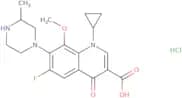
CAS :<p>Gatifloxacin hydrochloride is a fluoroquinolone antibiotic, which is synthesized chemically from quinolone compounds. It exhibits its mode of action by inhibiting bacterial DNA gyrase and topoisomerase IV, essential enzymes responsible for DNA replication and transcription processes in bacteria. This disruption of DNA processes leads to bacterial cell death, making it effective against a wide range of Gram-positive and Gram-negative bacteria.</p>Formule :C19H23ClFN3O4Degré de pureté :Min. 95%Masse moléculaire :411.86 g/molAtramycin A
CAS :Atramycin A is an antibiotic, which is derived from the Streptomyces genus, a prolific source of bioactive compounds. Streptomyces species are renowned for their ability to produce a vast array of secondary metabolites with diverse pharmacological activities. Atramycin A operates primarily through the inhibition of bacterial protein synthesis. It achieves this by binding to bacterial ribosomal subunits, thus interfering with peptide chain elongation and effectively halting bacterial growth.Formule :C25H24O9Degré de pureté :Min. 95%Masse moléculaire :468.50 g/molSartorypyrone B
CAS :Sartorypyrone B is a secondary metabolite, which is isolated from certain fungal species, including those in the genus **Aspergillus**. This compound is part of a class of natural products known as polyketides, characterized by their diverse structural complexity and bioactivity. The mode of action of Sartorypyrone B involves the inhibition of microbial growth and disruption of cellular processes, making it a compound of interest in antibacterial and anticancer research.Formule :C30H42O7Degré de pureté :Min. 95%Masse moléculaire :514.6 g/molCefotiam
CAS :<p>Cefotiam is a broad-spectrum cephalosporin antibiotic, which is a beta-lactam compound derived from the mold Acremonium. It functions by inhibiting bacterial cell wall synthesis, particularly by targeting penicillin-binding proteins, which leads to cell lysis and death in susceptible bacteria. This mechanism of action makes it effective against various Gram-positive and Gram-negative bacteria.</p>Formule :C18H23N9O4S3Degré de pureté :Min. 95%Couleur et forme :PowderMasse moléculaire :525.62 g/molSideroxylin
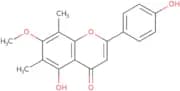
CAS :<p>Sideroxylin is a C-methylated flavone with action as an antimicrobial agent against Staphylococcus aureus and is used for research on antimicrobial and anticancer properties.</p>Formule :C18H16O5Degré de pureté :Min. 95%Masse moléculaire :312.3 g/molSteffimycin B
CAS :<p>Steffimycin B is an anthracycline antibiotic, which is a metabolite produced by certain Streptomyces species. This compound functions by intercalating into DNA, thereby inhibiting the synthesis of nucleic acids and disrupting essential cellular processes. Its mode of action involves preventing the replication and transcription of bacterial DNA, leading to cell death. Steffimycin B has been primarily explored for its antibiotic properties, particularly in research settings for its potential to combat specific bacterial infections. Additionally, its structural similarities to other anthracyclines suggest potential use in studying mechanisms of drug resistance and interactions with DNA. Further investigation may reveal additional therapeutic applications or synergistic effects in combination with other antimicrobial agents.</p>Formule :C29H32O13Degré de pureté :Min. 95%Masse moléculaire :588.6 g/molAzddmec
CAS :<p>Please enquire for more information about Azddmec including the price, delivery time and more detailed product information at the technical inquiry form on this page</p>Formule :C10H14N6O3Degré de pureté :Min. 95%Masse moléculaire :266.26 g/molClindamycin palmitate hydrochloride
CAS :<p>Clindamycin palmitate hydrochloride is a semisynthetic antibiotic prodrug, which is derived from the lincomycin family, originally sourced from the bacterium *Streptomyces lincolnensis*. This compound functions through its conversion into the active form, clindamycin, once inside the body. Clindamycin acts by inhibiting bacterial protein synthesis, binding to the 50S subunit of the bacterial ribosome, thereby impeding peptide chain initiation and elongation.</p>Formule :C34H63ClN2O6SDegré de pureté :Min. 95%Masse moléculaire :663.4 g/molPicloxidina
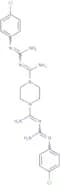
CAS :<p>Picloxidina is a chlorhexidine-based antiseptic, which is a synthetic compound with broad-spectrum antimicrobial activity. Its mode of action involves disrupting microbial cell membranes, leading to leakage of cellular contents and subsequent cell death. Picloxidina has been utilized extensively in ophthalmology due to its effectiveness in controlling ocular infections.</p>Formule :C20H24Cl2N10Degré de pureté :Min. 95%Masse moléculaire :475.4 g/molBentaluron
CAS :<p>Bentaluron is a synthetic fungicide, which is a chemical compound developed to combat fungal pathogens in agriculture. Its source originates from rigorous industrial chemical synthesis, ensuring efficacy and stability. The mode of action of Bentaluron involves disrupting essential biochemical pathways within fungal cells, specifically targeting and inhibiting enzymes critical for fungal growth and metabolism. This precise interference prevents the synthesis of vital cellular components, ultimately halting the proliferation of the fungus.</p>Formule :C11H13N3OSDegré de pureté :Min. 95%Masse moléculaire :235.31 g/mol