Antimicrobiens
Les antimicrobiens sont des agents qui détruisent ou inhibent la croissance des microorganismes, y compris les bactéries, les virus, les champignons et les parasites. Ces composés sont essentiels dans la prévention et le traitement des infections, jouant un rôle crucial en médecine, en agriculture et dans l'industrie alimentaire. Chez CymitQuimica, nous proposons une vaste gamme d'antimicrobiens de haute qualité et pureté, adaptés à diverses applications scientifiques et industrielles. Notre catalogue comprend des antibiotiques, des antifongiques, des antiviraux et des désinfectants, tous conçus pour répondre aux besoins de la recherche et du développement, ainsi qu'aux applications cliniques et de production. Avec nos produits, les professionnels peuvent garantir l'efficacité et la sécurité dans le contrôle des infections et la protection de la santé publique.
Sous-catégories appartenant à la catégorie "Antimicrobiens"
- Antibiotiques(4.128 produits)
- Antifongiques(901 produits)
- Antiparasitaires(701 produits)
- Antiviraux(765 produits)
2423 produits trouvés pour "Antimicrobiens"
Trier par
Degré de pureté (%)
0
100
|
0
|
50
|
90
|
95
|
100
Aurantimycin A
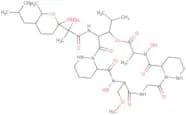
CAS :Aurantimycin A is an antibiotic compound, which is a polypeptide derived from the bacterium genus *Streptomyces*, a type of Actinobacteria. This compound exhibits its mode of action through inhibition of bacterial protein synthesis, specifically by interfering with the ribosomal function, thereby preventing the growth and proliferation of susceptible bacterial strains. The potent activity of Aurantimycin A against Gram-positive bacteria makes it a crucial tool in microbial and biochemical research.Formule :C38H64N8O14Degré de pureté :Min. 95%Masse moléculaire :857 g/mol2-Ethylhexyl 4-(4-chloro-2-methylphenoxy)butyrate
CAS :<p>2-Ethylhexyl 4-(4-chloro-2-methylphenoxy)butyrate is a pre-emergent herbicide, which is synthesized from phenoxyalkanoic acid derivatives. Its mode of action involves inhibiting essential plant lipid synthesis pathways, specifically targeting the acetyl-coenzyme A carboxylase (ACCase) enzyme. This enzyme is pivotal for fatty acid synthesis, which is critical for the development of cellular lipids necessary for plant growth and survival.</p>Formule :C19H29ClO3Degré de pureté :Min. 95%Masse moléculaire :340.9 g/molTetracycline hydrochloride, Antibiotic for Culture Media Use Only
CAS :<p>Tetracycline hydrochloride is a broad-spectrum antibiotic and is an electron transfer agent. It has been shown to be effective against bacterial infections in humans and has been used in cultures for the prevention of bacterial contamination. As an electron transfer agent, it is used in electron microscopy to study the surface of biological cells. Tetracycline hydrochloride enters bacterial cells by diffusion and interacts with the cytoplasmic membrane, where it induces a redox reaction that leads to cell death. The efficacy of tetracycline hydrochloride in treating candida albicans (yeast) was studied using in-vitro activity and showed that carboxymethyl chitosan nanoparticles were able to enhance the treatment efficiency.</p>Formule :C22H25ClN2O8Degré de pureté :Min. 88.0 Area-%Masse moléculaire :480.90 g/molRef: 3D-T-1961
1kgÀ demander5kgÀ demander10kgÀ demander25kgÀ demander2500gÀ demander-Unit-kgkgÀ demanderDioxohongdenafil
CAS :<p>Dioxohongdenafil is a synthetic compound, which is a type of pharmaceutical analog. It is derived from sildenafil, a well-known phosphodiesterase type 5 (PDE5) inhibitor, originally conceptualized through chemical modification of the parent compound. The mode of action of Dioxohongdenafil involves competitive inhibition of the PDE5 enzyme, leading to an increase in cyclic guanosine monophosphate (cGMP) levels. This biochemical alteration results in vasodilation and increased blood flow, mimicking the therapeutic mechanism observed in sildenafil.</p>Formule :C25H30N6O5Degré de pureté :Min. 95%Masse moléculaire :494.5 g/molDequalinium chloride
CAS :<p>Dequalinium chloride is a novel, broad spectrum antimicrobial agent with a mechanism of action that inhibits the mitochondria-dependent respiratory chain. Studies have shown that it inhibits the growth of resistant microorganisms in cell-based experiments and in bacterial infections. Dequalinium chloride also has cytopathic effects on thp-1 cells, which are specific for Mycobacterium tuberculosis. In addition to inhibiting mitochondria-dependent respiration, this compound also increases acetylcholine receptor sensitivity in A549 lung cancer cells. Dequalinium chloride is a quaternary ammonium cation and has been shown to be effective against clinical isolates and inhibitory concentrations of a variety of virus species, including human rhinovirus (HRV) and Coxsackie virus type B4 (CoxB4).</p>Formule :C30H40Cl2N4Degré de pureté :Min. 95.0 Area-%Masse moléculaire :527.57 g/molNybomycin
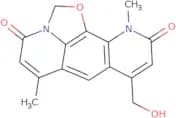
CAS :<p>Nybomycin is a quinolone-based antibiotic, which is a synthetic derivative originally derived from actinomycetes, a type of filamentous bacteria known for producing numerous bioactive compounds. Its mode of action involves targeting and inhibiting bacterial DNA gyrase and topoisomerase IV, enzymes critical for DNA replication and transcription. This mechanism disrupts DNA synthesis, thereby exerting bactericidal effects on susceptible bacterial populations.</p>Formule :C16H14N2O4Degré de pureté :Min. 95%Masse moléculaire :298.29 g/molValtrate hydrine B4
CAS :Valtrate hydrine B4 is a valepotriate derivative, which is a naturally occurring compound extracted from the roots of Valeriana species. It operates through its interaction with the central nervous system, primarily by modulating gamma-aminobutyric acid (GABA) receptors. This mode of action results in sedative and anxiolytic effects, making it a compound of interest in the research of natural tranquilizers and sleep aids.Formule :C27H40O10Degré de pureté :Min. 95%Masse moléculaire :524.6 g/mol(S)-N-Phenyl-1-((4-(3-(4-(trifluoromethyl)phenyl)ureido)phenyl)sulfonyl)pyrrolidine-2-carboxamide
CAS :(S)-N-Phenyl-1-((4-(3-(4-(trifluoromethyl)phenyl)ureido)phenyl)sulfonyl)pyrrolidine-2-carboxamide is a specialized inhibitor used in biochemical research, which is synthesized through advanced organic chemistry techniques. The compound acts by selectively binding to specific enzymatic or protein targets, disrupting their normal function and allowing scientists to study pathways and interactions at a molecular level.Formule :C25H23F3N4O4SDegré de pureté :Min. 95%Masse moléculaire :532.5 g/mol21-Norrapamycin
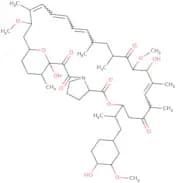
CAS :<p>21-Norrapamycin is a macrocyclic lactone antibiotic, which is derived from the bacterium Streptomyces hygroscopicus. Its chemical structure is closely related to that of rapamycin, a well-known immunosuppressant. The mode of action of 21-Norrapamycin involves the inhibition of the mechanistic target of rapamycin (mTOR) signaling pathway. By binding to the FK506-binding protein 12 (FKBP12), it forms a complex that then inhibits mTOR, a crucial regulator of cell growth, proliferation, and survival.</p>Formule :C50H77NO13Degré de pureté :Min. 95%Masse moléculaire :900.1 g/molIbafloxacin
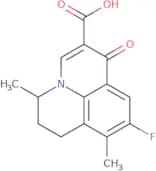
CAS :<p>Ibafloxacin is an antibacterial agent, which is a synthetic fluoroquinolone derived from quinolone compounds. It functions by inhibiting bacterial DNA gyrase and topoisomerase IV, enzymes crucial for DNA replication and transcription in bacteria. By preventing the supercoiling and uncoiling of bacterial DNA, ibafloxacin disrupts essential DNA processes, leading to bacterial cell death.</p>Formule :C15H14FNO3Degré de pureté :Min. 95%Masse moléculaire :275.27 g/molColistin sulfate, Antibiotic for Culture Media Use Only
CAS :<p>Antibacterial agent with the ability to permeate bacterial membranes and cause cell death. Colistin is a cationic peptide also known as polymyxin E. Colistin is effective in multidrug resistant Gram-positive bacteria such as P. aeruginosa, A. baumannii and K. pneumoniae.</p>Formule :C53H102N16O17SMasse moléculaire :1,266.73 g/molRef: 3D-Q-200890
1kgÀ demander5kgÀ demander10kgÀ demander25kgÀ demander2500gÀ demander-Unit-kgkgÀ demander(S,S)-Valifenalate
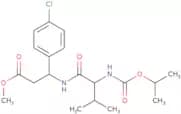
CAS :<p>(S,S)-Valifenalate is a chemical compound that serves as a systemic fungicide, a class of products designed to prevent or eliminate fungal diseases in plants. It is synthetically derived, indicating that its molecular structure is chemically engineered rather than extracted from natural sources. The compound operates by disrupting the fungal life cycle, specifically interfering with cell wall biosynthesis, ultimately inhibiting the growth and reproduction of fungal pathogens.</p>Formule :C19H27ClN2O5Degré de pureté :Min. 95%Masse moléculaire :398.9 g/molDoxycycline hydrochloride hemiethanolate hemihydrate, Antibiotic for Culture Media Use Only
CAS :<p>Doxycycline is an antibiotic that inhibits bacterial growth by inhibiting protein synthesis, respiratory chain, DNA gyrase, DNA topoisomerase IV. Doxycycline inhibits papaverine by blocking the expression of both cytochrome P450 and epoxide hydrolase. Doxycycline is commonly found in studies for bacterial infections, drug therapy, histopathological studies, cell culture and chemometric analysis.</p>Formule :C22H24N2O8·HClH2OC2H6ODegré de pureté :Min. 97.0 Area-%Masse moléculaire :512.90 g/molClindamycin 2-palmitate sulfoxide
CAS :<p>Clindamycin 2-palmitate sulfoxide is a semisynthetic antibiotic, which is a derivative of clindamycin. It originates from lincomycin, a natural antibiotic produced by the bacterium *Streptomyces lincolnensis*. This compound functions as a prodrug, which is converted into its active form in the body. Its mode of action involves inhibiting bacterial protein synthesis by binding to the 50S subunit of the ribosome, thereby preventing the growth and replication of susceptible bacteria.</p>Formule :C34H64Cl2N2O7SDegré de pureté :Min. 95%Masse moléculaire :715.9 g/molThiadiazin
CAS :<p>Thiadiazin is a synthetic compound, belonging to the class of heterocyclic chemical substances, which is primarily derived from chemical synthesis processes involving sulfur, nitrogen, and carbon atoms. It is characterized by a five-membered ring structure containing both sulfur and nitrogen atoms, which contributes to its diverse chemical properties.</p>Formule :C12H22N4S4Degré de pureté :Min. 95%Masse moléculaire :350.6 g/mol10, 11-Dehydrocurvularin
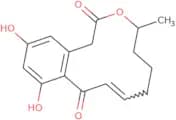
CAS :<p>10, 11-Dehydrocurvularin is a fungal phytotoxin with heat shock response and immune-modulatory activitie. Curvularins inhibit the expression of the inducible nitric oxide synthase (iNOS), thereby acting as anti-inflammatory agents and immune system modulators</p>Degré de pureté :Min. 95%Couleur et forme :PowderCarbazomycin B
CAS :<p>Carbazomycin B is a bioactive compound which is an antibiotic derived from the soil bacterium Streptomyces. This compound exhibits its mode of action by interfering with the synthesis of bacterial cell walls, which ultimately restricts the growth and proliferation of bacterial cells. The unique chemical structure of Carbazomycin B allows it to target specific pathways within bacterial organisms, making it an important tool in combating resistant strains.</p>Formule :C15H15NO2Degré de pureté :Min. 95%Masse moléculaire :241.28 g/molVineomycin B2
CAS :<p>Vineomycin B2 is an antitumor antibiotic, which is derived from the fermentation of Streptomyces bacteria. The compound functions through a DNA-binding mode of action, specifically intercalating into the DNA double helix, thus disrupting essential replication and transcription processes. This interference with DNA dynamics inhibits the proliferation of cancerous cells, making it a potent compound in oncology research.</p>Formule :C49H58O18Degré de pureté :Min. 95%Masse moléculaire :935.00 g/molClindamycin-2,3-diphosphate
<p>Clindamycin-2,3-diphosphate is a biochemical compound, which is derived from the antibiotic clindamycin, sourced through chemical modification to include diphosphate groups. Its mode of action involves inhibiting bacterial protein synthesis by binding to the 50S ribosomal subunit, thus interfering with peptide chain initiation and elongation. This disruption effectively halts bacterial growth, particularly in Gram-positive bacteria, and is crucial in combatting infections resistant to other antibiotics.</p>Formule :C18H35ClN2O11P2SDegré de pureté :Min. 95%Masse moléculaire :584.94 g/molN-Desisobutyl-N-propyl rifabutin
CAS :<p>N-Desisobutyl-N-propyl rifabutin is a synthetic derivative of rifabutin, which is an antibiotic belonging to the rifamycin class. This compound is sourced from modifications of the parent molecule rifabutin, itself derived from the rifamycin family produced by the bacterium Amycolatopsis, traditionally used for its antimicrobial properties. The mode of action involves the inhibition of bacterial RNA polymerase, effectively preventing the transcription process necessary for bacterial replication and protein synthesis. This disruption of RNA synthesis provides potent antimicrobial activity.</p>Formule :C45H60N4O11Degré de pureté :Min. 95%Masse moléculaire :832.98 g/mol