Antimicrobiens
Sous-catégories appartenant à la catégorie "Antimicrobiens"
- Antibiotiques(4.145 produits)
- Antifongiques(910 produits)
- Antiparasitaires(711 produits)
- Antiviraux(768 produits)
2429 produits trouvés pour "Antimicrobiens"
Cephradine
CAS :Cephradine is a broad-spectrum antibiotic, which is a synthetic derivative of cephalosporin C, originating from the mold Cephalosporium acremonium. Its mode of action involves interfering with bacterial cell wall synthesis. Cephradine binds to penicillin-binding proteins (PBPs) located inside the bacterial cell wall, inhibiting the final transpeptidation step of peptidoglycan synthesis, which leads to cell lysis and death.
Formule :C16H23N3O6SDegré de pureté :Min. 95%Masse moléculaire :385.4 g/molβ-Lactoglobulin A from bovine milk
CAS :β-Lactoglobulin A is a whey protein found predominantly in bovine milk, characterized as a globular protein. It is sourced from the milk of cows and serves as a major component of whey, the liquid by-product of cheese production. The structure of β-Lactoglobulin A allows it to bind hydrophobic molecules, such as fatty acids and vitamins, which may facilitate their transport and absorption in the digestive tract.
Degré de pureté :Min. 95%Nortadalafil-N-(2-hydroxy)propyl
CAS :Nortadalafil-N-(2-hydroxy)propyl is a chemotherapeutic agent, which is synthesized through the chemical modification of tadalafil. It is characterized as a small-molecule inhibitor, derived from the structural alteration of the well-known phosphodiesterase type 5 (PDE5) inhibitor. The mechanism of action involves the attenuation of PDE5 activity, leading to increased levels of cyclic guanosine monophosphate (cGMP) within targeted cellular pathways. This elevation in cGMP concentration results in vasodilation and increased blood flow, primarily investigated within the context of vascular and erectile tissue.
Formule :C24H23N3O5Degré de pureté :Min. 95%Masse moléculaire :433.5 g/molMacrosphelide A
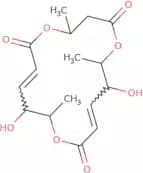
CAS :Macrosphelide A is a bioactive macrocyclic lactone, which is a secondary metabolite derived from the culture of certain fungal species. It functions primarily through the disruption of cell adhesion processes, which is facilitated by its ability to interfere with the function of specific cell surface receptors. This mode of action underlies its potential as an immunosuppressive agent, where it can inhibit the activities of immune cells by altering cellular communication and adhesion.
Formule :C16H22O8Degré de pureté :Min. 95%Masse moléculaire :342.34 g/molTuberculosis inhibitor 3
CAS :Tuberculosis inhibitor 3 is a synthesized chemical compound designed to target the Mycobacterium tuberculosis bacterium, which is the causative agent of tuberculosis. This inhibitor is derived through advanced chemical synthesis techniques, involving the modification of specific molecular structures to enhance its binding affinity and specificity toward the bacterial cellular targets.
Formule :C21H22F6N4O3SDegré de pureté :Min. 95%Masse moléculaire :524.5 g/molNonactin
CAS :Nonactin is a macrotetrolide antibiotic with action as an ionophore for potassium and ammonium ions and is used for research on ion transport and bacterial inhibition.
Formule :C40H64O12Degré de pureté :Min. 95%Couleur et forme :PowderMasse moléculaire :736.93 g/molCladosporin
CAS :Cladosporin is a secondary metabolite and natural product, specifically a fungal cyclodepsipeptide, which is isolated from the fungus *Cladosporium cladosporioides*. It exhibits its mode of action by selectively inhibiting the lysyl-tRNA synthetase enzyme in the Plasmodium species, the causative agent of malaria. This inhibition disrupts the protein synthesis pathway crucial for the survival and proliferation of the parasite.
Formule :C16H20O5Degré de pureté :Min. 95%Masse moléculaire :292.33 g/molPerfluorodecanephosphonic acid
CAS :Perfluorodecanephosphonic acid is a fluorinated organic compound, which is synthesized through the controlled polymerization of fluorinated precursors. It is characterized by its unique perfluorinated alkyl chain and a phosphonic acid group, providing a distinctive combination of hydrophobic and functional properties. Its mode of action involves the strong adsorption onto surfaces through the phosphonic acid moiety, allowing the formation of highly stable self-assembled monolayers (SAMs).
Formule :C10H2F21O3PDegré de pureté :Min. 95%Masse moléculaire :600.06 g/molLeptomycin A
CAS :Leptomycin A is a Streptomyces-produced inhibitor, which is derived from the bacterium Streptomyces spiroverticillatus. It functions by specifically binding to and inhibiting the CRM1 (exportin 1), a nuclear export receptor. This action blocks the nuclear export of proteins that contain a leucine-rich nuclear export signal (NES), thereby leading to their accumulation within the nucleus. The inhibition of CRM1 disrupts various cellular processes, including cell cycle regulation and signal transduction pathways.
Formule :C32H46O6Degré de pureté :Min. 95%Masse moléculaire :526.7 g/molPorfiromycin
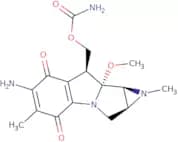
CAS :Porfiromycin is an antineoplastic antibiotic with action on DNA alkylation and cross-linking and is used for research on cancer treatment, particularly for hypoxic tumors.
Formule :C16H20N4O5Degré de pureté :Min. 95 Area-%Couleur et forme :PowderMasse moléculaire :348.35 g/mol10, 11-Dehydrocurvularin
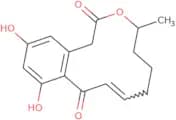
CAS :10, 11-Dehydrocurvularin is a fungal phytotoxin with heat shock response and immune-modulatory activitie. Curvularins inhibit the expression of the inducible nitric oxide synthase (iNOS), thereby acting as anti-inflammatory agents and immune system modulators
Degré de pureté :Min. 95%Couleur et forme :PowderUrdamycin B
CAS :Urdamycin B is an anthracycline antibiotic, which is derived from the bacterium *Streptomyces fradiae*. This compound acts by intercalating into DNA, disrupting the replication and transcription processes, leading to cell death. Its mode of action involves inhibiting topoisomerase II, an enzyme critical for DNA replication and cell cycle progression. This mechanism impairs cellular proliferation, making it effective against rapidly dividing cells.
Formule :C37H44O13Degré de pureté :Min. 95%Masse moléculaire :696.70 g/molTigecycline hydrate
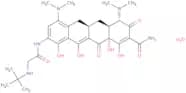
CAS :Inhibitor of protein synthesis; glycylcycline class
Formule :C29H39N5O8Degré de pureté :Min. 95%Masse moléculaire :585.65 g/molNeticonazole
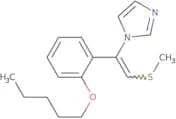
CAS :Neticonazole is a synthetic antifungal compound, which is derived from pharmaceutical chemical synthesis. It functions primarily as an imidazole derivative, disrupting the synthesis of ergosterol, a crucial component of fungal cell membranes. This interference leads to increased cell membrane permeability, ultimately causing cell lysis and death of the fungal organism.
Formule :C17H22N2OSDegré de pureté :Min. 95%Masse moléculaire :302.4 g/molAcetophos
CAS :Acetophos is an organophosphate insecticide, which is a synthetic chemical compound derived from phosphoric acid. It functions by inhibiting acetylcholinesterase, an essential enzyme in the nervous systems of insects. This inhibition leads to the accumulation of acetylcholine, causing continuous nerve impulses that result in the paralysis and eventual death of the pest.
Formule :C8H17O5PSDegré de pureté :Min. 95%Masse moléculaire :256.26 g/molClindamycin 2-palmitate sulfoxide
CAS :Clindamycin 2-palmitate sulfoxide is a semisynthetic antibiotic, which is a derivative of clindamycin. It originates from lincomycin, a natural antibiotic produced by the bacterium *Streptomyces lincolnensis*. This compound functions as a prodrug, which is converted into its active form in the body. Its mode of action involves inhibiting bacterial protein synthesis by binding to the 50S subunit of the ribosome, thereby preventing the growth and replication of susceptible bacteria.
Formule :C34H64Cl2N2O7SDegré de pureté :Min. 95%Masse moléculaire :715.9 g/molVebufloxacin
CAS :Vebufloxacin is an antibacterial agent, which is synthesized as a member of the fluoroquinolone class of antibiotics. This compound is derived from chemical synthesis, specifically designed to target and inhibit bacterial DNA gyrase and topoisomerase IV. These enzymes play crucial roles in DNA replication and transcription, making them ideal targets for disrupting bacterial cell function.
Formule :C19H22FN3O3Degré de pureté :Min. 95%Masse moléculaire :359.4 g/molVancomycin aglycon
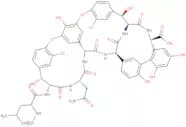
CAS :Vancomycin aglycon is a glycopeptide antibiotic, which is a derivative of vancomycin. It is sourced from the fermentation products of certain Amycolatopsis species, a genus of actinobacteria. The mode of action of vancomycin aglycon involves the inhibition of bacterial cell wall synthesis. It specifically binds to the D-Ala-D-Ala terminus of nascent peptidoglycan chains, thereby preventing the cross-linking that is crucial for maintaining cell wall integrity.
Formule :C53H52Cl2N8O17Degré de pureté :Min. 95%Masse moléculaire :1,143.93 g/mol21-Norrapamycin
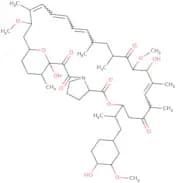
CAS :21-Norrapamycin is a macrocyclic lactone antibiotic, which is derived from the bacterium Streptomyces hygroscopicus. Its chemical structure is closely related to that of rapamycin, a well-known immunosuppressant. The mode of action of 21-Norrapamycin involves the inhibition of the mechanistic target of rapamycin (mTOR) signaling pathway. By binding to the FK506-binding protein 12 (FKBP12), it forms a complex that then inhibits mTOR, a crucial regulator of cell growth, proliferation, and survival.
Formule :C50H77NO13Degré de pureté :Min. 95%Masse moléculaire :900.1 g/mol