Acides gras
Les acides gras sont des acides carboxyliques avec de longues chaînes d'hydrocarbures, qui peuvent être saturées ou insaturées. Ils sont des composants essentiels des lipides, servant de building blocks clés pour les lipides complexes, les sources d'énergie et les molécules de signalisation. Les acides gras sont impliqués dans divers processus biologiques, y compris le métabolisme, la structure des membranes cellulaires et l'inflammation. Chez CymitQuimica, nous offrons une large gamme d'acides gras de haute qualité pour soutenir vos recherches en biochimie lipidique, nutrition et domaines connexes.
Sous-catégories appartenant à la catégorie "Acides gras"
- Acylglycérols/Glycérides(43 produits)
- Eicosanoïdes(6 produits)
- Esters d'acides gras(946 produits)
- Acides gras halogénés(32 produits)
2447 produits trouvés pour "Acides gras"
Trier par
Degré de pureté (%)
0
100
|
0
|
50
|
90
|
95
|
100
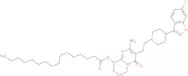
Paliperidone palmitate
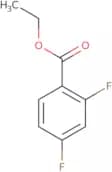
CAS :Produit contrôlé<p>Paliperidone palmitate is a drug that is used in the treatment of schizophrenia. It is the most potent and selective atypical antipsychotic agent available. Paliperidone palmitate has shown long-term efficacy and low risk of extrapyramidal symptoms, which are associated with some other antipsychotic agents. The drug has been shown to have minimal effects on prolactin levels, although it can cause an increase in serum prolactin levels when administered with risperidone. Paliperidone palmitate is a prodrug that is metabolized by esterases to its active form, paliperidone. Paliperidone does not bind to plasma proteins and therefore may be more suitable for patients with hepatic impairment.</p>Formule :C39H57FN4O4Degré de pureté :Min. 95%Couleur et forme :PowderMasse moléculaire :664.89 g/mol2,4-Difluorobenzoic acid ethyl ester
CAS :C9H8F2O2 2,4-Difluorobenzoic acid ethyl ester is a drug that inhibits the growth of protozoan parasites in the intestine. It has been shown to be effective against coccidiosis and grignard reagent, an antifungal drug. C9H8F2O2 2,4-Difluorobenzoic acid ethyl ester is a fungicide that inhibits the synthesis of RNA by binding to the cgmp-dependent protein (cyclic guanosine monophosphate) in protozoa, preventing protein synthesis and causing cell death. Magnesium chloride and chloride ions are required for this reaction to take place.Formule :C9H8F2O2Degré de pureté :Min. 95%Couleur et forme :Clear LiquidMasse moléculaire :186.16 g/molPalmitoyl-glycine
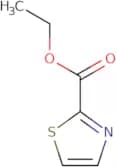
CAS :Palmitoyl-glycine is a fatty acid amide. It is an analog of the naturally occurring amino acid glycine that has been modified by adding a palmitoyl group to the side chain. Palmitoyl-glycine is enzymatically inactivated by bacterial enzymes and cationic surfactants and can be used as a skin cell model system for basic structure and physiological effects. Palmitoyl-glycine has been shown to have skin cell protective effects against oxidative stress, which may be due to its ability to form hydrogen bonds with the acyl chains of lipids.Formule :C18H35NO3Degré de pureté :Min. 95%Couleur et forme :White PowderMasse moléculaire :313.48 g/molThiazole-2-carboxylic acid ethyl ester
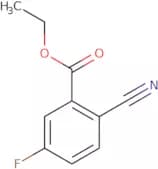
CAS :<p>Thiazole-2-carboxylic acid ethyl ester is a synthetic compound that is used as a model for peroxides and as a substrate in the study of carbonyl chemistry. It has been shown to react with benzene, yielding an alpha-hydroxybenzylidene ketone. The heterocycle can be converted to the corresponding carboxylic acid by dehydrogenation with hydrogen peroxide or sodium perborate. The yields of this reaction are dependent on the substituent effects of the heterocycle. Thiazole-2-carboxylic acid ethyl ester reacts with serine protease and amide in an enzyme assay. Kinetic data for this reaction are available in the literature.</p>Formule :C6H7NO2SDegré de pureté :Min. 95%Couleur et forme :PowderMasse moléculaire :157.19 g/mol2-Cyano-5-fluorobenzoic acid ethyl ester
CAS :2-Cyano-5-fluorobenzoic acid ethyl ester is a chemical compound with the formula C6H4(COOCH2)2FO. The compound is an intermediate in the synthesis of other chemicals, such as pharmaceuticals. It is also used as a building block in other syntheses. 2-Cyano-5-fluorobenzoic acid ethyl ester has been assigned CAS No. 1260751-65-2 and is useful in organic synthesis because it is a versatile building block, complex compound, and fine chemical.Formule :C10H8FNO2Degré de pureté :Min. 95%Masse moléculaire :193.17 g/molPipotiazine palmitate
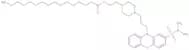
CAS :Produit contrôléPipotiazine palmitate is a long-acting antipsychotic drug that belongs to the class of phenothiazine derivatives. It is used for the treatment of schizophrenia and other psychotic disorders. Pipotiazine palmitate has been shown to be effective in treating chronic schizophrenia with minimal side effects. This drug binds to dopamine D2 receptors, which leads to a decrease in dopaminergic activity in the brain and improves symptoms of psychosis. Pipotiazine palmitate is administered orally in two doses per day. A major limitation of this medication is its low bioavailability due to its high lipophilicity, which may be due to its undecylenate ester form.Formule :C40H63N3O4S2Degré de pureté :Min. 95 Area-%Couleur et forme :PowderMasse moléculaire :714.08 g/molAscorbyl palmitate
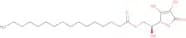
CAS :<p>Ascorbyl palmitate is an ester of ascorbic acid and palmitic acid. It is a water-soluble antioxidant that has been shown to be safe for oral ingestion at doses of up to 3 grams per day. Ascorbyl palmitate is used in topical formulations to provide protection against sun damage, and also has been shown to have anti-inflammatory properties, which may be due to its inhibitory effect on the mcl-1 protein. Ascorbyl palmitate has a phase transition temperature at about 41°C. This compound can be used in pharmaceuticals for the treatment of infectious diseases caused by bacteria such as tuberculosis or herpes simplex virus type 1 (HSV-1). This chemical also has been shown to have physiological effects on bowel disease and toxicity studies show that it does not cause any adverse reactions in rats or rabbits when given orally.</p>Formule :C22H38O7Degré de pureté :Min 98%Couleur et forme :White PowderMasse moléculaire :414.53 g/molPropargyl benzenesulfonate
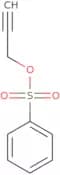
CAS :Propargyl benzenesulfonate is a chemical compound that has been shown to inhibit protease activity, an enzyme that breaks down proteins. It is also used in the synthesis of aminoindane and cyclic peptides. The chemical stability of propargyl benzenesulfonate has been demonstrated by its ability to withstand trifluoroacetic acid and hydrochloric acid, as well as malonic acid and immobilized conditions. Propargyl benzenesulfonate binds to integrin receptors on cells and inhibits depression-like behavior in animal models. It also has the ability to form hydrogen bonds with amines. The structural formula for propargyl benzenesulfonate is shown below:Formule :C9H8O3SDegré de pureté :Min. 98%Couleur et forme :Clear LiquidMasse moléculaire :196.22 g/mol2,6-Dimethylbenzoic acid ethyl ester
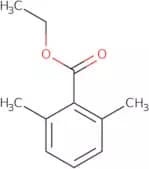
CAS :<p>2,6-Dimethylbenzoic acid ethyl ester (DBE) is an organic compound that is used as a starting material for the synthesis of other chemicals. It is produced by reacting chlorobenzene with magnesium in the presence of a suitable catalyst such as copper(II) chloride. The reaction can be carried out in bulk or in liquid phase, and yields are optimized by using activated carbon as a support. DBE is one of the most commonly used dialkyl benzoates for chemical syntheses due to its high reactivity. DBE has a particle size of about 10 micrometres and a bulk density close to 1 g/cm3.</p>Formule :C11H14O2Degré de pureté :Min. 95%Couleur et forme :PowderMasse moléculaire :178.23 g/molDL-α-Hydroxypalmitic acid
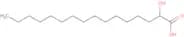
CAS :Palmitic acid is a fatty acid that is found in animal and vegetable fats. It is also an important component of the cell membrane. Palmitic acid has been shown to inhibit the growth of bacteria by interfering with the synthesis of cell membranes, which are largely composed of lipids. Palmitic acid has been shown to be active against Gram-positive bacteria, including Bacillus subtilis and Staphylococcus epidermidis, as well as Gram-negative bacteria such as Salmonella enterica Serovar Typhi and Escherichia coli O157:H7. Palmitic acid can be used to produce monolayers for use in magnetic resonance spectroscopy. These monolayers have been shown to have an effect on the rate at which glucose is transported across the surface of the membrane. Palmitic acid also inhibits glucosylceramide production in ganoderma lucidum, a type of fungus that causes plant diseases, by blockingFormule :C16H32O3Degré de pureté :Min. 98 Area-%Couleur et forme :PowderMasse moléculaire :272.42 g/mol1,2-Dipalmitoyl-sn-glycero-3-phosphatidic acid sodium
CAS :1,2-Dipalmitoyl-sn-glycero-3-phosphatidic acid sodium (DPPA) is a drug substance that has been used in primary culture to study the cell membrane of hepatocytes. This compound is a phospholipid with a cavity at one end and contains two hydroxy groups that can be conjugated to other molecules. It has been shown to be effective against Hepatitis B virus and mesenchymal stromal cells. DPPA has also been used as an adjuvant for gadolinium contrast agents for magnetic resonance imaging. Gadolinium may bind to the hydroxy groups on DPPA, which increases its birefringence and brightness on MRI scans.Formule :C35H69Na2O8PDegré de pureté :Min. 98 Area-%Couleur et forme :White PowderMasse moléculaire :694.87 g/molGlycerol tripalmitate
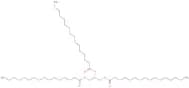
CAS :Glycerol tripalmitate is a triglyceride that is composed of three molecules of glycerol and one molecule of palmitic acid. It is used in the manufacture of sephadex g-100, a chromatographic material that separates proteins based on their size. Glycerol tripalmitate has been shown to have high chemical stability, which is important for its use as a pharmaceutical excipient. This substance also has a physiological function in the human body, including the production of lipids, such as fatty acids and triglycerides. Glycerol tripalmitate can be used to study phase transition temperature by using surface methodology. Carbonyl oxygens are present on the surface of this substance, which may have neurotrophic effects.Formule :C51H98O6Degré de pureté :Min. 85 Area-%Couleur et forme :PowderMasse moléculaire :807.32 g/molHexadecanamide
CAS :Hexadecanamide is a reactive amide that has an optimum concentration of 1.5-2.0 M in water and a pH range of 3.0-8.0. Hexadecanamide is oxidized by an oxidation catalyst to form hexadecane, which can be analyzed by gas chromatography or high performance liquid chromatography. The oxidation reaction can be monitored under constant pressure conditions using electrochemical impedance spectroscopy. Hexadecanamide reacts with hydroxyl groups and fatty acids to form hexadecanoic acid, which can be analyzed using gas chromatography or high performance liquid chromatography. Hexadecanamide also reacts with viral life to form hexadecanoic acid, which can be analyzed using gas chromatography or high performance liquid chromatography. Hexadecanamide has been shown to have anti-inflammatory properties, which may be due to its ability to inhibit the production of pro-inflammatory cytokines such as histamine and leukotrienesFormule :C16H33NODegré de pureté :Min. 95%Couleur et forme :PowderMasse moléculaire :255.44 g/mol4-Phenyl-2-pyrrolidone-3-carboxylic acid ethyl ester
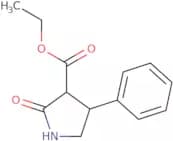
CAS :<p>4-Phenyl-2-pyrrolidone-3-carboxylic acid ethyl ester is an organic compound. It is an intermediate in the synthesis of 2,4,6-trichloroisonicotinic acid and 2,4,6-trichloropyrimidine. The compound has a variety of uses as a reagent and building block for organic synthesis. 4-Phenyl-2-pyrrolidone-3-carboxylic acid ethyl ester is soluble in many solvents such as acetone, ethers and chloroform. It has a CAS number of 5245032. This chemical can be used as a speciality chemical or fine chemical to produce drugs.</p>Formule :C13H15NO3Degré de pureté :Min. 95%Couleur et forme :PowderMasse moléculaire :233.26 g/molPalmitoyl pentapeptide trifluoroacetic acid
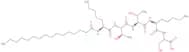
CAS :Palmitoyl pentapeptide trifluoroacetic acid is a synthetic molecule that has been shown to have antimicrobial and anti-inflammatory properties. It has been shown to reduce the activity of gsh-px, which is an enzyme involved in the metabolism of glutathione. This compound also inhibits the production of ATP in cells, which may be responsible for its cancer-inhibiting effects. Palmitoyl pentapeptide trifluoroacetic acid has been shown to inhibit skin cancer cell growth by interfering with fatty acid synthesis and increasing epidermal growth factor levels.Formule :C41H76N7O12Degré de pureté :Min. 95%Couleur et forme :PowderMasse moléculaire :802.05 g/molEicosapentaenoic acid ethyl ester
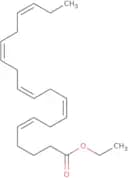
CAS :Eicosapentaenoic acid ethyl ester (EPA-E) is a natural compound that belongs to the group of polyunsaturated fatty acids. EPA-E has been shown to be an antioxidant, which prevents oxidative damage and reduces inflammation. It has been found to lower LDL cholesterol and triglycerides in clinical trials. EPA-E also decreases body mass index, hepatic steatosis, and symptoms of metabolic syndrome. The mechanism of action for these effects is not fully understood but may be due to increased activity of the enzyme spal2. EPA-E has been shown to have favorable biochemical properties in animal models of atherosclerosis.Formule :C22H34O2Degré de pureté :Min. 96 Area-%Couleur et forme :Clear LiquidMasse moléculaire :330.5 g/mol4-(1-Hydroxy-1-methylethyl)-2-propyl-1H-imidazole-5-carboxylic acid ethyl ester
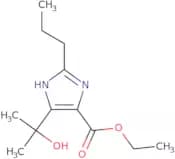
CAS :4-(1-Hydroxy-1-methylethyl)-2-propyl-1H-imidazole-5-carboxylic acid ethyl ester is a synthetic drug with pharmacological properties that are similar to those of the natural product medoxomil. It has been shown to be a potent blocker of the GABA receptor and is used for the treatment of epilepsy. 4-(1-Hydroxy-1-methylethyl)-2-propyl-1H-imidazole-5-carboxylic acid ethyl ester has been shown to be an inhibitor of rat liver microsomes and also has a high affinity for the enzyme cilexetil, which is responsible for the conversion of cilexetil into its active form.Formule :C12H20N2O3Degré de pureté :Min. 95%Couleur et forme :PowderMasse moléculaire :240.3 g/mol4-Fluoro-2-nitrobenzoic acid ethyl ester
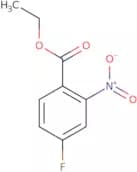
CAS :4-Fluoro-2-nitrobenzoic acid ethyl ester is a fine chemical that can be used as a reagent, intermediate compound, building block, scaffold and building block for speciality chemicals. It has been shown to be an effective chemical in the synthesis of 4-fluoro-2-nitrobenzoic acid, which is a versatile building block with many potential applications. 4-Fluoro-2-nitrobenzoic acid ethyl ester is also useful in reactions involving amines and alcohols as well as metal catalyzed reactions. This product has CAS No. 1072207-10-3.Formule :C9H8FNO4Degré de pureté :(%) Min. 85%Couleur et forme :Clear LiquidMasse moléculaire :213.16 g/molcis-4,7,10,13,16,19-Docosahexaenoic acid ethyl ester - 90%
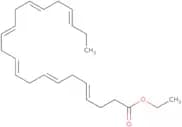
CAS :Cis-4,7,10,13,16,19-Docosahexaenoic acid ethyl ester (DHAEE) is a polyunsaturated fatty acid that belongs to the omega-3 family. It is used as an alternative feedstock for biodiesel production and has been shown to be a good candidate for hydrogenation reactions. The adsorption equilibrium of DHAEE has been studied using isotherms at different densities and pressures. At high pressures, the adsorption of DHAEE on silica gel was found to be reversible. This means that adsorbed DHAEE can be desorbed by heating the solid phase. This property could be useful in the recovery of this compound from spent catalysts or in other applications where it needs to be recovered from a solid phase.Formule :C24H36O2Degré de pureté :Min. 95%Couleur et forme :PowderMasse moléculaire :356.54 g/mol2-Amino-3-hydroxybenzoic acid ethyl ester
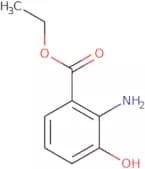
CAS :<p>2-Amino-3-hydroxybenzoic acid ethyl ester is soluble in organic solvents and is a catalyst for the hydrolysis of phenoxazinones. It has been shown to be the most active among the amino acid esters at pH 7. The optimum temperature for this enzyme is 37 degrees Celsius. The substrate specificity of this enzyme, which was purified by fractionation, is 3-hydroxyanthranilic acid and 3-hydroxyanthranilic acid with metals such as copper or zinc ions. This enzyme also catalyses the hydrolysis of proteins and peptides containing hydrophobic amino acids.</p>Formule :C9H11NO3Degré de pureté :Min. 95%Couleur et forme :PowderMasse moléculaire :181.19 g/mol