Acides gras
Les acides gras sont des acides carboxyliques avec de longues chaînes d'hydrocarbures, qui peuvent être saturées ou insaturées. Ils sont des composants essentiels des lipides, servant de building blocks clés pour les lipides complexes, les sources d'énergie et les molécules de signalisation. Les acides gras sont impliqués dans divers processus biologiques, y compris le métabolisme, la structure des membranes cellulaires et l'inflammation. Chez CymitQuimica, nous offrons une large gamme d'acides gras de haute qualité pour soutenir vos recherches en biochimie lipidique, nutrition et domaines connexes.
Sous-catégories appartenant à la catégorie "Acides gras"
- Acylglycérols/Glycérides(43 produits)
- Eicosanoïdes(6 produits)
- Esters d'acides gras(946 produits)
- Acides gras halogénés(32 produits)
2447 produits trouvés pour "Acides gras"
Trier par
Degré de pureté (%)
0
100
|
0
|
50
|
90
|
95
|
100
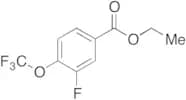
3-Fluoro-4-(trifluoromethoxy)benzoic Acid Ethyl Ester
CAS :Produit contrôléFormule :C10H8F4O3Couleur et forme :NeatMasse moléculaire :252.161-Bromohexadecane-d33
CAS :Produit contrôlé<p>Applications 1-Bromohexadecane-d33 (CAS# 284474-41-5) is a useful isotopically labeled research compound.<br></p>Formule :C16D33BrCouleur et forme :NeatMasse moléculaire :338.556,7-Dihydro-6-oxo-1H-pyrazolo[3,4-b]pyridine-3-carboxylic Acid Ethyl Ester
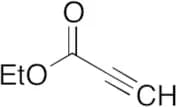
CAS :Produit contrôléFormule :C9H9N3O3Couleur et forme :NeatMasse moléculaire :207.19Ethyl Propargylate
CAS :Produit contrôlé<p>Applications Ethyl Propargylate is used in the synthesis of substituted anthraquinones. Also used in the preparation of inhibitory pyrazolo[1,5-a]pyridines for anti-inflammatory activity.<br> Not a dangerous good if item is equal to or less than 1g/ml and there is less than 100g/ml in the package<br>References Chang, M. et al: Synth. Comm., 43, 3363 (2013); Kojima, A. et al.: Bioorg. Med. Chem. Lett., 23, 5311 (2013);<br></p>Formule :C5H6O2Couleur et forme :NeatMasse moléculaire :98.1Acetyl Coenzyme A Trisodium Salt
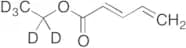
CAS :<p>Applications Acetyl Coenzyme A Trisodium Salt is used in skin-lightening cosmetics.<br></p>Formule :C23H38N7O17P3S·3NaCouleur et forme :NeatMasse moléculaire :878.54(2E)-2,4-Pentadienoic Acid Ethyl Ester-d5
CAS :Produit contrôléFormule :C7H5D5O2Couleur et forme :NeatMasse moléculaire :579.98Palmitoleoyl Chloride
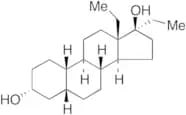
CAS :Produit contrôléFormule :C16H29ClOCouleur et forme :NeatMasse moléculaire :272.854(3α,5β,17α)-13-Ethyl-18,19-dinorpregnane-3,17-diol
CAS :Produit contrôlé<p>Applications (3α,5β,17α)-13-Ethyl-18,19-dinorpregnane-3,17-diol is an anabolic androgenic steroid.<br>References Fragkaki, A. et a.: J. Ster. Biochem. Mol. Biol., 115, 44 (2009);<br></p>Formule :C21H36O2Couleur et forme :NeatMasse moléculaire :320.51N-[1-(2,3-Dioleyloxy)propyl]-N,N,N-trimethylammonium Chloride
CAS :Produit contrôlé<p>Applications Small unilamellar liposomes containing DOTMA interact spontaneously with DNA to form lipid-DNA complexes with 100% entrapment of DNA. Facilitates fusion of the complex with the plasma membrane of tissue culture cells, resulting in both uptake and expression of the DNA. Effective technique for transient and stable expression of transfected DNA.<br>References Zhu., N., et al.: Science, 261, 209 (1993), Wang, J., et al.: Pharmazie, 62, 723 (2007), Shur, J., et al.: J. Pharm. Sci., 97, 4857 (2008),<br></p>Formule :C42H84ClNO2Couleur et forme :NeatMasse moléculaire :670.57(2S,3S,5S)-5-[(N-Formyl-L-leucyl)oxy]-2-hexyl-3-hydroxyhexadecanoic acid
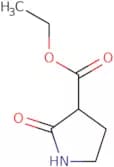
CAS :Please enquire for more information about (2S,3S,5S)-5-[(N-Formyl-L-leucyl)oxy]-2-hexyl-3-hydroxyhexadecanoic acid including the price, delivery time and more detailed product information at the technical inquiry form on this pageFormule :C29H55NO6Degré de pureté :Min. 95%Masse moléculaire :513.75 g/mol2-Oxopyrrolidine-3-carboxylic acid ethyl ester
CAS :<p>Please enquire for more information about 2-Oxopyrrolidine-3-carboxylic acid ethyl ester including the price, delivery time and more detailed product information at the technical inquiry form on this page</p>Formule :C7H11NO3Degré de pureté :Min. 95%Masse moléculaire :157.17 g/molPropargylaldehyde diethyl acetal
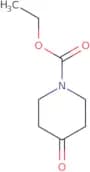
CAS :Propargylaldehyde diethyl acetal is a chemical compound that is used as an intermediate in the synthesis of other compounds. It is a white crystal or crystalline powder that is soluble in organic solvents such as ether, alcohols, and benzene. Propargylaldehyde diethyl acetal has been shown to be potent inhibitors of HSV-1, HSV-2, and HCMV. Furthermore, it has been reported that propargylaldehyde diethyl acetal inhibits the growth of cancer cells in vitro. In addition, propargylaldehyde diethyl acetal has been shown to inhibit the production of autoimmune diseases such as rheumatoid arthritis and multiple sclerosis.Formule :C7H12O2Degré de pureté :Min. 95%Couleur et forme :Colorless Clear LiquidMasse moléculaire :128.17 g/mol4-Oxo-1-piperidinecarboxylic acid ethyl ester
CAS :Produit contrôlé<p>4-Oxo-1-piperidinecarboxylic acid ethyl ester is an antimicrobial agent that belongs to the group of unsaturated ketones. It has been shown to have clinical activity against gram-positive bacteria, including Staphylococcus aureus, Enterococcus faecalis and Streptococcus pneumoniae, as well as Candida albicans. It also exhibits significant antiinflammatory activity in mice with chronic inflammation induced by carrageenan or LPS. 4-Oxo-1-piperidinecarboxylic acid ethyl ester inhibits the enzyme dpp-4, which is involved in the production of amyloid beta peptides and type II diabetes. This compound was also shown to possess anticholinesterase activity in vitro.</p>Formule :C8H13NO3Degré de pureté :Min. 95%Masse moléculaire :171.19 g/molrac 2-palmitoyl-3-chloropropanediol
CAS :<p>Please enquire for more information about rac 2-palmitoyl-3-chloropropanediol including the price, delivery time and more detailed product information at the technical inquiry form on this page</p>Formule :C19H37ClO3Degré de pureté :Min. 95%Masse moléculaire :348.95 g/molRac 1,2-bis-palmitoyl-3-chloropropanediol
CAS :<p>Rac-1,2-bis-palmitoyl-3-chloropropanediol is a dispersive molecule that is composed of a fatty acid and a chlorinated derivative of palmitic acid. It is used to calibrate the mass spectrometer and as an internal standard in quantitative analysis. Rac-1,2-bis-palmitoyl-3-chloropropanediol reacts with electrospray ionization with a dose-dependent response. It has been shown to be toxic to kidney cells at high doses but not at low doses. This chemical has been detected in food samples after being absorbed from the gastrointestinal tract. Rac 1,2-bis-palmitoyl 3 chloropropanediol can be found in the dipalmitate form or as formic acid.</p>Formule :C35H67ClO4Degré de pureté :95%NmrCouleur et forme :PowderMasse moléculaire :587.36 g/molPalmitoyl chloride
CAS :Palmitoyl chloride is a chemical compound that has the chemical formula CH3(CH2)16COCl. It is an ester of palmitic acid and chloroform. Palmitoyl chloride has a phase transition temperature of 39°C, giving it high resistance to heat. It can be used as a model system for studying the interactions between hydroxyl groups and chloride ions in water. This compound also has high water permeability and water vapor permeability, making it useful in the treatment of infectious diseases such as malaria. Palmitoyl chloride can be synthesized by reacting sodium carbonate with trifluoroacetic acid, which generates sodium trifluoroacetate. The sodium trifluoroacetate can react with 4-chlorobutyl alcohol to form 4-chlorobutylchloroformate, which reacts with palmitic acid to form palmitoyl chloride.Formule :C16H31ClODegré de pureté :Min. 95%Masse moléculaire :274.87 g/mol1,2-Dilinoleoyl-3-palmitoyl-rac-glycerol
CAS :<p>1,2-Dilinoleoyl-3-palmitoyl-rac-glycerol (DLPG) is a lipid molecule that is structurally similar to the sphingolipid ceramide. It has been shown to be an inhibitor of cellular uptake and growth rate and also has long-term toxicity effects. DLPG has been shown to inhibit the signal transduction pathway by binding to microprocessors in the cell membrane and changing their frequency. DLPG also has a profile that can be used as an analog for dextran sulfate, which is a chemical compound that inhibits the uptake of glucose in mammalian cells. The uptake of DLPG can be decoupled from its signaling activity by using constant magnetic fields, which can be generated with superparamagnetic iron oxides or iron particles.</p>Formule :C55H98O6Degré de pureté :Min. 95%Masse moléculaire :855.36 g/molMethyl palmitate
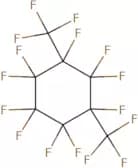
CAS :<p>Methyl palmitate is a chemical compound that belongs to the group of esters. It is a colorless liquid with a melting point of -17 °C, boiling point of 113 °C, and density of 0.834 g/mL. Methyl palmitate has shown genotoxic activity in a water vapor-resistant strain of Salmonella typhimurium TA100 and in the Ames assay. This chemical also has metabolic response properties, which may be due to its ability to induce prostaglandin J2 production and inhibit cyclic AMP accumulation in cells. Methyl palmitate is used as an additive for cosmetics, such as skin care products, perfumes, and hair dyes. It can also be found in food products such as margarine and coffee creamer.</p>Formule :C17H34O2Degré de pureté :Min. 95%Masse moléculaire :270.45 g/molHexadecafluoro(1,3-dimethylcyclohexane)
CAS :Produit contrôlé<p>Ternary mixtures of hexadecafluoro(1,3-dimethylcyclohexane) with fluorine and hydrogen fluoride are stable compounds. The proton is a constant, which is the only variable in the equation. The analytical method for determining the amount of hexadecafluoro(1,3-dimethylcyclohexane) in a mixture can be found in reference 1. This reference also discusses the matrix effect on this compound's stability and optical properties. Reference 2 discusses transfer reactions that are present when hexadecafluoro(1,3-dimethylcyclohexane) is heated to temperatures of 400°C or above. Reference 3 discusses how polymer films can be formed by heating hexadecafluoro(1,3-dimethylcyclohexane) with a solvent such as pentane. Reference 4 discusses how covid-19 pandemic has been shown to be effective against the H2 strain of subt</p>Formule :C8F16Degré de pureté :Min. 95%Masse moléculaire :400.06 g/mol2,3-Dipalmitoyl-sn-glycero-1-phosphocholine
CAS :<p>2,3-Dipalmitoyl-sn-glycero-1-phosphocholine is a synthetic lipid that is used as a surfactant in biological research. It is a proton donor that destabilizes membranes and interacts with phosphatidylcholine. The deformation of the lipid bilayer may be due to its protonation state. This synthetic lipid has been shown to increase fluidity of the membrane by changing the acyl chain composition and surfactant properties. 2,3-Dipalmitoyl-sn-glycero-1-phosphocholine also increases membrane transport by interacting with the bilayer and forming lamellar structures. The enantiomeric form of this lipid has been found to be more effective than its racemic mixture in the inhibition of cholesterol biosynthesis.</p>Formule :C40H80NO8PDegré de pureté :Min. 95%Masse moléculaire :734.04 g/mol


![6,7-Dihydro-6-oxo-1H-pyrazolo[3,4-b]pyridine-3-carboxylic Acid Ethyl Ester](/_next/image/?url=https%3A%2Fstatic.cymitquimica.com%2Fproducts%2FTR%2Fthumb-webp%2FD450380.webp&w=3840&q=75)


![N-[1-(2,3-Dioleyloxy)propyl]-N,N,N-trimethylammonium Chloride](/_next/image/?url=https%3A%2Fstatic.cymitquimica.com%2Fproducts%2FTR%2Fthumb-webp%2FD484000.webp&w=3840&q=75)
![(2S,3S,5S)-5-[(N-Formyl-L-leucyl)oxy]-2-hexyl-3-hydroxyhexadecanoic acid](/_next/image/?url=https%3A%2Fstatic.cymitquimica.com%2Fproducts%2F3D%2Fthumb-webp%2FFF23586.webp&w=3840&q=75)