Acides gras
Les acides gras sont des acides carboxyliques avec de longues chaînes d'hydrocarbures, qui peuvent être saturées ou insaturées. Ils sont des composants essentiels des lipides, servant de building blocks clés pour les lipides complexes, les sources d'énergie et les molécules de signalisation. Les acides gras sont impliqués dans divers processus biologiques, y compris le métabolisme, la structure des membranes cellulaires et l'inflammation. Chez CymitQuimica, nous offrons une large gamme d'acides gras de haute qualité pour soutenir vos recherches en biochimie lipidique, nutrition et domaines connexes.
Sous-catégories appartenant à la catégorie "Acides gras"
- Acylglycérols/Glycérides(43 produits)
- Eicosanoïdes(6 produits)
- Esters d'acides gras(946 produits)
- Acides gras halogénés(32 produits)
2447 produits trouvés pour "Acides gras"
Trier par
Degré de pureté (%)
0
100
|
0
|
50
|
90
|
95
|
100
N-Hexadecanol-D31
CAS :Produit contrôlé<p>Applications N-Hexadecanol (2,2,3,3...16,16,16-D31, 98%) (cas# 203633-15-2) is a useful research chemical.<br></p>Formule :C16D31H3OCouleur et forme :NeatMasse moléculaire :273.63Tetrahydro 11-Deoxycorticosterone
CAS :Produit contrôlé<p>Applications Tetrahydro 11-Deoxycorticosterone is a metabolite of 11-Deoxycorticosterone (DOC) (D232590).<br>References Fedele, E., et al.: J. Neurochem., 75, 782 (2000), Adkins, C., et al.: J. Biol. Chem., 276, 38934 (2001), Erceg, S., et al.: Brain Res., 1036, 115 (2005),<br></p>Formule :C21H34O3Couleur et forme :White To Off-WhiteMasse moléculaire :334.49Oxalic Acid Ethyl Ester
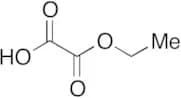
CAS :Produit contrôlé<p>Applications Oxalic Acid Ethyl Ester is a useful synthetic intermediate. It is used to synthesize 2-substituted 3-aryl-4(3H)-quinazolinones with anticonvulsant activities. It is also used to prepare nonbenzamidine tetrazole derivatives as factor Xa inhibitors.<br>References Wolfe, J., et al.: J. Med. Chem., 33, 161 (1009); Quan, M., et al.: bioorg. Med. Chem. Lett., 13, 369 (2003)<br></p>Formule :C4H6O4Couleur et forme :NeatMasse moléculaire :118.09a-Cortol
CAS :Produit contrôlé<p>Stability Hygroscopic<br>Applications α-Cortol, is a derivative of Cortisone (C696500), a Glucocorticoid, and an anti-inflammatory agent.<br>References Honda, A., et al.: J. Biol. Chem., 268, 7759 (1993), Narko, K., et al.: J. Clin. Endocrinol. Metab., 86, 1765 (2001), Michael, A., et al.: Reproduction, 126, 425 (2003),<br></p>Formule :C21H36O5Couleur et forme :NeatMasse moléculaire :368.5111-Hydroxylauric Acid
CAS :<p>Applications 11-Hydroxylauric Acid is used as a substrate to determine the functional expression and characterization of cytochrome P450 52A21.<br>References Kuehnel, K., et al.: Adv. Synthesis. Cata., 349, 1451 (2007); Kim, D.H., et al.: Arch. Biochem. Biophy., 464, 213 (2007);<br></p>Formule :C12H24O3Couleur et forme :NeatMasse moléculaire :216.32(Z)-13-Octadecen-1-ol
CAS :Produit contrôlé<p>Applications (Z)-13-Octadecen-1-ol is a compound structurally related to sex pheromone components of clearwing moths Paranthrene tabaniformis (Lepidoptera, Sesiidae).<br>References Klun, J., et al.: J. Entomol. Sci., 25, 64 (1990); Buda, V., et al.: J. Chem. Ecol., 19, 799 (1993); El-Sayed, A., et al.: Environ. Entomol. 32, 470 (2003);<br></p>Formule :C18H36OCouleur et forme :NeatMasse moléculaire :268.48Ethylene Glycol Monostearate
CAS :Produit contrôléFormule :C20H40O3Couleur et forme :Off-WhiteMasse moléculaire :328.535-Bromopentanoic Acid Ethyl Ester
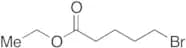
CAS :Produit contrôlé<p>Applications 5-Bromopentanoic Acid Ethyl Ester was used in the preparation of S(γ-Carboxypropyl)-DL-homocysteine and S(δ-Carboxybutyl)-DL-homocysteine. It was also used in the preparation of ethyl 5-azidovalerate.<br>References Awad, W.: J. Biol. Chem., 258, 12790 (1983); Li, Z., et al.: Tetrahedron Lett., 45, 3143 (2004)<br></p>Formule :C7H13BrO2Couleur et forme :NeatMasse moléculaire :209.08Palmitoyl Chloride
CAS :Produit contrôlé<p>Stability Moisture Sensitive<br>Applications Palmitoyl Chloride was used as a polymeric carriers for plasmid DNA (pDNA) delivery to 293T cells.<br>References Remant, B.K.C., et al.: J. Biomaterials. Sci. Poly. Ed., 22, 873 (2011); Allard, E., et al.: Int. J. Pharma., 379, 217 (2009);<br></p>Formule :C16H31ClOCouleur et forme :Light YellowMasse moléculaire :274.871-Hexadecanol
CAS :<p>Applications 1-Hexadecanol, is used in the cosmetic industry as an opacifier in shampoos, or as an emollient, emulsifier or thickening agent in the manufacture of skin creams and lotions.<br>References Smolinske S. C., et al.: Handbook Food Drug and Cosmetic Exipients, 75 (1992);<br></p>Formule :C16H34OCouleur et forme :White To Off-WhiteMasse moléculaire :242.445a-Pregnane-3a,20a-diol
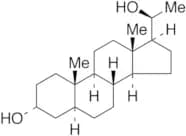
CAS :Produit contrôlé<p>Applications Progesterone metabolite.<br>References Beall, et al.: Biochem. J., 31, 35 (1937), Okuda, A., et al.: J. Biol. Chem., 259, 7519 (1984), Russell, D., et al.: Biochemistry, 31, 4737 (1992), Kondo, K., et al.: Eur. J. Biochem., 219, 357 (1994), Westerbacka, J., et al.: J. Clin. Endocrinol. Metab., 88, 4924 (2003),<br></p>Formule :C21H36O2Couleur et forme :NeatMasse moléculaire :320.51Hexadecafluoroheptane
CAS :Produit contrôlé<p>Applications Hexadecafluoroheptane, 98% (cas# 335-57-9) is a useful research chemical.<br></p>Formule :C7F16Couleur et forme :ColourlessMasse moléculaire :388.05(9Z,12Z,15Z)-Octadeca-9,12,15-trien-1-ol (>90%)
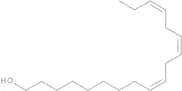
CAS :<p>Stability Light Sensitive<br>Applications (9Z,12Z,15Z)-octadeca-9,12,15-trien-1-ol is an essential oil component of Osmanthus fragrans.<br>References Hu, C., et al.: Huaxue Shiji, 32, 231 (2010); Tian, G., et al.: Anhui Nongye Kexue, 36, 7214 (2008)<br></p>Formule :C18H32ODegré de pureté :>90%Couleur et forme :ColourlessMasse moléculaire :264.45Butyl Palmitate
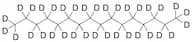
CAS :Produit contrôléFormule :C20H40O2Couleur et forme :ColourlessMasse moléculaire :312.53n-Hexadecane-d34
CAS :Produit contrôlé<p>Applications n-Hexadecane-d34 is the labeled compound of Hexadecane(H293630). Hexadecane has been used to prepare emulsions in water. It is also used as a substrate for the bacterial production of biosurfactants.<br>References Rang, M., et al.: J. Colloid Interface Sci., 209, 179 (1999); Hills, B., et al.: Magn. Reson. Imaging, 18, 319 (2000); Noordman, W., et al.: Appl. Environ. Microbiol., 68, 4502 (2002)<br></p>Formule :C162H34Couleur et forme :ColourlessMasse moléculaire :260.65Isopropyl Palmitate
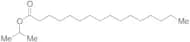
CAS :<p>Applications Isopropyl Palmitate has been used in the preparation of a pseudolatex-membrane for ketoprofen transdermal drug delivery systems.<br>References Suksaeree, J., et. al.: Ind. Eng. Chem. Res., 52, 15847 (2013)<br></p>Formule :C19H38O2Couleur et forme :ColourlessMasse moléculaire :298.50Hexadecanoic-9,9,10,10,11,11,12,12,13,13,14,14,15,15,16,16,16-d17 Acid
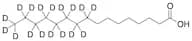
CAS :Produit contrôlé<p>Applications Hexadecanoic-9,9,10,10,11,11,12,12,13,13,14,14,15,15,16,16,16-d17 Acid (CAS# 81462-28-4) is a useful isotopically labeled research compound.<br></p>Formule :C16H15D17O2Couleur et forme :White To Off-WhiteMasse moléculaire :273.53Propargyl chloride
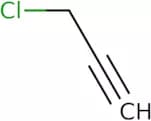
CAS :Propargyl chloride is a chemical that is used as an inhibitor in organic synthesis. It can be used to synthesize compounds with reactive groups such as alkenes, ketones, and amines. Propargyl chloride reacts with the hydroxyl group of an alcohol to form a propargyl alcohol. The reaction mechanism involves intramolecular hydrogen bonding between the hydroxyl group of the propargyl chloride and the carbon atom adjacent to it. Kinetic energy is required for this reaction to occur. The product of this reaction can then react with other molecules in order to form new compounds. Propargyl chloride has been shown to have therapeutic effects on chronic coughs due its ability to reduce the amount of kinetic energy needed for respiratory tract cells, which may have reduced coughing frequency. END>>Formule :C3H3ClDegré de pureté :Min. 95%Couleur et forme :Colorless Yellow Clear LiquidMasse moléculaire :74.51 g/mol4-Hydroxymandelic acid ethyl ester
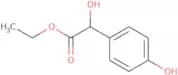
CAS :<p>Mandelic acid is a natural product that can be found in the leaves and rhizomes of plants from the genus Mandelia. It has been analysed for its natural product profile and was found to contain alcohols, fatty acids, and volatile compounds. 4-Hydroxymandelic acid ethyl ester is a synthetic compound that has been shown to have age-related benefits and functional properties. The compound has been shown to increase fatty acid synthesis, decrease oxidation of fatty acids, and inhibit signalling pathways associated with inflammation.</p>Formule :C10H12O4Degré de pureté :Min. 95%Couleur et forme :PowderMasse moléculaire :196.2 g/molFmoc-Cys((R)-2,3-di(palmitoyloxy)-propyl)-OH
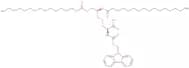
CAS :<p>Fmoc-Cys((R)-2,3-di(palmitoyloxy)-propyl)-OH is a versatile building block that is useful for the synthesis of complex compounds. This compound has been shown to be a useful intermediate in the synthesis of pharmaceuticals, organic dyes and research chemicals. Fmoc-Cys((R)-2,3-di(palmitoyloxy)-propyl)-OH is a fine chemical that is used as a reagent in organic synthesis. It has CAS No. 139573-77-6 and can be used as a speciality chemical or reaction component.</p>Formule :C53H83NO8SDegré de pureté :Min. 95 Area-%Couleur et forme :White PowderMasse moléculaire :894.29 g/mol