Acides gras
Les acides gras sont des acides carboxyliques avec de longues chaînes d'hydrocarbures, qui peuvent être saturées ou insaturées. Ils sont des composants essentiels des lipides, servant de building blocks clés pour les lipides complexes, les sources d'énergie et les molécules de signalisation. Les acides gras sont impliqués dans divers processus biologiques, y compris le métabolisme, la structure des membranes cellulaires et l'inflammation. Chez CymitQuimica, nous offrons une large gamme d'acides gras de haute qualité pour soutenir vos recherches en biochimie lipidique, nutrition et domaines connexes.
Sous-catégories appartenant à la catégorie "Acides gras"
- Acylglycérols/Glycérides(43 produits)
- Eicosanoïdes(6 produits)
- Esters d'acides gras(946 produits)
- Acides gras halogénés(32 produits)
2447 produits trouvés pour "Acides gras"
Trier par
Degré de pureté (%)
0
100
|
0
|
50
|
90
|
95
|
100
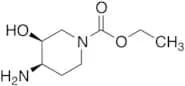
cis-4-Amino-3-hydoxy-1-piperidinecarboxylic Acid Ethyl Ester
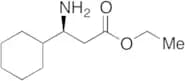
CAS :Produit contrôléFormule :C8H16N2O3Couleur et forme :NeatMasse moléculaire :188.224(betaS)-β-Aminocyclohexanepropanoic Acid Ethyl Ester
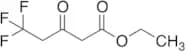
CAS :Produit contrôléFormule :C11H21NO2Couleur et forme :NeatMasse moléculaire :199.295,5,5-Trifluoro-3-oxo-pentanoic Acid Ethyl Ester
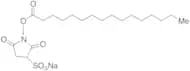
CAS :Produit contrôléFormule :C7H9F3O3Couleur et forme :NeatMasse moléculaire :198.14Sulfosuccinimidyl Palmitate Sodium
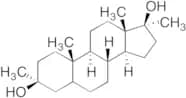
CAS :Produit contrôlé<p>Applications Sulfosuccinimidyl Palmitate Sodium is an analog of Sulfosuccinimidyl Oleate Sodium (S689200).<br></p>Formule :C20H34NNaO7SCouleur et forme :NeatMasse moléculaire :455.5413α,17α-Dimethylandrostane-3β,17β-diol
CAS :Produit contrôléFormule :C21H36O2Couleur et forme :NeatMasse moléculaire :320.513-Tridecylhexadecanoic Acid
CAS :Produit contrôléFormule :C29H58O2Couleur et forme :NeatMasse moléculaire :438.77Acetyl Coenzyme A Trisodium Salt
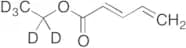
CAS :<p>Applications Acetyl Coenzyme A Trisodium Salt is used in skin-lightening cosmetics.<br></p>Formule :C23H38N7O17P3S·3NaCouleur et forme :NeatMasse moléculaire :878.54(2E)-2,4-Pentadienoic Acid Ethyl Ester-d5
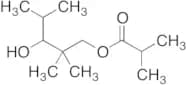
CAS :Produit contrôléFormule :C7H5D5O2Couleur et forme :NeatMasse moléculaire :579.982-Methyl-propanoic Acid 3-Hydroxy-2,2,4-trimethylpentyl Ester
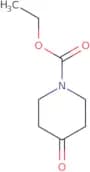
CAS :Produit contrôlé<p>Applications 2-Methyl-propanoic acid 3-Hydroxy-2,2,4-trimethylpentyl Ester is a plasticizer. It can also be used to synthesize hard and flexible nanocomposite coatings.<br>References Dieckmann, D., et al.:J. Vinyl Addit. Technol., 12, 217 (1990); Fogelstroem, L., et al.: ACS Appl. Mater. Interfaces, 2, 1679 (2010)<br></p>Formule :C12H24O3Couleur et forme :NeatMasse moléculaire :216.324-Oxo-1-piperidinecarboxylic acid ethyl ester
CAS :Produit contrôlé<p>4-Oxo-1-piperidinecarboxylic acid ethyl ester is an antimicrobial agent that belongs to the group of unsaturated ketones. It has been shown to have clinical activity against gram-positive bacteria, including Staphylococcus aureus, Enterococcus faecalis and Streptococcus pneumoniae, as well as Candida albicans. It also exhibits significant antiinflammatory activity in mice with chronic inflammation induced by carrageenan or LPS. 4-Oxo-1-piperidinecarboxylic acid ethyl ester inhibits the enzyme dpp-4, which is involved in the production of amyloid beta peptides and type II diabetes. This compound was also shown to possess anticholinesterase activity in vitro.</p>Formule :C8H13NO3Degré de pureté :Min. 95%Masse moléculaire :171.19 g/mol1,2-Dilinoleoyl-3-palmitoyl-rac-glycerol
CAS :<p>1,2-Dilinoleoyl-3-palmitoyl-rac-glycerol (DLPG) is a lipid molecule that is structurally similar to the sphingolipid ceramide. It has been shown to be an inhibitor of cellular uptake and growth rate and also has long-term toxicity effects. DLPG has been shown to inhibit the signal transduction pathway by binding to microprocessors in the cell membrane and changing their frequency. DLPG also has a profile that can be used as an analog for dextran sulfate, which is a chemical compound that inhibits the uptake of glucose in mammalian cells. The uptake of DLPG can be decoupled from its signaling activity by using constant magnetic fields, which can be generated with superparamagnetic iron oxides or iron particles.</p>Formule :C55H98O6Degré de pureté :Min. 95%Masse moléculaire :855.36 g/molGlycidyl palmitate
CAS :<p>Glycidyl palmitate is a synthetic fatty acid ester that has reactive hydroxyl groups. It is used in the production of polylactic acid, a biodegradable polymer. Glycidyl palmitate can be prepared by reacting a fatty acid with glycerol and an epichlorohydrin. The elimination rate of glycidyl palmitate from the body has been shown to be activated by surface methodology such as chemical ionization mass spectrometry. Glycidyl palmitate can also be analyzed using gas chromatography with flame ionization detection (GC-FID) or gas chromatography-mass spectrometry (GC-MS). A sample preparation technique for glycidyl palmitate is to dissolve it in sodium salts and use filtration as the final step before analysis. The most common fatty acids present in glycidyl palmitate are oleic acid and linoleic acid.</p>Formule :C19H36O3Degré de pureté :Min. 95%Masse moléculaire :312.49 g/molEthyl palmitate
CAS :<p>Ethyl palmitate is a glycol ether that belongs to the group of esters. It has been shown to have biochemical properties and natural compounds such as caproic acid and ethyl palmitate. The liquid form of ethyl palmitate is clear, colorless, and odorless with a density of 1.065 g/mL at 20°C. Ethyl palmitate is soluble in ethanol, diethylether, benzene, chloroform, carbon tetrachloride, acetic acid ethyl ester, acetone, ethyl acetate, dichloromethane, and methanol. Ethyl palmitate can be used as a model system or analytical method for the identification of other lipids in biological samples.</p>Formule :C18H36O2Degré de pureté :Min. 95%Masse moléculaire :284.48 g/molMethyl palmitate
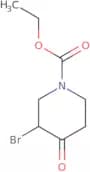
CAS :<p>Methyl palmitate is a chemical compound that belongs to the group of esters. It is a colorless liquid with a melting point of -17 °C, boiling point of 113 °C, and density of 0.834 g/mL. Methyl palmitate has shown genotoxic activity in a water vapor-resistant strain of Salmonella typhimurium TA100 and in the Ames assay. This chemical also has metabolic response properties, which may be due to its ability to induce prostaglandin J2 production and inhibit cyclic AMP accumulation in cells. Methyl palmitate is used as an additive for cosmetics, such as skin care products, perfumes, and hair dyes. It can also be found in food products such as margarine and coffee creamer.</p>Formule :C17H34O2Degré de pureté :Min. 95%Masse moléculaire :270.45 g/mol3-Bromo-4-oxo-piperidine-1-carboxylic acid ethyl ester
CAS :3-Bromo-4-oxo-piperidine-1-carboxylic acid ethyl ester is a monoclinic crystal of the salt of 3-bromo-4-oxo-piperidine and 1,2-ethanediol. It is used as an intermediate in the synthesis of cisapride, a medication that regulates gastrointestinal motility. 3BOCEP has been shown to hydrolyze in the stomach with a rate constant of 2 x 10 M s. The bromination product is cisapride, which has been shown to regulate gastrointestinal motility by stimulating GI smooth muscle contractions.Formule :C8H12BrNO3Degré de pureté :Min. 95%Masse moléculaire :250.09 g/mol1,3-Dioleoyl-2-palmitoylglycerol
CAS :<p>Dipalmitoylglycerol is a fatty acid that is naturally found in catfish. The optimal conditions for the synthesis of dipalmitoylglycerol from tripalmitin have been determined by surface methodology to be at pH 5 and at 0°C. Dipalmitoylglycerol has been shown to bind to the enzyme acetyl-CoA carboxylase, which is involved in the synthesis of fatty acids, and prevent its activation. As a result, there is no production of malonyl CoA, which is an important precursor in the synthesis of fatty acids. This may be beneficial for infants because it prevents them from developing allergies and asthma.</p>Formule :C55H102O6Degré de pureté :Min. 95%Masse moléculaire :859.39 g/molrac-3-hexadecanamido-2-methoxypropan-1-ol phosphocholine monohydrate
CAS :<p>Please enquire for more information about rac-3-hexadecanamido-2-methoxypropan-1-ol phosphocholine monohydrate including the price, delivery time and more detailed product information at the technical inquiry form on this page</p>Formule :C25H55N2O7PDegré de pureté :Min. 95%Masse moléculaire :526.69 g/molRac 1,2-bis-palmitoyl-3-chloropropanediol
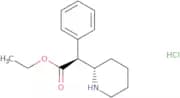
CAS :<p>Rac-1,2-bis-palmitoyl-3-chloropropanediol is a dispersive molecule that is composed of a fatty acid and a chlorinated derivative of palmitic acid. It is used to calibrate the mass spectrometer and as an internal standard in quantitative analysis. Rac-1,2-bis-palmitoyl-3-chloropropanediol reacts with electrospray ionization with a dose-dependent response. It has been shown to be toxic to kidney cells at high doses but not at low doses. This chemical has been detected in food samples after being absorbed from the gastrointestinal tract. Rac 1,2-bis-palmitoyl 3 chloropropanediol can be found in the dipalmitate form or as formic acid.</p>Formule :C35H67ClO4Degré de pureté :95%NmrCouleur et forme :PowderMasse moléculaire :587.36 g/mol(aS,2S)-α-Phenyl-2-piperidineacetic acid Ethyl ester hydrochloride
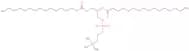
CAS :Produit contrôléPlease enquire for more information about (aS,2S)-alpha-Phenyl-2-piperidineacetic acid Ethyl ester hydrochloride including the price, delivery time and more detailed product information at the technical inquiry form on this pageFormule :C15H21NO2·HClDegré de pureté :Min. 95%Masse moléculaire :283.79 g/mol2,3-Dipalmitoyl-sn-glycero-1-phosphocholine
CAS :<p>2,3-Dipalmitoyl-sn-glycero-1-phosphocholine is a synthetic lipid that is used as a surfactant in biological research. It is a proton donor that destabilizes membranes and interacts with phosphatidylcholine. The deformation of the lipid bilayer may be due to its protonation state. This synthetic lipid has been shown to increase fluidity of the membrane by changing the acyl chain composition and surfactant properties. 2,3-Dipalmitoyl-sn-glycero-1-phosphocholine also increases membrane transport by interacting with the bilayer and forming lamellar structures. The enantiomeric form of this lipid has been found to be more effective than its racemic mixture in the inhibition of cholesterol biosynthesis.</p>Formule :C40H80NO8PDegré de pureté :Min. 95%Masse moléculaire :734.04 g/mol