Terpénoïdes
Les terpénoïdes, également connus sous le nom d'isoprénoïdes, sont la plus grande classe de composés organiques naturels, dérivés d'unités d'isoprène à cinq carbones. Ils se trouvent dans diverses plantes et sont connus pour leurs propriétés aromatiques, ainsi que pour leur rôle dans la défense des plantes et la signalisation. Les terpénoïdes ont été largement étudiés pour leurs effets thérapeutiques, y compris des propriétés anti-inflammatoires, antimicrobiennes et anticancéreuses. Ils sont utilisés dans les industries pharmaceutiques, cosmétiques et alimentaires pour leurs bienfaits sur la santé et leurs qualités aromatiques. Chez CymitQuimica, vous trouverez une large sélection de terpénoïdes, essentiels pour la recherche en biologie végétale, pharmacologie et synthèse de produits naturels.
Sous-catégories appartenant à la catégorie "Terpénoïdes"
- Diterpènes (C₂₀)(671 produits)
- Hémiterpènes (C₅)(21 produits)
- Monoterpènes (C₁₀)(709 produits)
- Sesquiterpènes (C₂₅)(451 produits)
- Tétraterpènes (C₄₀)(63 produits)
- Triterpènes (C₃₀)(1.130 produits)
1423 produits trouvés pour "Terpénoïdes"
Trier par
Degré de pureté (%)
0
100
|
0
|
50
|
90
|
95
|
100
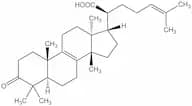
Β-elemonic acid
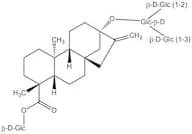
CAS :Carboxylic acid with ketone functionFormule :C30H46O3Degré de pureté :≥ 90.0 % (HPLC)Couleur et forme :PowderMasse moléculaire :454.7Rebaudioside a
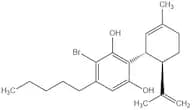
CAS :Natural glycosideFormule :C44H70O23Degré de pureté :≥ 95.0 % (HPLC)Couleur et forme :PowderMasse moléculaire :967.034-monobromocannabidiol
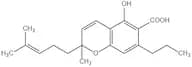
CAS :Halogen derivative of polyphenolFormule :C21H29BrO2Degré de pureté :≥ 90.0 % (HPLC)Couleur et forme :Viscous liquidMasse moléculaire :393.36Cannabichromevarinic acid
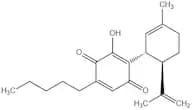
CAS :Carboxylic acid with phenol functionFormule :C20H26O4Degré de pureté :≥ 98.0 % (HPLC)Couleur et forme :PowderMasse moléculaire :330.42Cannabidiol hydroxyquinone
CAS :QuinoneFormule :C21H28O3Degré de pureté :≥ 90.0 % (HPLC)Couleur et forme :PowderMasse moléculaire :328.45Lycopene
CAS :Acyclic unsaturated hydrocarbonFormule :C40H56Degré de pureté :>=90.0% (HPLC)Masse moléculaire :536.87Zeaxanthin
CAS :Cyclic alcoholFormule :C40H56O2Degré de pureté :≥ 85.0 % (HPLC)Masse moléculaire :568.87(R)-(-)-Carvone
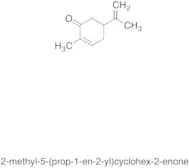
CAS :<p>Applications (R)-(-)-Carvone, is an antinociceptive monoterpene found as the main active constituent of essential oils obtained from plants of the genus Mentha. It is a novel agonist of TRPV1 channels. It can also be used as a chiral starting material.<br>References Goncalves, J.C., et al.: Cytometry part A., 83(2), 212 (2013); Liebigs ann., Chem., 403 (1993);<br></p>Formule :C10H14OCouleur et forme :ColourlessMasse moléculaire :150.22Carvone
CAS :Produit contrôlé<p>Stability Light Sensitive<br>Applications Carvone is useful for the treatment of various metabolic disorders and GI related disorders.<br>References Shabi, M. M., et al.: Res. J. Pharm. Biol. Chem. Sci., 8, 328 (2017)<br></p>Formule :C10H14OCouleur et forme :Light Yellow To Light BrownMasse moléculaire :150.22Limetol
CAS :Produit contrôlé<p>Applications Limetol, is the cyclized derivative of linalool (L465950), melanol, and other unsaturated alcohols, that was shown to give a product mixture that can be used in fragrance and perfumery industry.<br>References Klimánková, E., et al.: Food Chem., 107, 464 (2008); Nakamura, A., et al.: J. Agric. Food Chem., 57, 5480 (2009); Soni, A. et al.: Synth. Comm., 40, 74 (2010);<br></p>Formule :C10H18OCouleur et forme :NeatMasse moléculaire :154.25D-(+)-Carvone
CAS :<p>Applications D-(+)-Carvone, is used for the synthesis of (-)-terpestacin, a fungal metabolite with anticancer activity.It is also found in the essential oils of the in vitro M. longifolia plantlets and callus, that can be used as a potential source of a safe flavouring agent.<br>References Jin , Y., et al.: Org. Biomol. Chem., 10(28), 5452 (12012); Morcia, C., et al.: Acta. Biochimica. Polonica., 58(4), 581 (2011);<br></p>Formule :C10H14OCouleur et forme :NeatMasse moléculaire :150.22Levopimaric Acid
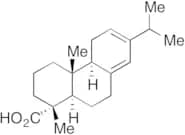
CAS :Produit contrôlé<p>Stability Air Sensitive<br>Applications Levopimaric Acid is a major component of pine oleoresin. It is an abietane-type of diterpene resin acid and has antibacterial, cardiovascular, and antioxidant properties.<br>References Kersten, P. J., et al.: J. Chem. Ecol., 32(12), 2679-85 (2006)<br></p>Formule :C20H30O2Couleur et forme :White To Off-WhiteMasse moléculaire :302.45Sabinene
CAS :<p>Sabinene is a bicyclic monoterpene, which is a volatile organic compound typically derived from the essential oils of various plants, including Norway spruce and some culinary herbs like black pepper, nutmeg, and tea tree. It is characterized by its distinct spicy and woody aroma, contributing to the complex bouquet of these plant essences.</p>Formule :C10H16Degré de pureté :Min. 98 Area-%Couleur et forme :Clear LiquidMasse moléculaire :136.23 g/molHarpagoside
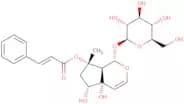
CAS :<p>Harpagoside is a bioactive compound, which is an iridoid glycoside derived from the root of the plant Harpagophytum procumbens, commonly known as Devil’s Claw. This compound is predominantly sourced from Southern Africa, where the plant is native to semi-arid regions and has been traditionally used in herbal medicine.</p>Formule :C24H30O11Degré de pureté :Min. 95%Couleur et forme :PowderMasse moléculaire :494.5 g/molγ-Himachalene
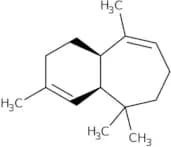
CAS :<p>Gamma-Himachalene is a sesquiterpene hydrocarbon, which is primarily sourced from the essential oils of certain plants, such as cedarwood. As a naturally occurring compound, its biosynthesis within the plant involves the cyclization of isoprenoid units, which gives rise to its unique chemical structure. This process is typically mediated by enzymes that facilitate the formation of various terpene compounds.</p>Formule :C15H24Degré de pureté :Min. 95%Masse moléculaire :204.35 g/molRyanodine
CAS :<p>Ryanodine receptor effector</p>Formule :C25H35NO9Degré de pureté :Min. 98 Area-%Couleur et forme :PowderMasse moléculaire :493.55 g/molDehydrocostus lactone
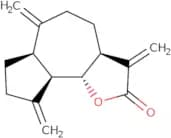
CAS :<p>Dehydrocostus lactone is a sesquiterpene lactone, which is a natural compound extracted from plants, notably from the roots of Saussurea lappa, a plant known for its therapeutic properties. This compound exerts its mode of action primarily through the inhibition of key inflammatory pathways, including the NF-κB pathway. By interfering with these pathways, dehydrocostus lactone can modulate the expression of pro-inflammatory cytokines, thereby exhibiting anti-inflammatory effects.</p>Formule :C15H18O2Degré de pureté :Min. 95%Masse moléculaire :230.3 g/molStrigolactone GR24
CAS :<p>Strigolactone GR24 is a synthetic analog of strigolactones, which are a class of plant hormones derived from the carotenoid biosynthetic pathway. These compounds play a critical role in plant development and interaction with the environment. Strigolactone GR24 functions by mimicking the action of natural strigolactones, influencing plant architecture and facilitating communication with symbiotic organisms.</p>Formule :C17H14O5Degré de pureté :Min. 98 Area-%Couleur et forme :White PowderMasse moléculaire :298.29 g/molα-Terpineol
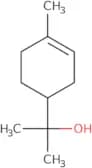
CAS :<p>Alpha-terpineol is a terpene alcohol that exhibits cytotoxic effects on cells. It has been shown to cause cell lysis in both bacteria and mammalian cells, which may be due to its reactive oxygen species (ROS) production. Alpha-terpineol is also an effective agent against infectious diseases such as HIV, tuberculosis, and malaria. This molecule has a high resistance to chemical degradation, making it a promising anticancer agent. Alpha-terpineol can inhibit the polymerase chain reaction (PCR) by binding to the enzyme DNA polymerase, thereby preventing the synthesis of DNA molecules. It can also bind to the enzyme RNA polymerase and inhibit the transcription of mRNA into protein molecules. Lastly, alpha-terpineol is known for its genotoxic effects in vivo and in vitro. The genotoxicity of alpha-terpineol has been demonstrated using several different methods including electron microscopy, chemical stability assays, surface methodology experiments on kidney bean extract,</p>Formule :C10H18ODegré de pureté :Min. 95%Masse moléculaire :154.25 g/molAlbiflorin
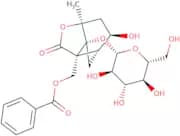
CAS :<p>Albiflorin is a bioactive compound, which is a monoterpene glucoside extracted from the roots of Paeonia species, specifically Paeonia lactiflora. Its primary mechanism of action involves the modulation of neurotransmitter systems, including serotonergic, dopaminergic, and GABAergic pathways. Such interactions are believed to underpin its effects on neural activity and psychological states.</p>Formule :C23H28O11Degré de pureté :Min. 98 Area-%Couleur et forme :PowderMasse moléculaire :480.46 g/mol