Terpénoïdes
Les terpénoïdes, également connus sous le nom d'isoprénoïdes, sont la plus grande classe de composés organiques naturels, dérivés d'unités d'isoprène à cinq carbones. Ils se trouvent dans diverses plantes et sont connus pour leurs propriétés aromatiques, ainsi que pour leur rôle dans la défense des plantes et la signalisation. Les terpénoïdes ont été largement étudiés pour leurs effets thérapeutiques, y compris des propriétés anti-inflammatoires, antimicrobiennes et anticancéreuses. Ils sont utilisés dans les industries pharmaceutiques, cosmétiques et alimentaires pour leurs bienfaits sur la santé et leurs qualités aromatiques. Chez CymitQuimica, vous trouverez une large sélection de terpénoïdes, essentiels pour la recherche en biologie végétale, pharmacologie et synthèse de produits naturels.
Sous-catégories appartenant à la catégorie "Terpénoïdes"
- Diterpènes (C₂₀)(671 produits)
- Hémiterpènes (C₅)(21 produits)
- Monoterpènes (C₁₀)(708 produits)
- Sesquiterpènes (C₂₅)(448 produits)
- Tétraterpènes (C₄₀)(63 produits)
- Triterpènes (C₃₀)(1.130 produits)
1423 produits trouvés pour "Terpénoïdes"
Trier par
Degré de pureté (%)
0
100
|
0
|
50
|
90
|
95
|
100
Ginkgolide C
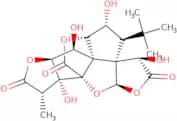
CAS :<p>Ginkgolide C is a terpenoid lactone, which is a natural compound isolated from the leaves of the Ginkgo biloba tree. Ginkgolide C is primarily known for its activity as a specific antagonist of platelet-activating factor (PAF), a potent phospholipid activator and mediator of many leukocyte functions, including platelet aggregation. Its mode of action involves the inhibition of PAF binding to its receptor, thereby reducing PAF-related inflammatory responses and platelet aggregation.</p>Formule :C20H24O11Degré de pureté :Min. 95%Couleur et forme :PowderMasse moléculaire :440.4 g/molGlycyrrhizic acid - 80%
CAS :<p>Glycyrrhizic acid is the major bioactive triterpene glycoside of licorice. In mice, glycyrrhizic acid modulates the gut microbiota counteracting a high fat diet. In rats, it has shown an anti-inflammatory activity that resulted in cardioprotective action against myocardial ischemia. In humans, it is a promising adjuvant in the treatment of depression.</p>Formule :C42H62O16Degré de pureté :Min. 95%Couleur et forme :White Off-White PowderMasse moléculaire :822.93 g/molKaurenoic acid
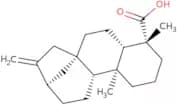
CAS :<p>Selective antibacterial and anti-inflammtory activity; uterine relaxant</p>Formule :C20H30O2Degré de pureté :Min. 98 Area-%Couleur et forme :White PowderMasse moléculaire :302.45 g/molGibberellic acid
CAS :<p>Gibberellic acid is a plant growth regulator, which is derived from fungal species, particularly Gibberella fujikuroi. It functions by stimulating and regulating various growth and developmental processes within plants. Gibberellic acid works through promoting cell elongation, breaking seed dormancy, and influencing enzyme production that leads to plant growth and development.Gibberellic acid is extensively utilized in agricultural and horticultural applications to enhance plant growth, improve fruit size, and increase yields. It is also employed in seed treatment to facilitate more uniform and quicker germination. Additionally, gibberellic acid is used to regulate flowering and to promote the development of certain plant species under controlled environmental conditions. This compound plays a critical role in research, providing insights into plant physiology and the hormonal interactions that govern plant development.</p>Formule :C19H22O6Masse moléculaire :346.38 g/mol11,13-Dihydroxy-3-oxo-10(14)guaien-12,6-olide - Cynara cardunculus (artichoke)
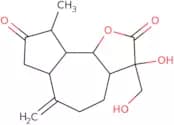
CAS :<p>11,13-Dihydroxy-3-oxo-10(14)guaien-12,6-olide is a bioactive compound, which is a phytochemical derived from Cynara cardunculus, commonly known as the artichoke. This compound belongs to a class of organic compounds known as sesquiterpene lactones. It is primarily sourced from the leaves and flower buds of the artichoke plant, which are rich in various polyphenolic and terpenoid components.</p>Formule :C15H20O5Degré de pureté :Min. 95%Couleur et forme :PowderMasse moléculaire :280.32 g/molDehydrocostus lactone
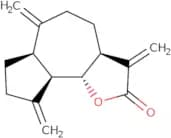
CAS :<p>Dehydrocostus lactone is a sesquiterpene lactone, which is a natural compound extracted from plants, notably from the roots of Saussurea lappa, a plant known for its therapeutic properties. This compound exerts its mode of action primarily through the inhibition of key inflammatory pathways, including the NF-κB pathway. By interfering with these pathways, dehydrocostus lactone can modulate the expression of pro-inflammatory cytokines, thereby exhibiting anti-inflammatory effects.</p>Formule :C15H18O2Degré de pureté :Min. 95%Masse moléculaire :230.3 g/molZederone
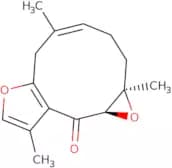
CAS :<p>Zederone is a bioactive sesquiterpene, which is a type of terpenoid compound. It is primarily sourced from the rhizomes of several Curcuma species, particularly Curcuma zedoaria. These plants are native to regions of Asia and have been used in traditional medicine for various purposes.</p>Formule :C15H18O3Degré de pureté :Min. 98 Area-%Couleur et forme :Off-White PowderMasse moléculaire :246.3 g/molSaikosaponin D
CAS :<p>Saikosaponin D is a bioactive compound, specifically a triterpenoid saponin, which is derived from the roots of Bupleurum species, plants commonly used in traditional Chinese medicine. Its mode of action involves modulating key pathways in inflammation and apoptosis. This compound targets cellular mechanisms by interacting with inflammatory mediators and apoptotic proteins, thereby influencing immune responses and cellular survival.</p>Formule :C42H68O13Degré de pureté :Min. 98 Area-%Couleur et forme :White PowderMasse moléculaire :780.98 g/molCofaryloside
CAS :<p>Please enquire for more information about Cofaryloside including the price, delivery time and more detailed product information at the technical inquiry form on this page</p>Formule :C26H42O10Degré de pureté :Min. 95%Masse moléculaire :514.61 g/molGinsenoside Rd
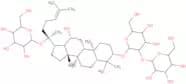
CAS :<p>Ginsenoside Rd is a bioactive compound, classified as a saponin, which is derived from the roots of Panax ginseng. This ginsenoside is a dammarane-type triterpenoid saponin and is one of the major active components found in ginseng extracts. The mode of action of Ginsenoside Rd involves multiple biochemical pathways, including anti-inflammatory, antioxidant, and neuroprotective effects. It modulates signaling pathways such as MAPK and PI3K/Akt, resulting in diverse biological activities.</p>Formule :C48H82O18Degré de pureté :Min. 95%Couleur et forme :White PowderMasse moléculaire :947.18 g/mol10-epi-Elemol
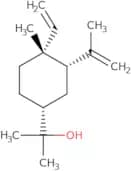
CAS :<p>10-epi-Elemol is a sesquiterpene alcohol, which is derived from natural plant sources, primarily obtained through the essential oils of particular species. Its molecular structure includes a complex arrangement of carbon rings and an alcohol group, characterizing it as a prominent component among sesquiterpenes.</p>Formule :C15H26ODegré de pureté :Min. 95%Masse moléculaire :222.37 g/molCurcumol
CAS :<p>Curcumol is a bioactive compound, which is a sesquiterpenoid alcohol primarily extracted from the rhizome of the plant Curcuma wenyujin, a member of the Zingiberaceae family. The source plant is native to parts of Asia and has been traditionally used in herbal medicine. The mode of action of Curcumol involves modulation of multiple biochemical pathways, including anti-inflammatory and antioxidant pathways. It has been observed to influence cellular signaling cascades that regulate apoptosis, cell proliferation, and angiogenesis, making it a compound of interest in oncology research.</p>Formule :C15H24O2Degré de pureté :Min. 95%Couleur et forme :PowderMasse moléculaire :236.35 g/mol8(17)14-Labdadiene-13,18-diol, picea sitchensis (sitka spruce)
CAS :<p>8(17)14-Labdadiene-13,18-diol is a diterpene, a class of chemical compounds known for their diverse structural traits and biological activities. This compound is derived from Picea sitchensis, commonly known as Sitka spruce, which is native to the western regions of North America. The diterpene structure of 8(17)14-Labdadiene-13,18-diol is significant due to its potential biological interactions.</p>Formule :C20H34O2Degré de pureté :Min. 95%Masse moléculaire :306.48 g/molMonotropein
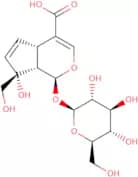
CAS :<p>Monotropein is a bioactive compound, which is an iridoid glycoside derived from natural sources such as plants in the Gentianaceae and Rubiaceae families. Its mode of action primarily involves anti-inflammatory and antioxidant pathways, exerting effects through modulation of specific molecular targets like NF-kB and various oxidative stress-related enzymes. These actions contribute to its efficacy in reducing inflammation and protecting against cellular oxidative damage.</p>Formule :C16H22O11Degré de pureté :Min. 95 Area-%Couleur et forme :PowderMasse moléculaire :390.34 g/molGinkgolide B
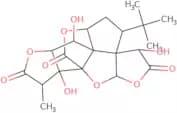
CAS :<p>Ginkgolide B is a diterpenoid lactone, which is a secondary metabolite isolated from the leaves of the Ginkgo biloba tree. This compound is primarily sourced from the extract of Ginkgo biloba, a plant that has been utilized for centuries in traditional medicine systems.</p>Formule :C20H24O10Degré de pureté :Min. 90 Area-%Couleur et forme :White PowderMasse moléculaire :424.4 g/molDeoxygedunin
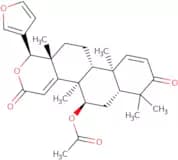
CAS :<p>Deoxygedunin is a natural limonoid, which is a type of chemical compound often derived from plant sources, particularly in the Meliaceae family. This compound is primarily isolated from the seeds of the Indian neem tree (Azadirachta indica) and the African mahogany tree (Khaya senegalensis). It exhibits its biological effects through activation of the Nrf2 pathway, an essential cellular defense mechanism against oxidative stress. By promoting the expression of antioxidant proteins, deoxygedunin enhances cellular resilience to oxidative damage.</p>Formule :C28H34O6Degré de pureté :Min. 95%Masse moléculaire :466.57 g/molSoyasaponin Bb
CAS :<p>Soyasaponin Bb is a naturally occurring saponin, which is a type of glycoside, derived from soybeans (Glycine max). It is primarily sourced from the seeds and roots of the soybean plant. The mode of action of soyasaponin Bb involves its ability to interact with lipid membranes, affecting cellular pathways and exerting antioxidant and anti-inflammatory effects. Additionally, it has been shown to modulate cholesterol metabolism and exhibit potential anticancer activities through apoptosis induction and inhibition of tumor cell proliferation.</p>Formule :C48H78O18Degré de pureté :Min. 94.0 Area-%Masse moléculaire :943.12 g/molRef: 3D-Q-100575
1gÀ demander50mgÀ demander100mgÀ demander250mgÀ demander500mgÀ demander-Unit-mgmgÀ demanderGinsenoside Re
CAS :<p>Ginsenoside Re is a naturally occurring saponin, which is a bioactive compound sourced primarily from the root of Panax ginseng. It operates through multiple biochemical pathways, including the modulation of immune responses, anti-inflammatory effects, and protective antioxidant activities. Ginsenoside Re exerts its actions by interacting with cellular receptors, influencing signaling pathways such as the PI3K/Akt and MAPK pathways, ultimately impacting gene expression and cellular responses.</p>Formule :C48H82O18Degré de pureté :Min. 98 Area-%Couleur et forme :White PowderMasse moléculaire :947.18 g/molPonicidin
CAS :<p>Ponicidin is a natural product, which is a diterpenoid compound derived from the plant *Isodon rubescens*. It exhibits a mode of action characterized by its ability to interfere with cellular processes through apoptosis induction and inhibition of cell proliferation. This occurs via the modulation of specific signaling pathways, including the suppression of NF-κB activity and the promotion of caspase activation.</p>Formule :C20H26O6Degré de pureté :Min. 95%Couleur et forme :PowderMasse moléculaire :362.43 g/molDubione B
CAS :<p>Please enquire for more information about Dubione B including the price, delivery time and more detailed product information at the technical inquiry form on this page</p>Degré de pureté :Min. 95%