Phénylpropanoïdes
Sous-catégories appartenant à la catégorie "Phénylpropanoïdes"
1293 produits trouvés pour "Phénylpropanoïdes"
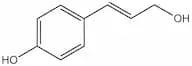
P-coumaroyl alcohol
CAS :Phenol alcoholFormule :C9H10O2Degré de pureté :≥ 98.0 % (HPLC)Couleur et forme :PowderMasse moléculaire :150.18Tubuloside a
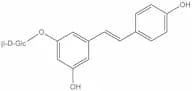
CAS :Natural glycosideFormule :C37H48O21Degré de pureté :≥ 90.0 % (HPLC)Masse moléculaire :828.76Trans-polydatin
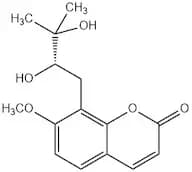
CAS :Natural glycosideFormule :C20H22O8Degré de pureté :≥ 98.0 % (HPLC)Couleur et forme :PowderMasse moléculaire :390.39Meranzin hydrate
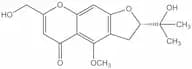
CAS :LactoneFormule :C15H18O5Degré de pureté :≥ 90.0 % (HPLC)Couleur et forme :PowderMasse moléculaire :278.3Cimifugin
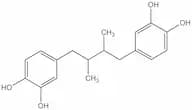
CAS :Oxygen-heterocyclic compoundFormule :C16H18O6Degré de pureté :≥ 98.0 % (HPLC)Couleur et forme :PowderMasse moléculaire :306.32Nordihydroguaiaretic acid
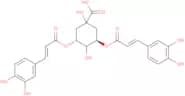
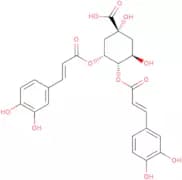
CAS :PolyphenolFormule :C18H22O4Degré de pureté :≥ 98.0 % (HPLC)Couleur et forme :PowderMasse moléculaire :302.373,5-Dicaffeoylquinic acid
CAS :3,5-Dicaffeoylquinic acid is a polyphenolic compound, which is naturally found in various plant species, particularly in coffee and certain herbal plants. This compound serves as a secondary metabolite within these plants, contributing to their defense mechanisms against pathogens and environmental stress. The compound exhibits its mode of action primarily through its powerful antioxidant activity. By scavenging free radicals and inhibiting oxidative stress pathways, it helps in protecting cellular components from oxidative damage.Formule :C25H24O12Degré de pureté :Min. 98 Area-%Couleur et forme :Off-White PowderMasse moléculaire :516.45 g/molEchinacoside
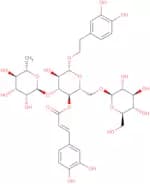
CAS :Echinacoside is a caffeic acid derivative naturally found in plants, such as, Echinacea angustifolia DC. Echinacoside belongs to the class of phenylethanoid glycosides. In vitro studies have revealed the mode of action of echinacoside in breast cancer cells; echinacoside suppresses the Wnt/β-catenin signalling pathway exerting anticancer activity (Tang et al, 2020). Echinacoside has been reported as beneficial for human health in terms of neuroprotection, cardioprotectiony, anti-inflammatory, antioxidant and anti-osteoporotic activity (Liu, 2018).Formule :C35H46O20Degré de pureté :Min. 98 Area-%Couleur et forme :PowderMasse moléculaire :786.74 g/molMalabaricone C
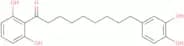
CAS :Malabaricone C is a bioactive compound which is extracted from the roots of trees belonging to the genus Myristica. These trees are well-known for producing a diverse array of secondary metabolites with unique biological activities. Derived primarily through careful extraction processes from these natural sources, Malabaricone C has been characterized by its distinct ability to modulate inflammatory pathways and exhibit antimicrobial properties. The compound is known to interfere with specific biochemical targets, potentially inhibiting the expression of pro-inflammatory cytokines and disrupting microbial cell mechanisms.Formule :C21H26O5Degré de pureté :Min. 95%Couleur et forme :SolidMasse moléculaire :358.43 g/mol(+)-Dehydrodiconiferyl alcohol
CAS :(+)-Dehydrodiconiferyl alcohol is a lignan, which is a type of phenolic compound naturally occurring in a variety of plant species, including those in the families Magnoliaceae, Lauraceae, and others. As a secondary metabolite derived from the oxidative coupling of coniferyl alcohol, it plays roles in plant defense and structural integrity.Formule :C20H22O6Degré de pureté :Min. 95%Masse moléculaire :358.39 g/molIsoliquiritigenin
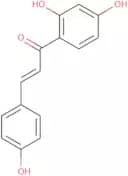
CAS :Isoliquiritigenin is a flavonoid compound, which is derived primarily from the root of the licorice plant (Glycyrrhiza spp.). Known for its yellow coloration, isoliquiritigenin is a chalcone, a type of compound found in many types of fruits, vegetables, and other plants. This natural product is extracted and purified from plant sources for research and potential therapeutic applications.Formule :C15H12O4Degré de pureté :Min. 95%Couleur et forme :PowderMasse moléculaire :256.25 g/mol1,3-Dicaffeoylquinic acid
CAS :1,3-Dicaffeoylquinic acid is a bioactive compound, which is a type of caffeoylquinic acid. This compound is commonly found in various plant sources, including coffee, artichokes, and certain herbal extracts. It is part of a larger family of polyphenolic compounds that are notable for their diverse biological activities.
Formule :C25H24O12Degré de pureté :Min. 95%Couleur et forme :White PowderMasse moléculaire :516.45 g/molPodophyllotoxin
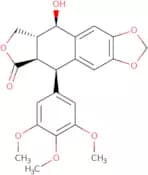
CAS :Podophyllotoxin is a potent antimitotic agent, which is derived from the roots and rhizomes of plants belonging to the genus Podophyllum, such as Podophyllum peltatum and Podophyllum emodi. Its mode of action involves the inhibition of microtubule assembly, leading to the disruption of mitotic spindle formation during cell division. This results in the arrest of cell proliferation, making it particularly effective against rapidly dividing cells.Formule :C22H22O8Degré de pureté :Min. 98 Area-%Couleur et forme :PowderMasse moléculaire :414.41 g/molResveratrol
CAS :Resveratrol is a natural phenylpropanoid of the family of stilbenoids and is present in red wines and certain foods. Resveratrol has been deeply studied for its antioxidant, anti-inflammatory and antimicrobial properties. In Vero cells, resveratrol at 50 μM has shown to have the ability to inhibit SARS-CoV-2 replication by 98% when added after infection. Featured reference paper: Rossi et al, 2021; Yang et al, 2021.Formule :C14H12O3Degré de pureté :Min. 98 Area-%Couleur et forme :White PowderMasse moléculaire :228.24 g/molE/E-Desmethoxycurcumin
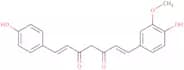
CAS :E/E-Desmethoxycurcumin is a polyphenolic compound, which is a derivative of curcumin. It is sourced from the rhizome of the Curcuma longa plant, commonly known as turmeric. As a demethoxylated analog of curcumin, its structure contains one less methoxy group, allowing it to interact with biological systems in distinctive ways. The mode of action of E/E-Desmethoxycurcumin involves modulation of various cellular signaling pathways, including the inhibition of nuclear factor kappa-light-chain-enhancer of activated B cells (NF-kB) and downregulation of pro-inflammatory cytokines. This makes it a subject of interest for its potential anti-inflammatory and antioxidant properties.Formule :C20H18O5Degré de pureté :Min. 95%Couleur et forme :Orange To Red SolidMasse moléculaire :338.35 g/moltrans-Resveratrol-3,4'-disulfate
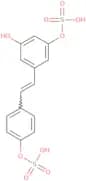
CAS :Trans-Resveratrol-3,4'-disulfate is a sulfate conjugate of resveratrol, which is a natural polyphenolic compound. It is commonly derived from the metabolic processes involving resveratrol, a compound found in the skin of grapes, berries, and peanuts. As a metabolite, it is typically produced in the liver through sulfation, mediated by sulfotransferase enzymes. This conversion enhances the solubility and stability of resveratrol, potentially increasing its bioavailability compared to its parent compound.
Formule :C14H12O9S2Degré de pureté :Min. 95%Masse moléculaire :388.37 g/mol4,5-Dicaffeoylquinic acid
CAS :4,5-Dicaffeoylquinic acid is a polyphenolic compound, which is primarily a derivative of chlorogenic acids found in various plants, notably within the Asteraceae family. It is naturally sourced from leaves, fruits, and other plant tissues where it plays a critical role in the plant's defense mechanisms. It functions through its ability to scavenge free radicals, thereby exhibiting significant antioxidant activity. This compound can inhibit oxidative stress by neutralizing reactive oxygen species (ROS), thus protecting cellular structures from damage.
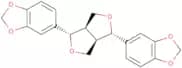
Formule :C25H24O12Degré de pureté :Min. 98 Area-%Couleur et forme :PowderMasse moléculaire :516.45 g/molSesamin
CAS :Sesamin is a lignan compound, which is a type of phytoestrogen, derived from sesame seeds (Sesamum indicum). It is a naturally occurring substance with potent biological efficacy. Sesamin functions primarily through its antioxidant and anti-inflammatory mechanisms. It scavenges free radicals, thereby protecting cellular components from oxidative stress. Additionally, sesamin interacts with various metabolic pathways, modulating lipid metabolism and enhancing the body's anti-inflammatory response.Formule :C20H18O6Degré de pureté :Min. 95%Couleur et forme :PowderMasse moléculaire :354.35 g/molDimethylcurcumin
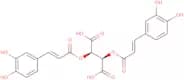
CAS :Dimethylcurcumin is a synthetic, small-molecule compound that is a derivative of curcumin, a naturally occurring polyphenol found in the spice turmeric. Curcumin is known for its various biological activities, but its clinical use is limited due to poor bioavailability. Dimethylcurcumin is chemically modified to enhance its stability and bioavailability, making it a more potent alternative.Formule :C23H24O6Degré de pureté :Min. 95%Masse moléculaire :396.43 g/molChicoric acid
CAS :Chicoric acid is a polyphenolic compound, which is primarily derived from chicory (Cichorium intybus) and echinacea (Echinacea purpurea). It serves as a secondary metabolite in these plants, contributing to their defense mechanisms. The mode of action of chicoric acid involves the inhibition of enzymes involved in the degradation of key cellular components, effectively reducing oxidative stress and modulating inflammatory responses.Formule :C22H18O12Degré de pureté :Min. 95 Area-%Couleur et forme :White PowderMasse moléculaire :474.37 g/mol