Phénylpropanoïdes
Phenylpropanoide sind eine vielfältige Gruppe von Pflanzenmetaboliten, die aus der Aminosäure Phenylalanin abgeleitet sind. Sie spielen eine wichtige Rolle in der Pflanzenstruktur, Abwehr und Pigmentierung. Darüber hinaus wurden Phenylpropanoide wegen ihrer entzündungshemmenden, antioxidativen und antimikrobiellen Eigenschaften untersucht. Diese Verbindungen werden in der Forschung zu Naturprodukten, Pflanzenbiologie und Pharmakologie verwendet.
Sous-catégories appartenant à la catégorie "Phénylpropanoïdes"
1290 produits trouvés pour "Phénylpropanoïdes"
Trier par
Degré de pureté (%)
0
100
|
0
|
50
|
90
|
95
|
100
Isorhapontigenin
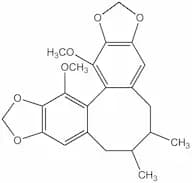
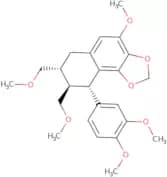
CAS :PolyphenolFormule :C15H14O4Degré de pureté :≥ 95.0 % (HPLC)Masse moléculaire :258.27Schizandrin c
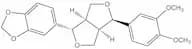
CAS :Oxygen-heterocyclic compoundFormule :C22H24O6Degré de pureté :≥ 95.0 % (HPLC)Masse moléculaire :384.42Fargesin
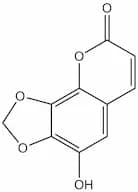
CAS :Oxygen-heterocyclic compoundFormule :C21H22O6Degré de pureté :≥ 98.0 % (HPLC)Couleur et forme :PowderMasse moléculaire :370.4Artemicapin c
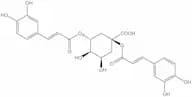
CAS :LactoneFormule :C10H6O5Degré de pureté :≥ 95.0 % (HPLC)Couleur et forme :PowderMasse moléculaire :206.151,5-dicaffeoylquinic acid
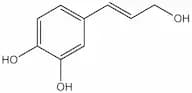
CAS :Carboxylic acid with additional oxygen functionsFormule :C25H24O12Degré de pureté :≥ 98.0 % (HPLC)Couleur et forme :PowderMasse moléculaire :516.46Caffeoyl alcohol
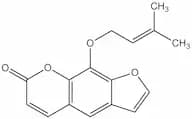
CAS :Phenol alcoholFormule :C9H10O3Degré de pureté :≥ 95.0 % (HPLC)Couleur et forme :PowderMasse moléculaire :166.18Imperatorin
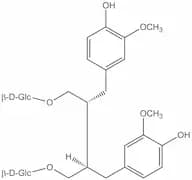
CAS :LactoneFormule :C16H14O4Degré de pureté :≥ 95.0 % (HPLC)Couleur et forme :PowderMasse moléculaire :270.29Secoisolariciresinol diglucoside
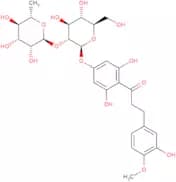
CAS :Natural glycosideFormule :C32H46O16Degré de pureté :≥ 98.0 % (HPLC)Couleur et forme :PowderMasse moléculaire :686.71Neohesperidin dihydrochalcone hydrate
CAS :<p>Neohesperidin dihydrochalcone hydrate is a high-intensity sweetener, which is derived from the bitter flavonoids found in citrus fruits, particularly from the peel and pulp of oranges and grapefruits. It is produced through a chemical hydrogenation process that transforms neohesperidin into a non-caloric sweetener. This unique compound acts as a potent flavor enhancer by intensifying sweetness and masking undesirable flavors, such as bitterness.</p>Formule :C28H36O15Degré de pureté :Min. 95%Couleur et forme :Off-White PowderMasse moléculaire :612.58 g/molHypophyllanthin
CAS :<p>Hypophyllanthin is a lignan compound, which is a secondary metabolite derived from various species of the genus Phyllanthus. These plants are widely distributed in tropical and subtropical regions and have been used in traditional medicine across cultures. The compound serves as an active constituent within the plant extract, contributing to its pharmacological properties.</p>Formule :C24H30O7Degré de pureté :Min. 95%Couleur et forme :PowderMasse moléculaire :430.49 g/molSinapaldehyde
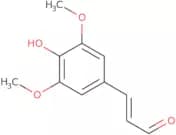
CAS :<p>Sinapaldehyde is a phenolic aldehyde, which is a secondary metabolite derived from lignin biosynthesis in plants. It is primarily sourced from lignin, a complex polymer found in the cell walls of various plants, often extracted through biochemical refinement processes from lignocellulosic biomass. The mode of action of Sinapaldehyde involves its function as an antioxidant, where it participates in redox reactions that mitigate oxidative stress by scavenging free radicals. Its structural characteristics enable it to interact with various biological molecules, contributing to its effectiveness in these reactions.</p>Formule :C11H12O4Degré de pureté :Min. 98 Area-%Couleur et forme :Yellow PowderMasse moléculaire :208.21 g/moltrans-Resveratrol-3,4'-disulfate
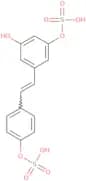
CAS :<p>Trans-Resveratrol-3,4'-disulfate is a sulfate conjugate of resveratrol, which is a natural polyphenolic compound. It is commonly derived from the metabolic processes involving resveratrol, a compound found in the skin of grapes, berries, and peanuts. As a metabolite, it is typically produced in the liver through sulfation, mediated by sulfotransferase enzymes. This conversion enhances the solubility and stability of resveratrol, potentially increasing its bioavailability compared to its parent compound.</p>Formule :C14H12O9S2Degré de pureté :Min. 95%Masse moléculaire :388.37 g/molChicoric acid
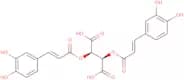
CAS :<p>Chicoric acid is a polyphenolic compound, which is primarily derived from chicory (Cichorium intybus) and echinacea (Echinacea purpurea). It serves as a secondary metabolite in these plants, contributing to their defense mechanisms. The mode of action of chicoric acid involves the inhibition of enzymes involved in the degradation of key cellular components, effectively reducing oxidative stress and modulating inflammatory responses.</p>Formule :C22H18O12Degré de pureté :Min. 95 Area-%Couleur et forme :White PowderMasse moléculaire :474.37 g/mol4,5-Dicaffeoylquinic acid
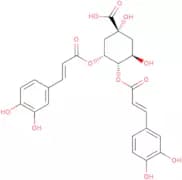
CAS :<p>4,5-Dicaffeoylquinic acid is a polyphenolic compound, which is primarily a derivative of chlorogenic acids found in various plants, notably within the Asteraceae family. It is naturally sourced from leaves, fruits, and other plant tissues where it plays a critical role in the plant's defense mechanisms. It functions through its ability to scavenge free radicals, thereby exhibiting significant antioxidant activity. This compound can inhibit oxidative stress by neutralizing reactive oxygen species (ROS), thus protecting cellular structures from damage.</p>Formule :C25H24O12Degré de pureté :Min. 98 Area-%Couleur et forme :PowderMasse moléculaire :516.45 g/molDemethoxycurcumin
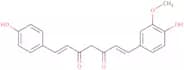
CAS :Demethoxycurcumin is a natural bioactive compound, which is a type of curcuminoid. It is derived from the rhizomes of the plant Curcuma longa, commonly known as turmeric, a member of the ginger family. Demethoxycurcumin is one of the primary components contributing to the characteristic yellow color of turmeric.Formule :C20H18O5Degré de pureté :Min. 98 Area-%Couleur et forme :PowderMasse moléculaire :338.35 g/mol1,4-Dicaffeoylquinic acid
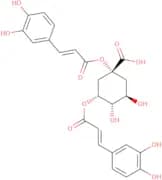
CAS :<p>1,4-Dicaffeoylquinic acid is a naturally occurring polyphenolic compound, specifically a type of caffeoylquinic acid, which is derived from various plant species including certain vegetables, fruits, and herbs. This compound is a result of biochemical synthesis within the plant, where it plays various roles, primarily in the defense mechanisms against pathogens and oxidative stress. The mode of action of 1,4-Dicaffeoylquinic acid centers on its potent antioxidant capabilities. It scavenges free radicals, thus protecting cellular components from oxidative damage, and exhibits anti-inflammatory properties through modulation of inflammatory pathways. The compound's ability to inhibit specific enzymes and signaling molecules contributes to its therapeutic potential.</p>Formule :C25H24O12Degré de pureté :Min. 95%Couleur et forme :White PowderMasse moléculaire :516.45 g/mol4-Hydroxy-3-methoxycinnamaldehyde
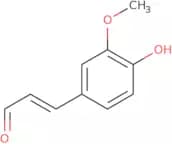
CAS :<p>4-Hydroxy-3-methoxycinnamaldehyde is a phenolic aldehyde, which is commonly found as a major component of certain essential oils, such as those extracted from cinnamon bark. This compound is notable for its prominent role in biological and chemical processes, sourced chiefly from the bark of Cinnamomum species.</p>Formule :C10H10O3Degré de pureté :Min. 95%Couleur et forme :PowderMasse moléculaire :178.18 g/molResveratrol
CAS :<p>Resveratrol is a natural phenylpropanoid of the family of stilbenoids and is present in red wines and certain foods. Resveratrol has been deeply studied for its antioxidant, anti-inflammatory and antimicrobial properties. In Vero cells, resveratrol at 50 μM has shown to have the ability to inhibit SARS-CoV-2 replication by 98% when added after infection. Featured reference paper: Rossi et al, 2021; Yang et al, 2021.</p>Formule :C14H12O3Degré de pureté :Min. 98 Area-%Couleur et forme :White PowderMasse moléculaire :228.24 g/molMalabaricone B
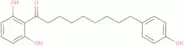
CAS :<p>Malabaricone B is a bioactive compound, which is a phenolic compound sourced from the seeds of the Myristica malabarica plant, commonly known as Indian bay leaf. This compound exhibits significant pharmacological activity, particularly in its ability to inhibit various inflammatory mediators.</p>Formule :C21H26O4Degré de pureté :Min. 95%Couleur et forme :White Off-White PowderMasse moléculaire :342.43 g/molCurcumin
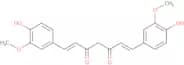
CAS :<p>Antioxidant; anti-inflammatory; anti-cancer agent; HSP90 inhibitor</p>Formule :C21H20O6Degré de pureté :Min. 95 Area-%Couleur et forme :Slightly Yellow PowderMasse moléculaire :368.39 g/mol