Flavonoïdes
Les flavonoïdes sont un groupe de métabolites végétaux dotés de propriétés antioxydantes qui contribuent à la couleur des fruits et des fleurs. Ils jouent un rôle important dans la protection des plantes contre les rayons UV et les pathogènes. Les flavonoïdes sont étudiés pour leurs potentiels bienfaits pour la santé, notamment des propriétés anti-inflammatoires, antivirales et anticancéreuses. Ils font l'objet de nombreuses recherches dans les domaines de la pharmacologie, de la nutrition et de la biologie moléculaire.
Sous-catégories appartenant à la catégorie "Flavonoïdes"
- Anthocyanidines(46 produits)
- Anthocyanine(46 produits)
- Catéchine(88 produits)
- Chalcones(237 produits)
- Pterocarpans(28 produits)
2408 produits trouvés pour "Flavonoïdes"
Trier par
Degré de pureté (%)
0
100
|
0
|
50
|
90
|
95
|
100
Hinokiflavone
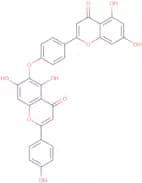
CAS :<p>A cytotoxic biflavonoid from Toxicodendron succedaneum, Juniperus sp., and Chamaecyparis obtusa (hinoki).</p>Formule :C30H18O10Degré de pureté :Min. 97 Area-%Couleur et forme :PowderMasse moléculaire :538.46 g/mol3'-Prenylnaringenin
CAS :3'-Prenylnaringenin is a potent phytoestrogen, a type of compound that is found in hops (Humulus lupulus), specifically in the female flowers or cones. This prenylflavonoid is particularly notable for its strong estrogenic activity attributed to its binding affinity to estrogen receptors. As such, it functions as an agonist, modulating estrogen receptor-mediated pathways and influencing gene expression related to estrogenic activity.Degré de pureté :Min. 95%Morusin
CAS :<p>Morusin is a naturally occurring flavonoid compound, which is derived primarily from the root bark of Morus alba, commonly known as the mulberry tree. This bioactive substance is known for its various chemical properties and its ability to modulate several biological pathways. The compound acts primarily through the inhibition of key signaling pathways, such as the NF-κB and MAPK pathways, which are involved in inflammation and cancer progression.</p>Formule :C25H24O6Degré de pureté :Min. 95%Couleur et forme :Yellow PowderMasse moléculaire :420.45 g/molDemethylretusin
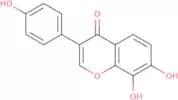
CAS :<p>Demethylretusin is a naturally occurring flavonoid, which is derived primarily from various plant sources, including soybeans and other legumes. It functions as a bioactive compound with the capability to modulate multiple biochemical pathways. The mode of action of Demethylretusin involves interacting with cellular receptors and enzymes, ultimately influencing cell signaling pathways and exhibiting antioxidative, anti-inflammatory, and potential anticancer properties.</p>Formule :C15H10O5Degré de pureté :Min. 95%Couleur et forme :PowderMasse moléculaire :270.24 g/molIridin
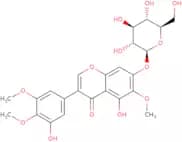
CAS :<p>Iridin is an isoflavone glycoside derived primarily from the rhizomes of certain species of the Iris plant. As a phytochemical compound, its source is botanical, particularly extracted from Iris versicolor, known commonly as the Blue Flag plant. The mode of action for Iridin involves its role as a glycoside compound, which influences various biochemical pathways in the body. Glycosides like Iridin are known for their potential to modulate enzyme activities, interact with cellular signals, and participate in the process of detoxification within the liver.</p>Formule :C24H26O13Degré de pureté :Min. 98 Area-%Couleur et forme :Off-White Yellow PowderMasse moléculaire :522.46 g/molBiochanin A
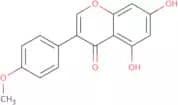
CAS :<p>Biochanin A is a naturally occurring isoflavone, which is derived from plants such as red clover and soy. This compound functions as a phytoestrogen, exerting its effects by modulating estrogen receptors, and showcases antioxidant capabilities through the scavenging of free radicals. As a result, Biochanin A holds significant interest for research in the modulation of hormonal pathways and in providing protection against oxidative stress.</p>Formule :C16H12O5Degré de pureté :Min. 95%Couleur et forme :White PowderMasse moléculaire :284.26 g/molQuercetin
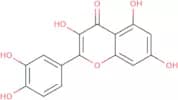
CAS :<p>Inhibitor of HSP70 and HSP27 expression</p>Formule :C15H10O7Degré de pureté :Min. 95 Area-%Couleur et forme :Yellow PowderMasse moléculaire :302.24 g/mol3'-Methoxy-3,7,4'-trihydroxyflavone
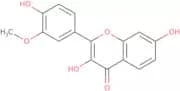
CAS :<p>3'-Methoxy-3,7,4'-trihydroxyflavone is a naturally occurring flavonoid compound, which is derived from various plant sources, such as fruits, vegetables, and medicinal herbs. This compound is known for its potent antioxidant activity, which is primarily achieved through the scavenging of reactive oxygen species and the inhibition of oxidative stress pathways.</p>Formule :C16H12O6Degré de pureté :Min. 95%Couleur et forme :PowderMasse moléculaire :300.26 g/molBaicalin 7-b-D-glucuronide
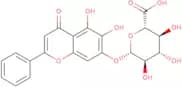
CAS :<p>Baicalin 7-b-D-glucuronide is a flavonoid metabolite, which is primarily derived from the root of the plant *Scutellaria baicalensis*, commonly known as Chinese skullcap. This compound occurs as part of the extensive array of flavonoids in traditional medicinal plants used in various ethnic medicine systems.</p>Formule :C21H18O11Degré de pureté :Min. 95 Area-%Couleur et forme :White PowderMasse moléculaire :446.36 g/molMorelloflavone
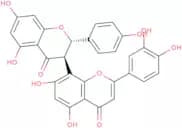
CAS :<p>Morelloflavone is a natural biflavonoid compound, which is primarily isolated from the Garcinia species, belonging to the Clusiaceae family. This compound is derived from plant sources that have been traditionally used in various medicinal systems. Morelloflavone exhibits its mode of action through multiple biochemical pathways, prominently including its antioxidant activity. It effectively scavenges free radicals, thereby protecting cells from oxidative stress, which is implicated in numerous pathological conditions.</p>Degré de pureté :Min. 95%3,7-Dimethoxy-3',4',5-Trihydroxyflavone
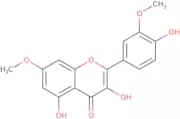
CAS :<p>3,7-Dimethoxy-3',4',5-Trihydroxyflavone is a flavonoid compound, which is derived from various plant sources known for their bioactive compounds. These plants are rich in polyphenolic substances, contributing to the compound's complex structure and functionality. The mode of action of 3,7-Dimethoxy-3',4',5-Trihydroxyflavone involves its ability to act as a potent antioxidant. It scavenges free radicals and reduces oxidative stress by neutralizing reactive oxygen species at the molecular level. Additionally, its molecular configuration allows for interactions with cellular signaling pathways, potentially influencing various biochemical processes.</p>Formule :C17H14O7Degré de pureté :Min. 95%Masse moléculaire :330.29 g/molIsovitexin
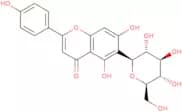
CAS :<p>Isovitexin is a naturally occurring flavonoid compound, specifically a C-glycosyl flavone, which is found in a variety of plants, including green tea, passionflower, and barley leaves. Derived from these botanical sources, isovitexin is characterized by its structural complexity, contributing to its biological activity. The mode of action of isovitexin involves its ability to scavenge free radicals and inhibit oxidative stress. It exhibits strong antioxidant properties that allow it to stabilize reactive oxygen species (ROS), thereby preventing cellular damage. Additionally, isovitexin has been studied for its potential anti-inflammatory and neuroprotective effects, attributed to its influence on signaling pathways and enzyme activities related to inflammation and cell survival. Isovitexin is primarily utilized in the context of scientific research to explore its pharmacological potentials. Researchers study its application in fields such as neuroprotection, cardioprotection, and its role in mitigating the effects of metabolic disorders. Its broad spectrum of activity makes it a compound of interest in both the development of therapeutic agents and the enhancement of nutritional supplements.</p>Formule :C21H20O10Degré de pureté :Min. 98 Area-%Couleur et forme :Off-White Yellow PowderMasse moléculaire :432.38 g/molVelutin
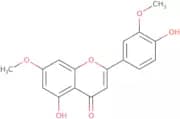
CAS :<p>Velutin is a natural flavonoid, which is derived from the leaves of certain plant species, specifically from the Asteraceae family. This compound demonstrates a unique mode of action by modulating various signaling pathways involved in inflammation and oxidative stress. Velutin effectively inhibits the activation of nuclear factor kappa-light-chain-enhancer of activated B cells (NF-κB) and reduces the expression of pro-inflammatory cytokines, contributing to its anti-inflammatory properties.</p>Formule :C17H14O6Degré de pureté :Min. 95%Couleur et forme :PowderMasse moléculaire :314.29 g/molAlpinumisoflavone
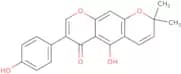
CAS :<p>Alpinumisoflavone is a naturally occurring isoflavone, which is derived from plants, particularly those in the Leguminosae family. Structurally, isoflavones are a class of phytoestrogens, plant-derived compounds with estrogenic activity. Alpinumisoflavone exerts its effects primarily through its antioxidant and anti-inflammatory activities. It modulates key signaling pathways by interacting with cellular components to reduce oxidative stress and inhibit inflammatory responses, making it a valuable compound in studying cellular protection mechanisms.</p>Formule :C20H16O5Degré de pureté :Min. 95%Couleur et forme :White PowderMasse moléculaire :336.34 g/mol(+)-Pinocembrin
CAS :<p>(+)-Pinocembrin is a flavonoid compound, which is a naturally occurring phytochemical. It is predominantly sourced from propolis, a resinous substance produced by bees, and also found in various plants such as honey and ginger root. The mode of action of (+)-Pinocembrin involves its potent antioxidant and antimicrobial properties. It acts by scavenging free radicals, thereby protecting cells from oxidative stress, and it also interferes with microbial cell membranes, leading to antimicrobial effects.</p>Formule :C15H12O4Degré de pureté :Min. 98 Area-%Couleur et forme :PowderMasse moléculaire :256.25 g/molKaempferol-7,4'-dimethyl ether
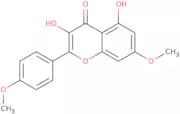
CAS :<p>Kaempferol-7,4'-dimethyl ether is a flavonoid derivative, which is a naturally occurring compound predominantly found in certain plant species. As a derivative of kaempferol, it is an O-methylated flavonoid, often isolated from various members of the Leguminosae family. Its mode of action involves interacting with multiple biological pathways, typically exhibiting antioxidant and anti-inflammatory properties. This potent flavonoid modulates signaling pathways and can influence cellular energy metabolism, often impacting reactive oxygen species (ROS) levels.</p>Formule :C17H14O6Degré de pureté :Min. 95 Area-%Couleur et forme :PowderMasse moléculaire :314.29 g/molIsoscutellarein
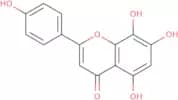
CAS :<p>Isoscutellarein is a flavonoid compound, which is naturally derived from various plant sources, including herbs and certain vegetables. It functions primarily as an antioxidant, scavenging free radicals and reducing oxidative stress within biological systems. This activity is attributed to its ability to donate hydrogen atoms or electrons, thus stabilizing reactive oxygen species (ROS).</p>Formule :C15H10O6Degré de pureté :Min. 95 Area-%Couleur et forme :PowderMasse moléculaire :286.24 g/molNaringenin-7-rutinoside
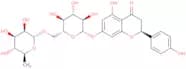
CAS :<p>Naringenin-7-rutinoside is a flavonoid glycoside, which is naturally sourced from citrus fruits, such as grapefruits and oranges. This compound is characterized by its unique molecular structure where the flavonoid naringenin is bound to the disaccharide rutinose. The mode of action of naringenin-7-rutinoside primarily involves its antioxidant properties, which allow it to scavenge free radicals and reduce oxidative stress in biological systems.</p>Formule :C27H32O14Degré de pureté :Min. 98 Area-%Couleur et forme :White PowderMasse moléculaire :580.53 g/molLuteolin 7-diglucuronide
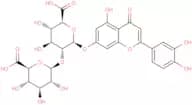
CAS :<p>Luteolin 7-diglucuronide is the major flavonoid isolated from Verbena officinalis and Aloysia triphylla.</p>Formule :C27H26O18Degré de pureté :98.24% - 98.44%Couleur et forme :SolidMasse moléculaire :638.48(S)-Naringenin
CAS :<p>(S)-Naringenin is a naturally occurring flavonoid compound, which is found predominantly in citrus fruits, such as grapefruits and oranges. Its source lies within the plant secondary metabolites known for their diverse biological activities. As a flavanone, (S)-naringenin acts primarily as an antioxidant, effectively scavenging reactive oxygen species and thereby protecting cells from oxidative stress. Additionally, it exhibits anti-inflammatory actions by modulating various signaling pathways and inhibiting the production of pro-inflammatory cytokines.</p>Formule :C15H12O5Degré de pureté :Min. 95%Couleur et forme :Grey SolidMasse moléculaire :272.25 g/mol