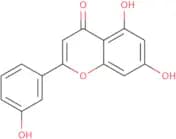
Flavonoïdes
Les flavonoïdes sont un groupe de métabolites végétaux dotés de propriétés antioxydantes qui contribuent à la couleur des fruits et des fleurs. Ils jouent un rôle important dans la protection des plantes contre les rayons UV et les pathogènes. Les flavonoïdes sont étudiés pour leurs potentiels bienfaits pour la santé, notamment des propriétés anti-inflammatoires, antivirales et anticancéreuses. Ils font l'objet de nombreuses recherches dans les domaines de la pharmacologie, de la nutrition et de la biologie moléculaire.
Sous-catégories appartenant à la catégorie "Flavonoïdes"
- Anthocyanidines(46 produits)
- Anthocyanine(46 produits)
- Catéchine(88 produits)
- Chalcones(237 produits)
- Pterocarpans(28 produits)
2408 produits trouvés pour "Flavonoïdes"
Trier par
Degré de pureté (%)
0
100
|
0
|
50
|
90
|
95
|
100
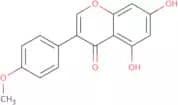
Biochanin A
CAS :<p>Biochanin A is a naturally occurring isoflavone, which is derived from plants such as red clover and soy. This compound functions as a phytoestrogen, exerting its effects by modulating estrogen receptors, and showcases antioxidant capabilities through the scavenging of free radicals. As a result, Biochanin A holds significant interest for research in the modulation of hormonal pathways and in providing protection against oxidative stress.</p>Formule :C16H12O5Degré de pureté :Min. 95%Couleur et forme :White PowderMasse moléculaire :284.26 g/molDiosmetin-7-neohesperidoside
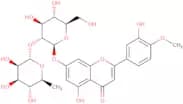
CAS :Diosmetin-7-neohesperidoside is a flavonoid glycoside, which is a secondary metabolite predominantly found in citrus fruits. This compound acts through various biochemical pathways, importantly exhibiting potent antioxidant and anti-inflammatory activities. Its mode of action involves the scavenging of free radicals and modulation of enzyme activities that contribute to inflammatory responses.Formule :C28H32O15Degré de pureté :Min. 95%Masse moléculaire :608.54 g/molMorusin
CAS :<p>Morusin is a naturally occurring flavonoid compound, which is derived primarily from the root bark of Morus alba, commonly known as the mulberry tree. This bioactive substance is known for its various chemical properties and its ability to modulate several biological pathways. The compound acts primarily through the inhibition of key signaling pathways, such as the NF-κB and MAPK pathways, which are involved in inflammation and cancer progression.</p>Formule :C25H24O6Degré de pureté :Min. 95%Couleur et forme :Yellow PowderMasse moléculaire :420.45 g/molMorelloflavone
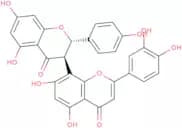
CAS :Morelloflavone is a natural biflavonoid compound, which is primarily isolated from the Garcinia species, belonging to the Clusiaceae family. This compound is derived from plant sources that have been traditionally used in various medicinal systems. Morelloflavone exhibits its mode of action through multiple biochemical pathways, prominently including its antioxidant activity. It effectively scavenges free radicals, thereby protecting cells from oxidative stress, which is implicated in numerous pathological conditions.Degré de pureté :Min. 95%Baicalin 7-b-D-glucuronide
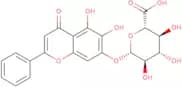
CAS :<p>Baicalin 7-b-D-glucuronide is a flavonoid metabolite, which is primarily derived from the root of the plant *Scutellaria baicalensis*, commonly known as Chinese skullcap. This compound occurs as part of the extensive array of flavonoids in traditional medicinal plants used in various ethnic medicine systems.</p>Formule :C21H18O11Degré de pureté :Min. 95 Area-%Couleur et forme :White PowderMasse moléculaire :446.36 g/mol4'-Hydroxy-7-methoxyisoflavone
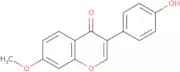
CAS :<p>4'-Hydroxy-7-methoxyisoflavone is a naturally occurring isoflavone, which is a type of phytoestrogen found in various plants. It is synthesized typically from plant sources and is part of a broader class of compounds known for their presence in legumes, especially soy and red clover. The mode of action of 4'-Hydroxy-7-methoxyisoflavone is primarily through its interaction with estrogen receptors, where it can exhibit weak estrogenic activity. This attribute allows it to modulate estrogenic signaling pathways, influencing cellular processes related to growth and metabolism.</p>Formule :C16H12O4Degré de pureté :Min. 95%Masse moléculaire :268.26 g/molIridin
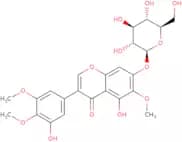
CAS :<p>Iridin is an isoflavone glycoside derived primarily from the rhizomes of certain species of the Iris plant. As a phytochemical compound, its source is botanical, particularly extracted from Iris versicolor, known commonly as the Blue Flag plant. The mode of action for Iridin involves its role as a glycoside compound, which influences various biochemical pathways in the body. Glycosides like Iridin are known for their potential to modulate enzyme activities, interact with cellular signals, and participate in the process of detoxification within the liver.</p>Formule :C24H26O13Degré de pureté :Min. 98 Area-%Couleur et forme :Off-White Yellow PowderMasse moléculaire :522.46 g/mol6-Methoxyflavone
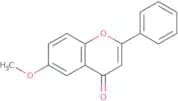
CAS :<p>6-Methoxyflavone is a flavonoid compound, which is a naturally occurring product found in certain plants. It is characterized by the presence of a methoxy group attached to the flavone backbone. This compound is typically extracted from plant sources such as citrus fruits and certain herbs that have a high content of polyphenolic compounds. Its mode of action involves modulating various biochemical pathways, including the inhibition of specific enzymes and interaction with cellular receptors, potentially affecting oxidative stress and inflammation pathways.</p>Formule :C16H12O3Degré de pureté :Min. 95%Couleur et forme :White PowderMasse moléculaire :252.26 g/molHinokiflavone
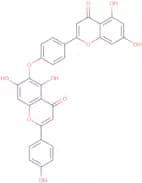
CAS :<p>A cytotoxic biflavonoid from Toxicodendron succedaneum, Juniperus sp., and Chamaecyparis obtusa (hinoki).</p>Formule :C30H18O10Degré de pureté :Min. 97 Area-%Couleur et forme :PowderMasse moléculaire :538.46 g/mol3,5-Dihydroxyflavone
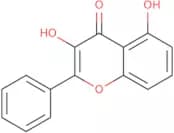
CAS :<p>3,5-Dihydroxyflavone is a flavonoid compound, which is a type of natural product commonly found in plants. This compound is derived from various plant sources, where it serves as a secondary metabolite involved in plant defense mechanisms. 3,5-Dihydroxyflavone exerts its effects through several mechanisms, including modulating oxidative stress and interacting with cellular signaling pathways. Its antioxidant properties allow it to scavenge free radicals, thereby protecting cells from oxidative damage. Additionally, it can influence various enzymes and receptors involved in cellular processes, leading to a range of biological effects.</p>Formule :C15H10O4Degré de pureté :Min. 95%Couleur et forme :Off-White PowderMasse moléculaire :254.24 g/molIsoflavone - 40%
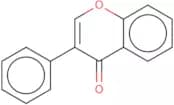
CAS :Isoflavone - 40% is a phytochemical compound, specifically classified as a type of polyphenolic plant-derived compound. It is sourced primarily from soybeans and other legumes, where it naturally occurs as part of the plant's secondary metabolites. The mode of action of isoflavones involves their ability to mimic estrogen. Due to their structural similarity to estrogen, isoflavones can bind to estrogen receptors and exert weak estrogenic effects, which are particularly relevant in humans and animals.Formule :C15H10O2Degré de pureté :Min. 95%Couleur et forme :Off-White Clear LiquidMasse moléculaire :222.24 g/mol3'-Methoxy-3,7,4'-trihydroxyflavone
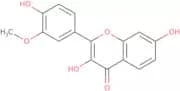
CAS :<p>3'-Methoxy-3,7,4'-trihydroxyflavone is a naturally occurring flavonoid compound, which is derived from various plant sources, such as fruits, vegetables, and medicinal herbs. This compound is known for its potent antioxidant activity, which is primarily achieved through the scavenging of reactive oxygen species and the inhibition of oxidative stress pathways.</p>Formule :C16H12O6Degré de pureté :Min. 95%Couleur et forme :PowderMasse moléculaire :300.26 g/molDemethylretusin
CAS :<p>Demethylretusin is a naturally occurring flavonoid, which is derived primarily from various plant sources, including soybeans and other legumes. It functions as a bioactive compound with the capability to modulate multiple biochemical pathways. The mode of action of Demethylretusin involves interacting with cellular receptors and enzymes, ultimately influencing cell signaling pathways and exhibiting antioxidative, anti-inflammatory, and potential anticancer properties.</p>Formule :C15H10O5Degré de pureté :Min. 95%Couleur et forme :PowderMasse moléculaire :270.24 g/mol3'-Prenylnaringenin
CAS :3'-Prenylnaringenin is a potent phytoestrogen, a type of compound that is found in hops (Humulus lupulus), specifically in the female flowers or cones. This prenylflavonoid is particularly notable for its strong estrogenic activity attributed to its binding affinity to estrogen receptors. As such, it functions as an agonist, modulating estrogen receptor-mediated pathways and influencing gene expression related to estrogenic activity.Degré de pureté :Min. 95%Quercetagetin-7-O-glucoside
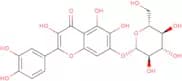
CAS :<p>Quercetagetin-7-O-glucoside is a flavonoid glycoside, which is a type of phytochemical compound. It is derived from various plant sources, notably plants in the Asteraceae family. The compound consists of the flavonoid quercetagetin and a glucose molecule, forming a glycoside linkage. Its mode of action primarily involves antioxidant activity, where it scavenges free radicals and chelates metal ions, thus potentially reducing oxidative stress in biological systems.</p>Formule :C21H20O13Degré de pureté :Min. 95%Masse moléculaire :480.38 g/molLuteolin 7-diglucuronide
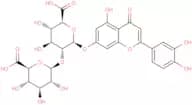
CAS :<p>Luteolin 7-diglucuronide is the major flavonoid isolated from Verbena officinalis and Aloysia triphylla.</p>Formule :C27H26O18Degré de pureté :98.24% - 98.44%Couleur et forme :SolidMasse moléculaire :638.486-Prenylpinocembrin
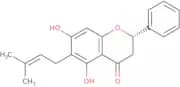
CAS :<p>6-Prenylpinocembrin is a prenylated flavonoid compound, which is derived from various natural sources, particularly plants such as those found in the Leguminosae family. This compound is characterized by the addition of a prenyl group to the flavonoid pinocembrin, enhancing its lipophilicity and potential biological activity.</p>Formule :C20H20O4Degré de pureté :Min. 95%Masse moléculaire :324.37 g/mol(S)-Naringenin
CAS :<p>(S)-Naringenin is a naturally occurring flavonoid compound, which is found predominantly in citrus fruits, such as grapefruits and oranges. Its source lies within the plant secondary metabolites known for their diverse biological activities. As a flavanone, (S)-naringenin acts primarily as an antioxidant, effectively scavenging reactive oxygen species and thereby protecting cells from oxidative stress. Additionally, it exhibits anti-inflammatory actions by modulating various signaling pathways and inhibiting the production of pro-inflammatory cytokines.</p>Formule :C15H12O5Degré de pureté :Min. 95%Couleur et forme :Grey SolidMasse moléculaire :272.25 g/molFluoxastrobin
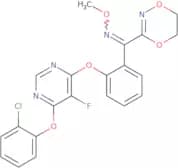
CAS :<p>Fluoxastrobin is a fungicide, which is a synthetic agricultural chemical developed primarily to combat fungal infections in crops. It belongs to the strobilurin class, derived from natural compounds produced by certain fungi. The mode of action of fluoxastrobin involves the inhibition of mitochondrial respiration in fungal cells. By targeting the cytochrome bc1 complex in the mitochondria, it effectively disrupts energy production within the pathogen, leading to its death.</p>Formule :C21H16CIFN4O5Degré de pureté :Min. 95%Masse moléculaire :562.29 g/mol5,7,3'-Trihydroxyflavone
CAS :<p>5,7,3'-Trihydroxyflavone is a flavonoid compound, which is a type of polyphenolic molecule found in plants. This compound is derived from various plant sources such as fruits, vegetables, and certain herbs, where it naturally occurs as part of the plant's secondary metabolites. It exhibits several biochemical actions, predominantly due to its antioxidant properties. This involves scavenging free radicals and chelating metal ions, which contribute to oxidative stress reduction. Additionally, it may influence various signaling pathways related to cell survival and inflammation.</p>Formule :C15H10O5Degré de pureté :Min. 95%Masse moléculaire :270.24 g/mol