Pterocarpans
28 produits trouvés pour "Pterocarpans"
Medicarpin-3-acetate
CAS :Medicarpin-3-acetate is an organic compound, classified as a modified flavonoid, which is derived from natural plant sources such as the Fabaceae family. Its derivation involves acetate functionalization of medicarpin, a pterocarpan phytoalexin. The mode of action of Medicarpin-3-acetate is primarily linked to its ability to interact with plant biological pathways, disrupting fungal cell wall synthesis, thus serving as a potential antifungal agent.
Formule :C18H16O5Degré de pureté :Min. 95%Masse moléculaire :312.32 g/mol(-)-Maackiain
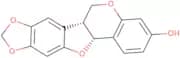
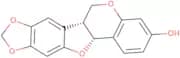
CAS :(-)-Maackiain is a naturally occurring isoflavonoid, which is a compound derived from the leguminous plant family, particularly in species like Maackia amurensis. It exhibits its bioactivity through its antifungal action, which involves the disruption of microbial cell membranes and inhibition of fungal enzyme systems, ultimately leading to impaired growth of pathogenic fungi. The compound has been extensively studied for its role in plant defense mechanisms as a phytoalexin, a substance produced in response to pathogen attack. Consequently, (-)-Maackiain has applications in agricultural biotechnology for developing disease-resistant crops. Additionally, its phytochemical properties have generated interest in pharmaceutical research where it is investigated for potential therapeutic uses, including cancer treatment and neuroprotection, due to its ability to modulate various biological pathways. Both its ecological and medicinal relevance make it a subject of interest for ongoing scientific investigations.
Formule :C16H12O5Degré de pureté :Min. 95%Couleur et forme :SolidMasse moléculaire :284.26 g/mol6a-Hydroxymaackiain
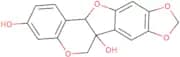
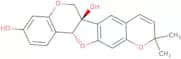
CAS :6a-Hydroxymaackiain is a naturally occurring phytoalexin, which is an antimicrobial compound produced by plants as part of their defense mechanisms against pathogens. This particular compound is typically sourced from leguminous plants, where it is synthesized in response to external stressors such as microbial infection. The mode of action of 6a-Hydroxymaackiain involves disrupting the cell membranes of invading microorganisms, thereby inhibiting their ability to grow and proliferate. This defense strategy allows the plant to resist infection and maintain its overall health.
Formule :C16H12O6Degré de pureté :Min. 95%Couleur et forme :PowderMasse moléculaire :300.26 g/mol2,8-Dihydroxy-3,9-dimethoxypterocarpan
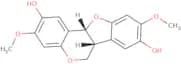
CAS :2,8-Dihydroxy-3,9-dimethoxypterocarpan is a naturally occurring pterocarpan derivative, which is a type of phytochemical. This compound is typically sourced from various leguminous plants, where it serves as a phytoalexin. Phytoalexins are antimicrobial and often antioxidative substances synthesized de novo by plants in response to pathogen attack.Formule :C17H16O6Degré de pureté :Min. 95%Masse moléculaire :316.31 g/molPhaseollin
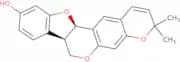
CAS :Phaseollin is a phytoalexin, which is a naturally occurring antifungal compound. It is derived from Phaseolus vulgaris, commonly known as the common bean. This compound is synthesized by the plant in response to pathogenic attack, serving as a critical component of the plant's innate defense system.Formule :C20H18O4Degré de pureté :Min. 95%Couleur et forme :PowderMasse moléculaire :322.35 g/molGlyceollin IV
CAS :Glyceollin IV is a specialized phytoalexin, which is a type of naturally occurring compound produced by plants as a response to stress or pathogen attack, such as soybeans. This compound is derived from the isoflavonoid metabolic pathway and is part of a group of glyceollins known for their bioactive properties. Glyceollin IV operates primarily through mechanisms involving the modulation of cellular stress responses and inhibition of certain enzymatic pathways that contribute to its antimicrobial, antioxidant, and antitumor activities.
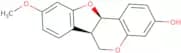
Formule :C21H22O5Degré de pureté :Min. 95%Masse moléculaire :354.4 g/mol(-)-Medicarpin
CAS :(-)-Medicarpin is a phytoalexin, which is a type of natural antimicrobial compound. It is derived from leguminous plants, including certain species of Medicago, where it plays a crucial role in plant defense mechanisms. This compound is biosynthesized in response to pathogenic attack, particularly fungal infections, thereby enhancing the plant's resistance to such threats.
Formule :C16H14O4Degré de pureté :Min. 95%Couleur et forme :White Off-White PowderMasse moléculaire :270.28 g/mol8-Hydroxy-3,4,9,10-tetramethoxypterocarpan
CAS :8-Hydroxy-3,4,9,10-tetramethoxypterocarpan is a naturally occurring isoflavonoid, which is derived from the roots of certain plant species within the Fabaceae family. The compound is primarily isolated through extraction and purification processes that leverage its natural abundance in these botanical sources.Formule :C19H20O7Degré de pureté :Min. 95%Masse moléculaire :360.36 g/molPterocarpan
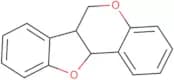
CAS :Pterocarpan is a natural phytochemical compound, which is a type of isoflavonoid derived from plants, particularly leguminous species. These compounds are part of the plant’s secondary metabolite arsenal, produced as a response to environmental stressors or pathogenic attacks. The mode of action of pterocarpans involves interaction with microbial cell membranes, leading to disruption and inhibition of pathogen growth, and the scavenging of free radicals, thereby exerting antioxidant effects.Formule :C15H12O2Degré de pureté :Min. 95%Masse moléculaire :224.25 g/mol(±)-Neorautenane
CAS :(±)-Neorautenane is an alkaloid compound, which is a naturally occurring product found in certain plant species. This product is derived from natural botanical sources, specifically plants that belong to particular genera known for their medicinal properties. The mode of action of (±)-Neorautenane involves interaction with specific biological pathways, potentially affecting neurobiological functions due to its structure and properties typical of alkaloids.Formule :C21H18O5Degré de pureté :Min. 95%Masse moléculaire :350.36 g/molNeorautenol
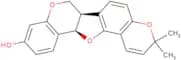
CAS :Neorautenol is an advanced agricultural fungicide, which is an organocopper complex derived from synthetic processes involving copper and specific organic ligands. This complex acts by disrupting the enzymatic mechanisms within fungal cells, leading to the inhibition of critical metabolic pathways necessary for their growth and reproduction.
Formule :C20H18O4Degré de pureté :Min. 95%Masse moléculaire :322.35 g/molTrifolirhizin
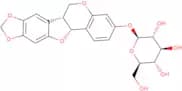
CAS :Trifolirhizin is a flavonoid compound, which is derived from the roots of licorice, an herb widely used in traditional medicine. This bioactive compound is known for its pharmacological properties, primarily acting through modulation of inflammatory pathways. Trifolirhizin exerts its effects by inhibiting the activity of pro-inflammatory cytokines and enzymes, thereby reducing oxidative stress and inflammation at the cellular level.Formule :C22H22O10Degré de pureté :Min. 95%Masse moléculaire :446.4 g/molIsophaseollin
CAS :Isophaseollin is a natural prenylated isoflavone, which is derived from soybeans and other legumes. It is a secondary metabolite associated with plant defense mechanisms. The compound functions primarily as an antioxidant by neutralizing free radicals, thus protecting cellular structures from oxidative stress. Furthermore, it exhibits antitumor potential through the modulation of signaling pathways that regulate cell proliferation and apoptosis.Formule :C20H22O4Degré de pureté :Min. 95%Masse moléculaire :326.39 g/mol2,10-Dihydroxy-3,4,8,9-tetramethoxypterocarpan
CAS :2,10-Dihydroxy-3,4,8,9-tetramethoxypterocarpan is a polyphenolic compound, specifically a type of pterocarpan. This compound is typically derived from certain plant sources, particularly those within the Fabaceae family. The structure and presence of multiple methoxy and hydroxy groups suggest potential interactions through hydrogen bonding and hydrophobic interactions, which could influence its biological activity.Formule :C19H20O8Degré de pureté :Min. 95%Masse moléculaire :376.36 g/molErybraedin
CAS :Erybraedin is a natural compound, which is an isoflavonoid derived from the root of plants belonging to the genus *Erythrina*. This compound exhibits a range of biological activities through its role as a phytoestrogen and inhibitor of key enzymes such as topoisomerases. Its mode of action includes interference with cellular processes like DNA replication and transcription, primarily by stabilizing the DNA-topoisomerase complex. This results in the inhibition of enzyme activity, preventing the re-ligation of DNA strands and ultimately leading to cell cycle arrest. Erybraedin's applications are diverse due to its multifaceted biological effects, including potential roles in anticancer therapies, owing to its ability to induce apoptosis in cancer cells. Additionally, its estrogenic properties are under investigation for implications in hormone-related disorders. Detailed exploration of its pharmacodynamics and pharmacokinetics continues to provide insight into its therapeutic potential, highlighting its significance in natural product research and drug discovery.Formule :C25H28O4Degré de pureté :Min. 95%Masse moléculaire :392.49 g/mol2,8-Dihydroxy-3,9,10-trimethoxypterocarpan
CAS :2,8-Dihydroxy-3,9,10-trimethoxypterocarpan is a naturally occurring pterocarpan, which is a type of isoflavonoid compound. It is found in various legumes and has been studied for its potential bioactive properties. Structurally characterized by multiple methoxy and hydroxyl groups, this compound is derived from plants and is notable for its role in plant defense mechanisms.Formule :C18H18O7Degré de pureté :Min. 95%Masse moléculaire :346.33 g/molCalopocarpin
CAS :Please enquire for more information about Calopocarpin including the price, delivery time and more detailed product information at the technical inquiry form on this pageFormule :C20H20O4Degré de pureté :Min. 95%Masse moléculaire :324.37 g/mol(+/-)-Maackiain
CAS :(+/-)-Maackiain is an isoflavonoid compound, which is derived from natural sources such as plants in the legume family, including Maackia amurensis. This compound plays a critical role in the defense mechanism of plants, exhibiting notable antifungal and antioxidant activities. The mode of action of (+/-)-Maackiain involves the inhibition of fungal growth by disrupting the cell wall integrity and interfering with enzymatic functions essential for fungal survival. Additionally, its antioxidant properties help in scavenging free radicals, thus protecting cells from oxidative stress.Formule :C16H12O5Degré de pureté :Min. 95%Masse moléculaire :284.26 g/molTuberosin
CAS :Tuberosin is an isoflavonoid compound derived from tuberous plant species. It is primarily sourced from various leguminous plants where it functions as a secondary metabolite. Its mode of action involves the modulation of biological pathways, such as antioxidant, anti-inflammatory, and antimicrobial activities, which are being examined for their therapeutic potential.
Formule :C20H18O5Degré de pureté :Min. 95%Masse moléculaire :338.35 g/molHomopterocarpin
CAS :Homopterocarpin is a naturally occurring flavonoid, which is an isoflavonoid compound found primarily in the heartwood of Pterocarpus species. These trees, belonging to the Leguminosae family, are indigenous to tropical regions and have been utilized in traditional medicine for their bioactive properties. Homopterocarpin operates through various biochemical pathways, notably by exhibiting antioxidant and anti-inflammatory effects. Its mode of action involves the modulation of inflammatory cytokines and the scavenging of reactive oxygen species, contributing to its potential efficacy in managing oxidative stress-related disorders.Formule :C17H16O4Degré de pureté :Min. 95%Couleur et forme :PowderMasse moléculaire :284.31 g/mol