Nucléotides
Sous-catégories appartenant à la catégorie "Nucléotides"
2637 produits trouvés pour "Nucléotides"
6-Methyluridine
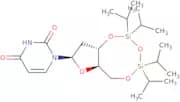
CAS :Methyluridine is a derivative of uridine that is used in the synthesis of pyrimidine nucleotides. This drug is also an inhibitor of orotidine 5′-monophosphate decarboxylase, which converts orotic acid to uracil. The conformational properties of methyluridine have been studied and found to be similar to those of other purine derivatives, such as adenine and guanine. In addition, methyluridine has been shown to inhibit the growth of typhimurium and increase the production of uracil in human lymphocytes. Methyluridine is metabolized by hydroxylation in liver microsomes, yielding 6-carboxylic acid.Formule :C10H14N2O6Degré de pureté :Min. 95%Couleur et forme :PowderMasse moléculaire :258.23 g/mol2'-Deoxy-3',5'-O-(1,1,3,3-tetraisopropyl-1,3-disiloxanediyl)uridine
CAS :2'-Deoxy-3',5'-O-(1,1,3,3-tetraisopropyl-1,3-disiloxanediyl)uridine is a novel and synthetic nucleoside analog with antiviral activity. It inhibits the synthesis of DNA by binding to the enzyme ribonucleotide reductase. This compound has been shown to be an activator of PPARs in vitro.Formule :C21H38N2O6Si2Degré de pureté :Min. 95%Masse moléculaire :470.72 g/molMalonyl coenzyme A lithium salt - 90%
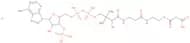
CAS :Malonyl coenzyme A lithium salt - 90% is a fatty acid that is involved in the biosynthesis of fats. It is also involved in the synthesis of prostaglandins, which are hormone-like substances that have a wide variety of effects on many different tissues. Malonyl coenzyme A lithium salt - 90% may be useful for the treatment of insulin resistance and obesity due to its ability to stimulate glucose uptake by fat cells and increase insulin sensitivity. The following product details are for a supplement:Formule :C24H38N7O19P3S·xLiDegré de pureté :Min. 95%Masse moléculaire :853.58 g/molN6-Benzyladenosine 5'-triphosphate sodium salt - 10 mM aqueous solution
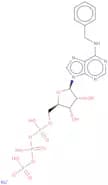
CAS :N6-Benzyladenosine 5'-triphosphate sodium salt - 10 mM aqueous solution is an analog of adenosine triphosphate (ATP). It is used in the study of protein kinase C. ATP and its analogs are able to phosphorylate proteins and regulate their activity. This study has shown that N6-benzyladenosine 5'-triphosphate sodium salt - 10 mM aqueous solution is an atp analog that activates protein kinase C, leading to the phosphorylation of proteins. This analog also inhibits tyrosine kinases, which may be due to its ability to inhibit the reuptake of serotonin and other transmitters.Formule :C17H22N5O13P3·xNaDegré de pureté :Min. 95%Couleur et forme :Colorless PowderMasse moléculaire :597.3 g/molUridine diphosphate choline (UDPC) sodium
CAS :Uridine diphosphate choline (UDPC) sodium is a nucleotide that is used as a phosphoramidite for DNA synthesis. The chemical formula for UDPC is C8H14N4O8P. The activation of the molecule occurs in acidic conditions, which may be due to the formation of an amide bond between the terminal phosphate and the amino group on the phosphorylcholine. This same reaction can also occur in alkaline conditions. UDPC has been shown to inhibit viral replication, including HIV-1, by blocking reverse transcription of viral RNA into DNA. It also has anticancer effects, as it inhibits cell proliferation and induces apoptosis in cancer cells. UDPC does not have any known side effects or toxicity.Formule :C14H25N3O12P2•NaDegré de pureté :Min. 95%Couleur et forme :PowderMasse moléculaire :512.3 g/molCaffeoyl-coenzym A
CAS :Please enquire for more information about Caffeoyl-coenzym A including the price, delivery time and more detailed product information at the technical inquiry form on this pageFormule :C30H42N7O19P3SDegré de pureté :Min. 95%Masse moléculaire :929.68 g/mol2-Phenylaminoadenosine
CAS :2-Phenylaminoadenosine (2-PA) is a potent and selective inhibitor of the P2Y receptor. 2-PA has been shown to reduce myocardial infarct size in vivo in mice, which may be due to its ability to inhibit the release of dopamine from the brain. In addition, 2-PA binds to LPS receptors on endothelial cells, reducing the production of proinflammatory cytokines and preventing platelet aggregation. 2-PA also inhibits the activation of toll-like receptor 4 (TLR4) in human monocytes, leading to reduced expression of proinflammatory cytokines and increased expression of anti-inflammatory cytokines. 2-PA is an agonist that binds with high affinity to P2Y receptors on erythrocytes. This binding results in decreased adenosine triphosphate (ATP) production by adenosine deaminase, which leads to decreased intracellular calcium levels and inhibition of neutrophFormule :C16H18N6O4Degré de pureté :Min. 95%Couleur et forme :PowderMasse moléculaire :358.35 g/mol2'-Deoxyinosine-5'-triphosphate sodium,100mM aqueous solution
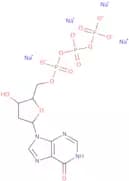
CAS :2'-Deoxyinosine-5'-triphosphate sodium (2'-dITP) is a modified nucleotide that has antiviral and anticancer properties. It has been shown to be an activator for ribonucleosides, deoxyribonucleosides, and DNA. 2'-DITP has also been shown to inhibit the growth of human breast cancer cells in vitro.
Formule :C10H11N4Na4O13P3Degré de pureté :Min. 95%Couleur et forme :Clear LiquidMasse moléculaire :580.09 g/mol2-Chloroadenosine
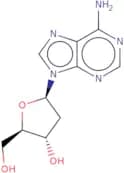
CAS :2-Chloroinosine is an adenosine receptor agonist; metabolically stable analog of adenosineFormule :C10H12ClN5O4Degré de pureté :Min. 95%Couleur et forme :PowderMasse moléculaire :301.69 g/mol2'-Deoxyadenosine
CAS :2'-Deoxyadenosine is a nucleoside that is found in DNA. It has been shown to have potent anticancer activity against carcinoma cell lines and to bind to the adenosine receptor A3. 2'-Deoxyadenosine has also been shown to inhibit the production of inflammatory cytokines, such as tumor necrosis factor-α and interleukin-6, from nuclear extracts of mouse tumor cells. This nucleoside may be a potential drug target for the treatment of cancer and inflammation.Formule :C10H13N5O3Degré de pureté :Min. 98 Area-%Couleur et forme :PowderMasse moléculaire :251.24 g/mol5'-O-DMT-thymidine-3'-succinyl CPG 2000 Å
5'-O-DMT-thymidine-3'-succinyl CPG 2000 Å is a synthetic nucleoside that contains an acetyl group at the 5' position. The succinyl group has been added to the 3' position of the nucleoside and is bonded to a carrier molecule (2000 Å). This product is used as an activator in DNA synthesis, it also has antiviral and anticancer activities.Couleur et forme :Powder2'-Deoxy-3,4,5,6-tetrahydrouridine
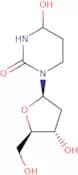
CAS :2'-Deoxy-3,4,5,6-tetrahydrouridine (2DTHR) is a cytidine deaminase inhibitor that is used in vitro to inhibit the production of tumor necrosis factor (TNF). 2DTHR has been shown to be active against hepatocellular carcinoma cells. It is also reactive with tumor tissue and can be eliminated at a rate similar to that of deoxycytidine kinase. This drug binds to the enzyme target and inhibits its activity by increasing enzyme levels, which causes cell death. 2DTHR inhibits TNF production in tumor tissue by binding to cytidine deaminase and preventing conversion of cytidine into uracil. This drug has been shown to cause tumor inhibition in vitro.
Formule :C9H16N2O5Degré de pureté :Min. 95%Couleur et forme :PowderMasse moléculaire :232.23 g/mol5-Methoxyuridine-5'-triphosphate sodium, 100mM aqueous solution
CAS :5-Methoxyuridine-5'-triphosphate is a monophosphate nucleoside that serves as a precursor for the synthesis of 5-methoxyuridine (5MU) and other nucleosides. It has antiviral effects, and is used in the treatment of herpes zoster infection. 5-Methoxyuridine-5'-triphosphate is an analog of uridine and deoxyribonucleosides with antiviral activity, which can be used to treat herpes zoster infection. This drug also has anticancer properties, which may be due to its ability to inhibit DNA synthesis by inhibiting ribonucleotide reductase and DNA polymerase, leading to cell death.Formule :C10H17N2O16P3•NaxDegré de pureté :Min. 95%Couleur et forme :Clear LiquidMasse moléculaire :514.17 g/molN6-(6-Aminohexyl)-2'-deoxyadenosine
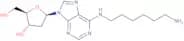
CAS :N6-(6-Aminohexyl)-2'-deoxyadenosine is a novel nucleoside that is structurally related to the natural nucleosides, dATP and dGTP. It has been shown to be an activator of ribonucleosides and phosphoramidites, which are used in the synthesis of DNA and RNA. N6-(6-Aminohexyl)-2'-deoxyadenosine has also been shown to inhibit cancer cells as well as antiviral activity against HIV-1.Formule :C16H26N6O3Degré de pureté :Min. 95%Couleur et forme :Slightly Yellow PowderMasse moléculaire :350.43 g/mol1-b-D-Arabinofuranosyluracil 5'-monophosphate
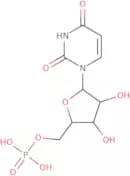
CAS :1-b-D-Arabinofuranosyluracil 5'-monophosphate is a pyrimidine nucleotide analog. Because of its structural similarity to natural nucleotides, it can interact with enzymes involved in nucleic acid synthesis. It is also a metabolite of Ara-U (arabinosyluracil), which is itself a compound studied for its biological activity. Scientists could potentially use this molecule in research to study how cells process and use nucleotides, and to understand how changes in nucleotide structure can affect biological processes.Formule :C9H13N2O9PDegré de pureté :Min. 95%Couleur et forme :PowderMasse moléculaire :324.18 g/mol4-Chloro-5-iodo-pyrrolo[2,3-d]pyriMidine-7-carboxylic acid tert-butyl ester
CAS :Focuses is a chemical compound that does not have any known commercial or industrial uses.Degré de pureté :Min. 95%ent-abacavir
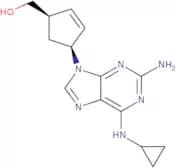
CAS :Ent-abacavir is a drug that belongs to the group of antiretroviral drugs. It has minimal toxicity and has been shown to be effective in long-term treatment of HIV/AIDS. Ent-abacavir is also used as part of active antiretroviral therapy, which includes at least three or four different drugs. It inhibits the activity of reverse transcriptase, an enzyme involved in the replication process of HIV and other retroviruses. This drug has been shown to have few drug interactions with other medications, although caution should be taken when using ent-abacavir with drugs that are metabolized by cytochrome P450 enzymes. Ent-abacavir is not recommended for use in patients who have chronic viral hepatitis or who have a body mass index greater than 30 kg/m2 because its pharmacokinetic properties may be altered in these individuals.Formule :C14H18N6ODegré de pureté :Min. 95%Masse moléculaire :286.33 g/molPolyoxin B
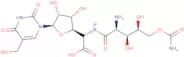
CAS :Polyoxin B is a natural product that is produced by the fungus Polyporus umbellatus. It is a synthetase inhibitor that specifically inhibits the enzyme malic acid synthetase in bacteria and fungi. Polyoxin B has been shown to have antifungal activity in vitro and to inhibit the growth of Cryptococcus neoformans, which may be due to its ability to inhibit terminal residues, such as acetate extract, bacterial strain, and synthase enzyme.Formule :C17H25N5O13Degré de pureté :Min. 70%Couleur et forme :Yellow PowderMasse moléculaire :507.41 g/mol2'-Deoxyuridine-5'-monophosphate disodium salt
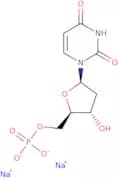
CAS :2'-Deoxyuridine-5'-monophosphate disodium salt (2DUMP) is a nucleoside analog that inhibits the synthesis of DNA and RNA by inhibiting the enzyme thymidylate synthase. 2DUMP is a covalent inhibitor of thymidylate synthase, which prevents the formation of dTMP from deoxyuridine 5'-triphosphate. This compound has been shown to be effective in treating squamous cell cancer and hyperproliferative diseases such as chronic myelogenous leukemia. 2DUMP is also used as an antiviral agent against HIV, herpes simplex virus, and varicella zoster virus. It has been shown to bind to benzalkonium chloride (BAK) in biological samples such as serum or plasma. 2DUMP binds to BAK through a covalent linkage between the 3' hydroxyl group on BAK and the phosphate group on 2DUMPFormule :C9H11N2O8PNa2Degré de pureté :Min. 95%Couleur et forme :PowderMasse moléculaire :352.15 g/mol9-(β-D-Arabinofuranosyl)adenine 5'-monophosphate
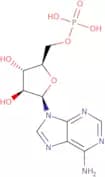
CAS :9-(β-D-Arabinofuranosyl)adenine 5'-monophosphate (Ara-AMP) is a prodrug that is converted to adenine arabinoside in vivo. It is used as an antiviral agent for the prevention of hepatitis B and C. Ara-AMP inhibits viral DNA synthesis by acting as a competitive inhibitor of adenosine triphosphate, which is required for viral DNA polymerase activity. Ara-AMP also has antiviral properties against some RNA viruses, such as HIV and influenza virus. Ara-AMP can be administered orally or by injection, making it suitable for use in children who are unable to take oral medication.Formule :C10H14N5O7PDegré de pureté :Min. 95%Couleur et forme :White PowderMasse moléculaire :347.22 g/mol






![4-Chloro-5-iodo-pyrrolo[2,3-d]pyriMidine-7-carboxylic acid tert-butyl ester](/_next/image/?url=https%3A%2Fstatic.cymitquimica.com%2Fproducts%2F3D%2Fthumb-webp%2FNC44293.webp&w=3840&q=75)