Nucléotides
Les nucléotides sont des composés organiques qui servent de building blocks aux acides nucléiques, essentiels à la formation de l'ADN et de l'ARN. Chaque nucléotide est composé d'une base azotée, d'une molécule de sucre et d'un ou plusieurs groupes phosphate. Ces nucléotides s'assemblent pour former de longues chaînes, créant le matériel génétique qui porte et transmet l'information génétique dans tous les organismes vivants. Dans cette section, vous trouverez une large gamme de nucléotides essentiels pour la recherche en génétique, biologie moléculaire et biochimie. Ils sont fondamentaux pour étudier les processus génétiques, synthétiser des acides nucléiques et développer des outils diagnostiques et thérapeutiques. Chez CymitQuimica, nous proposons des nucléotides de haute qualité pour soutenir vos recherches scientifiques et applications, garantissant précision et fiabilité dans vos expériences.
Sous-catégories appartenant à la catégorie "Nucléotides"
2634 produits trouvés pour "Nucléotides"
Trier par
Degré de pureté (%)
0
100
|
0
|
50
|
90
|
95
|
100
2'-O-Methylguanosine 5'-triphosphate lithium salt - 100mM aqueous solution
CAS :<p>2'-O-Methylguanosine 5'-triphosphate lithium salt is a synthetic nucleotide</p>Formule :C11H18N5O14P3·xLiDegré de pureté :Min. 95%Couleur et forme :Clear LiquidMasse moléculaire :537.21 g/mol5,6-Dihydrothymidine
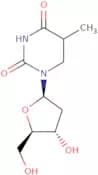
CAS :<p>5,6-Dihydrothymidine is a hydroxylated thymidine analogue. It binds to the leukocyte antigen, which is found on many different types of cells. 5,6-Dihydrothymidine inhibits the replication of herpes simplex virus and can be used for diagnostic purposes. 5,6-Dihydrothymidine has been shown to have conformational properties that are similar to those of thymine, which allows it to bind to the template strand in DNA. This binding prevents the synthesis of messenger RNA from DNA. 5,6-Dihydrothymidine is also able to inhibit cell growth in culture and can be used as a cell culture medium supplement.</p>Formule :C10H16N2O5Degré de pureté :Min. 95%Couleur et forme :PowderMasse moléculaire :244.24 g/molN6-Propargyladenosine
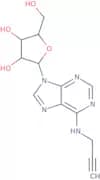
CAS :<p>N6-Propargyladenosine is an alkyne functionalised nucleoside.</p>Formule :C13H15N5O4Degré de pureté :Min. 95%Couleur et forme :PowderMasse moléculaire :305.29 g/mol8-(p-Chlorophenylthio)-cGMP
CAS :<p>8-(p-Chlorophenylthio)-cGMP is a modified nucleoside that has anticancer activity. It inhibits DNA synthesis and the activation of protein kinases, which are enzymes that transmit signals from the cell surface to the nucleus. 8-(p-Chlorophenylthio)-cGMP can also inhibit viral replication by inhibiting the production of new virus particles and by inhibiting the action of reverse transcriptase, an enzyme that converts RNA into DNA.</p>Formule :C16H15ClN5O7PSDegré de pureté :Min. 95%Masse moléculaire :487.81 g/mol5-Methoxyuridine 5′-triphosphate sodium, 85mM/L aqueous solution
CAS :Please enquire for more information about 5-Methoxyuridine 5′-triphosphate sodium, 85mM/L aqueous solution including the price, delivery time and more detailed product information at the technical inquiry form on this pageFormule :C10H17N2O16P3•NaxDegré de pureté :Min. 95%2-Deoxycytidine 3',5'-diphosphate
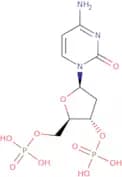
CAS :<p>2-Deoxycytidine 3',5'-diphosphate is an additive that is used in the production of DNA. It is a single-stranded nucleotide with a guanine base. 2-Deoxycytidine 3',5'-diphosphate has been shown to inhibit bacterial growth by reacting with hydrogen peroxide, which is produced during the process of oxidative phosphorylation. This reaction leads to the formation of reactive oxygen species, which damage DNA and cause cell death. The compound also binds to metal ions and prevents them from interacting with cellular components. 2-Deoxycytidine 3',5'-diphosphate can be used as a chromatographic agent for separating DNA fragments according to their size.</p>Formule :C9H15N3O10P2Degré de pureté :Min. 95%Masse moléculaire :387.18 g/mol5'-O-DMT-thymidine-3'-lcaa-CPG
<p>5'-O-DMT-thymidine-3'-lcaa-CPG is a nucleoside, ribonucleoside, and diphosphate that inhibits viral DNA synthesis. It is a novel compound with antiviral properties that has been shown to inhibit the replication of human cytomegalovirus (HCMV) and herpes simplex type 1 virus. 5'-O-DMT-thymidine-3'-lcaa-CPG also functions as an anticancer agent by inhibiting DNA synthesis in tumor cells. This nucleoside analog is phosphoramidite, which can be used for the preparation of modified oligonucleotides. 5'-O-DMT-thymidine-3'-lcaa-CPG has high purity and high quality.</p>Degré de pureté :Min. 95%Couleur et forme :PowderN-(2'-Deoxy- 2', 2'- difluorocytidine 5'-P- phenyl phosphate) L- alanine benzyl ester
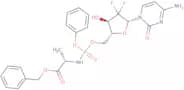
CAS :<p>N-(2'-Deoxy- 2', 2'- difluorocytidine 5'-P- phenyl phosphate) L- alanine benzyl ester, also known as Acelarin, is primarily used in cancer treatment, including leukemia and solid tumors.</p>Formule :C25H27F2N4O8PDegré de pureté :Min. 98 Area-%Couleur et forme :PowderMasse moléculaire :580.47 g/mol6-Chloro-2-iodo-9-(2',3',5'-tri-O-acetyl-b-D-ribofuranosyl)purine
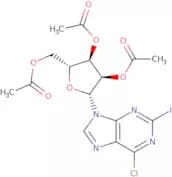
CAS :<p>6-Chloro-2-iodo-9-(2',3',5'-tri-O-acetyl-b-D-ribofuranosyl)purine is a protected purine nucleoside</p>Formule :C16H16ClIN4O7Degré de pureté :Min. 95%Masse moléculaire :538.68 g/mol7-Deaza-7-iodoadenosine
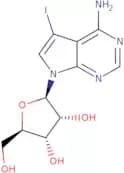
CAS :<p>7-Deaza-7-iodoadenosine is a nucleotide that has been used in experiments to assess the levels of adenosine, a dinucleotide phosphate that is involved in many cellular functions. 7-deaza-7-iodoadenosine has been shown to inhibit locomotor activity in rats and cyclase activity in 3T3-L1 preadipocytes. It also inhibits the release of inflammatory proteins from polymorphonuclear leucocytes and angiogenesis (formation of new blood vessels) in liver cells. Although this nucleotide has not been extensively studied, it has been proposed as an antiinflammatory agent because it inhibits protein synthesis and downregulates proinflammatory proteins.</p>Formule :C11H13IN4O4Degré de pureté :Min. 95%Masse moléculaire :392.15 g/mol5-Isopropyl-2'-deoxyuridine
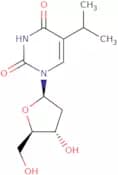
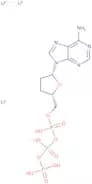
CAS :<p>5-Isopropyl-2'-deoxyuridine is a nucleoside analog that is used in the treatment of inflammatory bowel disease. It has been shown to be effective in the treatment of Crohn's disease, ulcerative colitis, and indeterminate colitis. 5-Isopropyl-2'-deoxyuridine inhibits bacterial growth by inhibiting RNA synthesis, which leads to cell death. This drug also inhibits the production of inflammatory mediators such as prostaglandins and leukotrienes that are released from cells infected with bacteria. 5-Isopropyl-2'-deoxyuridine is converted into an active form by hydrolysis or oxidation followed by phosphorylation. This drug binds to the 5' end of bacterial DNA and prevents the formation of hydrogen bonds between adjacent bases, causing strand breakage.</p>Formule :C12H18N2O5Degré de pureté :Min. 95%Masse moléculaire :270.28 g/mol2',3'-Dideoxyadenosine-5'-triphosphate lithium salt
CAS :<p>2',3'-Dideoxyadenosine-5'-triphosphate lithium salt is a nucleoside for use in research applications</p>Formule :C10H16N5O11P3·xLiDegré de pureté :Min. 95%Couleur et forme :Clear liquid.Masse moléculaire :475.18 g/mol7-TFA-ap-7-Deaza-2',3'-dideoxyadenosine
CAS :<p>7-TFA-ap-7-Deaza-2',3'-dideoxyadenosine is a diphosphate nucleoside analogue that can be activated by phosphoramidites. It is a novel, synthetic, and high quality nucleotide with antiviral and anticancer properties. This drug has been shown to inhibit the synthesis of DNA and RNA at the transcriptional level. 7-TFA-ap-7-Deaza-2',3'-dideoxyadenosine is a monophosphate nucleoside analogue that can be used in ribonucleotide synthesis for the treatment of cancer.</p>Formule :C16H16F3N5O3Masse moléculaire :383.33 g/molRef: 3D-J-700297
1gÀ demander50mgÀ demander100mgÀ demander250mgÀ demander500mgÀ demander-Unit-ggÀ demanderγ-(2-Azidoethyl)-ATP sodium, 10 mM aqueous solution
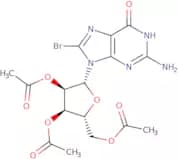
<p>Please enquire for more information about γ-(2-Azidoethyl)-ATP sodium, 10 mM aqueous solution including the price, delivery time and more detailed product information at the technical inquiry form on this page</p>Formule :C12H19N8O13P3•NaxDegré de pureté :Min. 95%2',3',5'-Tri-O-acetyl-8-bromoguanosine
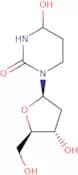
CAS :<p>2',3',5'-Tri-O-acetyl-8-bromoguanosine is a synthetic nucleoside analog that inhibits the growth of tumor cells. It has been shown to inhibit the progression of prostate cancer and cervical cancer by binding to guanosine, preventing its conversion into ATP. This compound also prevents proliferation in hek293 and glioblastoma cells. The mechanism of action may be due to oxidative phosphite formation, which causes DNA damage and subsequent apoptosis.</p>Formule :C16H18BrN5O8Degré de pureté :Min. 95%Couleur et forme :Off-White To Light (Or Pale) Yellow SolidMasse moléculaire :488.25 g/mol2'-Deoxy-3,4,5,6-tetrahydrouridine
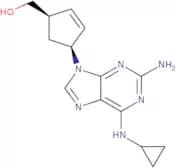
CAS :<p>2'-Deoxy-3,4,5,6-tetrahydrouridine (2DTHR) is a cytidine deaminase inhibitor that is used in vitro to inhibit the production of tumor necrosis factor (TNF). 2DTHR has been shown to be active against hepatocellular carcinoma cells. It is also reactive with tumor tissue and can be eliminated at a rate similar to that of deoxycytidine kinase. This drug binds to the enzyme target and inhibits its activity by increasing enzyme levels, which causes cell death. 2DTHR inhibits TNF production in tumor tissue by binding to cytidine deaminase and preventing conversion of cytidine into uracil. This drug has been shown to cause tumor inhibition in vitro.</p>Formule :C9H16N2O5Degré de pureté :Min. 95%Couleur et forme :PowderMasse moléculaire :232.23 g/molent-abacavir
CAS :<p>Ent-abacavir is a drug that belongs to the group of antiretroviral drugs. It has minimal toxicity and has been shown to be effective in long-term treatment of HIV/AIDS. Ent-abacavir is also used as part of active antiretroviral therapy, which includes at least three or four different drugs. It inhibits the activity of reverse transcriptase, an enzyme involved in the replication process of HIV and other retroviruses. This drug has been shown to have few drug interactions with other medications, although caution should be taken when using ent-abacavir with drugs that are metabolized by cytochrome P450 enzymes. Ent-abacavir is not recommended for use in patients who have chronic viral hepatitis or who have a body mass index greater than 30 kg/m2 because its pharmacokinetic properties may be altered in these individuals.</p>Formule :C14H18N6ODegré de pureté :Min. 95%Masse moléculaire :286.33 g/molAdenosine 2',3'-cyclic monophosphate
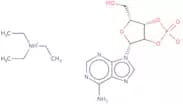
CAS :<p>Adenosine 2',3'-cyclic monophosphate triethylammonium salt (AMP-TEA) is a structural analogue of adenosine. It is a potent inhibitor of protein synthesis by preventing the phosphodiesterase activity of cyclic nucleotide phosphodiesterases and cyclic nucleotide phosphodiesterase. AMP-TEA can be used as a tool to study translation in tissue culture, as well as to examine the effects on protein synthesis and other biochemical reactions that are regulated by cyclic nucleotides. It is also used for the preparation of tissue samples for enzymatic analysis or for radiolabeling experiments.<br>AMP-TEA has an optimum pH of 4.5, but can be used at lower or higher pH values. The optimal temperature range for use is between 0°C and 50°C, with the maximum stability occurring at 37°C.</p>Formule :C10H12N5O6PDegré de pureté :Min. 95%Couleur et forme :PowderMasse moléculaire :329.21 g/molN6-Benzyladenosine 5'-triphosphate sodium salt - 10 mM aqueous solution
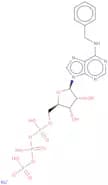
CAS :<p>N6-Benzyladenosine 5'-triphosphate sodium salt - 10 mM aqueous solution is an analog of adenosine triphosphate (ATP). It is used in the study of protein kinase C. ATP and its analogs are able to phosphorylate proteins and regulate their activity. This study has shown that N6-benzyladenosine 5'-triphosphate sodium salt - 10 mM aqueous solution is an atp analog that activates protein kinase C, leading to the phosphorylation of proteins. This analog also inhibits tyrosine kinases, which may be due to its ability to inhibit the reuptake of serotonin and other transmitters.</p>Formule :C17H22N5O13P3·xNaDegré de pureté :Min. 95%Couleur et forme :Colorless PowderMasse moléculaire :597.3 g/molUridine diphosphate choline (UDPC) sodium
CAS :<p>Uridine diphosphate choline (UDPC) sodium is a nucleotide that is used as a phosphoramidite for DNA synthesis. The chemical formula for UDPC is C8H14N4O8P. The activation of the molecule occurs in acidic conditions, which may be due to the formation of an amide bond between the terminal phosphate and the amino group on the phosphorylcholine. This same reaction can also occur in alkaline conditions. UDPC has been shown to inhibit viral replication, including HIV-1, by blocking reverse transcription of viral RNA into DNA. It also has anticancer effects, as it inhibits cell proliferation and induces apoptosis in cancer cells. UDPC does not have any known side effects or toxicity.</p>Formule :C14H25N3O12P2•NaDegré de pureté :Min. 95%Couleur et forme :PowderMasse moléculaire :512.3 g/mol