Nucléotides
Sous-catégories appartenant à la catégorie "Nucléotides"
2638 produits trouvés pour "Nucléotides"
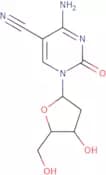
5-Cyano-2'-deoxycytidine
CAS :Nucleobase functionalised deoxynucleosideFormule :C10H12N4O4Degré de pureté :Min. 95%Masse moléculaire :252.23 g/mol2'-Deoxy-5-methyl-isocytidine
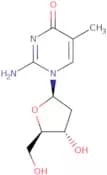
CAS :2'-Deoxy-5-methyl-isocytidine is an analog of cytidine that is used in the synthesis of oligodeoxynucleotides. It has shown to be complementary to dsDNA and to inhibit hepatitis B virus replication in cell culture. 2'-Deoxy-5-methyl-isocytidine is synthesized by solid phase chemistry on a polystyrene support with monomers, depyrimidination, and purification by column chromatography. The chemical stability of this compound has been shown by its ability to withstand heating at 100°C for 10 minutes without decomposition.Formule :C10H15N3O4Degré de pureté :Min. 95%Masse moléculaire :241.26 g/mol7-Deaza-2'-deoxy-7-ethynyladenosine
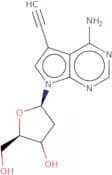
CAS :7-Deaza-2'-deoxy-7-ethynyladenosine is a fluorescent analog of adenosine that has been synthesized to be used as an antimicrobial agent. This compound has shown to be effective against both Gram-positive and Gram-negative bacteria, including methicillin resistant Staphylococcus aureus and Escherichia coli. 7DDAE is also able to inhibit the growth of fungus and yeast, such as Candida albicans. This drug has been shown to have no cytotoxic effects on mammalian cells at concentrations up to 50 μM. 7DDAE has been found to be very photostable in solution, which means it does not degrade when exposed to light.
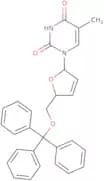
Formule :C13H14N4O3Degré de pureté :Min. 95%Couleur et forme :PowderMasse moléculaire :274.28 g/mol2',3'-Dehydro-5'-O-tritylthymidine
CAS :2',3'-Dehydro-5'-O-tritylthymidine is an anticancer compound, which is a novel nucleoside phosphoramidite. It is synthesized from thymidine in two steps: first, the 2',3'-dideoxyribose phosphate moiety is prepared by reacting 2',3'-dideoxyribose with chloroacetic acid in the presence of triethylamine, followed by reaction with trityl chloride to form the 5' position of the thymidine. 2',3'-Dehydro-5'-O-tritylthymidine has been shown to inhibit DNA synthesis and antiviral activity.Formule :C29H26N2O4Degré de pureté :Min. 95%Masse moléculaire :466.54 g/mol2'-Deoxy-5-fluorouridine-5'-triphosphate sodium salt - 100 mM solution in water
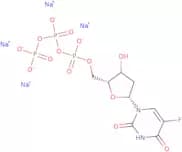
CAS :2'-Deoxy-5-fluorouridine-5'-triphosphate sodium salt - 100 mM solution in water is a nucleotide analog that inhibits the synthesis of RNA. It is used for the treatment of cancer. This agent binds to DNA and prevents the formation of RNA by inhibiting the enzyme ribonucleotide reductase. 2'-Deoxy-5-fluorouridine-5'-triphosphate sodium salt - 100 mM solution in water also has a perchloric acid component, which may be responsible for its haematopoietic effects.
Formule :C9H14FN2O14P3·xNaDegré de pureté :Min. 95%Couleur et forme :PowderMasse moléculaire :486.13 g/molGuanosine-2'(&3')-monophosphate disodium (mixed isomers)
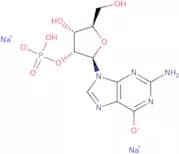
CAS :Guanosine-2'(&3')-monophosphate disodium salt (mixed isomers) is a synthetic nucleoside with antiviral and anticancer properties. It has been shown to activate the transcription of DNA in vitro by binding to the promoter region, resulting in higher levels of RNA synthesis. Guanosine-2'(&3')-monophosphate disodium salt (mixed isomers) has been shown to inhibit the replication of viruses, such as herpes simplex virus type 1 (HSV-1), and it may have potential use in cancer therapy. The drug is also used as a precursor for other antiviral drugs and antibiotics. Guanosine-2'(&3')-monophosphate disodium salt (mixed isomers) is available in high purity, high quality, and at low cost.Formule :C10H14N5O8P•2NaDegré de pureté :Min. 95%Couleur et forme :White PowderMasse moléculaire :407.18 g/mol2’-Deoxy-N2-DMF-2’-fluoroguanosine
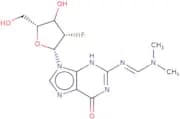
Please enquire for more information about 2’-Deoxy-N2-DMF-2’-fluoroguanosine including the price, delivery time and more detailed product information at the technical inquiry form on this page
Formule :C13H17FN6O4Degré de pureté :Min. 95%Masse moléculaire :340.31 g/mol2-Methyladenosine-5'-triphosphate
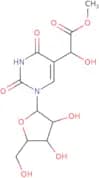
CAS :2-Methyladenosine-5'-triphosphate (2-MeATP) is an inhibitor of the purinergic receptor P2X. It is a competitive antagonist of ATP at the P2X receptor, blocking ATP binding and inhibiting ATP-mediated signal transduction. 2-MeATP has been shown to inhibit angiotensin-mediated hyperpolarization in wild type and mutant strains of M. smegmatis, as well as m. tuberculosis perfusion in mesenteric lymph nodes and vasoconstriction in wildtype and mutant strains of AT1 receptors.Formule :C11H18N5O13P3Degré de pureté :Min. 95%Masse moléculaire :521.21 g/mol5-(Carboxyhydroxymethyl)uridine methyl ester
CAS :5-(Carboxyhydroxymethyl)uridine methyl ester is a modified form of uridine that is used in biochemical reactions. It is found in the ovary, where it interacts with acidic environments to produce the corresponding hydroxymethyl derivatives. The hydroxymethyl derivatives are then converted to the corresponding 5-carboxy-hydroxymethyl derivatives by conjugates and modifications, which can be analyzed using various assays. 5-(Carboxyhydroxymethyl)uridine methyl ester has also been shown to have epigenetic effects on cellular activity and cancer.Formule :C12H16N2O9Degré de pureté :Min. 95 Area-%Couleur et forme :Slightly Yellow Clear LiquidMasse moléculaire :332.26 g/mol4-Amino-6-hydroxypyrazolo[3,4-d]pyrimidine
CAS :Formule :C5H5N5ODegré de pureté :>93.0%(HPLC)Couleur et forme :White to Light yellow to Light orange powder to crystallineMasse moléculaire :151.135-Amino-1-β-D-ribofuranosyl-1H-imidazole-4-carboxamide
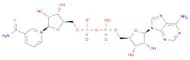
CAS :Formule :C9H14N4O5Degré de pureté :95%Couleur et forme :SolidMasse moléculaire :258.2313THIONICOTINAMIDE ADENINE DINUCLEOTIDE
CAS :Formule :C21H33N7O13P2SDegré de pureté :95%Couleur et forme :SolidMasse moléculaire :685.5383Coenzyme A,S-(2E)-2-dodecenoate
CAS :Formule :C33H56N7O17P3SDegré de pureté :86.0%Masse moléculaire :947.8207Polyinosinic-polycytidylic acid sodium salt
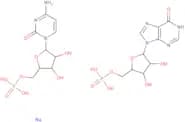
CAS :Polyinosinic acid-polycytidylic acid (Poly I:C), an agonist of TLR3 toll-like receptors, is a synthetic double-stranded RNA analog, consisting of polyinosinic acid (poly I) paired with polycytidylic acid (poly C), forming a stable duplex structure. PolyI:C stimulates the secretion of pro-inflammatory cytokines and type I interferon through its interaction with endosomal Toll-like receptor 3 (TLR-3) and the cytoplasmic receptors melanoma differentiation-associated gene 5 (MDA-5) and retinoic acid-inducible gene I (RIG-I). This immunostimulant activity makes Poly I:C a useful vaccine adjuvant and is used in vaccine formulations. Poly I:C and its stabilized analogs (e.g., poly-ICLC) are also being actively researched for their dual role in oncology: directly targeting tumors and acting as immune potentiators. For example Poly I:C can induce apoptosis in tumor cells and stimulate immunogenic cell death and is therefore being explored alongside chemotherapy, radiotherapy, and checkpoint inhibitors, helping to overcome resistance mechanisms and strengthen treatment outcomes. We can supply PolyI:C to all stages of your project - from R&D and preclinical phases right up to GMP commercial manufacture. Contact our team for custom Poly I:C products.
For more on poly I:C read out blog 'Poly I:C: A Vaccine Adjuvant With Oncological Potential.'Formule :(C10H13N4O8P)x•(C9H14N3O8P)x•NaxCouleur et forme :White Powder3′-UMP
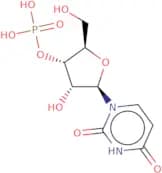
CAS :3′-UMP is a modified nucleoside that has antiviral activity, and is synthesized by the phosphoramidite method. It is a novel compound, which has not been previously reported. 3′-UMP is an activator of ribonucleotide reductase and can be used to treat viral infections. This drug also has anticancer effects and can be used as a chemotherapeutic agent for the treatment of leukemia. 3′-UMP has high purity and high quality.
Formule :C9H13N2O9PDegré de pureté :Min. 95%Masse moléculaire :324.18 g/molPolyinosinic acid tripotassium salt
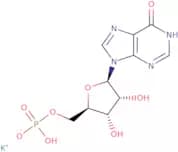
CAS :Polyinosinic acid is a single stranded RNA analog which is combined with polycytidylic acid (poly C) to form a stable duplex structure known as Polyinosinic acid-polycytidylic acid (Poly I:C). PolyI:C stimulates the secretion of pro-inflammatory cytokines and type I interferon through its interaction with endosomal Toll-like receptor 3 (TLR-3) and the cytoplasmic receptors melanoma differentiation-associated gene 5 (MDA-5) and retinoic acid-inducible gene I (RIG-I). This immunostimulant activity makes Poly I:C a useful vaccine adjuvant and is used in vaccine formulations. Poly I:C and its stabilized analogs (e.g., poly-ICLC) are also being actively researched for their dual role in oncology: directly targeting tumors and acting as immune potentiators. For example Poly I:C can induce apoptosis in tumor cells and stimulate immunogenic cell death and is therefore being explored alongside chemotherapy, radiotherapy, and checkpoint inhibitors, helping to overcome resistance mechanisms and strengthen treatment outcomes. We can supply PolyI:C to all stages of your project - from R&D and preclinical phases right up to GMP commercial manufacture. Contact our team for custom Poly I:C products.
For more on poly I:C read out blog 'Poly I:C: A Vaccine Adjuvant With Oncological Potential.'Degré de pureté :Min. 95%2',3',5'-Tri-O-acetylinosine
CAS :2′,3′,5′-Tri-O-acetylinosine is a protected form of the nucleoside inosine, with potential for use in the preparation of modified nucleotides and nucleoside analogs.
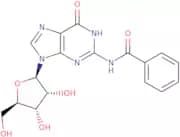
Formule :C16H18N4O8Degré de pureté :Min. 95%Couleur et forme :White To Off-White SolidMasse moléculaire :394.34 g/molN2-Benzoylguanosine
CAS :N2-Benzoylguanosine is a nucleotide derivative that is formed by the acetylation of guanosine. It has been shown to act as a buffer in alkaline solutions and isomerizes to its n-oxide form when heated. N2-Benzoylguanosine reacts with peroxides such as hydrogen peroxide, glyoxal, and organic peroxides, forming hydroperoxide intermediates that can be converted into other products. The acidic hydrolysis of N2-benzoylguanosine yields the corresponding 6-benzoyladenosines. It has been shown to enhance the activity of uridine in inhibiting bacterial growth, while also acting as an inhibitor of viral RNA synthesis. This compound also reacts with nitrous acid to form an n6-benzoyladenosine derivative that inhibits the formation of RNA chains during transcription.
Formule :C17H17N5O6Degré de pureté :Min. 95%Couleur et forme :White to beige solid.Masse moléculaire :387.35 g/mol


![4-Amino-6-hydroxypyrazolo[3,4-d]pyrimidine](/_next/image/?url=https%3A%2Fstatic.cymitquimica.com%2Fproducts%2F3B%2Fthumb-webp%2FA2699.webp&w=3840&q=75)