Nucléotides
Sous-catégories appartenant à la catégorie "Nucléotides"
2638 produits trouvés pour "Nucléotides"
6-Methyluridine
CAS :Methyluridine is a derivative of uridine that is used in the synthesis of pyrimidine nucleotides. This drug is also an inhibitor of orotidine 5′-monophosphate decarboxylase, which converts orotic acid to uracil. The conformational properties of methyluridine have been studied and found to be similar to those of other purine derivatives, such as adenine and guanine. In addition, methyluridine has been shown to inhibit the growth of typhimurium and increase the production of uracil in human lymphocytes. Methyluridine is metabolized by hydroxylation in liver microsomes, yielding 6-carboxylic acid.Formule :C10H14N2O6Degré de pureté :Min. 95%Couleur et forme :PowderMasse moléculaire :258.23 g/mol2',3'-O-Isopropylideneinosine
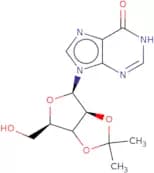
CAS :2',3'-O-Isopropylideneinosineis a nucleoside for use in research applications
Formule :C13H16N4O5Degré de pureté :Min. 95%Couleur et forme :PowderMasse moléculaire :308.3 g/mol2'-Deoxyuridine-5'-monophosphate disodium salt
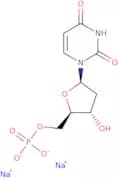
CAS :2'-Deoxyuridine-5'-monophosphate disodium salt (2DUMP) is a nucleoside analog that inhibits the synthesis of DNA and RNA by inhibiting the enzyme thymidylate synthase. 2DUMP is a covalent inhibitor of thymidylate synthase, which prevents the formation of dTMP from deoxyuridine 5'-triphosphate. This compound has been shown to be effective in treating squamous cell cancer and hyperproliferative diseases such as chronic myelogenous leukemia. 2DUMP is also used as an antiviral agent against HIV, herpes simplex virus, and varicella zoster virus. It has been shown to bind to benzalkonium chloride (BAK) in biological samples such as serum or plasma. 2DUMP binds to BAK through a covalent linkage between the 3' hydroxyl group on BAK and the phosphate group on 2DUMPFormule :C9H11N2O8PNa2Degré de pureté :Min. 95%Couleur et forme :PowderMasse moléculaire :352.15 g/molLamivudine-5'-triphosphate tetratriethylammonium salt - ca.15 mM Aqueous solution
Lamivudine-5'-triphosphate tetratriethylammonium salt - ca.15 mM Aqueous solution is an antiviral drug used to treat HIV/AIDS and hepatitis B infections. It is a potent inhibitor of human immunodeficiency virus type 1 (HIV-1) replication, acting by blocking the viral enzyme reverse transcriptase. Lamivudine-5'-triphosphate tetratriethylammonium salt - ca.15 mM Aqueous solution also inhibits cellular viral DNA synthesis and has been shown to exhibit anticancer activity in vitro and in vivo. This product is synthesized from raw materials through a novel process that involves modification of the phosphoramidite monophosphate with tetratriethylammonium salts.Formule :C32H74N7O12P3SDegré de pureté :Min. 95%Masse moléculaire :873.96 g/molXanthosine-5'-triphosphate triethylammonium salt - 100 mM aqueous solution
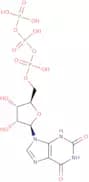
CAS :Inhibitor of adenylyl and guanylyl cyclaseFormule :C10H15N4O15P3·xC6H15NDegré de pureté :Min. 95%Couleur et forme :Colorless PowderMasse moléculaire :524.17 g/mol2'-O-Propargyladenosine
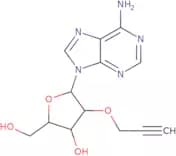
CAS :2'-O-Propargyladenosine is a modified nucleoside that belongs to the group of deoxyribonucleosides. It is an activator of viral DNA polymerases, which causes the synthesis of viral DNA to stop. This compound has antiviral and anticancer activities. 2'-O-Propargyladenosine has been shown to be effective against various human cancer cell lines in vitro and in vivo. It is a synthetic nucleoside with high purity, showing no detectable impurities by HPLC analysis.
Formule :C13H15N5O4Degré de pureté :Min. 95%Couleur et forme :White PowderMasse moléculaire :305.29 g/mol5-Methoxyuridine-5'-triphosphate sodium, 100mM aqueous solution
CAS :5-Methoxyuridine-5'-triphosphate is a monophosphate nucleoside that serves as a precursor for the synthesis of 5-methoxyuridine (5MU) and other nucleosides. It has antiviral effects, and is used in the treatment of herpes zoster infection. 5-Methoxyuridine-5'-triphosphate is an analog of uridine and deoxyribonucleosides with antiviral activity, which can be used to treat herpes zoster infection. This drug also has anticancer properties, which may be due to its ability to inhibit DNA synthesis by inhibiting ribonucleotide reductase and DNA polymerase, leading to cell death.Formule :C10H17N2O16P3•NaxDegré de pureté :Min. 95%Couleur et forme :Clear LiquidMasse moléculaire :514.17 g/mol4-Chloro-5-iodo-pyrrolo[2,3-d]pyriMidine-7-carboxylic acid tert-butyl ester
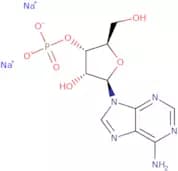
CAS :Focuses is a chemical compound that does not have any known commercial or industrial uses.Degré de pureté :Min. 95%Adenosine 3'-monophosphate sodium
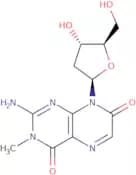
CAS :Adenosine 3'-monophosphate sodium is a nucleotide that is used as a substrate for enzymes. It has been shown to increase the enzymatic activity of papaverine, litoralis, subtilis, and histidine phosphatase. Adenosine 3'-monophosphate sodium also has protease activity, which can be activated by adding an enzyme preparation containing subtilisin and trypsin. This compound also has a pH optimum of 8.0-9.5 and is active at an alkaline pH of 9.5-10.5. The specific strain of bacteria will determine the optimal pH range for activity, with enterobacter bacterial strains having a maximum range of 6-7 and brevibacterium bacteria strains having a range of 4-6.Formule :C10H12N5O7PNa2Degré de pureté :Min. 95%Couleur et forme :White To Off-White SolidMasse moléculaire :391.19 g/mol3-Methyl-8-(2-deoxy-b-D-ribofuranosyl)isoxanthopterin
CAS :3-Methyl-8-(2-deoxy-b-D-ribofuranosyl)isoxanthopterin is a nucleoside analog that is used as an activator of phosphoramidite. It can be used as a building block in the synthesis of modified phosphoramidites and it has antiviral, anticancer, and antiinflammatory properties. 3-Methyl-8-(2-deoxy-b-D-ribofuranosyl)isoxanthopterin is a novel nucleoside analog that can be used to synthesize DNA or RNA. It is also an inhibitor of deoxyribonucleoside kinase, preventing the conversion of deoxyribonucleosides into diphosphate monophosphates.
Formule :C12H15N5O5Degré de pureté :Min. 95%Couleur et forme :PowderMasse moléculaire :309.28 g/mol2-Chloroadenosine
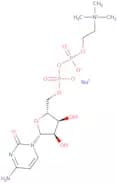
CAS :2-Chloroinosine is an adenosine receptor agonist; metabolically stable analog of adenosineFormule :C10H12ClN5O4Degré de pureté :Min. 95%Couleur et forme :PowderMasse moléculaire :301.69 g/molCiticoline sodium
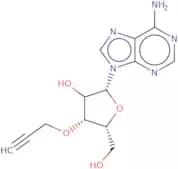
CAS :Citicoline is a complex organic molecule, a form of B-vitamin choline that acts as an intermediate in many biosynthetic pathways, for example, in the biosynthesis of cell membrane phospholipids. As a dietary supplement, citicoline is a source of choline and cytidine, two components that are quickly absorbed in the intestine and across the blood-brain barrier. The neuroprotective properties of citicoline improves mental performance increasing the levels of other brain-related chemicals like dopamine and norepinephrine, helping with recovery in stroke patients, reducing memory loss due to aging and improving vision in patients with glaucoma.Formule :C14H26N4O11P2•NaDegré de pureté :Min. 98.0 Area-%Couleur et forme :White To Off-White SolidMasse moléculaire :511.31 g/mol3'-O-Propargyladenosine
CAS :3'-O-Propargyladenosine is a modified nucleoside that has antiviral and anti-inflammatory properties. It is a synthetic compound that is chemically related to adenosine. 3'-O-Propargyladenosine is an activator of the immune system and it inhibits viral DNA synthesis. The compound also has been shown to reduce inflammation in mice by inhibiting the production of prostaglandin E2 (PGE2). 3'-O-Propargyladenosine has been shown to inhibit the replication of human immunodeficiency virus type 1 (HIV-1) and cytomegalovirus (CMV).Formule :C13H15N5O4Degré de pureté :Min. 95%Couleur et forme :PowderMasse moléculaire :305.29 g/molUridine-3',5'-cyclic monophosphate sodium salt
CAS :Uridine-3',5'-cyclic monophosphate sodium salt is a phosphotriester that is an intermediate in the biosynthesis of nucleosides. It is also a phosphodiesterase inhibitor, which means it inhibits the breakdown of cyclic nucleotides and allows them to accumulate. This drug has been shown to increase platelet production and has anti-inflammatory effects. Uridine-3',5'-cyclic monophosphate sodium salt is a human metabolite that can be synthesized from uridine, which is present in DNA, RNA, and food sources such as meat, eggs, and milk. The synthesis of uridine-3',5'-cyclic monophosphate sodium salt requires phosphoramidite as a precursor.
Formule :C9H10N2O8P·NaDegré de pureté :Min. 98 Area-%Couleur et forme :White PowderMasse moléculaire :328.2 g/molGuanosine 5'-diphosphate sodium
CAS :Pyruvate kinase substrate
Formule :C10H15N5O11P2•Na2Degré de pureté :Min. 95%Couleur et forme :PowderMasse moléculaire :466.19 g/mol5′-O-DMT-LNA N-Bz adenosine
CAS :5′-O-DMT-LNA N-Bz adenosine is a novel nucleoside that has been modified with an aminooxy group. The compound is synthesized by the phosphoramidite method and it is designed for use in antiviral and anticancer research. 5′-O-DMT-LNA N-Bz adenosine can be used as a substrate for DNA polymerases and other enzymes to produce nucleic acid strands. This product is CAS No. 206055-74-5, monophosphate, Phosphoramidites, Synthetic, Deoxyribonucleosides, Anticancer, Ribonuclesides, High purity.
Formule :C39H35N5O7Degré de pureté :Min. 95%Masse moléculaire :685.73 g/mol5-Bromo-2'-deoxycytidine
CAS :5-Bromo-2'-deoxycytidine is a synthetic nucleoside analogue that is used to treat diabetic neuropathy. It is structurally similar to cytidine, and inhibits the enzyme DNA polymerase by intramolecular catalysis. This causes deamination of the 5-bromo group, which prevents further synthesis of DNA. 5-Bromo-2'-deoxycytidine has been shown to be effective in vivo in a mouse model for inflammatory bowel diseases, including colitis and eosinophilic enteritis. The drug was also found to inhibit the production of Eosinophil peroxidase from HL-60 cells in vitro.Formule :C9H12BrN3O4Degré de pureté :Min. 95%Couleur et forme :Off-White PowderMasse moléculaire :306.11 g/mol2'-Deoxy-3,4,5,6-tetrahydrouridine
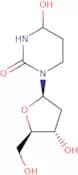
CAS :2'-Deoxy-3,4,5,6-tetrahydrouridine (2DTHR) is a cytidine deaminase inhibitor that is used in vitro to inhibit the production of tumor necrosis factor (TNF). 2DTHR has been shown to be active against hepatocellular carcinoma cells. It is also reactive with tumor tissue and can be eliminated at a rate similar to that of deoxycytidine kinase. This drug binds to the enzyme target and inhibits its activity by increasing enzyme levels, which causes cell death. 2DTHR inhibits TNF production in tumor tissue by binding to cytidine deaminase and preventing conversion of cytidine into uracil. This drug has been shown to cause tumor inhibition in vitro.
Formule :C9H16N2O5Degré de pureté :Min. 95%Couleur et forme :PowderMasse moléculaire :232.23 g/mol3'-O-Methylinosine
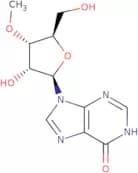
CAS :3'-O-Methylinosine is a synthetic nucleoside that inhibits the synthesis of viral DNA and RNA by interacting with the enzyme ribonucleotide reductase. This antiviral agent has been shown to be effective against a wide range of viruses, including human cytomegalovirus, herpes simplex virus type 1, varicella-zoster virus, and influenza A virus. 3'-O-Methylinosine has also been shown to inhibit the growth of cancer cells in vitro and in vivo.
Formule :C11H14N4O5Degré de pureté :Min. 95%Couleur et forme :White PowderMasse moléculaire :282.25 g/mol2-Phenylaminoadenosine
CAS :2-Phenylaminoadenosine (2-PA) is a potent and selective inhibitor of the P2Y receptor. 2-PA has been shown to reduce myocardial infarct size in vivo in mice, which may be due to its ability to inhibit the release of dopamine from the brain. In addition, 2-PA binds to LPS receptors on endothelial cells, reducing the production of proinflammatory cytokines and preventing platelet aggregation. 2-PA also inhibits the activation of toll-like receptor 4 (TLR4) in human monocytes, leading to reduced expression of proinflammatory cytokines and increased expression of anti-inflammatory cytokines. 2-PA is an agonist that binds with high affinity to P2Y receptors on erythrocytes. This binding results in decreased adenosine triphosphate (ATP) production by adenosine deaminase, which leads to decreased intracellular calcium levels and inhibition of neutrophFormule :C16H18N6O4Degré de pureté :Min. 95%Couleur et forme :PowderMasse moléculaire :358.35 g/mol




![4-Chloro-5-iodo-pyrrolo[2,3-d]pyriMidine-7-carboxylic acid tert-butyl ester](/_next/image/?url=https%3A%2Fstatic.cymitquimica.com%2Fproducts%2F3D%2Fthumb-webp%2FNC44293.webp&w=3840&q=75)