Vitamines
Les vitamines sont des composés organiques nécessaires en petites quantités pour des fonctions physiologiques essentielles et une bonne santé globale. Elles jouent des rôles cruciaux dans le métabolisme, la fonction immunitaire et le maintien cellulaire. Dans cette catégorie, vous trouverez une large gamme de vitamines, incluant des types solubles dans l'eau et dans les graisses, nécessaires pour la recherche en nutrition, biochimie et sciences de la santé. Chez CymitQuimica, nous proposons des vitamines de haute qualité pour soutenir vos efforts de recherche et développement, garantissant la précision et l'efficacité de vos études sur les fonctions et les carences en vitamines.
1124 produits trouvés pour "Vitamines"
Trier par
Degré de pureté (%)
0
100
|
0
|
50
|
90
|
95
|
100
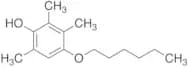
1-O-Hexyl-2,3,5-trimethylhydroquinone
CAS :Produit contrôlé<p>Applications A novel phenolic antioxidant that showed strong antimutagenic activity against eight carcinogenic heterocyclic amines (HCA), produced during cooking processes. Its antimutagenic activity appeared to inhibit both metabolic activation of HCA and action on activated N-Hydroxy species.<br>References Hirose, M., et al.: Jpn. J. Cancer Res., 84, 481 (1993), Hirsoe, M., et al.: Carcinogenesis, 16, 2, 217 (1995), Hirsoe, M., et al.: Carcinogenesis, 16, 9, 2227 (1995), Hirsoe, M., et al.: Carcinogenesis, 16, 12, 3049 (1995)<br></p>Formule :C15H26O2Couleur et forme :NeatMasse moléculaire :238.37Vitamin K4
CAS :Produit contrôlé<p>Applications Vitamin K4, is a chemically synthesized Vitamin K which plays an important role in the normal blood coagulation system.<br>References jiang Y. et al.: Pharmazie. 2013 Jun;68(6):442-8.<br></p>Formule :C15H14O4Couleur et forme :NeatMasse moléculaire :258.27Menaquinone 7, Synthetic (90%)
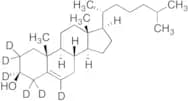
CAS :<p>Stability Light and Temperature Sensitive<br>Applications Menaquinones are isoprenoid quinones of the naphthalene series and belongs to the K2 Vitamin homologs. Menaquinones were originally discovered as the anti-hemorrhagic factor and now encompasses a variety of physiological processes. Menaquinone 7 belongs to the class of K2-Vitamins homologs. Menaquinone 7 has been identified as the most bioactive cofactor for the carboxylation reaction of Gla-proteins such as osteocalcin and matrix-Gla protein, which plays a crucial role in building and maintaining overall bone health.<br>References Hugenholtz, P., et al.: J. Bacteriol., 180, 4765 (1998), Ginet, N., et al.: Biochemistry, 40, 1812 (2001), Cape, J., et al.: J. Biol. Chem., 280, 34654 (2005),<br></p>Formule :C46H64O2Degré de pureté :90%Couleur et forme :Light YellowMasse moléculaire :649.00Cholesterol-d6
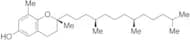
CAS :Produit contrôlé<p>Stability Hygroscopic<br>Applications Labelled Cholesterol (C432501). Cholesterol is the principal sterol of the higher animals. Cholesterol was found in all body tissues, especial in the brain, spinal cord, and in animal fats or oils. Cholesterol is the main constituent of gallstones.<br>References Rosin, Z., et al.: Physiol. Chem., 124, 282 (1923), Schoenheimer, et al.: J. Biol. Chem., 105, 355 (1934), Gemant, et al.: Life Sci., 1, 233 (1962), Johnson, K., et al.: 4, 457 (1964),<br></p>Formule :C272H6H40OCouleur et forme :Off White SolidMasse moléculaire :392.69δ-Tocopherol (>90%)
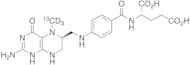
CAS :<p>Applications One of the naturally occurring forms of Vitamin E. Isolated from soybean oil.<br>References Emerson, et al.: Science, 83, 421 (1936), Bieri, J.G., et al.: J. Nutr., 104, 850 (1974), Jiang, Q., et al.: Am. J. Clin. Nutr., 74, 714 (2001),<br></p>Formule :C27H46O2Degré de pureté :>90%Couleur et forme :Light Yellow To Dark BrownMasse moléculaire :402.65Levomefolic Acid-13C,d3
CAS :Produit contrôlé<p>Applications A labelled active form of folic acid used at the cellular level for DNA reproduction, the cysteine cycle and the regulation of homocysteine among other functions. It is a coenzymated form of folic acid. It has been proposed for treatment of cardiovascular disease.<br>References Willems, F. et al.: Br. J. Pharmacol., 145, 823 (2004); Prinz-Langhebohi, R.: et al., Br. J. Pharmacol., 158, 2014 (2009); Wright, A. et al.: Brit, J. Nutrit., 103, 724 (2010)<br></p>Formule :CC192H3H22N7O6Couleur et forme :BeigeMasse moléculaire :463.47Biopterin
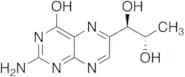
CAS :<p>Stability Hygroscopic<br>Applications A pteridine widely distributed in nature; naturally occurring as the L-erythro-form. Considered as a growth factor for some insects. Fluoresces with a blue color in alkaline solution.<br>References Klatt, P., et al.: J. Biol. Chem., 269, 13861 (1994); Mitnaul, L., et al.: Biochemistry, 92, 885 (1995); Thony, B., et al.: Biochem. J., 347, 1 (2000);<br></p>Formule :C9H11N5O3Couleur et forme :Off WhiteMasse moléculaire :237.22D-α-Tocopherol Quinone
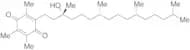
CAS :Produit contrôlé<p>Stability Light Sensitive<br>Applications D-α-Tocopherol Quinone is an vitamin E derivative that exhibits antioxidant properties. D-α-Tocopherol Quinone has been shown to partially restore the activity of NADH dehydrogenase and used to investigate the electron transport system in rat hepatocyte and human erythrocyte.<br>References Sun, I. L., et al.: Proc. Natl. Acad. Sci. USA 89, 11126 (1992); Hosomi, A., et al.: FEBS Lett. 409, 105 (1997)<br></p>Formule :C29H50O3Couleur et forme :NeatMasse moléculaire :446.71Perhydrofarnesyl Acetone
CAS :Produit contrôlé<p>Applications Perhydrofarnesyl Acetone is used as a flavor and fragrance agent, it is often used in jasmine compositions.<br>References Toda, H. et al.: Dev. Food Sci., 17, 181 (1988); Maggi, F. et al.: Food Chem., 113, 216 (2009); Maggi, F. et al.: Chem. Biodiv., 8, 2057 (2011);<br></p>Formule :C18H36OCouleur et forme :ColourlessMasse moléculaire :268.4813-cis-Vitamin A Palmitate
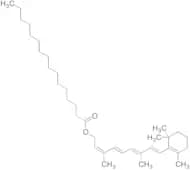
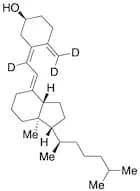
CAS :Formule :C36H60O2Couleur et forme :Colourless To YellowMasse moléculaire :524.8604Secalciferol-d6
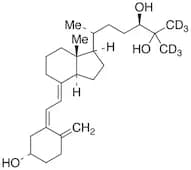
CAS :Produit contrôlé<p>Stability Light Sensitive, Temperature Sensitive<br>Applications A labelled metabolite of Vitamin D, a possible anti-inflammatory steroid.<br> Not a dangerous good if item is equal to or less than 1g/ml and there is less than 100g/ml in the package<br>References Boyan, B., et al.: Steroids, 66, 363 (2001), Holick, M., et al.: J. Cell Biochem., 88, 296 (2003), Vogeser, M., et al.: Clin. Chem., 50, 1415 (2004), Singh, R., et al.: J. Clin. Endocrinol. Metab., 91, 3055 (2006),<br></p>Formule :C272H6H38O3Couleur et forme :NeatMasse moléculaire :422.67Tachysterol (>90%)
CAS :<p>Stability Light Sensitive, Temperature Sensitive<br>Applications Bioactive, synthetic vitamin D3 analog; exhibits antiproliferative effect on keratinocytes. Antipsoriatic.<br> Not a dangerous good if item is equal to or less than 1g/ml and there is less than 100g/ml in the package<br>References Matsunaga, T., et al.: J. Dermatol., 17, 135 (1990), Gerritsen, M.J.P., et al.: Br. J. Dermatol., 131, 57 (1994),<br></p>Formule :C28H44ODegré de pureté :>90%Couleur et forme :NeatMasse moléculaire :396.65Menaquinone 4-D7 (Mixture of cis-trans isomers)
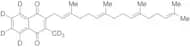
CAS :Produit contrôléFormule :C31H33D7O2Couleur et forme :Colourless To Dark YellowMasse moléculaire :451.69Secalciferol
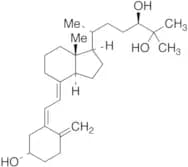
CAS :Produit contrôlé<p>Stability Light Sensitive, Temperature Sensitive<br>Applications A metabolite of Vitamin D, a possibly anti-inflammatory steroid.<br> Not a dangerous good if item is equal to or less than 1g/ml and there is less than 100g/ml in the package<br>References Boyan, B., et al.: Steroids, 66, 363 (2001), Holick, M., et al.: J. Cell Biochem., 88, 296 (2003), Vogeser, M., et al.: Clin. Chem., 50, 1415 (2004), Singh, R., et al.: J. Clin. Endocrinol. Metab., 91, 3055 (2006),<br></p>Formule :C27H44O3Couleur et forme :NeatMasse moléculaire :416.64α-Tocopherol Acetate
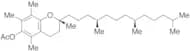
CAS :<p>Applications α-Tocopherol acetate is the most bioactive of the naturally occurring forms of Vitamin E. Richest sources are green vegetables, grains, and oils, particularly palm, safflower and sunflower oils.<br>References Bianchi, G., et al.: Eur. J. Lipid Sci. Technology, 105, 229 (2003), Sakouhi, F., et al.: Food Chem., 108, 833 (2008),<br></p>Formule :C31H52O3Couleur et forme :Off-WhiteMasse moléculaire :472.74Vitamin K1 2,3-Epoxide
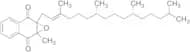
CAS :Produit contrôlé<p>Applications Vitamin K1 2,3-Epoxide is a metabolite of Vitamin K1 (V676080), which is occurs widely in green plants, algae, and photosynthetic bacteria.<br>References Smee, D.F., et al.: Antimicrob. Agents Chemother., 23, 676 (1983), Miyamoto, T., et al.: Biochem. Pharmacol., 35, 839 (1986); Hassan, M.M.A., et al.: Anal. Profiles Drug Subs., 17, 449 (1988), Breton, J., et al.: Biochemistry, 33, 12405 (1994), Dowd, P., et al.: Science, 269, 1684 (1995);<br></p>Formule :C31H46O3Couleur et forme :Light YellowMasse moléculaire :466.7013-cis-Retinyl Acetate (85%)
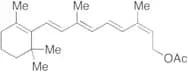
CAS :Produit contrôlé<p>Applications 13-cis-Retinyl Acetate is a derivative of 13-Cis-Retinol (R252110), an active metabolite of vitamin A.<br>References Shantz, E., et al.: J. Biol. Chem., 183, A61 (1950), Barua, A., et al.: Biochem. J., 164, 133 (1977), Brouwer, I., et al.: Nutr. Res. Rev., 14, 267 (2001), Grillenberger, M., et al.: Br. J. Nutr., 95, 379 (2006),<br></p>Formule :C22H32O2Degré de pureté :85%Couleur et forme :NeatMasse moléculaire :328.49Vitamin D4
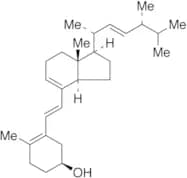
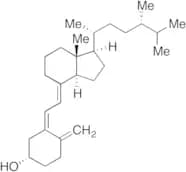
CAS :<p>Stability Hygroscopic, Temperature Sensitive<br>Applications Vitamin D4 is the active analogue of Vitamin D.<br> Not a dangerous good if item is equal to or less than 1g/ml and there is less than 100g/ml in the package<br>References Holick, M., et al.: J. Biochemistry, 10, 2799 (1971), Haddad, J., et al.: J. Bone Miner. Res., 4, 243 (1989), Palmieri, G., et al.: J. Clin. Endocrin. Metab., 82, 3516 (1997),<br></p>Formule :C28H46OCouleur et forme :NeatMasse moléculaire :398.66D-γ-Tocotrienol
CAS :<p>Stability Light Sensitive<br>Applications γ-Tocotrienol exhibits antioxidant properties and belongs to the vitamin E family. It is naturally found in wheat germ oil and bran. In addition, α-tocopherol and γ-tocotrienol derivatives are potential lead compounds for developing anticancer and antiproliferative agents against MCF-7 and MDA-MB-231 breast cancer cells and the A549 lung cancer cells.<br>References Gagic, Z., et al.: Eur. J. Pharm. Sci. 88, 59 (2016); Guardiola, F., et al.: Food Chem. Toxicol., 34, 193 (1996); Kong, S., et al.: Food Chem., 120, 278 (2010); Aggarwal, B., et al.: Biochem. Pharmacol., 80, 1613 (2010)<br></p>Formule :C28H42O2Couleur et forme :YellowMasse moléculaire :410.63