Vitamines
Les vitamines sont des composés organiques nécessaires en petites quantités pour des fonctions physiologiques essentielles et une bonne santé globale. Elles jouent des rôles cruciaux dans le métabolisme, la fonction immunitaire et le maintien cellulaire. Dans cette catégorie, vous trouverez une large gamme de vitamines, incluant des types solubles dans l'eau et dans les graisses, nécessaires pour la recherche en nutrition, biochimie et sciences de la santé. Chez CymitQuimica, nous proposons des vitamines de haute qualité pour soutenir vos efforts de recherche et développement, garantissant la précision et l'efficacité de vos études sur les fonctions et les carences en vitamines.
1124 produits trouvés pour "Vitamines"
Trier par
Degré de pureté (%)
0
100
|
0
|
50
|
90
|
95
|
100
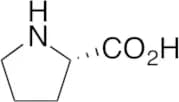
L-Proline
CAS :<p>Applications L-Proline is an amino acid and precursor (with vitamin C) for collagen, the building block of the structure of tendons, ligaments, arteries, veins and muscles. It is important in wound healing.<br>References Bondarenko, L.B., et al.: Int. J. Peptides., 2, 1687 (2012); Rimer, T., et al.: Biomacromolecules, 13, 2110 (2012);<br></p>Formule :C5H9NO2Couleur et forme :NeatMasse moléculaire :115.13α-Tocopherol
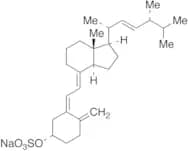
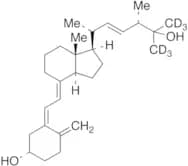
CAS :<p>Stability Light Sensitive<br>Applications α-Tocopherol is the most bioactive of the naturally occurring forms of Vitamin E. Richest sources are green vegetables, grains, and oils, particularly palm, safflower and sunflower oils.<br>References Bianchi, G., et al.: Eur. J. Lipid Sci. Technology, 105, 229 (2003), Sakouhi, F., et al.: Food Chem., 108, 833 (2008),<br></p>Formule :C29H50O2Couleur et forme :NeatMasse moléculaire :430.71Vitamin D2 Sulfate Sodium Salt
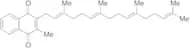
CAS :Formule :C28H43NaO4SCouleur et forme :NeatMasse moléculaire :498.69Menaquinone 4 (Mixture of cis-trans isomers)
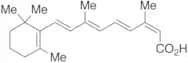
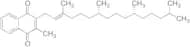
CAS :<p>Applications Menaquinones are isoprenoid quinones of the naphthalene series and belongs to the K2 Vitamin homologs. Menaquinones were originally discovered as the anti-hemorrhagic factor and now encompasses a variety of physiological processes. Menaquinone 4 has four isoprene residue in its side chain and is also commonly refered to as menatetrenone. Menaquinone-4 is the most common type of vitamin K2 and is known as a hemostatic agent and is used as adjunctive therapy for the pain of osteoporosis.<br>References Hugenholtz, P., et al.: J. Bacteriol., 180, 4765 (1998), Ginet, N., et al.: Biochemistry, 40, 1812 (2001), Cape, J., et al.: J. Biol. Chem., 280, 34654 (2005),<br></p>Formule :C31H40O2Couleur et forme :Light YellowMasse moléculaire :444.6513-cis-Retinoic Acid
CAS :Produit contrôlé<p>Stability Moisture, Temperature, Light Sensitive, Store in freezer<br>Applications Used as a treatment for severe acne. Presently being studied in conjuction with the treatment of photoaged skin.<br>References Lerche, C., et al.: Exp. Dermatol., 17, 972 (2008), Sato, T., et al.: J. Med. Chem., 51, 7705 (2008), Gan, J., et al.: Chem. Res. Toxicol., 22, 690 (2009), Macejova, D., et al.: Toxicol. Lett., 184, 114 (2009), Chen, P., et al.: Toxicol. App. Pharmacol., 234, 143 (2009),<br></p>Formule :C20H28O2Couleur et forme :NeatMasse moléculaire :300.44Ferroprotoporphyrin IX
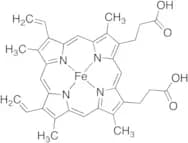
CAS :<p>Stability Light Sensitive<br>Applications Ferroprotoporphyrin IX is a metabolite formed during biosynthesis and is used to evaluate iron nutrition and metabolism. It is also an iron containing cofactor that is involved with a wide range of cellular functions including oxygen transport.<br>References Labbe, R.F., et. al.: Clin. Chem., 45, 146 (1999); Yuan, X., et al.: Proc. Natl. Acad. Sci. USA 113, E5144 (2016);<br></p>Formule :C34H32FeN4O42Couleur et forme :NeatMasse moléculaire :616.49Lumiflavin
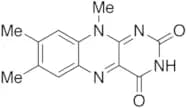
CAS :Produit contrôlé<p>Applications Lumiflavin is a toxic photolysis product of vitamin B2 (R415000).<br>References Zhao, X. et al.: Chemosphere, 63, 1116 (2006); Litke, S.V. et al.: Khim. Fiz., 10, 48 (1991); Ye, W. et al.: Guang. Yaox. Xueb., 12, 175 (1996);<br></p>Formule :C13H12N4O2Couleur et forme :Dark YellowMasse moléculaire :256.26GW0742
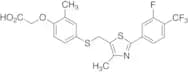
CAS :Produit contrôlé<p>Applications A small molecule agonist of the human Peroxisome Proliferator-Activated Recept δ (PPAR δ). It shows an EC50 of 1.1 nM against PPAR δ with 100-fold selectivity over the other human subtypes.<br>References Sznaidman, M.L., et al.: Bioorganic and Medicinal Chemistry Letters, 13, 1517 (2003)<br></p>Formule :C21H17F4NO3S2Couleur et forme :Light YellowMasse moléculaire :471.49Saikosaponin A
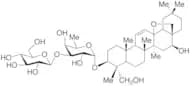
CAS :Produit contrôlé<p>Stability Hygroscopic<br>Applications Saikosaponin A was shown to exhibit anti-inflammatory activities by suppressing activation of NF-kB signaling pathway.<br>References Wu, S.J., et al.: Am. J. Chin. Med., 38, 99 (2010); Wu. S.J., et al.: J. Med. Food., 11, 224 (2008); Yoon, S.S., et al.: Neurosci. Lett., 529, 97 (2012); Lu, C.N., et al.: Int. Immunopharmacol., 14, 121 (2012);<br></p>Formule :C42H68O13Couleur et forme :NeatMasse moléculaire :780.98Pyridoxine-d3 hydrochloride
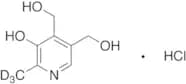
CAS :Produit contrôlé<p>Applications Labelled Pyridoxine. One of the vitamins of the B6 complex; present in many foodstuffs (yeast, liver and cereals). Pyridoxine has a role in transporting protein Bsu1, Pyridoxine contributes to thiamine uptake; characterization of thiamine (vitamin B1) transporter Thi9 from Schizosaccharomyces pombe.<br>References Williams, R., et al.: J. Biol. Chem., 87, 581 (1930), Rodionov, D., et al.: J. Biol. Chem., 277, 48949 (2002),Nosaka, K., et al.: Mol. Microbiol., 58, 467 (2005),<br></p>Formule :C82H3H8NO3·ClHCouleur et forme :White To Off-WhiteMasse moléculaire :208.66all-trans-Retinol
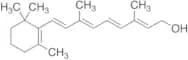
CAS :Produit contrôlé<p>Stability Liight Sensitive, Temperature Sensitive<br>Applications Occurs preformed only in animals; metabolized from carotenoids, such β-carotene, in the intestinal mucosa. Dietary sources include liver, milk, butter, cheese, eggs and fish liver oils or as carotenois from fruits and vegetables. Stored primarily in the liver in esterified form; transported in the blood by retinol binding protein (RBP). Nutritional factor.<br>References Davis, M., et al.: J. Biol. Chem., 15, 167 (1913), Crouch, R.K., et al.: Photochem. Photobiol., 64, 613 (1996),<br></p>Formule :C20H30OCouleur et forme :Off-White To Dark YellowMasse moléculaire :286.45LG 100268
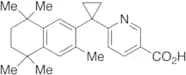
CAS :Produit contrôlé<p>Applications LG 100268 is a potent RXR agonist for evaluation in the treatment of non-insulin-dependent (type II) diabetes mellitus (NIDDM).<br>References Clyne, C., et al.: J. Biol. Chem., 277, 20591 (2002), Santen, R., et al.: J. Clin. Endocrinol. Metab., 87, 3007 (2002), Falender, A., et al.: Endocrinology, 144, 3598 (2003), Sablin, E., et al.: Mol. Cell., 11, 1575 (2003)<br></p>Formule :C24H29NO2Couleur et forme :NeatMasse moléculaire :363.49β-Nicotinic Acid Mononucleotide
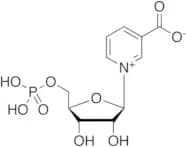
CAS :Produit contrôlé<p>Stability Hygroscopic<br>Applications A nucleotide of nicotinic acid which is produced from quinolinic acid by quinolinate phosphoribosyltransferase via transfer of a phosphoribose group. It is an intermediate of nicotinic acid adenine dinucleotide (NaAD) which is then converted to NAD via amidation and in turn converted to NADPH.<br>References Petrelli, R. et al.: Curr. Med. Chem., 18, 1973 (2011); Shibata, K. et al.: J. Chrom. B Biomed. Sci. Appl., 749, 281 (2000); Evans, C. et al.: BMC Chem. Biol., 10, 2 (2010);<br></p>Formule :C11H14NO9PCouleur et forme :NeatMasse moléculaire :335.225-Hydroxy Vitamin D2-d6
CAS :Produit contrôlé<p>Stability Light Sensitive, Temperature Sensitive, Toxic<br>Applications A labelled metabolite of Vitamin D2 (V676040).<br> Not a dangerous good if item is equal to or less than 1g/ml and there is less than 100g/ml in the package<br>References Barnes, P., et al.: J. Clin. Invest., 83, 1527 (1989), Holick, M., et al.: J. Cell Biochem., 88(2), 296 (2003), Maunsell, Z., et al.: Clin. Chem., 51, 1683 (2005),<br></p>Formule :C282H6H38O2Couleur et forme :White To Off-WhiteMasse moléculaire :418.682-O-a-D-Glucopyranosyl-L-ascorbic Acid
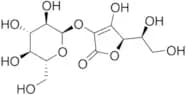
CAS :Produit contrôlé<p>Applications 2-O-a-D-Glucopyranosyl-L-ascorbic Acid is a useful cosmetic gel and skin cleanser.<br>References Aizawa, K., et al.: PCT Int. Appl. (2020), WO 2020226147 A1<br></p>Formule :C12H18O11Couleur et forme :White To Off-WhiteMasse moléculaire :338.26Hydrocortisone 17-Valerate
CAS :Produit contrôlé<p>Applications Hydrocortisone 17-Valerate is a derivative of Hydrocortisone (H714615) which is a glucocorticoid that is produced by the zona fasciculata of the adrenal gland.<br>References Ponec, M. et. al.: J. Pharm. Sci., 75, 973 (1986); Vigore, L., et al.: Cancer Ther., 6, 699 (2008)<br></p>Formule :C26H38O6Couleur et forme :NeatMasse moléculaire :446.58(+)-Biotin (+)-Sulfoxide
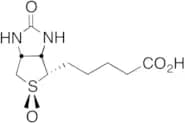
CAS :Produit contrôlé<p>Stability Hygroscopic<br>Applications (-)-Biotin Sulfoxide, is a metabolite of Biotin (B389040), which is a growth factor present in minute amounts in every living cell, and plays an indispensable role in numerous naturally occurring carboxylation reactions.<br>References du Vigneaud, et al.: J. Biol. Chem., 146, 475 (1942), Traub, et al.: Nature, 178, 649 (1956), Siegel, H., et al.: Experienta, 37, 789 (1981), Vesely, D.L., Science, 216, 1329 (1982), Hugues, M., et al.: Biochemistry, 31, 12 (1992),<br></p>Formule :C10H16N2O4SCouleur et forme :NeatMasse moléculaire :260.31Coenzyme Q2
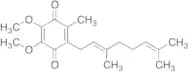
CAS :Produit contrôlé<p>Applications Coenzyme Q2 is a redox carrier in the mitochondrial respiratory chain in eukaryotic cells. It has been used to investigate interaction of coenzyme Q with phosphatidylethanolamine membranes.<br>References Do, T., et al.: J. Biol Chem. 276, 18161 (2001); Gomez-Fernandez, J. C., et al.: Eur. J. Biochem. 259, 739 (1999);<br></p>Formule :C19H26O4Couleur et forme :NeatMasse moléculaire :318.407Pantothenic Acid-13C3,15N Hemicalcium Salt
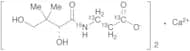
CAS :<p>Applications Labelled Pantothenic Acid. A member of the B complex vitamins; essential vitamin for the biosynthesis of coenzyme A in mammalian cells. Occurs ubiquitously in all animal and plant tissue. The richest common source is liver, but jelly of the queen bee contains 6 times as much as liver. Rice bran and molasses are other good sources.<br>References Gardner, P., et al.: Food Chem., 68, 471 (2000), Ou, B., et al.: J. Agric. Food Chem., 50, 2772 (2002), Bahorun, T., et al.: J. Sci. Food Agric., 84, 1553 (2004),<br></p>Formule :C3C6H1615NO5·CaCouleur et forme :BeigeMasse moléculaire :484.47