Nucléosides
Les nucléosides sont des building blocks fondamentaux des acides nucléiques, composés d'une base azotée attachée à une molécule de sucre. Dans cette section, vous trouverez une large gamme de nucléosides essentiels pour la recherche en biologie moléculaire, biochimie et pharmacologie. Ces composés jouent des rôles cruciaux dans la synthèse de l'ADN et de l'ARN, et sont également vitaux dans divers processus métaboliques. Les nucléosides sont utilisés pour étudier le matériel génétique, développer des thérapies antivirales et anticancéreuses, et comprendre les mécanismes cellulaires. Chez CymitQuimica, nous proposons des nucléosides de haute qualité pour soutenir vos besoins en recherche et développement, garantissant pureté et fiabilité pour vos applications expérimentales.
3567 produits trouvés pour "Nucléosides"
Trier par
Degré de pureté (%)
0
100
|
0
|
50
|
90
|
95
|
100
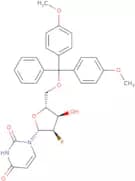
2'-Deoxy-5'-O-DMT-2'-fluorouridine
CAS :<p>2'-Deoxy-5'-O-DMT-2'-fluorouridine is a medicament that belongs to the group of antineoplastic agents and is used in cancer treatment. It inhibits the synthesis of DNA by inhibiting the enzyme thymidylate synthetase, which is required for the formation of thymine nucleotides. This drug has been shown to be effective against some cancer cells in vitro and in vivo, but not all. 2'-Deoxy-5'-O-DMT-2'-fluorouridine can also inhibit terminal growth phases and induce programmed cell death. Solid phase synthesis has been used to synthesize this molecule as a phosphoramidite.</p>Formule :C30H29FN2O7Degré de pureté :Min. 98 Area-%Couleur et forme :White PowderMasse moléculaire :548.57 g/mol5-(N-Isopentenyl-N-trifluoroacetyl)aminomethyluridine
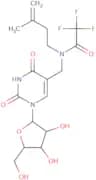
CAS :<p>5-(N-Isopentenyl-N-trifluoroacetyl)aminomethyluridine is a nucleoside analog that is structurally related to cytidine. It was first synthesized in the 1970s, and has been shown to possess antiviral activity against herpes simplex virus type 1. In addition, it has been shown to inhibit DNA synthesis and the formation of DNA double strands. 5-(N-Isopentenyl-N-trifluoroacetyl)aminomethyluridine is an activator of protein kinase C and cyclic AMP phosphodiesterase, as well as a DNA polymerase inhibitor with anticancer properties.</p>Degré de pureté :Min. 95%5'-O-Acetyl-2',3'-dideoxy-2',3'-didehydro-5-fluorouridine
CAS :<p>5'-O-Acetyl-2',3'-dideoxy-2',3'-didehydro-5-fluorouridine is a nucleoside analog. It is synthesized by substituting the hydroxyl group of uridine with a fluorine atom and the 2' position of ribose with a 5'-O-acetyl group. This modification prevents the incorporation of this nucleoside into DNA or RNA, making it an effective antiviral and anticancer agent. 5'-O-Acetyl-2',3'-dideoxy-2',3'-didehydro-5-fluorouridine has been shown to be highly active against tumor cells but not normal cells in vitro.</p>Formule :C11H11N2O5Degré de pureté :Min. 95%Masse moléculaire :251.22 g/mol2'-Azido-2'-deoxyadenosine
CAS :<p>2'-Azido-2'-deoxyadenosine is a synthetic nucleoside analog of adenosine in which the 2'-hydroxyl group of the ribose sugar is replaced by an azido group (–N₃), and the 3'- and 5'-hydroxyl groups remain intact. This modification confers unique chemical properties, including the ability to participate in bioorthogonal "click" chemistry reactions, particularly azide-alkyne cycloadditions, making it useful for labeling and tracking nucleic acids in biochemical studies. Additionally, the azido substitution can influence enzymatic recognition and incorporation by polymerases, allowing its use in studying nucleic acid metabolism, drug design, and therapeutic nucleoside analog development.</p>Formule :C10H12N8O3Degré de pureté :Min. 95%Couleur et forme :PowderMasse moléculaire :292.25 g/mol2’-Deoxy-2’-fluoroadenosine 5’-monophosphate triethyl ammonium salt
<p>2’-Deoxy-2’-fluoroadenosine 5’-monophosphate triethyl ammonium salt is a nucleoside phosphoramidite that acts as an antiviral agent. It is used to treat influenza and herpes simplex virus infections. 2’-Deoxy-2’-fluoroadenosine 5’-monophosphate triethyl ammonium salt also inhibits the growth of cancer cells, but has not been shown to be effective against bacterial or fungal infections.</p>Degré de pureté :Min. 95%2'-Deoxyadenosine-5'-monophosphate disodium salt
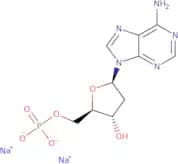
CAS :<p>2'-Deoxyadenosine-5'-monophosphate disodium salt (DAP) is a white crystalline powder. It is soluble in water and insoluble in ethanol. DAP can be neutralised by aqueous solutions of hydroxide, such as sodium hydroxide or ammonium hydroxide. DAP is also reactive with aluminium oxide, which can be used for drying the compound to form anhydrous particles. DAP reacts with chloride ions to form 2',3'-diacetylpyridine-5'-diphosphate dibasic chloride, which has been shown to inhibit bacterial growth and act as an antibacterial agent. Autoclaving may be required for preparation of this drug due to its sensitivity to heat energy.</p>Formule :C10H12N5Na2O6PDegré de pureté :Min. 99 Area-%Couleur et forme :White PowderMasse moléculaire :375.19 g/molCyclopentenyl cytosine
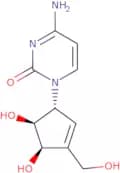
CAS :<p>Cyclopentenyl cytosine is a cytotoxic drug that inhibits the synthesis of DNA, RNA, and proteins. It is a nucleoside analogue that inhibits the enzyme activity of ribonucleotide reductase. Cyclopentenyl cytosine has significant cytotoxicity against hl-60 cells, as well as squamous carcinoma and MDA-MB-231 breast cancer cells. It also has significant activity against cyclopentenyl, dextran sulfate, and mitochondrial functions in vivo in human cells. Cyclopentenyl cytosine binds to the response element on the DNA strand, preventing transcription of genes for protein synthesis and cell division.</p>Formule :C10H13N3O4Degré de pureté :Min. 95%Couleur et forme :PowderMasse moléculaire :239.23 g/mol4-Amino-7-(2-deoxy-b-D-ribofuranosyl)-7H-pyrrolo[2,3-d]pyrimidin-5-carboxamide
CAS :<p>4-Amino-7-(2-deoxy-b-D-ribofuranosyl)-7H-pyrrolo[2,3-d]pyrimidin-5-carboxamide is a synthetic compound that inhibits protein synthesis by binding to the 50S ribosomal subunit. It also prevents viral replication by inhibiting the incorporation of amino acids into proteins. 4-Amino-7-(2-deoxy-b-Dribofuranosyl)-7H pyrrolo[2,3 d]pyrimidin 5 carboxamide binds to the 50S ribosomal subunit and blocks tRNA entry into the A site of the ribosome. This binding prevents translation and transcription of mRNA, effectively inhibiting protein synthesis. It has been shown to be effective against murine leukemia virus (MLV), influenza A virus, and herpes simplex virus type 1 (HSV1) in cell culture</p>Formule :C12H15N5O4Degré de pureté :Min. 95%Masse moléculaire :293.28 g/molAdenosine 5'-phosphosulfate sodium salt, 10 mM in water
CAS :<p>Adenosine 5′-phosphosulfate sodium salt has been used quantify pyrophosphate and in enzyme-linked bioluminescence assay for adenosine triphosphate (ATP).Product provided as 10 mM solution in water.</p>Formule :C10H14N5O10PSDegré de pureté :Min. 90.0 Area-%Masse moléculaire :427.28 g/mol5'-O-DMT-2'-O-methyl-5-methyluridine 3'-CE phosphoramidite
CAS :<p>5'-O-DMT-2'-O-methyl-5-methyluridine 3'-CE phosphoramidite is a novel antiviral and anticancer agent. It is a nucleoside analog that mimics the natural product from which it was synthesized, 2'-deoxycytidine 5'-O-DMT-3'-CE phosphoramidite. It has been shown to inhibit replication of DNA in vitro with an IC50 of less than 10 nM. 5'-O-DMT-2'-O-methyl-5-methyluridine 3'-CE phosphoramidite is also an inhibitor of human telomerase activity and can be used as a potential therapeutic for cancer treatment.</p>Formule :C41H51N4O9PDegré de pureté :90%Couleur et forme :White PowderMasse moléculaire :774.86 g/molCytidine
CAS :<p>Cytidine is a pyrimidine nucleoside that is important in the synthesis of RNA and DNA. Cytidine deaminase is an enzyme that catalyzes the conversion of cytidine to uridine. Cytidine deaminase has been shown to be inhibited by its substrate, cytidine, and by other compounds that are structurally similar to cytidine such as uracil, thymine, and guanine. Cytidine deaminase has been shown to have a role in the development of autoimmune diseases and HIV infection. This enzyme also has an important role in the polymerization of DNA during replication.<br>Cytidine can be used for transfection experiments and to inhibit viral replication.</p>Formule :C9H13N3O5Degré de pureté :Min. 99 Area-%Masse moléculaire :243.22 g/mol5-o-(Dimethoxytrityl)-N4-dimethylaminomethylidene-5-iodo-2'-deoxycytidine
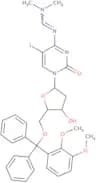
CAS :<p>Dimethoxytrityl-5-iodo-2'-deoxycytidine is a novel, modified nucleoside that has anticancer and antiviral properties. It is synthesized by reacting 5-iodo-2'-deoxycytidine with dimethoxytrityl chloride in the presence of triethylamine. This compound can be used to synthesize oligonucleotide phosphoramidites, ribonucleosides, and diphosphates.</p>Formule :C33H35IN4O6Degré de pureté :Min. 95%Masse moléculaire :710.6 g/mol5'-O-p-Anisoyl-3'-fluoro-2',3'-dideoxyuridine
<p>5'-O-p-Anisoyl-3'-fluoro-2',3'-dideoxyuridine (5-FAU) is a deoxynucleoside that is synthesized by the phosphoramidite method, and it has been used as an antiviral agent. 5-FAU is a novel nucleoside analog with anticancer activity. It inhibits replication of herpes simplex virus type 1 and 2, varicella zoster virus, and Epstein Barr virus in cell culture. 5-FAU also inhibits HIV replication in vitro and in animal models. The antiviral activity of 5-FAU is due to its inhibition of viral DNA polymerase, which prevents the synthesis of viral DNA from viral RNA templates.</p>Formule :C17H17FN2O6Degré de pureté :Min. 95%Masse moléculaire :364.33 g/mol4’,5’-Didehydro-2’-O-(2-methoxyethyl)uridine
CAS :<p>4’,5’-Didehydro-2’-O-(2-methoxyethyl)uridine (4,5DDMU) is a novel nucleoside analog that is phosphorylated to 4,5-didehydro-2'-O-(2-methoxyethyl)uridine 5'-triphosphate. This nucleoside has been shown to inhibit the proliferation of human cancer cells in vitro and in vivo. 4,5DDMU inhibits viral replication by generating diphosphate derivatives of the viral DNA polymerase enzyme that are unable to synthesize DNA. 4,5DDMU also inhibits HIV replication by inhibiting reverse transcriptase activity in the virus.End></p>Degré de pureté :Min. 95%N4-Benzoyl-3'-O-tert-butydimethylsilylcytidine 2'-CE-phosphoramidite
<p>N4-Benzoyl-3'-O-tert-butydimethylsilylcytidine 2'-CE-phosphoramidite is a novel nucleoside analog that has shown anticancer and antiviral activity. It is a monophosphate, modified nucleoside that inhibits the deoxyribonucleotide biosynthetic pathway in cells. N4-Benzoyl-3'-O-tert-butydimethylsilylcytidine 2'-CE-phosphoramidite can be used as an activator of ribonuclease S1 and ribonuclease T1, which are enzymes involved in the process of DNA replication. In addition to its use as a therapeutic agent, this compound is also used for research purposes.</p>Formule :C52H66N5O9PSiDegré de pureté :Min. 95%Masse moléculaire :964.17 g/mol4-7H-Chloro-5-iodo-7-(2-C-methyl-b-D-ribofuranosyl)-7H-pyrrolo[2,3-d]pyrimidin-2-amine
CAS :<p>4-7H-Chloro-5-iodo-7-(2-C-methyl-b-D-ribofuranosyl)-7H-pyrrolo[2,3-d]pyrimidin-2-amine is a modified nucleoside that has been shown to have antiviral, anticancer and activator properties. This compound is synthesized by the reaction of 4,7H chloro 5 Iodo 7 (2 C methyl b D ribofuranosyl) 7 H pyrrolo[2,3 d]pyrimidine with 2 C methyl b D ribofuranosyl in aqueous solution at neutral pH. 4 - 7 H Chloro 5 Iodo 7 (2 C methyl b D ribofuranosyl) 7 H pyrrolo [2,3 d] pyrimidine reacts with 2 C methyl b D ribofuranosyl to form 4 - 7 H Chlor</p>Degré de pureté :Min. 95%Adenylyl-3'-5'-adenosine ammonium salt
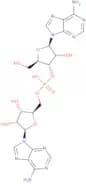
CAS :<p>Adenylyl-3'-5'-adenosine ammonium salt is a novel and activator. CAS No. 21027-46-3. Ribonuclesides, Deoxyribonucleosides, diphosphate, Phosphoramidites, Modified, Anticancer, Antiviral, monophosphate, Nucleosides, Synthetic. High quality and high purity.</p>Formule :C20H25N10O10PDegré de pureté :Min. 95%Masse moléculaire :596.45 g/mol2'-Deoxy-5'-O-DMT-pseudouridine 3'-CE phosphoramidite
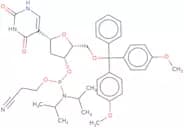
CAS :<p>2'-Deoxy-5'-O-DMT-pseudouridine 3'-CE phosphoramidite is a nucleoside that is used in the synthesis of DNA. It is an antiviral and anticancer agent that has been shown to have anti-inflammatory properties. 2'-Deoxy-5'-O-DMT-pseudouridine 3'-CE phosphoramidite inhibits viral replication by inhibiting the synthesis of viral RNA, which prevents the production of proteins necessary for viral reproduction. The modified monophosphate form of this nucleoside is also a potent inhibitor of cancer cells in vitro and in vivo.</p>Formule :C39H47N4O8PDegré de pureté :Min. 95%Couleur et forme :PowderMasse moléculaire :730.81 g/mol2,4-Dithiothymidine
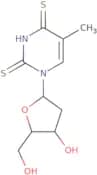
CAS :<p>2,4-Dithiothymidine (DT) is a chemotherapeutic that has been shown to be clinically effective in the treatment of hematopoietic malignancies. It is an oligothymidylate analogue that contains a pyrimidine heterocycle and an ethylthio group. DT is not a nucleoside analog, but it inhibits DNA synthesis by binding to the enzyme thymidylate synthase and preventing the formation of thymine from uracil. DT also binds to single-stranded DNA with high affinity and alters its conformation, which may inhibit transcription and replication. The photophysical properties of this molecule are studied theoretically using quantum mechanics and population analysis theory. The reagent DT can be used to focus attention on other molecules or conformation states of proteins that might have improved biological activity.</p>Formule :C10H14N2O3S2Degré de pureté :Min. 95%Masse moléculaire :274.36 g/molInosine-3',5'-cyclic-monophosphate triethylammonium - 10 mM aqueous solution
<p>Inosine-3',5'-cyclic-monophosphate triethylammonium is a synthetic nucleoside that functions as an activator of the deoxyribonucleotide synthesis. It has antiviral and anticancer properties, and has been shown to have anti-inflammatory activities. Inosine-3',5'-cyclic-monophosphate triethylammonium has been shown to inhibit the growth of cells in culture and induce apoptosis. This is due to its ability to inhibit DNA synthesis by inhibiting the enzyme ribonucleotide reductase.</p>Formule :C10H11N4O7P·NC6H15Degré de pureté :Min. 95%Masse moléculaire :431.38 g/mol



![4-Amino-7-(2-deoxy-b-D-ribofuranosyl)-7H-pyrrolo[2,3-d]pyrimidin-5-carboxamide](/_next/image/?url=https%3A%2Fstatic.cymitquimica.com%2Fproducts%2F3D%2Fthumb-webp%2FNA144685.webp&w=3840&q=75)




![4-7H-Chloro-5-iodo-7-(2-C-methyl-b-D-ribofuranosyl)-7H-pyrrolo[2,3-d]pyrimidin-2-amine](/_next/image/?url=https%3A%2Fstatic.cymitquimica.com%2Fproducts%2F3D%2Fthumb-webp%2FNC14083.webp&w=3840&q=75)