Nucléosides
3569 produits trouvés pour "Nucléosides"
8-(2-Deoxy-b-D-ribofuranosyl)-imidazo[1,2-a]-1,3,5-triazine-2,4(3H,8H)-dione
CAS :8-(2-Deoxy-b-D-ribofuranosyl)-imidazo[1,2-a]-1,3,5-triazine-2,4(3H,8H)-dione is a monophosphate nucleotide analog that inhibits viral DNA polymerases. It is a novel and high quality nucleoside phosphoramidite. 8-(2-Deoxy-b-D-ribofuranosyl)-imidazo[1,2-a]-1,3,5-triazine-2,4(3H,8H)-dione is synthesized from 2'-deoxyribonucleosides and modified ribonucleosides. The CAS number for the compound is 35763855 2.
Formule :C10H12N4O5Degré de pureté :Min. 95%Masse moléculaire :268.23 g/molPyrimidine-4-carboxylic acid hydrazide
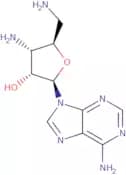
CAS :Pyrimidine-4-carboxylic acid hydrazide (PCAH) is an antimycobacterial agent that inhibits the growth of Mycobacterium tuberculosis and other related species. PCAH is a ligand that binds to redox active metal ions, forming a supramolecular complex. The carboxyl group on PCAH reacts with the hydroxide ion in the presence of water to produce hydrogen peroxide, which in turn oxidizes the mycolic acids in the cell wall of M. tuberculosis, leading to cell death. The pyridine ring on PCAH is nucleophilic and can react with nucleophiles such as thiols or amines, which are found in proteins or peptides. This reaction results in nucleophilic substitutions, which inhibit bacterial protein synthesis and lead to cell death.Formule :C5H6N4ODegré de pureté :Min. 95%Masse moléculaire :138.13 g/mol3',5'-Diamino-3',5'-dideoxyadenosine
CAS :3',5'-Diamino-3',5'-dideoxyadenosine (3,5-ddA) is a nucleoside that has been shown to be an efficient inhibitor of HIV replication in vitro. It has been used for the treatment of AIDS, but it is not yet approved for this use. 3,5-ddA inhibits the conversion of dATP to dTTP and prevents DNA synthesis by blocking the enzyme ribonucleotide reductase. The drug can be synthesized with high efficiency by using a modified nucleoside amidite approach.
Formule :C10H15N7O2Degré de pureté :Min. 95%Masse moléculaire :265.28 g/mol2'-Deoxy-N2-isobutyrylcytidine
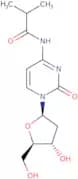
CAS :2'-Deoxy-N2-isobutyrylcytidine is a nucleoside analogue of cytidine that has been modified with a 2-amino-2-deoxyribose moiety. The transaminated product is more stable than the parent compound and has improved anticoagulant activity. It has also been shown to be active in inhibiting DNA synthesis and cell proliferation in vitro. 2'-Deoxy-N2-isobutyrylcytidine inhibits the growth of bacteria by binding to their ribosomes, preventing protein synthesis. This compound has also been shown to inhibit the formation of blood clots in mice.
Formule :C13H19N3O5Degré de pureté :Min. 95%Masse moléculaire :297.31 g/mol2',3'-O-Isopropylidene-6-thioinosine
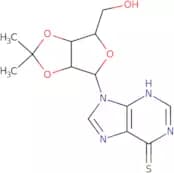
CAS :2',3'-O-Isopropylidene-6-thioinosine is a fluorinated analogue of 6-thioguanine, which is an important precursor in the synthesis of nucleotides. The compound contains a fluorine atom at the 2' position and a sulfur atom at the 3' position of the ribose ring. It is soluble in organic solvents and can be used as a tracer for biochemical studies. The thermal stability of 2',3'-O-Isopropylidene-6-thioinosine has been demonstrated by molecular modelling and thermally induced filtration experiments. Molecular modeling has also shown that 2',3'-O-Isopropylidene-6-thioinosine binds to the active site of uridine phosphorylase, which is involved in pyrimidine salvage pathways in cells.
2',3'-O-Isopropylidene-6-thioinosFormule :C13H16N4O4SDegré de pureté :Min. 95%Masse moléculaire :324.36 g/mol5-[4-(4,4,5,5-tetramethyl-[1,3,2]dioxaborolan-2-yl)-benzylidene]-pyrimidine-2,4,6-trione
Ribonuclease is an enzyme that cleaves the phosphodiester backbone of ribonucleotide to produce a 5'-phosphate and a 2'-deoxyribonucleoside. Ribonuclease is an activator that activates the synthesis of ribonucleotides, deoxyribonesucleotides and nucleosides. Ribonuclease has antiviral properties which may be due to its ability to inhibit DNA polymerase by catalyzing the hydrolysis of the 2'-deoxyribose-5'-phosphate bond in DNA. Ribonuclease has also been shown to have anticancer activity, which may be due to its ability to inhibit protein synthesis.
Degré de pureté :Min. 95%3',5'-O-[Tetrakis(1-methylethyl)-1,3-disiloxanediyl]-guanosine
CAS :3',5'-O-[Tetrakis(1-methylethyl)-1,3-disiloxanediyl]-guanosine is a nucleoside phosphoramidite that is synthesized by the reaction of 3',5'-O-[Tetrakis(trimethylsiloxy)silyl]guanosine with tetrakis(1-methylethyl) siloxane. It is a novel monophosphate analogue of guanosine and has antiviral, anticancer and activator properties. 3',5'-O-[Tetrakis(1-methylethyl)-1,3-disiloxanediyl]-guanosine is not toxic to cells and can be used in the treatment of cancer.
Formule :C22H39N5O6Si2Degré de pureté :Min. 95%Masse moléculaire :525.75 g/mol2',3',5'-Tri-O-acetylinosine
CAS :2′,3′,5′-Tri-O-acetylinosine is a protected form of the nucleoside inosine, with potential for use in the preparation of modified nucleotides and nucleoside analogs.
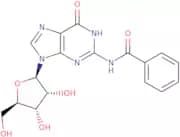
Formule :C16H18N4O8Degré de pureté :Min. 95%Couleur et forme :White To Off-White SolidMasse moléculaire :394.34 g/molN2-Benzoylguanosine
CAS :N2-Benzoylguanosine is a nucleotide derivative that is formed by the acetylation of guanosine. It has been shown to act as a buffer in alkaline solutions and isomerizes to its n-oxide form when heated. N2-Benzoylguanosine reacts with peroxides such as hydrogen peroxide, glyoxal, and organic peroxides, forming hydroperoxide intermediates that can be converted into other products. The acidic hydrolysis of N2-benzoylguanosine yields the corresponding 6-benzoyladenosines. It has been shown to enhance the activity of uridine in inhibiting bacterial growth, while also acting as an inhibitor of viral RNA synthesis. This compound also reacts with nitrous acid to form an n6-benzoyladenosine derivative that inhibits the formation of RNA chains during transcription.
Formule :C17H17N5O6Degré de pureté :Min. 95%Couleur et forme :White to beige solid.Masse moléculaire :387.35 g/molDMTr-TNA-C(Bz)-amidite
CAS :Please enquire for more information about DMTr-TNA-C(Bz)-amidite including the price, delivery time and more detailed product information at the technical inquiry form on this page
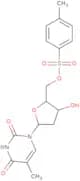
Formule :C45H50N5O8PMasse moléculaire :819.9 g/mol5'-O-Tosylthymidine
CAS :5'-O-Tosylthymidine is a bifunctional reagent that is used in the synthesis of DNA. It is a nucleophilic, inorganic compound that reacts with the electrophilic acrylonitrile group on 5'-hydroxythymidine to form a stable thiophosphate linkage. The reaction takes place stepwise and is catalyzed by an enzyme called DNA polymerase. This product has been used as an antimetabolite in medicine, mainly for treating leukemia.
Formule :C17H20N2O7SDegré de pureté :Min. 95%Masse moléculaire :396.42 g/mol5′-O-DMT-LNA N-Bz adenosine
CAS :5′-O-DMT-LNA N-Bz adenosine is a novel nucleoside that has been modified with an aminooxy group. The compound is synthesized by the phosphoramidite method and it is designed for use in antiviral and anticancer research. 5′-O-DMT-LNA N-Bz adenosine can be used as a substrate for DNA polymerases and other enzymes to produce nucleic acid strands. This product is CAS No. 206055-74-5, monophosphate, Phosphoramidites, Synthetic, Deoxyribonucleosides, Anticancer, Ribonuclesides, High purity.
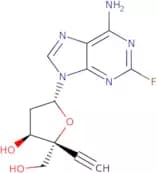
Formule :C39H35N5O7Degré de pureté :Min. 95%Masse moléculaire :685.73 g/mol2'-Deoxy-4'-ethynyl-2-fluoroadenosine
CAS :2'-Deoxy-4'-ethynyl-2-fluoroadenosine (EFdA) is an analog of adenosine. EFdA is a potent inhibitor of HIV replication, and has been shown to be effective against other viruses such as influenza virus, herpes simplex virus, and vesicular stomatitis virus. EFdA was the first nucleoside analog to show antiviral activity in tissue culture against these viruses. This drug also inhibits the synthesis of mitochondrial rRNA and reduces the formation of mitochondrial DNA in human cells by inhibiting mitochondrial DNA polymerase γ. EFdA also prevents the binding of monoclonal antibodies to human B lymphocytes, which may be due to its steric interactions with plasma RNA. This drug is metabolized by cytochrome P450 2C8 and 2C9 into a variety of metabolites that are excreted in urine as glucuronides or sulfates. EFdA has a long
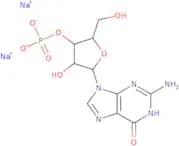
Formule :C12H12FN5O3Degré de pureté :Min. 95%Masse moléculaire :293.25 g/mol3′-Guanylic acid disodium
CAS :3′-Guanylic acid disodium is a nucleoside analog that inhibits viral replication and tumor growth. It is an antiviral agent that is active against herpes simplex virus type 1 and type 2, as well as cytomegalovirus. 3′-Guanylic acid disodium is also an anticancer agent that has shown promising results in animal models of glioma, lymphoma, lung cancer, and breast cancer. The molecule inhibits the synthesis of DNA by competitively inhibiting the action of ribonucleotide reductase. 3′-Guanylic acid disodium also inhibits protein synthesis by blocking the conversion of ribonucleotides to deoxyribonucleotides. This drug has been shown to have a high purity and quality with no detectable impurities or contaminants.
Formule :C10H14N5O8P•Na2Degré de pureté :Min. 95%Masse moléculaire :409.2 g/mol5-Methyl-L-uridine
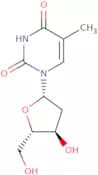
CAS :5-Methyl-L-uridine is an antiviral drug which belongs to a class of compounds called nucleoside analogues. It is used in the treatment of chronic hepatitis B and C, as well as for prevention of hepatitis A and B. 5-Methyl-L-uridine inhibits the virus by turning off the production of viral DNA and RNA, through interactions with the virus's polymerase chain reaction process. This drug also prevents protein synthesis in cells infected with viruses such as HIV, herpes simplex virus type 1, and influenza A virus. 5-Methyl-L-uridine is a prodrug that is converted to its active form, uridine monophosphate, by enzymes in the liver. The cytotoxic effects of 5-methyluridine on cancer cells have been shown to be due to inhibition of cellular DNA synthesis and repair pathways.
Formule :C10H14N2O6Degré de pureté :Min. 95%Couleur et forme :White PowderMasse moléculaire :258.23 g/molRef: 3D-NM06240
Produit arrêté2'-O-(2-Methoxyethyl)guanosine 5'-monophosphate
CAS :10umol is approx 5mg.2'-O-(2-Methoxyethyl)guanosine 5'-monophosphate is a novel nucleoside phosphorylated on the 5' position
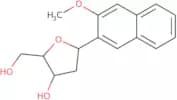
Degré de pureté :Min. 95%dNaM
CAS :dNaM is a metabolite of DNA that has been shown to be a potential biomarker for metabolic disorders and autoimmune diseases. dNaM levels are elevated in the blood of pregnant women, which may serve as a marker for preeclampsia. Elevated levels have also been observed in patients with type 2 diabetes, obesity, and cancer. Methylation plays an important role in dNaM metabolism. The enzyme DNA methyltransferase (DNMT) catalyzes the transfer of methyl groups from S-adenosyl methionine to cytosine residues on the DNA molecule. DNMT activity is increased by high body mass index (BMI), low vitamin B12 levels, and HIV infection. This enzyme is also inhibited by valproic acid and deprenyl, which may affect dNaM methylation status.
Formule :C16H18O4Degré de pureté :Min. 95%Masse moléculaire :274.31 g/molRef: 3D-SUB89319
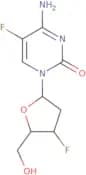
Produit arrêté2',3'-Dideoxy-3',5-difluorocytidine
CAS :2',3'-Dideoxy-3',5-difluorocytidine (ddF) is a nucleotide analogue that inhibits the viral polymerase. It binds to the enzyme and prevents it from synthesizing DNA, which is needed for viral replication. ddF has been shown to be effective against different types of cancer cells, including breast and prostate cancers. This drug also has antiviral properties and is used as an antiviral agent in AIDS therapy. ddF may also be used as a precursor in the synthesis of other nucleosides or nucleotides.
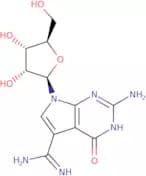
Degré de pureté :Min. 95%Archaeosine
CAS :Archaeosine is a low energy chemical compound that inhibits the enzyme transcriptase polymerase chain reaction (PCR), which is an enzyme that catalyzes the synthesis of DNA from RNA. Archaeosine has significant interactions with human proteins, such as leukocyte antigen, and can be used to study protein-protein interactions and enzyme kinetics. The asymmetric synthesis of archaeosine has been studied in rat liver microsomes, which is a type of cell found in the tissues of the liver. Archaeosine also prevents bacterial enzymes from synthesizing DNA.
Formule :C12H16N6O5Degré de pureté :Min. 95%Masse moléculaire :324.29 g/mol
![8-(2-Deoxy-b-D-ribofuranosyl)-imidazo[1,2-a]-1,3,5-triazine-2,4(3H,8H)-dione](/_next/image/?url=https%3A%2Fstatic.cymitquimica.com%2Fproducts%2F3D%2Fthumb-webp%2FND145594.webp&w=3840&q=75)


![5-[4-(4,4,5,5-tetramethyl-[1,3,2]dioxaborolan-2-yl)-benzylidene]-pyrimidine-2,4,6-trione](/_next/image/?url=https%3A%2Fstatic.cymitquimica.com%2Fproducts%2F3D%2Fthumb-webp%2FNT44284.webp&w=3840&q=75)
![3',5'-O-[Tetrakis(1-methylethyl)-1,3-disiloxanediyl]-guanosine](/_next/image/?url=https%3A%2Fstatic.cymitquimica.com%2Fproducts%2F3D%2Fthumb-webp%2FNT16564.webp&w=3840&q=75)