Nucléosides
3569 produits trouvés pour "Nucléosides"
3’-b-Amino-2’,3’-dideoxy-5-methyl-5’-O-trityluridine
CAS :3’-b-Amino-2’,3’-dideoxy-5-methyl-5’-O-trityluridine is an antiviral nucleoside that can inhibit the synthesis of DNA in cells. It has been shown to be active against Hepatitis B and Human Immunodeficiency Virus (HIV). This drug has also been shown to have anticancer properties. 3’-b-Amino-2’,3’-dideoxy-5-methyl-5’-O -trityluridine is a novel nucleoside modified at the 5′ position with a trityl group and with an amino group at the 3′ position. 3′ b -amino 2 ′,3 ′ -dideoxy 5 ′ -methyl 5 ′ -O trityl uridine is water soluble and stable in acid conditions.Degré de pureté :Min. 95%N4-Benzoyl-5'-O-DMT-2'-O-(2-methoxyethyl)-5-methylcytidine 3'-CE phosphoramidite
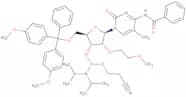
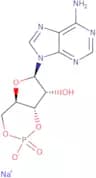
CAS :Nucleoside phosphoramidites are used in the chemical synthesis of oligonucleotides. Using a chemical approach rather than an enzymatic one allows quick and inexpensive access to custom-made oligonucleotides of the desired sequence. Differently from the enzymatic synthesis, the chemically synthesised oligonucleotide sequence is typically constructed in a 3’ to 5’ direction. N4-Benzoyl-5'-O-DMT-2'-O-(2-methoxyethyl)-5-methylcytidine 3'-CE phosphoramidite, also called 5-Me-DMT-2'-O-MOE-C(Bz)-CEP, has been used in the synthesis of oligonucleotides which are specifically hybridizable with nucleic acids encoding multidrug resistant-associated protein (MRP). The antisense oligonucleotide ISIS 13041 gave almost complete removal of resistance to vincristine, a chemotherapy drug.Formule :C50H60N5O10PDegré de pureté :Min. 95%Couleur et forme :White PowderMasse moléculaire :922.01 g/molAdenosine 3',5'-cyclic monophosphate sodium salt
CAS :Second messenger in intracellular signal transductionFormule :C10H11N5NaO6PDegré de pureté :Min. 97 Area-%Couleur et forme :White PowderMasse moléculaire :351.19 g/molN6-([6-Aminohexyl]carbamoylmethyl)adenosine 5'-triphosphate lithium salt
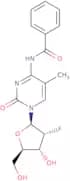
CAS :N6-([6-Aminohexyl]carbamoylmethyl)adenosine 5'-triphosphate lithium salt is a monophosphate nucleoside that has been modified with a 6-aminohexylaminocarbonyl group. It is an antiviral and anticancer agent that inhibits the synthesis of DNA, RNA, and proteins. N6-[(6-Aminohexyl)carbamoylmethyl]adenosine 5'-triphosphate lithium salt is novel and high quality.Formule :C18H32N7O14P3·xLiDegré de pureté :Min. 95%2'-Deoxy-2'-fluoro-N4-benzoyl-5-methylcytidine
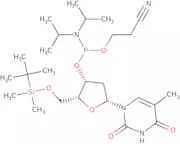
CAS :2'-Deoxy-2'-fluoro-N4-benzoyl-5-methylcytidine is a monophosphate nucleoside that is used as an antiviral and anticancer drug. It inhibits the synthesis of DNA, RNA, and proteins by acting as a chain terminator. 2'-Deoxy-2'-fluoro-N4-benzoyl-5-methylcytidine inhibits viral replication by blocking the formation of viral DNA. This compound is also used for the treatment of cancerous cells. 2'-Deoxy-2'-fluoro-N4-benzoyl-5-methylcytidine has shown to be effective against leukemia cells in culture. 2'-Deoxy -2' -fluoro N4 benzoyl 5 methyl cytidine has been synthesized with high purity and is available in a variety of modifications including phosphoramidites and deoxyribonucleosides.Degré de pureté :Min. 95%5'-O-tert-Butyldimethylsilylthymidine 3'-CE phosphoramidite
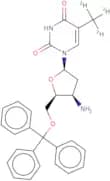
5'-O-tert-Butyldimethylsilylthymidine 3'-CE phosphoramidite is a nucleoside which is an activator for DNA synthesis. It is synthesized from the natural substance thymidine, and it can be modified to have various properties by changing the chemical group that attaches to the 3' carbon. 5'-O-tert-Butyldimethylsilylthymidine 3'-CE phosphoramidite is a novel nucleoside that has been shown to be anticancerous in vitro. This compound may also play a role in treating viral infections due to its antiviral properties.Formule :C25H45N4O6PSiDegré de pureté :Min. 95%Masse moléculaire :556.72 g/mol3'-Amino-3'-deoxy-5'-O-trityl-D3-thymidine
Produit contrôlé3'-Amino-3'-deoxy-5'-O-trityl-D3-thymidine is a nucleoside and deoxyribonucleoside. It is an antiviral and anticancer agent that inhibits the synthesis of DNA by competitively inhibiting the enzyme ribonucleotide reductase, which converts ribonucleotides to deoxyribonucleotides. 3'-Amino-3'-deoxy-5'-O-trityl-D3-thymidine has been shown to be effective in treating HIV, herpes zoster, and cancer cells.Formule :C29H26N3O4D3Degré de pureté :Min. 95%Masse moléculaire :486.58 g/mol2'-Deoxy-5'-O-DMT-uridine 3'-O succinate TEA
2'-Deoxy-5'-O-DMT-uridine 3'-O succinate TEA salt is a modified nucleoside that is an activator for DNA synthesis. It can be used to synthesize oligonucleotides for use in the treatment of cancer and antiviral agents. 2'-Deoxy-5'-O-DMT-uridine 3'-O succinate TEA salt has been shown to inhibit viral replication by inhibiting the function of reverse transcriptase, which is an enzyme that catalyzes the conversion of RNA into DNA. This product has a CAS number, high purity, and high quality.Degré de pureté :Min. 95%3'-Amino-N4-benzoyl-5'-O-benzoyl-2',3'-dideoxyadenosine
This product is a novel nucleoside analog with antiviral, anticancer and antiretroviral activities. It is an activator of ribonucleosides and deoxyribonucleosides. This product is synthesized by the phosphoramidite method. The purity of this product is greater than 98%.Formule :C24H22N6O4Degré de pureté :Min. 95%Masse moléculaire :458.47 g/mol3'-Azido-5'-O-benzoyl-3'-deoxythymidine
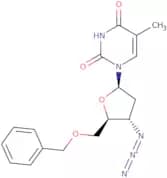
CAS :3'-Azido-5'-O-benzoyl-3'-deoxythymidine is a novel antiviral agent that is synthesized by modifying the structure of thymidine. It has been shown to have high antiviral activity against HIV and other viruses in vitro. 3'-Azido-5'-O-benzoyl-3'-deoxythymidine also inhibits tumor growth in animal models and may be useful as an anticancer drug. This compound is found to be active against a number of cancers, including leukemia, colon cancer, and prostate cancer. 3'-Azido-5'-O-benzoyl-3'-deoxythymidine is phosphoramidites for DNA synthesis, which can be used in the production of ribonucleosides or deoxyribonucleosides.Formule :C17H19N5O4Degré de pureté :Min. 95%Masse moléculaire :357.36 g/molN6-Benzoyl-2'-O-benzyl-5'-O-DMT-adenosine
CAS :N6-Benzoyl-2'-O-benzyl-5'-O-DMT-adenosine is a novel nucleoside with anticancer and antiviral properties. It is a phosphoramidite that can be used for the synthesis of DNA, RNA, and other nucleosides. N6-Benzoyl-2'-O-benzyl-5'-O-DMT-adenosine has been shown to inhibit the growth of cancer cells by preventing RNA synthesis and DNA replication. This chemical also has antiviral effects against HIV and can inhibit the replication of herpes simplex virus type 1. The chemical is highly soluble in water, methanol, ethanol, acetone, chloroform, ethyl ether and acetonitrile.Formule :C45H41N5O7Degré de pureté :Min. 95%Masse moléculaire :763.84 g/mol1-(2'-Deoxy-5'-O-DMT-2'-fluoro-b-D-arabinofuranosyl)uracil
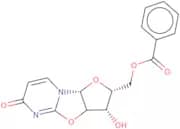
CAS :1-(2'-Deoxy-5'-O-DMT-2'-fluoro-b-D-arabinofuranosyl)uracil is a nucleoside analog and contains a uracil base, and a 2'-deoxy-5'-O-DMT-2'-fluoro-b-D-arabinofuranosyl sugar moiety. The 2'-fluoro modification is of particular interest due to its potential to alter the chemical and biological properties of the resulting oligonucleotides. Fluorinated nucleosides and their analogs have been extensively studied for their antiviral and anticancer activities. The incorporation of fluorine into nucleoside analogs can also affect their interaction with DNA and RNA, leading to changes in their therapeutic potential.Formule :C30H29FN2O7Degré de pureté :Min. 95%Couleur et forme :White To Off-White SolidMasse moléculaire :548.56 g/mol5'-O-Benzoyl-2,2'-anhydrouridine
5'-O-Benzoyl-2,2'-anhydrouridine is an antiviral agent that belongs to the group of deoxyribonucleosides. It is a modified nucleoside that is synthesized from 2,4-dihydroxybenzoic acid and 5-aminoimidazole ribonucleotide monophosphate. 5'-O-Benzoyl-2,2'-anhydrouridine can be used as a phosphoramidite synthon for the synthesis of DNA or RNA. The drug has been shown to inhibit the replication of several viruses in cell culture, including herpes simplex virus type 1 (HSV1), herpes simplex virus type 2 (HSV2), varicella zoster virus (VZV), cytomegalovirus (CMV), and Epstein Barr virus (EBV). 5'-O-Benzoyl-2,2'-anhydrouridine alsoFormule :C16H14N2O6Degré de pureté :Min. 95%Masse moléculaire :330.29 g/mol2'-Deoxyguanosine-5'-monophosphate disodium salt
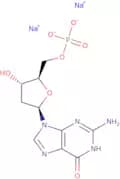
CAS :2'-Deoxyguanosine-5'-monophosphate disodium salt is an inorganic compound that has a furanose ring. It is used as a monofunctional building block for the synthesis of nucleotide derivatives. The conformations of 2'-deoxyguanosine-5'-monophosphate disodium salt are experimentally determined by x-ray data, which shows that the molecule adopts a twisted conformation with two possible orientations: one where the 2'OH group is oriented toward the phosphate group, and another where it is oriented away from it. The nature of these conformers can be confirmed by analyzing their x-ray diffraction patterns.Formule :C10H12N5Na2O7PDegré de pureté :Min. 98 Area-%Couleur et forme :White PowderMasse moléculaire :391.19 g/mol2',3',5'-Tri-O-acetylguanosine
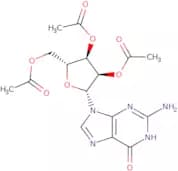
CAS :2',3',5'-Tri-O-acetylguanosine is a protected form of the nucleoside guanosine which has potential application as a synthetic intermediate in nucleic acid and nucleoside chemistry.Formule :C16H19N5O8Degré de pureté :Min. 95%Couleur et forme :White PowderMasse moléculaire :409.35 g/molCytidine 3',5'-cyclic monophosphate monosodium
CAS :Cytidine 3',5'-cyclic monophosphate monosodium is a phosphotriester that is used as a building block to synthesize ribonucleosides, uridine, guanosine, and cytidine. The phosphate group in the molecule can be removed by nucleophilic substitution with ammonia or sodium hydroxide to form the corresponding nucleosides. Cytidine 3',5'-cyclic monophosphate monosodium has been shown to inhibit bacterial growth.Formule :C9H11N3O7PNaDegré de pureté :Min. 95%Couleur et forme :White PowderMasse moléculaire :327.16 g/molAdenosine-2'-monophosphate
CAS :Adenosine-2'-monophosphate is a nucleotide that contains two adenine bases. It is an important precursor in the synthesis of ATP, which is the main source of energy for cells. Adenosine-2'-monophosphate has been shown to inhibit phosphatase and lysine residues, as well as GSH-Px activities in kidney cells, leading to increased glomerular filtration rate. It also activates microglia cells and induces oxidative injury in rat brain tissue. The kinetic data for this molecule suggests that it binds to the enzyme ternary complex formation with a neutral pH optimum.
Formule :C10H14N5O7PDegré de pureté :Min. 95%Couleur et forme :PowderMasse moléculaire :347.22 g/mol6-Amino-4-methoxy-2-(b-D-ribofuranosyl)-2H-pyrazolo[3,4-d]pyrimidine
6-Amino-4-methoxy-2-(b-D-ribofuranosyl)-2H-pyrazolo[3,4-d]pyrimidine is a novel antiviral monophosphate nucleoside. It has been shown to be an activator of the transcription factor NFAT and to inhibit the replication of human immunodeficiency virus (HIV). 6-Amino-4-methoxy-2-(b-D-ribofuranosyl)-2H-pyrazolo[3,4-d]pyrimidine is synthesized from 2,6 dihydroxybenzaldehyde and 3,5 dibenzyloxybenzaldehyde using phosphoramidites. The product is purified by HPLC.Degré de pureté :Min. 95%2'-Deoxy-4'-thioadenosine
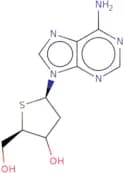
CAS :2'-Deoxy-4'-thioadenosine is a purine nucleoside that is synthesized from 4-thiouridine and phosphorylase. It is cytotoxic and has significant cytotoxicity against cultured cells. The cytotoxicity of 2'-deoxy-4'-thioadenosine was found to be due to its conversion to the triphosphate form in the cells, which inhibits both DNA synthesis and RNA synthesis. This drug also has an inhibitory effect on the growth of tumor cells by inhibiting ribosomal protein synthesis.Formule :C10H13N5O2SDegré de pureté :Min. 95%Masse moléculaire :267.31 g/mol2'-Deoxy-3,5-dimethylcytidine
CAS :2'-Deoxy-3,5-dimethylcytidine is a nucleoside analog that is an activator of the ribonucleotide reductase enzyme. It has been shown to have anticancer properties in vitro and in vivo. 2'-Deoxy-3,5-dimethylcytidine has also been shown to be effective against HIV and herpes virus infections. 2'-Deoxy-3,5-dimethylcytidine is synthesized from deoxyribonucleosides or nucleosides by phosphitylation with phosphoramidites or diphosphates. The CAS number for this product is 198198-29-7.Formule :C11H17N3O4Degré de pureté :Min. 95%Couleur et forme :PowderMasse moléculaire :255.27 g/mol5'-O-DMT-2'-O-methyl-5-iodouridine 3'-CE-phosphoramidite
5'-O-DMT-2'-O-methyl-5-iodouridine 3'-CE-phosphoramidite is a novel nucleoside, which has been synthesized by the activation of 5'-O-DMT-2'-O-methyluridine 3'-CE with phosphorous tribromide. It has been tested for antiviral and anticancer activities, as well as its ability to inhibit HIV replication in vitro. This compound is also useful for the synthesis of other nucleosides.Degré de pureté :Min. 95%1-(2'-Deoxy-2'-fluoro-β-D-arabinofuranosyl)-5-iodouracil
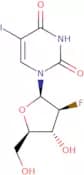
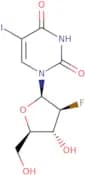
CAS :1-(2'-Deoxy-2'-fluoro-β-D-arabinofuranosyl)-5-iodouracil is a nucleoside analog with antiviral properties. It consists of a modified uracil base (5-iodouracil) attached to a fluorinated arabinofuranosyl sugar moiety. In cell culture, it inhibits the replication of varicella-zoster virus, herpes simplex virus type 1 and 2 and cytomegalovirus.Formule :C9H10FIN2O5Degré de pureté :Min. 98 Area-%Couleur et forme :White Off-White PowderMasse moléculaire :372.09 g/molcGMP sodium salt - Bio-X ™
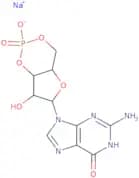
CAS :Cyclic guanosine monophosphate (cyclic GMP) is a guanine nucleotide that is a cellular regulatory agent and is used to increase the levels of various hormones. This molecule is said to increase levels of hormones such as insulin, oxytocin and acetylcholine. Studies have found this molecule to also activate protein kinases.Formule :C10H12N5O7P•NaDegré de pureté :Min. 95%Couleur et forme :PowderMasse moléculaire :368.2 g/mol2'-Deoxy-2'-fluoro-N2-isobutyrylguanosine
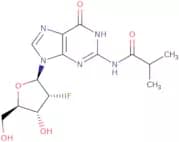
CAS :2'-Deoxy-2'-fluoro-N2-isobutyrylguanosine is a modified nucleoside analog for research applicationsFormule :C14H18FN5O5Degré de pureté :Min. 95%Couleur et forme :White PowderMasse moléculaire :355.33 g/molFialuridine - Bio-X ™
CAS :This product is part of our Bio-X ™ Range. These products are aimed at life science researchers who need high quality ready-to-use products for assay development, screening or other R&D work. With a solubility datasheet and convenient vials, all of our Bio-X ™ products are in stock across our global warehouses for rapid delivery and ease of use.Formule :C9H10FIN2O5Degré de pureté :Min. 95%Couleur et forme :PowderMasse moléculaire :372.09 g/mol2'-Deoxy-6-thioguanosine - Bio-X ™
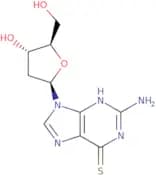
CAS :This product is part of our Bio-X ™ Range. These products are aimed at life science researchers who need high quality ready-to-use products for assay development, screening or other R&D work. With a solubility datasheet and convenient vials, all of our Bio-X ™ products are in stock across our global warehouses for rapid delivery and ease of use.Formule :C10H13N5O3SDegré de pureté :Min. 95%Couleur et forme :PowderMasse moléculaire :283.31 g/mol9-(b-D-Arabinofuranosyl)-8-chloroadenine
CAS :9-(b-D-arabinofuranosyl)-8-chloroadenine is a deoxyribonucleoside that is structurally related to adenosine. It has antiviral properties and has been shown to be active against herpes virus, influenza A virus, and cytomegalovirus. 9-(b-D-Arabinofuranosyl)-8-chloroadenine is an activator of cellular DNA polymerase δ and has been shown to inhibit the replication of HIV in human T lymphocytes. 9-(b-D-Arabinofuranosyl)-8-chloroadenine also inhibits the proliferation of tumor cells and is being investigated as a potential chemotherapeutic agent for cancer treatment.
Degré de pureté :Min. 95%1', 2', 3', 4', 5'- ¹³C5-Adenosine
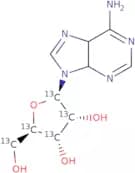
CAS :1', 2', 3', 4', 5'- ¹³C5-Adenosine is adenosine which has all five carbon atoms of the ribose sugar replaced with the stable isotope carbon-13 (^13C). Possible applications are in proteomics studies.Formule :C5C5H13N5O4Degré de pureté :Min. 97 Area-%Couleur et forme :White PowderMasse moléculaire :272.2 g/molN1-Methylpseudouridine-5'-triphosphate trisodium
Please enquire for more information about N1-Methylpseudouridine-5'-triphosphate trisodium including the price, delivery time and more detailed product information at the technical inquiry form on this pageFormule :C10H14N2Na3O15P3Masse moléculaire :564.11 g/mol2’,3’-Bis-O-tert-butyldimethylsilyl-5-methoxyuridine
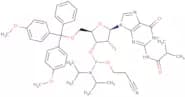
2’,3’-Bis-O-tert-butyldimethylsilyl-5-methoxyuridine is an antiviral nucleoside that is chemically synthesized from 5-methoxyuridine. It has been shown to inhibit the replication of HIV in cell cultures and animal models. This drug can be used as a phosphoramidite for the synthesis of oligonucleotides. 2’,3’-Bis-O-tert-butyldimethylsilyl-5-methoxyuridine is a novel nucleoside that has not been previously reported in the chemical literature.Degré de pureté :Min. 95%2'-Deoxy-5'-O-DMT-2'-fluoro-N2-isobutyrylguanosine 3'-CE phosphoramidite
CAS :2'-Deoxy-5'-O-DMT-2'-fluoro-N2-isobutyrylguanosine 3'-CE phosphoramidite is a novel nucleoside analog, which has potent antiviral activity against HIV and other retroviruses. It is synthesized from 5'-O-DMT-2'-fluoro-N2-isobutyrylguanosine by the reaction of sodium bicarbonate with 2',3'-dideoxyadenosine in the presence of an activator. The product can be used for the synthesis of RNA or DNA for use as probes, primers, and templates in polymerase chain reactions (PCRs).Formule :C44H53FN7O8PDegré de pureté :Min. 95%Couleur et forme :White PowderMasse moléculaire :857.91 g/mol1-(b-L-Threonyl)-5-methyluracil
1-(b-L-Threonyl)-5-methyluracil (1,5MT) is a synthetic nucleoside that has antiviral and anticancer properties. 1,5MT is modified with a b-L-threonyl group at the 5’ position. This modification stabilizes the molecule and prevents its degradation by ribonucleases. The modification also increases the phosphoramidite reactivity of 1,5MT and enhances its incorporation into DNA during synthesis. 1,5MT is an activator for RNA polymerase II, which plays an important role in transcriptional regulation. It binds to the enzyme's allosteric site and stimulates transcriptional elongation by RNA polymerase II through phosphoramidate formation with deoxyribose phosphate. 1,5MT is active against cancer cells in vitro and has been shown to inhibit tumor growth in vivo.Degré de pureté :Min. 95%2'-O-Acetyl-3'-azido-5'-O-(4-methylbenzoyl)-3'-deoxyuridine
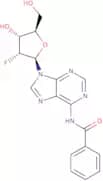
CAS :2'-O-Acetyl-3'-azido-5'-O-(4-methylbenzoyl)-3'-deoxyuridine (2'AAZ) is a modified nucleoside that has antiviral and anticancer activities. This compound blocks the synthesis of DNA, RNA, and proteins. 2'AAZ inhibits cell proliferation by interfering with the replication of DNA and by inhibiting protein synthesis. It has been shown to inhibit the growth of cancer cells in vitro and in vivo. The IC50 values for 2'AAZ are 5 μM for herpes simplex virus type 1 (HSV1) infection in Vero cells, 4 μM for HSV2 infection in Vero cells, 3 μM for influenza A virus (H1N1) infection in MDCK cells, and 0.5 μM for human immunodeficiency virus type 1 (HIV-1) infection in CEM-SS cells.Degré de pureté :Min. 95%N6-Benzoyl-2'-deoxy-2'-fluoroadenosine
CAS :N6-Benzoyl-2'-deoxy-2'-fluoroadenosine is an oligonucleotide that can be used to modulate the expression of survivin. It inhibits the expression of this protein by binding to its mRNA and preventing translation. N6-Benzoyl-2'-deoxy-2'-fluoroadenosine has shown potential for use in cancer treatment due to its ability to inhibit tumor growth and metastasis. It may also be used in the treatment of autoimmune diseases, such as rheumatoid arthritis, where it can inhibit the production of inflammatory cytokines.
Formule :C17H16FN5O4Degré de pureté :Min. 95%Couleur et forme :White PowderMasse moléculaire :373.34 g/molN4-Methylcytidine 5'-triphosphate triethylammonium salt
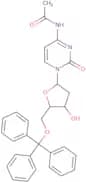
N4-Methylcytidine 5'-triphosphate triethylammonium salt is a novel nucleoside analog that inhibits the growth of tumor cells. It is synthesized by reacting N4-methylcytidine with phosphoramidite in an amine base, and then treated with triethylamine to produce a triethylammonium salt. This nucleoside analog inhibits DNA synthesis by inhibiting the enzyme ribonucleotide reductase, which converts ribonucleotides to deoxyribonucleotides. The resulting monophosphate compound has been shown to be effective in cancer treatment and may also be used as an antiviral agent.Formule :C10H18N3O14P3Degré de pureté :Min. 95%Masse moléculaire :497.18 g/molN4-Acetyl-2'-deoxy-5'-O-tritylcytidine
CAS :N4-Acetyl-2'-deoxy-5'-O-tritylcytidine is a novel nucleoside that is synthesized by modifying cytidine to form an acetylated nucleotide. It has been found to be an effective inhibitor of DNA synthesis and antiviral agent.Formule :C30H29N3O5Degré de pureté :Min. 95%Masse moléculaire :511.57 g/mol5'-O-Benzoyl-2'-deoxy-N2-isobutyrylguanosine 3'-CE phosphoramidite
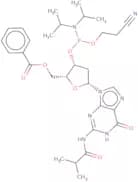
5'-O-Benzoyl-2'-deoxy-N2-isobutyrylguanosine 3'-CE phosphoramidite is a novel nucleoside phosphoramidite. It is an activator that can be used in the synthesis of oligonucleotide analogues, such as ribonucleosides and deoxyribonucleosides. 5'-O-Benzoyl-2'-deoxy-N2-isobutyrylguanosine 3'-CE phosphoramidite has shown anticancer activity.Formule :C30H40N7O7PDegré de pureté :Min. 95%Masse moléculaire :641.67 g/molPalmitoyl coenzyme A potassium salt
CAS :Palmitoyl coenzyme A potassium salt is a novel, modified nucleoside that has antiviral and anticancer activities. It is a phosphoramidite with a phosphate group at one end and a palmitoyl group at the other. The phosphate group is attached to the 5' position of the sugar, while the palmitoyl group is attached to the 3' position of the sugar. Palmitoyl coenzyme A potassium salt can be used in DNA synthesis.Formule :C37H65N7O17P3SKDegré de pureté :Min. 95%Couleur et forme :White PowderMasse moléculaire :1,044.03 g/molIsocytidine
CAS :Isocytidine, also known as 2-amino-1-β-D-ribofuranosyl-4(1H)-pyrimidinone, have broad antitumor activity targeting indolent lymphoid malignancies.Formule :C9H13N3O5Degré de pureté :Min. 95%Couleur et forme :PowderMasse moléculaire :243.22 g/mol5-Methylcytidine-5'-triphosphate sodium salt - 100mM aqueous solution
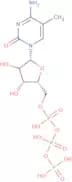
CAS :5-Methylcytidine-5'-triphosphate sodium salt is a nucleoside diphosphate that is used as an activator in the synthesis of DNA. It is also used as a building block in the synthesis of anticancer agents, such as 5-methylcytosine monophosphate and phosphoramidites. The chemical name for this product is 5-methylcytidine-5'-triphosphate sodium salt and its CAS number is 327174-86-7. This product is available for purchase at Sigma Aldrich with a purity of 99%.Formule :C10H18N3O14P3·xNaDegré de pureté :Min. 95%Couleur et forme :PowderMasse moléculaire :497.18 g/molS-Adenosyl-L-methionine disulfate tosylate
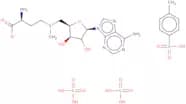
CAS :S-Adenosyl-L-methionine disulfate tosylate (SAMe) is a dietary supplement that is used to treat depression and liver disease. It is also a metabolite of the amino acid methionine, which is formed by the enzyme S-adenosylmethionine synthase. SAMe has been shown to inhibit the activation of caspase 3, which causes apoptosis in cells, and may be useful for treating cancer and other diseases. The chromatographic method used to separate SAMe from other compounds relies on its evaporative properties, due to its high water solubility.Formule :C22H34N6O16S4Degré de pureté :Min. 95 Area-%Couleur et forme :White PowderMasse moléculaire :766.8 g/mol5-(2-Hydroxyethyl)uridine
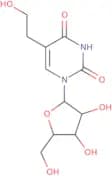
CAS :5-(2-Hydroxyethyl)uridine (5HUdR) is a nucleoside that is structurally related to uridine. 5HUdR has been used as an analogue of uridine and has been shown to be catalytically hydrogenated with acrylonitrile in the presence of a palladium catalyst. 5HUdR can also be synthesized by photochemical hydrogenation with trimethylsilyl derivatives. This compound is a functional group in the synthesis of 2-deoxyuridine, which is an important precursor for DNA synthesis.Formule :C11H16N2O7Degré de pureté :90%MinCouleur et forme :PowderMasse moléculaire :288.25 g/mol3'-O-Acetyl-2'-deoxyadenosine
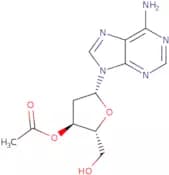
CAS :Please enquire for more information about 3'-O-Acetyl-2'-deoxyadenosine including the price, delivery time and more detailed product information at the technical inquiry form on this pageFormule :C12H15N5O4Degré de pureté :Min. 95%Couleur et forme :White PowderMasse moléculaire :293.29 g/mol9-(5’-Methyl-b-D-ribofuranosyl)-6-chloropurine
9-(5’-Methyl-b-D-ribofuranosyl)-6-chloropurine is a novel antiviral that belongs to the class of deoxyribonucleosides. It is synthesized by reacting 5’-methyl-2,4(1H,3H) pyrimidinedione with 6-chloropurine in the presence of sodium bicarbonate and sulfuric acid. 9-(5’-Methyl-b-D-ribofuranosyl)-6-chloropurine inhibits DNA synthesis by binding to the enzyme ribonuclease H (RNase H). RNase H hydrolyzes RNA sequences that are complementary to the 3’ end of DNA sequences and this drug prevents RNase H from functioning. 9-(5’-Methyl-b-Dribofuranosyl)-6 chloropurine also inhibits tumour cells and has shown anticancer activity inDegré de pureté :Min. 95%6-Azauridine-5'-monophosphate
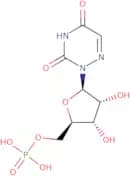
CAS :6-Azauridine-5'-monophosphate (6-AU) is a compound that is synthesized by the enzyme Azoarcus sp. 6-AU synthetase and is a precursor to azauridine, an intermediate in the biosynthesis of purines. It has been shown to inhibit bacterial growth in tissue culture and depression in mice. The kinetic data were obtained using a titration calorimetry assay at 25 degrees Celsius using subtilis. This drug also has convulsant effects on animals and can cause orotic aciduria when administered orally in high doses. 6-AU has been shown to be effective against cancer cells as well as infectious diseases such as tuberculosis and malaria.
Formule :C8H12N3O9PDegré de pureté :Min. 95%Couleur et forme :PowderMasse moléculaire :325.17 g/mol7-(Cyano)-7-deazaguanosine
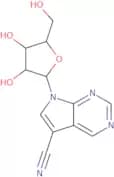
CAS :7-(Cyano)-7-deazaguanosine is an analog of guanosine that is synthesized by the substitution of two nitrogen atoms by two carbon atoms. 7-(Cyano)-7-deazaguanosine has been shown to be a potent inhibitor of bacterial queuosine biosynthesis and can be used as a research tool for studies on the biosynthesis of nucleic acids. It has also been shown to have anticodon activity, which inhibits the function of the anticodon loop in RNA polymerase.
Formule :C12H12N4O4Degré de pureté :Min. 95%Masse moléculaire :276.25 g/mol3-Deazauridine 5'-O-triphosphate lithium salt - 100 mM aqueous solution
3-Deazauridine 5'-O-triphosphate lithium salt is a nucleotide that can be found in the monophosphate form. It is an activator of RNA polymerase and is used to synthesize DNA. 3-Deazauridine 5'-O-triphosphate lithium salt functions as a novel anticancer agent, inhibiting the synthesis of DNA. This substance is also used as a building block for phosphoramidites and as a reagent for DNA synthesis.Degré de pureté :Min. 95%N4-Benzoyl-1-(3-O-methyl-b-D-xylofuranosyl)cytosine
N4-Benzoyl-1-(3-O-methyl-β-D-xylofuranosyl)cytosine is a modified nucleoside analog used in the treatment of cancer. It has been shown to be effective in the treatment of leukemia and lymphoma. N4-Benzoyl-1-(3-O-methyl-β-D-xylofuranosyl)cytosine inhibits viral DNA synthesis and is also an effective antiviral agent against HIV. This compound has been shown to have anticancer properties, which may be due to its ability to inhibit DNA replication and protein synthesis.Degré de pureté :Min. 95%3-Deaza-4’-C-methyluridine
CAS :3-Deaza-4’-C-methyluridine is an activator that can be used in the treatment of cancer. It is a synthetic nucleoside that has been modified to inhibit viral replication. 3-Deaza-4’-C-methyluridine can also be used in antiviral therapy, as it inhibits the synthesis of viral DNA and RNA. This antibacterial agent is a novel nucleoside that has been shown to have high purity and high quality. 3-Deaza-4’-C-methyluridine was first isolated from calf thymus DNA.Formule :C11H15NO6Degré de pureté :Min. 95%Masse moléculaire :257.24 g/mol2'-Deoxy-N2-DMF-guanosine
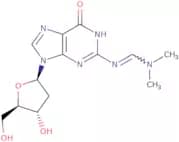
CAS :2'-Deoxy-N2-DMF-guanosine is a synthetic nucleoside that is used as a primer in DNA sequencing and hybridization experiments. It binds to the 5' end of single-stranded DNA and is complementary to guanosine. The 2'-deoxy group on the sugar moiety prevents the formation of hydrogen bonds with other bases, which increases stability. In addition, it has a high affinity for dna binding proteins. This synthetic nucleoside has been shown to be useful in clinical diagnostics and can be used as a probe for detecting diazirine residues in DNA sequences.Formule :C13H18N6O4Degré de pureté :Min. 97 Area-%Couleur et forme :White Off-White PowderMasse moléculaire :322.33 g/mol


![N6-([6-Aminohexyl]carbamoylmethyl)adenosine 5'-triphosphate lithium salt](/_next/image/?url=https%3A%2Fstatic.cymitquimica.com%2Fproducts%2F3D%2Fthumb-webp%2FNA73270.webp&w=3840&q=75)






![6-Amino-4-methoxy-2-(b-D-ribofuranosyl)-2H-pyrazolo[3,4-d]pyrimidine](/_next/image/?url=https%3A%2Fstatic.cymitquimica.com%2Fproducts%2F3D%2Fthumb-webp%2FNA162978.webp&w=3840&q=75)