Nucléosides
3570 produits trouvés pour "Nucléosides"
Adenosine-5'-[-(propargyl)]triphosphate sodium salt
Adenosine-5'-[-(propargyl)]triphosphate sodium salt is a modified nucleoside with anticancer activity. It has been shown to be a potent activator of DNA synthesis and an inhibitor of viral replication. Adenosine-5'-[-(propargyl)]triphosphate sodium salt is not active against bacterial cells, but it can be used in the treatment of cancer. This drug also has antiviral effects, which may be due to its ability to inhibit viral replication by binding to viral RNA polymerases or by inhibiting the transcriptional activation of genes encoding for enzymes that are required for mRNA synthesis.Formule :C13H18N5O13P3Degré de pureté :Min. 95%Masse moléculaire :545.23 g/mol7-Deaza-2'-deoxy-5'-O-DMT-adenosine
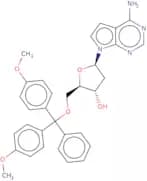
CAS :7-Deaza-2'-deoxy-5'-O-DMT-adenosine is a nucleoside that has been synthesized by reacting 7-deaza-2'-deoxyadenosine with 5,6,7,8-tetrahydro-1H-[1]pyrazolo[3,4]pyrimidin-4(3H)-one. It is a novel anticancer agent that has been shown to inhibit the proliferation of various tumor cells in vitro. The cytotoxic effects of 7-deaza-2'-deoxy-5'-O-DMT adenosine are due to its ability to activate DNA synthesis while inhibiting DNA repair. It also inhibits ribonucleotide reductase and protein synthesis.Formule :C32H32N4O5Degré de pureté :Min. 95%Masse moléculaire :552.62 g/mol2',3',5'-Tri-O-acetyl-N2-dimethylguanosine
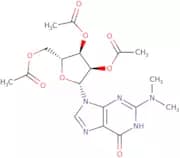
CAS :2',3',5'-Tri-O-acetyl-N2-dimethylguanosine is a novel modified nucleoside. It is a monophosphate that has been shown to be an activator of DNA and RNA synthesis, which can lead to the production of cancer cells. 2',3',5'-Tri-O-acetyl-N2-dimethylguanosine also has antiviral and antibacterial properties, as well as anticancer activity. This compound is used as a phosphoramidite in the synthesis of oligonucleotides for use in research and therapeutic applications.Formule :C18H23N5O8Degré de pureté :Min. 95%Masse moléculaire :437.4 g/mol2'-Deoxy-5'-O-DMT-guanosine-(DMF)-3'-Q Linker CPG; 1000 Å
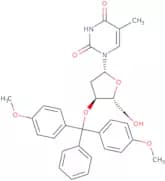
The 2'-Deoxy-5'-O-DMT-guanosine-(DMF)-3'-Q Linker CPG; 1000 Å is a synthetic, high quality, novel and high purity phosphoramidite that is activated with DMAP. The covalent linkage of the nucleoside to the CPG is made by an amidite coupling reaction. The following compounds have been synthesized on this support: ampicillin, chloramphenicol, gentamicin, kanamycin, neomycin and tetracycline. This product is used in anticancer and antiviral research.Degré de pureté :Min. 95%3'-O-DMT-thymidine
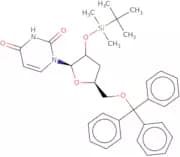
CAS :3'-O-DMT-thymidine is a nucleoside analogue that is synthesized from thymidine. It has been shown to bind to the proviral dna of HIV and inhibit viral replication when present in a complex with the other nucleosides. 3'-O-DMT-thymidine is also stable at high temperatures and binds to carboxamide groups on proteins. This compound has been shown to be effective as a binder for surfaces and membranes, which may be due to its ability to form stable complexes with terminal phosphates. The stability of these complexes can be influenced by the presence of denaturants such as temperature, pH, or ionic strength parameters. 3'-O-DMT-thymidine also forms stable complexes with linkers that are sensitive to thermal denaturation.Formule :C31H32N2O7Degré de pureté :Min. 95%Masse moléculaire :544.6 g/mol2'-O-(tert-Butyldimethylsilyl)-3'-deoxy-5'-O-trityluridine
CAS :2'-O-(tert-Butyldimethylsilyl)-3'-deoxy-5'-O-trityluridine is a nucleoside that has antiviral and anticancer properties. It is a monophosphate of uridine, which is an important precursor in the synthesis of DNA and RNA. This product has been modified to improve its purity and quality, making it suitable for use in laboratory research.Formule :C34H40N2O5SiDegré de pureté :Min. 95%Masse moléculaire :584.78 g/molN6-(4-Methyoxybenzoyl)adenosine
CAS :N6-(4-Methoxybenzoyl)adenosine is an adenine base that is a furanose sugar, with a glycosidic bond. The furanose ring has a phenyl group and an adenine base in the conformation of pyranose. The phenyl ring is in the geometry of chair form and is bonded to the 6' position of the adenosine base. N6-(4-Methoxybenzoyl)adenosine has a glycosidic bond at C1' - C5'. It has an angstrom distance between C1'-C2' and C3'-C5'.
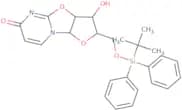
Formule :C18H19N5O6Degré de pureté :Min. 95%Masse moléculaire :401.37 g/mol2,2'-Anhydro-5'-O-t-butyldiphenylsilyluridine
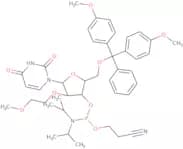
CAS :2,2'-Anhydro-5'-O-t-butyldiphenylsilyluridine (2,2'-ABSU) is a novel modified nucleoside that was synthesized in order to be used as an antiviral agent. 2,2'-ABSU has shown to be an effective inhibitor of HIV-1 replication and it has been shown to have anticancer properties. This drug is high quality and can be used for the manufacture of phosphoramidites.Degré de pureté :Min. 95%5'-O-DMT-2'-O-(2-methoxyethyl)uridine 3'-CE phosphoramidite
CAS :Building block for the introduction of uridine units into oligonucleotidesFormule :C42H53N4O10PDegré de pureté :Min. 95%Masse moléculaire :804.86 g/molKinetin riboside-5'-triphosphate sodium
CAS :Kinetin riboside-5'-triphosphate sodium salt is a novel antiviral. It is a modified ribonucleotide that inhibits DNA synthesis and has been shown to be effective against cancer cells in vitro. Kinetin riboside-5'-triphosphate sodium salt can also activate the immune system by inducing the production of cytokines, such as interleukin-2 (IL-2), which may have anticancer effects.Formule :C15H19N5NaO14P3Degré de pureté :Min. 95%Masse moléculaire :609.25 g/mol2'-O-Methylguanosine 5'-triphosphate lithium salt - 100mM aqueous solution
CAS :2'-O-Methylguanosine 5'-triphosphate lithium salt is a synthetic nucleotideFormule :C11H18N5O14P3·xLiDegré de pureté :Min. 95%Couleur et forme :Clear LiquidMasse moléculaire :537.21 g/molLutonarin
CAS :Lutonarin is a naturally occurring compound in the plant Pueraria lobata. It has been shown to have anti-cancer properties and can be used as an alternative to radiation therapy for cancer treatment. Lutonarin is a membrane-hyperpolarizing agent that is able to pass through the cell membrane, leading to membrane hyperpolarization. Lutonarin also inhibits the production of gamma-aminobutyric acid (GABA), which leads to increased cell proliferation and inhibition of root formation. Lutonarin has been found to inhibit enzyme activities, such as glucose monitoring and protocatechuic acid, phenolic acid, and crystalline cellulose degradation. This leads to reduced glucose levels in blood plasma and reduced degradation of polysaccharides in roots.Formule :C27H30O16Degré de pureté :Min. 95%Masse moléculaire :610.5 g/mol5'-O-DMT-thymidine 3'-thiophosphoramidite
5'-O-DMT-thymidine 3'-thiophosphoramidite is a nucleoside that is used as a building block for the synthesis of DNA and RNA. The compound is also used to create antiviral drugs, anticancer agents, and novel drugs with antimicrobial properties. The chemical structure of 5'-O-DMT-thymidine 3'-thiophosphoramidite has been modified from the natural ribonucleoside thymidine. This modification prevents the phosphorylation of 5'-O-DMT-thymidine 3'-thiophosphoramidite by cellular kinases, which makes this compound more stable in vivo.Formule :C44H48N3O8PS2Degré de pureté :Min. 95%Masse moléculaire :841.97 g/mol8-Aza-7-deaza-2'-deoxy-N2-DMF-5'-O-DMT-guanosine 3'-CE phosphoramidite
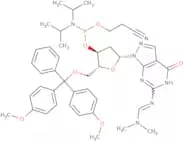
CAS :8-Aza-7-deaza-2'-deoxy-N2-DMF-5'-O-DMT-guanosine 3'-CE phosphoramidite is a novel monophosphate derivative of 2' deoxyN2,8-diaminofluorene 5'-O-(4,4′-dimethoxytrityl) guanosine. It can be used as an activator in DNA synthesis or as a precursor for the synthesis of other modified purines and pyrimidines. This compound has been shown to have anticancer activity in mice. It also has antiviral effects against HIV and HSV1. 8-Aza-7-deaza-2'-deoxyN2,8-diaminofluorene 5'-O-(4,4′dimethoxytrityl) guanosine 3′ CE phosphoramidite is soluble in methanol and ethanol andFormule :C43H53N8O7PDegré de pureté :Min. 95%Couleur et forme :PowderMasse moléculaire :824.9 g/mol5-Fluoro-2'-O-methyluridine
CAS :5-Fluoro-2'-O-methyluridine is a nucleotide that can be used in the treatment of colorectal adenocarcinoma and other types of cancer. It inhibits the synthesis of DNA by blocking the activity of ribonucleotide reductase, an enzyme that converts ribonucleotides to deoxyribonucleotides. 5-Fluoro-2'-O-methyluridine has been shown to decrease the growth of human glioblastoma cells in cell culture and animal models. The effect is dose dependent and occurs through inhibition of RNA synthesis and protein synthesis, leading to cell death.Formule :C10H13FN2O6Degré de pureté :Min. 95%Masse moléculaire :276.22 g/mol2'-Deoxyguanosine-5'-monophosphate disodium salt hydrate
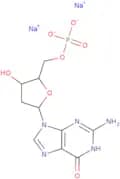
CAS :2'-Deoxyguanosine-5'-monophosphate disodium salt hydrate is a novel nucleoside diphosphate that has antiviral and anticancer effects. It inhibits the synthesis of viral DNA, RNA, and proteins, which can lead to cell death by apoptosis. 2'-Deoxyguanosine-5'-monophosphate disodium salt hydrate also inhibits the proliferation of cancer cells and other malignant cells.Formule :C10H12N5Na2O7PDegré de pureté :Min. 95%Masse moléculaire :391.19 g/molEmtricitabine-d2,15N
CAS :Emtricitabine-d2,15N is a labelled version of emtricitabine. It is a nucleoside reverse transcriptase inhibitor that inhibits the HIV-1 virus by blocking the activity of the enzyme needed to convert RNA into DNA. This drug also offers long-term efficacy and can be used in combination with other antiretroviral agents including tenofovir alafenamide hemifumarate (TAF) and tenofovir disoproxil fumarate (TDF). The addition of TAF or TDF to emtricitabine-d2,15N provides an active antiretroviral therapy for HIV/AIDS patients. Emtricitabine-d2,15N has shown to reduce viral load significantly in people taking it as part of their treatment regimen.
Formule :C8D10FN3O3SDegré de pureté :Min. 95%Masse moléculaire :257.3 g/molN6-Benzoyl-5'-O-(4,4'-dimethoxytrityl) -2'-deoxyadenosine
CAS :N6-Benzoyl-5'-O-(4,4'-dimethoxytrityl)-2'-deoxyadenosine is a versatile nucleoside building block.Formule :C38H35N5O6Degré de pureté :Min. 98 Area-%Masse moléculaire :657.71 g/molPyrimidine-5-carboxamidine hydrochloride
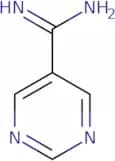
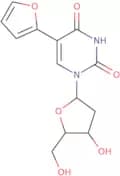
CAS :Pyrimidine-5-carboxamidine hydrochloride (GC) is a guanosine analog that inhibits bacterial growth by binding to the anticodon region of ribosomes. GC has been shown to bind to the replicons of many organisms, including bacteria, and inhibit the formation of mRNA from DNA. This drug also inhibits methyltransferase, which prevents transfer RNA from being modified with methionine. GC may be used in research for eukaryotes and deamination reactions in trna modification.Formule :C5H6N4·HClDegré de pureté :Min. 95%Masse moléculaire :158.59 g/mol5-(Furan-2-yl)-2'-deoxyuridine
CAS :5-(Furan-2-yl)-2'-deoxyuridine is a novel anticancer drug that is an analog of thymine. 5-(Furan-2-yl)-2'-deoxyuridine inhibits DNA synthesis by inhibiting the formation of deoxythymidylate from uracil and 5-fluorouracil, which in turn prevents the incorporation of thymine into DNA. The drug has been shown to be active against human leukemia cells in culture and to inhibit viral replication in vitro. The drug also blocks RNA synthesis by inhibiting ribonucleotide reductase, preventing the production of nucleosides from nucleotides. 5-(Furan-2-yl)-2'-deoxyuridine has been modified to improve its solubility and stability. This compound is stable for up to 3 months when stored at 4 degrees Celsius and can be used as a starting material for other chemical compounds.
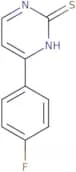
Formule :C13H14N2O6Degré de pureté :Min. 95%Masse moléculaire :294.26 g/mol4-(4-Fluorophenyl)pyrimidine-2-thiol
CAS :4-(4-Fluorophenyl)pyrimidine-2-thiol is a monophosphate deoxyribonucleoside that has been modified to include an activator group. This modification allows for the phosphoramidite of 4-(4-Fluorophenyl)pyrimidine-2-thiol to be incorporated into DNA, which makes it a novel substance. The CAS number for 4-(4-Fluorophenyl)pyrimidine-2-thiol is 155957-43-0. 4-(4-Fluorophenyl)pyrimidine-2-thiol has shown anticancer activity in vitro and may have potential as a cancer chemotherapeutic agent.Formule :C10H7FN2SDegré de pureté :Min. 95%Masse moléculaire :206.24 g/mol2',3',5'-Tri-O-benzoyl-4'-C-fluoroadenosine
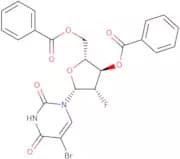
CAS :2',3',5'-Tri-O-benzoyl-4'-C-fluoroadenosine is a novel nucleoside analogue that inhibits the proliferation of cancer cells. It is an activator of ribonucleotide reductase, which converts ribonucleosides to deoxyribonucleosides and thereby prevents viral replication. 2',3',5'-Tri-O-benzoyl-4'-C-fluoroadenosine has antiviral activity against influenza A virus and herpes simplex virus type 1 (HSV-1) in cell culture. This drug also has an inhibitory effect on the DNA polymerases and other enzymes involved in DNA synthesis. 2',3',5'-Tri-O-benzoyl-4'-C-fluoroadenosine is a high quality product with high purity, CAS No. 1000203-40-6.Degré de pureté :Min. 95%1-(3',5'-Di-O-benzoyl-2'-deoxy-2'-fluoro-b-D-arabinofuranosyl)-5-bromo-uracil
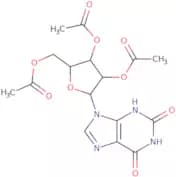
CAS :1-(3',5'-Di-O-benzoyl-2'-deoxy-2'-fluoro-b-D-arabinofuranosyl)-5-bromo-uracil is a novel antiviral and antitumor agent, synthesized by using a new synthetic approach. It has been shown to be effective in vitro against influenza A virus and herpes simplex virus types 1 and 2. This compound is also active against HIV type 1 (HIV) and Kaposi's sarcoma cells. The antiviral activity of this compound may be due to its ability to inhibit viral DNA polymerase activity. The antitumor activity of this compound may be due to its ability to inhibit the proliferation of tumor cells, leading to their death by apoptosis or necrosis.Formule :C23H18BrN2O7Degré de pureté :Min. 95%Masse moléculaire :514.3 g/mol2,6-Dihydro-9-(2',3',5'-tri-O-acetyl-b-D-ribofuranosyl)purine
CAS :Produit contrôlé2,6-Dihydro-9-(2',3',5'-tri-O-acetyl-b-D-ribofuranosyl)purine is a synthetic activator that is used in the synthesis of nucleosides and nucleotide phosphoramidites. It has been shown to have antiviral activity against herpes simplex virus type 1, herpes simplex virus type 2, and vesicular stomatitis virus.Formule :C16H22N4O7Degré de pureté :Min. 95%Masse moléculaire :382.37 g/mol5-Fluoro-1-(2',3'-dideoxy-2',3'-didehydro-5'-O-acetyl-b-L-ribofuranosyl)-uracil
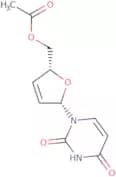
CAS :5-Fluoro-1-(2',3'-dideoxy-2',3'-didehydro-5'-O-acetyl-b-L-ribofuranosyl)-uracil is a modified nucleoside that is phosphorylated and activated to 5'-triphosphate. It has antiviral, anticancer, and antimalarial activities.Formule :C11H12N2O5Degré de pureté :Min. 95%Masse moléculaire :252.22 g/mol2-[2-(2-Naphthalenyl)ethoxy]adenosine
CAS :2-[2-(2-Naphthalenyl)ethoxy]adenosine is a structural determinant that belongs to the class of adenosine derivatives. It is an antagonist of adenosine receptors, binding to the A1 receptor with high affinity and blocking the effects of adenosine. 2-[2-(2-Naphthalenyl)ethoxy]adenosine has been shown to have a high affinity for benzyl and thioether groups in its structure, which are important for binding to the A1 receptor. This compound has been used in assays to determine the binding of other compounds with adenosine receptors. 2-[2-(2-Naphthalenyl)ethoxy]adenosine has also been shown as a radioligand for competitive binding studies with human brain membranes.Formule :C22H23N5O5Degré de pureté :Min. 95%Masse moléculaire :437.45 g/mol1-(2'-Deoxy-2'-fluoro-5'-O-trityl-b-L-arabinofuranosyl)-uracil
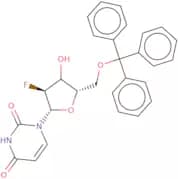
1-(2'-Deoxy-2'-fluoro-5'-O-trityl-b-L-arabinofuranosyl)-uracil is a monophosphate nucleotide that is used in antiviral therapy. It inhibits viral DNA synthesis by inhibiting viral DNA polymerase and viral RNA transcription. The drug is currently in phase I clinical trials for the treatment of cancer and AIDS. 1-(2'-Deoxy-2'-fluoro-5'-O-trityl-b-L-arabinofuranosyl)-uracil is a novel compound that has not been described in the literature before. The drug was synthesized by modifying a natural nucleoside, uracil, with fluorine to produce an antiviral agent. This compound has shown anticancer effects in vitro and in vivo experiments as well as antiplasmodial activity against malaria.Formule :C28H25FN2O5Degré de pureté :Min. 95%Masse moléculaire :488.51 g/molN6-Benzoyl-2'-deoxy-5'-O-levulinoyladenosine-3'-CE phosphoramidite
N6-Benzoyl-2'-deoxy-5'-O-levulinoyladenosine-3'-CE phosphoramidite is a novel antiviral agent that exhibits high quality and high purity. It can be used to synthesize DNA, RNA, and other nucleosides. N6-Benzoyl-2'-deoxy-5'-O-levulinoyladenosine-3'-CE phosphoramidite is an activator of the DNA polymerase and an inhibitor of the viral polymerase. This compound has been shown to have anticancer properties in vitro and in vivo.Formule :C31H40N7O7PDegré de pureté :Min. 95%Masse moléculaire :653.67 g/molN4-Benzoyl-5'-O-DMT-2'-ethylfluoro-5-methylcytidine 3'-CE phosphoramidite
N4-Benzoyl-5'-O-DMT-2'-ethylfluoro-5-methylcytidine 3'-CE phosphoramidite is a novel, deoxyribonucleosides that has been synthesized with high purity, high quality, and high yield. It is an anticancer drug that inhibits the synthesis of ribonucleotides in DNA and RNA.Degré de pureté :Min. 95%9-(2'-Deoxy-5'-O-DMT-2'-fluoro-b-D-arabinofuranosyl)-N2-isobutyrylguanine 3'-CE phosphoramidite
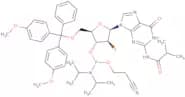
CAS :9-(2'-Deoxy-5'-O-DMT-2'-fluoro-b-D-arabinofuranosyl)-N2-isobutyrylguanine 3'-CE phosphoramidite is a novel nucleoside analogue that has shown to be effective against cancer. This product can also be used as an antiviral and antifungal agent. It is synthesized from 2,3,4,5,6-pentaacetoxybenzaldehyde and chloroacetamide. 9-(2'-Deoxy-5'-O-DMT-2'-fluoro-b-D-arabinofuranosyl)-N2-isobutyrylguanine 3'-CE phosphoramidite is a high quality product that is made of Ribonuclesides, Synthetic Monophosphate Nucleosides Diphosphate Modified Deoxyribonucleosides Activator.Formule :C44H53FN7O8PDegré de pureté :Min. 95%Couleur et forme :White to off-white solid.Masse moléculaire :857.93 g/mol2',3'-Di-O-methylguanosine
2',3'-Di-O-methylguanosine is a nucleoside, which is a chemical compound composed of a nitrogenous base, a five-carbon sugar, and one phosphate group. It is an analog of guanosine that has been modified by replacing the 2' hydroxyl group with a methyl group. This modification prevents the phosphorylation of the monophosphate form to the diphosphate form. This modification also makes 2',3'-Di-O-methylguanosine an activator of DNA polymerase and RNA polymerase. The novel features of this compound make it an excellent candidate for anticancer and antiviral treatments.
Degré de pureté :Min. 95%2',3'-Dideoxy-N2-isobutyrylguanosine
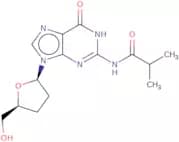
2',3'-Dideoxy-N2-isobutyrylguanosine is a monophosphate that inhibits viral replication by competing with the natural substrate, diphosphate. It is synthesized in high purity and quality by our company. 2',3'-Dideoxy-N2-isobutyrylguanosine has been used as an antiviral agent to inhibit the hepatitis B virus. This product is also of interest for its potential use in cancer treatment.
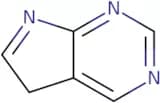
Formule :C14H19N5O4Degré de pureté :Min. 95%Masse moléculaire :321.34 g/mol7-Deazapurine
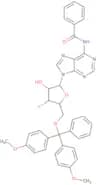
CAS :7-Deazapurine is a cytostatic agent that inhibits the polymerase chain reaction by competitive inhibition of the incorporation of nucleotides into DNA. It has potent antitumor activity and significant cytotoxicity, which are due to its ability to inhibit DNA synthesis and cell division. 7-Deazapurine is also a nucleophilic compound that reacts with hydroxyl groups in DNA. The hydrolysis of 7-deazapurine by hydroxylases can be prevented by addition of high salt or trifluoroacetic acid, but this does not seem to affect its cytotoxic effects. 7-Deazapurine has been shown to have significant cytotoxicity against miapaca-2 cells and other cancer cell lines.Formule :C6H5N3Degré de pureté :Min. 95%Masse moléculaire :119.12 g/molN6-Benzoyl-3'-deoxy-5'-O-DMT-3'-fluoroadenosine
CAS :N6-Benzoyl-3'-deoxy-5'-O-DMT-3'-fluoroadenosine is an activator nucleoside that is used as a phosphoramidite in DNA synthesis. It is also used in antiviral and anticancer therapies. N6-Benzoyl-3'-deoxy-5'-O-DMT-3'-fluoroadenosine has been shown to have high purity and high quality, making it suitable for use in the pharmaceutical industry. This product is not active against bacterial or viral infections, but has proved to be effective in the treatment of leukemia, lymphoma and other cancers.Formule :C38H34FN5O6Degré de pureté :Min. 95%Masse moléculaire :675.71 g/mol8-Aminoguanosine
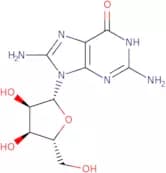
CAS :8-Aminoguanosine is a synthetic purine nucleoside that inhibits DNA synthesis. It has been shown to inhibit the proliferation of HL-60 cells, which are a model for human monocytes and neutrophils. 8-Aminoguanosine has been shown to bind to the template strand of DNA and inhibit the incorporation of deoxyribonucleotide triphosphates into the newly synthesized strand. This binding prevents DNA replication by preventing access to the template strand of DNA. 8-Aminoguanosine inhibits cyclin D2, an enzyme required for cell division, at concentrations as low as 0.1 mM, and it also inhibits microtubule assembly. 8-Aminoguanosine has shown in vitro activity against various tumor cell lines including Molt-4 and MCF7 cells, and in vivo activity in a mouse model against C3H/HeJ mice transplanted with Lewis lung carcinoma cells.
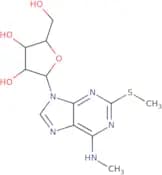
Formule :C10H14N6O5Degré de pureté :Min. 95%Couleur et forme :PowderMasse moléculaire :298.26 g/mol2-Methylthio-N6-methyladenosine
CAS :2-Methylthio-N6-methyladenosine is an adenosine nucleoside that is found in the DNA of eukaryotes. It is similar to 2-methylthio-n6-isopentenyladenosine, which is a modified form of n6-methyladenosine. The chemical structures of both molecules are related to the thermodynamic properties of the molecule and their ability to be postsynthetically modified. These modifications can lead to changes in their translation, which can have implications for the development and progression of disease. 2-Methylthio-N6-methyladenosine has a role in epigenetics, which is defined as changes in gene expression without any alterations in DNA sequence. In this case, it may modify the chloride ion concentration by changing its chemical structure, leading to epigenetic changes that can affect how genes are expressed or translated into proteins.Formule :C12H17N5O4SDegré de pureté :Min. 95%Couleur et forme :White PowderMasse moléculaire :327.36 g/molN4-Acetyl-1-(2'-O-acetyl-5'-O-DMT-b-D-arabinofuranosyl)cytosine 3'-CE phosphoramidite
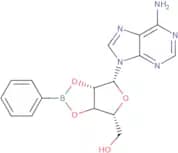
N4-Acetyl-1-(2'-O-acetyl-5'-O-DMT-b-D-arabinofuranosyl)cytosine 3'-CE phosphoramidite is a novel nucleoside designed for DNA activation. It has high quality and high purity, which are essential for pharmaceutical and analytical applications. This product is used in the synthesis of DNA, antiviral drugs, and anti-cancer agents. N4-Acetyl-1-(2'-O-acetyl-5'-O-DMT b -D -arabinofuranosyl)cytosine 3'-CE phosphoramidite can be used as an activator in the synthesis of deoxyribonucleosides and ribonucleosides.Formule :C22H34N5O8PDegré de pureté :Min. 95%Masse moléculaire :527.51 g/molAdenosine 2',3'-O-phenylboronate
CAS :Adenosine 2',3'-O-phenylboronate is a nucleoside that is used as an antiviral and anticancer drug. It is used in the treatment of AIDS, leukemia, and lymphoma. Adenosine 2',3'-O-phenylboronate inhibits viral replication by preventing the formation of viral DNA. This nucleoside has also been shown to have antitumor properties and can be used to inhibit cancer cell growth. br>br> Adenosine 2',3'-O-phenylboronate can be modified with phosphoramidites, which allow for the synthesis of modified adenosine 2',3'-O-phenylboronates. These modifications include substituting one or more hydrogen atoms with a variety of substituents, including fluorines, chlorine, bromines, nitro groups, alkyl groups, alkoxy groups and others. This modification provides for a novel type of antiFormule :C16H16BN5O4Degré de pureté :Min. 95%Masse moléculaire :353.14 g/mol3'-O-tert-Butyldiphenylsilyl-2'-O-methyluridine
3'-O-tert-Butyldiphenylsilyl-2'-O-methyluridine is a novel nucleoside with antiviral and anticancer properties. It has been shown to inhibit the growth of human tumor cells in culture and induce apoptosis, as well as inhibit viral replication. 3'-O-tert-Butyldiphenylsilyl-2'-O-methyluridine is an analogue of uridine, which can be used for the synthesis of DNA or RNA. The phosphate group is attached to the 3' carbon on the sugar moiety. This nucleoside has been modified from a natural ribonucleoside by substitution of a tertiary butylphenylsilyl group at the 2' position with an o-methyl group. 3'-O-tert-Butyldiphenylsilyl-2'-O-methyluridine is supplied as a white powder with purity greater than 99Degré de pureté :Min. 95%1-(2',3',5'-Tri-O-acetyl-b-D-arabinofuranosyl)uracil
1-(2',3',5'-Tri-O-acetyl-b-D-arabinofuranosyl)uracil is a novel nucleoside analog with antiviral and anticancer activities. It is a modified nucleoside that is synthesized from 2',3',5'-triacetyl b-D-arabinofuranosyl uracil. The synthesis of this compound involves the use of acetylation, which produces a monophosphate form of the nucleoside. This product has been shown to be an activator in the synthesis of DNA and RNA.Degré de pureté :Min. 95%Lamivudine 5'-monophosphate ammonium salt
CAS :Lamivudine 5'-monophosphate ammonium salt is a novel antiviral agent that inhibits the viral polymerase by competing with natural dNTPs. It has been shown to be effective against Hepatitis B virus (HBV) and human immunodeficiency virus type 1 (HIV-1). Lamivudine 5'-monophosphate ammonium salt is a synthetic nucleoside that is phosphorylated to form its active form, lamivudine 5'-triphosphate ammonium salt. This drug has been shown to inhibit tumor growth in vivo and in vitro.Formule :C8H15N4O6PSDegré de pureté :Min. 95%Masse moléculaire :326.27 g/mol4-Bromo-2-methoxypyrimidine
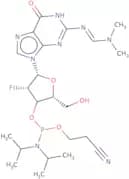
CAS :4-Bromo-2-methoxypyrimidine is a synthetic compound that is used in the synthesis of other compounds. It reacts with alcohols, boronic acids, and benzyl halides to form heterocycles or pyrimidine compounds. The reaction system is catalytic and chemoselectively. 4-Bromo-2-methoxypyrimidine has been shown to have anticancer activity against various cell lines in vitro. It also possesses an ability to react with aryl boronic acids, such as those found in 2-pyridinones, to form new compounds. This reaction is catalyzed by palladium on carbon or copper chloride in the presence of a base. The new compounds have shown anti-inflammatory and cytotoxic activities against cancer cells.Degré de pureté :Min. 95%2'-Deoxy-N2-DMF-5'-DMT-2'-fluoroguanosine 3'-CE phosphoramidite
2'-Deoxy-N2-DMF-5'-DMT-2'-fluoroguanosine 3'-CE phosphoramidite is a nucleoside analog that is structurally similar to the natural substrate of DNA polymerase. It can be used in the synthesis of oligonucleotides and as a reagent for the synthesis of modified DNA. The phosphoramidite has antiviral activity and has been shown to have anticancer effects in animal models. It is also used as an activator for deoxyribonucleotide activation, which increases the efficiency of DNA synthesis.
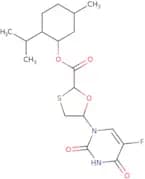
Formule :C43H52FN8O7PDegré de pureté :Min. 95 Area-%Couleur et forme :PowderMasse moléculaire :842.89 g/mol5-Fluoro-1-(2'-L-menthyloxycarbonyl-1'-3'-oxathiolan-5'-yl)-cytosine
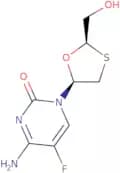
CAS :5-Fluoro-1-(2'-L-menthyloxycarbonyl-1'-3'-oxathiolan-5'-yl)-cytosine is a nucleoside, a type of chemical compound containing both a sugar (deoxyribose) and an organic molecule (a base). It is an antiviral agent that inhibits the production of viral DNA by inhibiting the enzyme DNA polymerase. 5-Fluoro-1-(2'-L-menthyloxycarbonyl-1'-3'-oxathiolan-5'-yl)-cytosine is also an anticancer agent that can inhibit the production of cancer cells in vitro and in vivo. This product is a novel monophosphate nucleotide analog with high purity and CAS number 1422361-25-8.Degré de pureté :Min. 95%5-Bromo-2',3'-dideoxyuridine
CAS :5-Bromo-2',3'-dideoxyuridine is a nucleoside analogue that is used as a chemotherapeutic drug against various types of cancer. It has been shown to have anti-tumour activity by interfering with the synthesis of deoxyribonucleic acid (DNA) and ribonucleic acid (RNA). 5-Bromo-2',3'-dideoxyuridine binds to the sugar ring in DNA and inhibits the enzyme DNA polymerase from synthesizing DNA. This drug also stabilizes conformations of the molecule, which are responsible for its pharmacological effects.
5-Bromo-2',3'-dideoxyuridine can be found in two different crystal structures, monoclinic and tetragonal. The monoclinic form is stabilized by hydrogen bonds between the puckers in the sugar ring and hydrogen bonds to neighboring molecules. This form is more soluble than the tetragonal form,Degré de pureté :Min. 95%5-Aza-3-deaza-N4-DMF-5'-O-DMT-2'-O-methylcytidine 3'-CE phosphoramidite
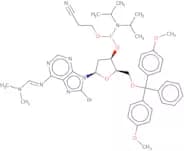
5-Aza-3-deaza-N4-DMF-5'-O-DMT-2'-O-methylcytidine 3'-CE phosphoramidite is a novel modified nucleoside that is synthesized by the reaction of 5-Aza-3,8-(N4,N4)-dimethyl-1,2:5,6:8:10,11:12,-tetradeoxyribonucleosides with 2'-O,O'-Dimethoxytrityl Chloride. This product has been shown to be an activator and to have antiviral and anticancer activities. It also has a high purity and quality.Formule :C43H55N6O8PDegré de pureté :Min. 95%Masse moléculaire :814.91 g/mol8-Bromo-2'-deoxy-N6-DMF-5'-O-DMT-adenosine 3'-CE phosphoramidite
8-Bromo-2'-deoxy-N6-DMF-5'-O-DMT-adenosine 3'-CE phosphoramidite is a novel nucleoside that is synthesized from 8-bromo-2'-deoxyadenosine and N,N,-diisopropylethylamine. It has been shown to have anticancer, antiviral, and antiinflammatory activities. This compound is also used as an activator in the synthesis of DNA and RNA. The purity of this product exceeds 99% and it has been modified for use with automated synthesizers.Formule :C43H52BrN8O6PDegré de pureté :Min. 95%Masse moléculaire :887.82 g/mol3'-Deoxy-3'-fluoroinosine
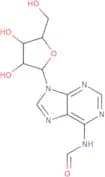
CAS :3'-Deoxy-3'-fluoroinosine is a nucleoside analog that has been shown to have cytotoxic effects. It inhibits the growth of nematodes and other parasites by blocking the deacetylation of lipids in the cell membrane, which leads to their death. 3'-Deoxy-3'-fluoroinosine has also been shown to inhibit trypanosomiasis and leishmania infections by preventing the synthesis of purines and pyrimidines. This drug binds to 6-chloropurine ribonucleotide reductase, thereby inhibiting the production of nucleic acids. 3'-Deoxy-3'-fluoroinosine is not active against mammalian cells, which may be due to its inability to penetrate cell membranes efficiently.Degré de pureté :Min. 95%N6-Formyl adenosine
CAS :N6-Formyl adenosine is an endogenous nucleotide that is dynamically modified in the human body. N6-Formyl adenosine is a reactive modification of adenosine and has been shown to be present in DNA, RNA, and proteins. It is also found in human cells and tissues, where it can be demethylated by enzymes such as DNA methyltransferase. This modification may have implications for research into the nature of messenger RNA (mRNA), which plays a crucial role in protein synthesis. N6-Formyl adenosine has been used to distinguish between mature and immature mRNA molecules by fluorescence analysis.Formule :C11H13N5O5Degré de pureté :Min. 97 Area-%Masse moléculaire :295.25 g/mol2-(Piperidin-4-Yloxy)Pyrimidine Dihydrochloride
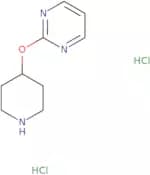
CAS :2-(Piperidin-4-Yloxy)Pyrimidine Dihydrochloride is a nutrient that can be used for soil fertilization and weed control. It is a non-selective herbicide that inhibits the growth of all plants. This compound breaks down in the environment, so it is environmentally friendly. 2-(Piperidin-4-Yloxy)Pyrimidine Dihydrochloride can be applied to the soil or sprayed on leaves to control weeds. It is more efficient at controlling weeds than potassium chloride, which is another type of fertilizer.Formule :C9H13N3O·2HClDegré de pureté :Min. 95%Masse moléculaire :252.14 g/mol
![Adenosine-5'-[-(propargyl)]triphosphate sodium salt](/_next/image/?url=https%3A%2Fstatic.cymitquimica.com%2Fproducts%2F3D%2Fthumb-webp%2FNA30542.webp&w=3840&q=75)








![2-[2-(2-Naphthalenyl)ethoxy]adenosine](/_next/image/?url=https%3A%2Fstatic.cymitquimica.com%2Fproducts%2F3D%2Fthumb-webp%2FNN16559.webp&w=3840&q=75)