Nucléosides
3569 produits trouvés pour "Nucléosides"
N4-Ethenocytidine
CAS :N4-Ethenocytidine is a nucleoside analogue that has been synthesized and shown to be an effective inhibitor of the hepatitis C virus. N4-Ethenocytidine prevents the synthesis of viral RNA by attacking the 3'-hydroxyl group of uridine, which is involved in the formation of ribonucleotides. This compound can also inhibit rat liver microsomes through a hydrated attack on carbonyl groups. The reaction products are trifluoroacetic acid and chloride ions. N4-Ethenocytidine's fluorescence properties have been used to identify its reaction intermediates, which include uridylic acid and 4-etheno-N6-isopentenyladenosine.
Formule :C11H13N3O5Degré de pureté :Min. 95%Couleur et forme :White Off-White PowderMasse moléculaire :267.24 g/mol2’-Deoxy-2’-fluoro-N3-(2S)-[2-(tert-butoxycarbonyl)-amino-3-carbonyl]propyluridine
2’-Deoxy-2’-fluoro-N3-(2S)-[2-(tert-butoxycarbonyl)-amino-3-carbonyl]propyluridine is a nucleoside, modified with fluorine at the 2’ position. It is an activator of phosphoramidites in the synthesis of DNA and RNA. This product has shown anticancer activity in vitro. 2'DFNAPU has also been shown to inhibit the replication of HIV virus and herpes simplex virus type 1 in cell culture, which may be due to its ability to inhibit viral DNA polymerase.
Degré de pureté :Min. 95%2'-Deoxy-5-methylcytidine
CAS :2'-Deoxy-5-methylcytidine is a nucleoside analogue that inhibits the synthesis of DNA. It prevents methylation of guanine, which disrupts the binding of guanine nucleotide-binding proteins to the dna template and prevents polymerase chain reactions. 2'-Deoxy-5-methylcytidine has been shown to inhibit colon cancer cells in vitro, and may be a potential biomarker for bowel disease. This drug is also a methyltransferase inhibitor, which means it blocks the enzyme responsible for adding methyl groups to cytosine molecules.
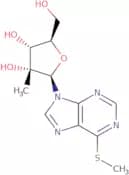
Formule :C10H15N3O4Degré de pureté :Min. 98 Area-%Couleur et forme :White PowderMasse moléculaire :241.25 g/mol2'-C-Methyl-6-S-methyl-6-thioinosine
CAS :2'-C-Methyl-6-S-methyl-6-thioinosine is a modified nucleoside that can be used as an antiviral and anticancer agent. It has been shown to activate the immune system by inducing cytokine production, which leads to increased cytotoxicity against tumor cells. 2'-C-Methyl-6-S-methyl-6-thioinosine has also been shown to inhibit DNA synthesis and induce apoptosis in cancer cells. This product is of high purity and quality, with a CAS number of 172722-76-8.
Degré de pureté :Min. 95%6-O-Methyl-5’(R)-C-methylinosine
6-O-Methyl-5’(R)-C-methylinosine is a modified nucleoside that is an antiviral agent. It inhibits the synthesis of viral DNA and RNA by inhibiting the activity of ribonucleotide reductase. 6-O-Methyl-5’(R)-C-methylinosine has been shown to inhibit the growth of certain cancer cells and may be useful in treating prostate cancer. This drug has been synthesized from deoxyribonucleosides and diphosphate, which are phosphoramidites that were used as starting materials. 6-O-Methyl-5’(R)-C-methylinosine was first described in a patent in 1979, with CAS number 827076.
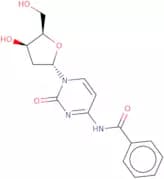
Degré de pureté :Min. 95%N4-Benzoyl-2'-deoxy-a-cytidine
CAS :N4-Benzoyl-2'-deoxy-a-cytidine is a novel, modified nucleoside that has shown anticancer and antiviral activity. It is synthesized by the enzymatic oxidation of 2'-deoxyadenosine with benzoyl chloride and sodium bicarbonate. N4-Benzoyl-2'-deoxy-a-cytidine has been shown to activate transcription, increase DNA synthesis, and inhibit virus replication. It also inhibits bacterial growth, but does not appear to have any effect on mammalian cells.Formule :C16H17N3O5Degré de pureté :Min. 95%Couleur et forme :PowderMasse moléculaire :331.32 g/molPolyinosinic-polycytidylic acid sodium salt
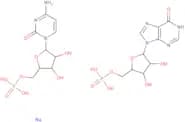
CAS :Polyinosinic acid-polycytidylic acid (Poly I:C), an agonist of TLR3 toll-like receptors, is a synthetic double-stranded RNA analog, consisting of polyinosinic acid (poly I) paired with polycytidylic acid (poly C), forming a stable duplex structure. PolyI:C stimulates the secretion of pro-inflammatory cytokines and type I interferon through its interaction with endosomal Toll-like receptor 3 (TLR-3) and the cytoplasmic receptors melanoma differentiation-associated gene 5 (MDA-5) and retinoic acid-inducible gene I (RIG-I). This immunostimulant activity makes Poly I:C a useful vaccine adjuvant and is used in vaccine formulations. Poly I:C and its stabilized analogs (e.g., poly-ICLC) are also being actively researched for their dual role in oncology: directly targeting tumors and acting as immune potentiators. For example Poly I:C can induce apoptosis in tumor cells and stimulate immunogenic cell death and is therefore being explored alongside chemotherapy, radiotherapy, and checkpoint inhibitors, helping to overcome resistance mechanisms and strengthen treatment outcomes. We can supply PolyI:C to all stages of your project - from R&D and preclinical phases right up to GMP commercial manufacture. Contact our team for custom Poly I:C products.
For more on poly I:C read out blog 'Poly I:C: A Vaccine Adjuvant With Oncological Potential.'Formule :(C10H13N4O8P)x•(C9H14N3O8P)x•NaxCouleur et forme :White PowderN′-[9-(2-Deoxy-2-fluoro-β-D-arabinofuranosyl)-6,9-dihydro-6-oxo-1H-purin-2-yl]-N,N-dimethylmethanimidamide
CAS :Please enquire for more information about N′-[9-(2-Deoxy-2-fluoro-β-D-arabinofuranosyl)-6,9-dihydro-6-oxo-1H-purin-2-yl]-N,N-dimethylmethanimidamide including the price, delivery time and more detailed product information at the technical inquiry form on this page
Formule :C13H17FN6O4Degré de pureté :Min. 95%Masse moléculaire :340.31 g/mol3,N6-Dimethyl-2-deoxyadenosine
3,N6-Dimethyl-2-deoxyadenosine is a synthetic nucleoside that is an activator of DNA polymerase. It has been shown to inhibit the growth of cancer cells and has antiviral properties.
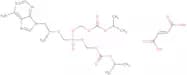
Degré de pureté :Min. 95%Tenofovir disoproxil fumarate
CAS :Anti-viral; reverse transcriptase inhibitor
Formule :C23H34N5O14PDegré de pureté :Min. 97.5 Area-%Couleur et forme :White Off-White PowderMasse moléculaire :635.52 g/mol7’-Hydroxy-N2-Isobutyryl-N-trityl-morpholino guanine
CAS :N2-Isobutyryl-7’-HO-N-trityl-morpholino guanosine is a novel nucleoside analog that has been synthesized to have an improved pharmacological profile.
Formule :C33H34N6O4Degré de pureté :Min. 95%Couleur et forme :PowderMasse moléculaire :578.66 g/molRef: 3D-NI138672
Produit arrêté6-Amino-4-hydroxyamino-2-(b-D-ribofuranosyl)-2H-pyrazolo[3,4-d]pyrimidine
6-Amino-4-hydroxyamino-2-(b-D-ribofuranosyl)-2H-pyrazolo[3,4-d]pyrimidine is a novel synthetic ribonucleotide that inhibits the growth of tumor cells by interfering with DNA synthesis. This compound has been shown to inhibit the replication of HIV and herpes simplex virus type 1. The phosphoramidite monomer is readily available and can be synthesized in high purity and high quality. 6-Amino-4-hydroxyamino-2-(b-D-ribofuranosyl)-2H-pyrazolo[3,4-d]pyrimidine is a modified nucleoside that is activated by phosphorylation at the 5' position. CAS No.: 10266890
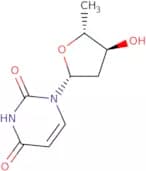
Degré de pureté :Min. 95%2',5'-Dideoxyuridine
CAS :2',5'-Dideoxyuridine is a synthetic nucleoside analog derived from uridine, one of the four standard nucleosides found in RNA. It is chemically modified by the removal of hydroxyl (–OH) groups at the 2' and 5' positions of the sugar, altering its ability to participate in RNA or DNA chain formation.
Formule :C9H12N2O4Degré de pureté :Min. 95%Couleur et forme :White To Off-White SolidMasse moléculaire :212.21 g/mol2'-Deoxy-5-propynyluridine
CAS :2'-Deoxy-5-propynyluridine is a nucleoside that is naturally synthesized in the body. It is an intermediate in the synthesis of pyrimidine nucleotides and has been shown to be useful for the treatment of cardiac arrhythmias. 2'-Deoxy-5-propynyluridine has also been found to have a stabilizing effect on RNA, enhancing its biological relevance. This compound can be used as a fluorescent probe and can be used to study transcriptional regulation mechanisms.
Formule :C12H14N2O5Degré de pureté :Min. 95%Couleur et forme :PowderMasse moléculaire :266.26 g/mol5'-O-DMT-5-(furan-2-yl)-2'-O-methylcytidine
5'-O-DMT-5-(furan-2-yl)-2'-O-methylcytidine is a novel nucleoside that can be used as a drug for the treatment of cancers. It is an analog of cytidine, which inhibits the synthesis of DNA and RNA, thereby preventing the replication of cancer cells. 5'-O-DMT-5-(furan-2-yl)-2'-O-methylcytidine has been shown to have antiviral activity against HIV and hepatitis B virus in vitro. The compound also has anticancer activity and is a phosphoramidite monophosphate. This compound is soluble in water and is available at high purity with CAS No. 89937-60-4.
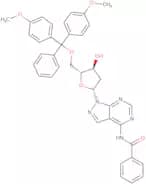
Degré de pureté :Min. 95%8-Aza-N6-benzoyl-7-deaza-2'-deoxy-5'-O-DMT-adenosine
CAS :8-Aza-N6-benzoyl-7-deaza-2'-deoxy-5'-O-DMT-adenosine is a nucleoside analog that has been modified by replacing the ribose moiety with deoxyribose. This modification increases its stability in vivo and in vitro. 8-Aza-N6-benzoyl-7-deaza-2'-deoxy-5'-O-DMT adenosine is an activator of DNA polymerase, which can be used to synthesize DNA. It is also an antiviral agent, active against herpes simplex virus type 1 and 2, vaccinia virus, and cytomegalovirus. This compound has shown promising anticancer activity against human breast cancer cells grown in culture.
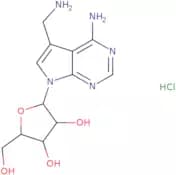
Formule :C38H35N5O6Degré de pureté :Min. 95%Masse moléculaire :657.71 g/mol7-(Aminomethyl)-7-deazaadenosine
CAS :7-(Aminomethyl)-7-deazaadenosine is a nucleoside that has antiviral and anticancer properties. It is a novel compound, and its synthesis involves the use of activated 2′-deoxyribonucleosides. This compound is synthesized by reacting 7-amino-7-deazaguanine with an appropriate phosphoramidite at room temperature in the presence of an activator such as ammonium hydroxide or pyridine. The product can be purified by recrystallization from methanol, followed by chromatography on silica gel using a gradient elution system. The purity of this compound can be determined by HPLC analysis with UV detection at 254 nm.
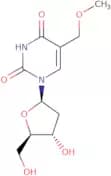
br>br>Formule :C12H17N5O4Degré de pureté :Min. 95%Masse moléculaire :295.29 g/mol5-Methoxymethyl-2'-deoxyuridine
CAS :5-Methoxymethyl-2'-deoxyuridine is an antiviral agent that inhibits viral replication by reacting with the glycosidic bond in the viral enzyme, which prevents the enzyme from functioning and so prevents virus replication. 5-Methoxymethyl-2'-deoxyuridine has been shown to be active against herpes simplex virus, although it is not active against wild-type viruses. This drug has toxic effects on animals, which may be due to its ability to inhibit amino transferase activity, which leads to systemic diseases. It has also been shown that 5-Methoxymethyl-2'-deoxyuridine can be used as a marker for autoimmune diseases.
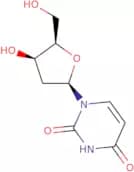
Formule :C11H16N2O6Degré de pureté :Min. 95%Couleur et forme :PowderMasse moléculaire :272.25 g/mol2'-Deoxyuridine
CAS :2'-Deoxyuridine (2'-dU) is an intermediate in the synthesis of thymidylate, which is a precursor for DNA synthesis. It can be prepared through high-performance liquid chromatography. 2'-dU has been shown to inhibit the enzymatic activity of enzymes responsible for synthesizing uridine and thymidylate, leading to neuronal death. 2'-dU has also been shown to have a protective effect against mitochondrial dysfunction induced by hydrogen fluoride. It is also known to bind with toll-like receptor 4 (TLR4), which is involved in inflammatory responses. 2'-dU has been used as a fluorescence probe for nucleic acids and as a polymerase chain reaction (PCR) substrate.
Formule :C9H12N2O5Degré de pureté :Min. 98 Area-%Couleur et forme :White PowderMasse moléculaire :228.21 g/molN6-Benzoyl-5'-O-trityl-adenosine
N6-Benzoyl-5'-O-trityl-adenosine is a novel nucleoside, which has been synthesized to be a phosphoramidite. It is an anticancer drug that inhibits the growth of tumor cells by competitively inhibiting the synthesis of DNA and RNA. In addition, N6-Benzoyl-5'-O-trityl-adenosine has antiviral properties, which may be due to its ability to inhibit viral DNA polymerase. This compound also shows high purity and quality.
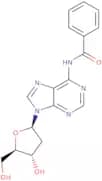
Formule :C36H31N5O5Degré de pureté :Min. 95%Masse moléculaire :613.66 g/molN6-Benzoyl-2'-deoxyadenosine
CAS :N6-Benzoyl-2'-deoxyadenosine (BADA) is a nucleoside analog that is used in the diagnosis of infections caused by bacteria. BADA binds to DNA duplexes and alters their structure, which can be detected using electrophoresis. BADA has been shown to have low bioavailability and is insoluble in water, so it must be administered intravenously. It has also been found to have anti-inflammatory properties, which may be due to its ability to inhibit prostaglandin synthesis.
Formule :C17H17N5O4Degré de pureté :Min. 95%Couleur et forme :White PowderMasse moléculaire :355.35 g/mol5'-O-DMT-2'-O-(2-methoxyethyl)-5-methyluridine 3'-CE phosphoramidite
CAS :5'-O-DMT-2'-O-(2-methoxyethyl)-5-methyluridine 3'-CE phosphoramidite is a nucleoside phosphoramidite used as a building block for the introduction of uridine units into oligonucleotides. 5'-O-DMT-2'-O-(2-methoxyethyl)-5-methyluridine 3'-CE phosphoramidite is used for a broad range of applications including the synthesis of natural and unnatural DNA and RNA strands. Phosphoramidites are the reagent class of choice for oligonucleotide synthesis as they contain readily removable orthogonal protecting groups and can be produced at reasonable scales. The diisopropylamino leaving group is readily cleaved upon exposure to an azole catalyst allowing for a highly efficient coupling reaction with a free hydroxyl group on the growing oligonucleotide and oxidation of the subsequent phosphite triester, followed by beta-elimination of the cyanoethyl group affords the stable phosphodiester linkage.
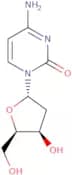
Formule :C43H55N4O10PDegré de pureté :Min. 95%Couleur et forme :White PowderMasse moléculaire :818.89 g/mol2'-Deoxycytidine
CAS :2'-Deoxycytidine is a deoxyribonucleotide that is used in the synthesis of DNA. It has been shown to have potent antitumor activity against solid tumours and may be useful for the treatment of leukemic mice. This compound has been shown to inhibit the kinase activity of IL-2 receptor and Toll-like receptor, which are proteins that regulate the immune response. 2'-Deoxycytidine also inhibits DNA polymerase activity and thermal expansion, which may make it a good candidate as an anticancer drug.
Formule :C9H13N3O4Degré de pureté :Min. 99 Area-%Couleur et forme :PowderMasse moléculaire :227.22 g/molRef: 3D-ND06286
Produit arrêté6-Thioinosine
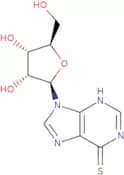
CAS :6-Thioinosine is a nucleoside analog that is chemically related to 6-mercaptopurine. It inhibits the polymerase chain reaction and has been shown to inhibit aerobic metabolism in aerobacter aerogenes. It also inhibits the growth of hl-60 cells, which are derived from human leukemia cells. 6-Thioinosine has been shown to have anti-inflammatory properties, which may be due to its ability to inhibit prostaglandin synthesis. It also blocks the activity of certain receptors and has a disease activity against infectious diseases such as systemic candidiasis, bacterial endocarditis, and bowel disease.
Formule :C10H12N4O4SDegré de pureté :Min. 98 Area-%Couleur et forme :PowderMasse moléculaire :284.29 g/molRef: 3D-NT08808
Produit arrêtéN4-Benzoyl-5'-O-tert-butyldimethylsilyl-2'-deoxycytidine
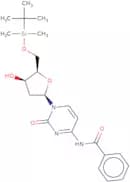
CAS :N4-Benzoyl-5'-O-tert-butyldimethylsilyl-2'-deoxycytidine is a nucleoside monophosphate with antiviral and anticancer activity. It is used as an activator for the synthesis of oligodeoxynucleotides and may be used in the treatment of herpes zoster, AIDS, or cancer. N4-Benzoyl-5'-O-tert-butyldimethylsilyl-2'-deoxycytidine has a novel structure that is modified from natural nucleosides and has been shown to have high purity.
Degré de pureté :Min. 97.0 Area-%Couleur et forme :PowderMasse moléculaire :445.60 g/mol5’-Deoxy-5’-iodo-2’-O-methyluridine
CAS :5’-Deoxy-5’-iodo-2’-O-methyluridine is a nucleoside that is modified with the substitution of an iodine atom for a hydrogen atom on the 5′ carbon. It has antiviral and anticancer properties. The high purity and novel structure make this compound useful in DNA synthesis. This product can also be used as a phosphoramidite or deoxyribonucleoside building block in DNA synthesis.
Degré de pureté :Min. 95%2-Amino-8-aza-7-deaza-7-iodoguanosine
2-Amino-8-aza-7-deaza-7-iodoguanosine is a deoxyribonucleoside that is structurally related to guanosine and inosine. It is an antiviral agent with high purity and modified properties, which can be synthesized using phosphoramidite chemistry. 2-Amino-8-aza-7-deaza-7-iodoguanosine has shown antiviral activity against herpes simplex virus type 1 (HSV1) in a cell culture assay. The compound also inhibits the growth of HSV1 by suppressing viral DNA synthesis, RNA synthesis, and protein synthesis. This drug may have potential for use as a topical antiviral treatment for HSV1 infections of the skin or mucous membranes such as those in the mouth or genitals.
Degré de pureté :Min. 95%α-Thymidine
CAS :a-Thymidine is a thymidylate analog that is used as an anti-HIV drug. It is the L-enantiomer of thymidine, which is a nucleoside base in DNA. The biological effects of a-thymidine are due to its ability to be incorporated into DNA and act as a competitive inhibitor of the enzyme protein synthesis. It also has been shown to have antiviral properties against herpes simplex virus type 1 and hepatitis B virus.
Formule :C10H14N2O5Degré de pureté :Min. 98 Area-%Couleur et forme :PowderMasse moléculaire :242.23 g/mol2-Amino-6-chloro-9-(2’-O-propargyl-b-D-ribofuranosyl)purine
CAS :2-Amino-6-chloro-9-(2'O-propargyl-bDribofuranosyl)purine is a modified nucleoside that has antiviral and anticancer properties. It has been shown to inhibit DNA synthesis in the presence of deoxyribonucleosides, diphosphate, and Nucleosides. The compound was also found to inhibit the replication of herpes simplex virus type 1 (HSV-1) by interfering with viral DNA polymerase and causing chain termination. 2-Amino-6-chloro-9-(2'O-propargyl-bDribofuranosyl)purine is a novel compound that can be used as a high quality pharmaceutical ingredient for cancer treatments.
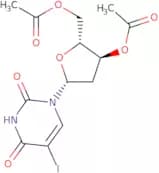
Degré de pureté :Min. 95%3',5'-Di-O-acetyl-2'-deoxy-5-iodouridine
CAS :3',5'-Di-O-acetyl-2'-deoxy-5-iodouridine is an inorganic, deoxyribonucleoside. It is the acetyl derivative of 2'-deoxy-5-iodouridine, which is an analog of uracil. 3',5'-Di-O-acetyl-2'-deoxy-5-iodouridine has been shown to have antiviral properties against herpes simplex virus type 1 (HSV1) and herpes simplex virus type 2 (HSV2) in animals. This drug also has antiangiogenic properties, inhibiting the growth of new blood vessels and tissues at the site of a tumour. Studies have shown that 3',5'-di-O acetyl 2'-deoxyuridine can be incorporated into exudates from human cancer patients and can inhibit tumor cell proliferation in vivo.
Formule :C13H15IN2O7Degré de pureté :Min. 95%Masse moléculaire :438.18 g/molN6-Benzoyl-2'-O-methyladenosine
CAS :N6-Benzoyl-2'-O-methyladenosine is a novel nucleoside that has been synthesized by chemical modification of adenosine. It is an activator of the ribonucleotide reductase enzyme and is currently being studied as an anticancer and antiviral agent. N6-Benzoyl-2'-O-methyladenosine has shown antitumor activity against human breast cancer cells in vitro and in vivo, inhibiting tumor growth. It also inhibits the replication of herpes simplex virus type 1 (HSV1) and type 2 (HSV2).
Formule :C18H19N5O5Masse moléculaire :385.37 g/mol6-Amino-1-(2',3',5'-tri-O-benzoyl-b-D-ribofuranosyl)-4-methoxy-1H-pyrazolo[3,4-d]pyrimidine
6-Amino-1-(2',3',5'-tri-O-benzoyl-b-D-ribofuranosyl)-4-methoxy-1H-pyrazolo[3,4-d]pyrimidine is a deoxyribonucleoside with antiviral activity. It was synthesized by the reaction of 2,3,5'-triacetylpyrazolo[3,4-d]pyrimidinium triflate and bromoacetaldehyde diethyl acetal. The compound has been shown to be an activator of DNA and to inhibit cancer cell growth in vitro. 6ABA is a novel nucleoside that can be used as a base for further modification.
Degré de pureté :Min. 95%N6-Benzoyl-5'-O-2'-deoxyadenosine
N6-Benzoyl-5'-O-2'-deoxyadenosine is a modified nucleoside that contains a benzoyl group. This nucleoside has been shown to be an antiviral and anticancer agent, and is also active against herpes simplex virus type 1 (HSV1). N6-Benzoyl-5'-O-2'-deoxyadenosine may be a potential therapeutic for the treatment of HSV1 infection. It is also believed to have anti-inflammatory properties. The synthesis of this compound can be achieved by reacting 5'-O-tetraisopropyldiphenylphosphoramidite with benzoyl chloride in the presence of triethylamine.
Formule :C36H31N5O4Degré de pureté :Min. 95%Masse moléculaire :597.66 g/mol5-(Methylaminomethyl)-2-thiouridine
CAS :5-(Methylaminomethyl)-2-thiouridine is a nucleotide that is important for both DNA and RNA synthesis. It is the methyl donor in the formation of dTMP, an essential component of DNA. 5-(Methylaminomethyl)-2-thiouridine is synthesized by the enzyme thioredoxin reductase using NADPH and glutathione as cofactors. The synthesis of this nucleotide is regulated by hydrogen bonding, which may be due to its ability to form a cationic surfactant with a molecule such as typhimurium. This activity may be due to the presence of a disulfide bond that can react with other molecules such as guanine nucleotides.
5-(Methylaminomethyl)-2-thiouridine has been shown to have structural analysis and chemical biology applications when used in conjunction with E. coli K-12 cells, MethanobrevibFormule :C11H17N3O5SDegré de pureté :(¹H-Nmr) Min. 95 Area-%Couleur et forme :PowderMasse moléculaire :303.34 g/molN6-Benzoyl-3'-O-benzyl-5'-O-DMT-adenosine
CAS :N6-Benzoyl-3'-O-benzyl-5'-O-DMT-adenosine is a modified nucleoside that is synthesized by the phosphoramidite method. It has antiviral activity and can be used as an anticancer drug. N6-Benzoyl-3'-O-benzyl-5'-O-DMT-adenosine has been shown to inhibit the growth of cancer cells in vitro. The compound also inhibits DNA replication, RNA synthesis, and protein synthesis.
Formule :C45H41N5O7Degré de pureté :Min. 95%Masse moléculaire :763.84 g/mol3'-O-Acetyl-5'-O-DMT-2'-O-methyl-5-naphthyl-b-methylaminocarbonyl-uridine
CAS :3'-O-Acetyl-5'-O-DMT-2'-O-methyl-5-naphthyl-b-methylaminocarbonyl-uridine is a modified nucleoside that has antiviral and anticancer activity. 3'-O-Acetyl-5'-O-DMT-2'-O-methyl-5-naphthyl-b -methylaminocarbonyluridine is synthesized by the direct condensation of 5-(3',4',5',6'-tetraacetyl)aminoimidazole with 2-(dimethylamino)ethanol in the presence of sodium acetate. The product is then purified by high performance liquid chromatography (HPLC). This compound has been shown to inhibit HIV replication and induce apoptosis in cancer cells.
Degré de pureté :Min. 95%5-Fluorouridine-5'-triphosphate triethylammonium salt - aqueous solution
5-Fluorouridine-5'-triphosphate triethylammonium salt - aqueous solution is an activated nucleoside that is synthesized from the triethylamine salt of 5-fluorouridine. This product has antiviral and anticancer activities, and can be used as a DNA-synthesizing agent in the synthesis of deoxyribonucleosides. It has been shown to inhibit replication of human immunodeficiency virus (HIV) by inhibiting viral reverse transcriptase, as well as cytomegalovirus (CMV) by inhibiting viral DNA polymerase.
Formule :C33H74N6O15P3FDegré de pureté :Min. 95%Couleur et forme :Colorless PowderMasse moléculaire :906.89 g/mol2'-Deoxy-a-cytidine
CAS :2'-Deoxy-a-cytidine is a nucleoside analog that inhibits the growth of bacteria by competitively binding to the 5' position of the ribose sugar in RNA. This prevents the enzyme from adding a new linkage to the ribose, which results in an irreversible blockage of RNA synthesis. 2'-Deoxy-a-cytidine has been shown to be bacteriostatic against Escherichia coli and other bacterial species. It is also able to inhibit adenosine production, although it does not show any activity against DNA synthesis.
2'-Deoxy-a-cytidine has been shown to be effective against E. coli and other bacterial species, but does not show any activity against DNA synthesisFormule :C9H13N3O4Degré de pureté :Min. 95 Area-%Couleur et forme :PowderMasse moléculaire :227.22 g/mol5-b-D-Glucopyranosyl-5-thio-thymidine
5-b-D-Glucopyranosyl-5-thio-thymidine is a monophosphate nucleoside that is chemically modified to be an antiviral agent. It inhibits the synthesis of viral DNA by competing with natural deoxyribonucleosides for incorporation into the growing DNA chain. 5-b-D-Glucopyranosyl-5-thio-thymidine is a novel compound and has not been evaluated in humans. However, it may have anticancer properties due to its ability to inhibit tumor cell proliferation. This drug also has potential as an antiinflammatory agent because it can inhibit the production of prostaglandins from arachidonic acid.
Degré de pureté :Min. 95%Cytidine 5'-triphosphate disodium salt
CAS :Please enquire for more information about Cytidine 5'-triphosphate disodium salt including the price, delivery time and more detailed product information at the technical inquiry form on this page
Formule :C9H14N3Na2O14P3Degré de pureté :Min. 97 Area-%Masse moléculaire :527.12 g/mol4-Amino-7-(β-D-ribofuranosyl)-7H-pyrrolo[2.3-d]pyrimidine-5-carboxylic acid
CAS :4-Amino-7-(β-D-ribofuranosyl)-7H-pyrrolo[2.3-d]pyrimidine-5-carboxylic acid (4AP) is a bioactive molecule that is used for the prophylaxis and/or treatment of viruses, such as influenza virus. It is also found in plants and is an intermediate metabolite in lysine conjugation reactions. 4AP may be used to inhibit viral infections by blocking viral protein synthesis at the ribosome level, inhibiting viral RNA polymerase, or by interfering with the assembly of virion components. 4AP has been shown to have antihypertensive properties and may have other therapeutic effects on diabetes and obesity.
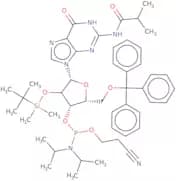
Formule :C12H14N4O6Degré de pureté :Min. 95%Couleur et forme :PowderMasse moléculaire :310.26 g/mol2'-O-tert-Butyldimethylsilyl-N2-Isobutyryl-5'-O-tritylguanosine 3'-CE phosphoramidite
2'-O-tert-Butyldimethylsilyl-N2-Isobutyryl-5'-O-tritylguanosine 3'-CE phosphoramidite is an anticancer nucleoside, which is used as a building block to synthesize DNA and RNA. The compound has been shown to be effective against HIV and herpes simplex virus. It also has antiviral effects against influenza A virus, cytomegalovirus, and Epstein Barr virus.
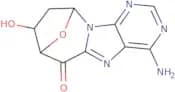
Formule :C48H64N7O7PSiDegré de pureté :Min. 95%Masse moléculaire :910.15 g/mol5'-Oxo-2'-deoxy-8,5'-cycloadenosine
CAS :5'-Oxo-2'-deoxy-8,5'-cycloadenosine is a novel anticancer agent that belongs to the group of deoxyribonucleosides. It has been shown to inhibit the proliferation of cancer cells in vitro and in vivo. The mechanism of action for 5'-oxo-2' -deoxy-8,5'-cycloadenosine may be due to its ability to cause DNA damage, leading to cell death by apoptosis. This drug also inhibits viral replication and may have antiviral activity. 5'-Oxo-2'-deoxy-8,5'-cycloadenosine can be used as an intermediate in the synthesis of phosphoramidites, ribonucleosides or diphosphate nucleotides.
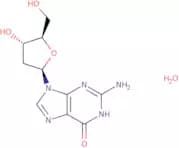
Formule :C10H9N5O3Degré de pureté :Min. 95%Masse moléculaire :247.21 g/mol2'-Deoxyguanosine monohydrate
CAS :2'-Deoxyguanosine monohydrate is a nucleoside that has been shown to inhibit the synthesis of DNA in human cells. It has also been shown to have a role in the regulation of energy metabolism and mitochondrial functions. 2'-Deoxyguanosine monohydrate binds to the enzyme polymerase chain reaction, which prevents the reverse transcription process from occurring. This nucleoside is involved in the biological studies of cytokine production, such as IL-2 receptor binding and calcium pantothenate-dependent activation of nuclear DNA replication.
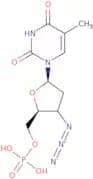
Formule :C10H13N5O4·H2ODegré de pureté :Min. 98 Area-%Couleur et forme :White PowderMasse moléculaire :285.26 g/mol3'-Azido-3'-deoxythymidine-5'-monophosphate lithium salt - 100 mM aqueous solution
CAS :3'-Azido-3'-deoxythymidine-5'-monophosphate lithium salt - 100 mM aqueous solution is an azidothymidine (AZT) analog that inhibits HIV replication. AZT is a nucleoside reverse transcriptase inhibitor that blocks the progression of HIV by preventing the virus from duplicating its DNA. This product has been shown to be effective in treating AIDS and related diseases, as well as other infectious diseases such as hepatitis B and C. 3'-Azido-3'-deoxythymidine-5'-monophosphate lithium salt - 100 mM aqueous solution is often used in combination with other drugs to increase their efficacy. It has also been shown to be an effective chemotherapeutic agent against cancer cells.
Formule :C10H14N5O7P·xLiDegré de pureté :Min. 95%Masse moléculaire :347.22 g/mol5’-O-DMT-2’-O-methoxyethyl-5-methyluridine
5’-O-DMT-2’-O-methoxyethyl-5-methyluridine is a novel nucleoside analog with anticancer activity. It is a monophosphate of 5'-O-DMT-2'-O-methoxyethyluridine, which has been shown to inhibit the growth of tumor cells by phosphorylation and activation of DNA polymerase β. 5’-O-DMT-2’-O-methoxyethyluridine also inhibits replication of influenza virus in vitro, and has antiviral properties against herpes simplex virus type 1 (HSV1).
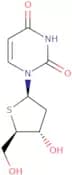
Degré de pureté :Min. 95%2'-Deoxy-4'-thiouridine
CAS :2'-Deoxy-4'-thiouridine (2dT) is a synthetic purine nucleoside analogue that has antiviral activity against herpes simplex virus and hepatitis B virus. It is a lead compound for the development of therapeutic agents for human immunodeficiency virus type 1 and varicella, and it has potential applications in the treatment of renal toxicity. 2dT inhibits viral replication by inhibiting viral thymidine kinase, which converts 2dT to 2'-deoxy-4'-thioguanosine monophosphate (2'TGMP). The 2'TGMP inhibits intracellular phosphorylation reactions necessary for DNA synthesis and cell division. This inhibition leads to death of the infected cells.
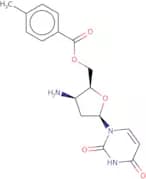
Formule :C9H12N2O4SDegré de pureté :Min. 95%Masse moléculaire :244.27 g/mol3'-Amino-2',3'-dideoxy-5'-O-toluoyluridine
3'-Amino-2',3'-dideoxy-5'-O-toluoyluridine is an antiviral and anticancer agent. It inhibits the activity of DNA polymerase, which is essential for DNA replication. 3'-Amino-2',3'-dideoxy-5'-O-toluoyluridine also inhibits ribonucleotide reductase, which is essential for RNA synthesis. This drug has been shown to be effective against herpes simplex virus (HSV) and human immunodeficiency virus (HIV). 3'-Amino-2',3'-dideoxy-5'-O-toluoyluridine has been shown to be active against a number of tumor cell lines in vitro and in vivo, including breast cancer cells.
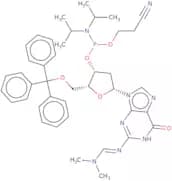
Formule :C17H19N3O5Degré de pureté :Min. 95%Masse moléculaire :345.35 g/mol2'-Deoxy-N2-DMF-5'-O-tritylguanosine 3'-CE phosphoramidite
2'-Deoxy-N2-DMF-5'-O-tritylguanosine 3'-CE phosphoramidite is a novel phosphoramidite nucleoside of the antiviral agent N2-DMF-5'-O-tritylguanosine, which has been modified to contain a deoxyribonucleoside at the 5' position. The phosphoramidite nucleotide is synthesized by reacting 2'-deoxyadenosine with DMF and 2,4,6-trichlorobenzoyl chloride in an organic solvent such as dichloromethane. It is then purified by recrystallization or chromatography to remove impurities such as DMF, 2,4,6-trichlorobenzoyl chloride, and other non-reacted compounds. This product can be used in the synthesis of oligonucleotides for use in DNA sequencing.
Formule :C41H49N8O5PDegré de pureté :Min. 95%Masse moléculaire :764.87 g/mol



![2’-Deoxy-2’-fluoro-N3-(2S)-[2-(tert-butoxycarbonyl)-amino-3-carbonyl]propyluridine](/_next/image/?url=https%3A%2Fstatic.cymitquimica.com%2Fproducts%2F3D%2Fthumb-webp%2FND162843.webp&w=3840&q=75)


![N′-[9-(2-Deoxy-2-fluoro-β-D-arabinofuranosyl)-6,9-dihydro-6-oxo-1H-purin-2-yl]-N,N-dimethylmethani…](/_next/image/?url=https%3A%2Fstatic.cymitquimica.com%2Fproducts%2F3D%2Fthumb-webp%2FNF183584.webp&w=3840&q=75)


![6-Amino-4-hydroxyamino-2-(b-D-ribofuranosyl)-2H-pyrazolo[3,4-d]pyrimidine](/_next/image/?url=https%3A%2Fstatic.cymitquimica.com%2Fproducts%2F3D%2Fthumb-webp%2FNA162982.webp&w=3840&q=75)









![6-Amino-1-(2',3',5'-tri-O-benzoyl-b-D-ribofuranosyl)-4-methoxy-1H-pyrazolo[3,4-d]pyrimidine](/_next/image/?url=https%3A%2Fstatic.cymitquimica.com%2Fproducts%2F3D%2Fthumb-webp%2FNA162942.webp&w=3840&q=75)







![4-Amino-7-(β-D-ribofuranosyl)-7H-pyrrolo[2.3-d]pyrimidine-5-carboxylic acid](/_next/image/?url=https%3A%2Fstatic.cymitquimica.com%2Fproducts%2F3D%2Fthumb-webp%2FNA145085.webp&w=3840&q=75)