Nucléosides
3569 produits trouvés pour "Nucléosides"
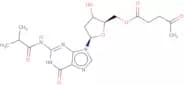
2'-Deoxy-N2-isobutyryl-5'-O-levulinoylguanosine
2'-Deoxy-N2-isobutyryl-5'-O-levulinoylguanosine is a novel antiviral drug that has been shown to be active against influenza, herpes, and HIV. It belongs to the class of deoxyribonucleosides and is ribonucleotide analogs. 2'-Deoxy-N2-isobutyryl-5'-O-levulinoylguanosine inhibits viral replication by interacting with viral DNA polymerase, preventing the extension of viral DNA chains by blocking the incorporation of nucleotides into the growing strand. The enzyme activity of 2'-deoxy-N2-isobutyrylguanosine is activated by phosphoramidites in vitro.
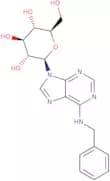
Formule :C19H25N5O7Degré de pureté :Min. 95%Masse moléculaire :435.43 g/mol6-Benzylamino-9-(a-D-glucopyranosyl)purine
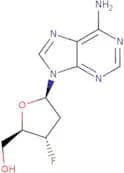
CAS :6-Benzylamino-9-(a-D-glucopyranosyl)purine is a novel nucleoside phosphoramidite that has been synthesized as an intermediate for anticancer therapy. It is a monophosphate, which has antiviral and antifungal activity. 6-Benzylamino-9-(a-D-glucopyranosyl)purine is a synthetic nucleoside with a novel structure, which inhibits the synthesis of DNA and RNA. This drug also has ribonucleotide reductase inhibitory activities.Formule :C18H21N5O5Degré de pureté :Min. 95%Masse moléculaire :387.4 g/mol2',3'-Dideoxy-3'-fluoroadenosine
CAS :2',3'-Dideoxy-3'-fluoroadenosine (ddFdA) is an antiviral drug that has been shown to be effective against HIV and other viruses. It is a synthetic nucleoside analogue of the natural purine adenosine. ddFdA inhibits the synthesis of viral RNA and DNA by competitively inhibiting the enzyme ribonucleotide reductase, thereby blocking DNA synthesis. The drug has shown significant activity in humans with immunodeficiency, but also has toxic effects on lymphocytes. ddFdA is synthesised from 2',3'-dideoxyadenosine (ddAdo), which is produced by the action of adenosinase on adenosine. In humans, ddFdA is converted to dideoxyadenosine triphosphate (ddATP), which inhibits cellular proliferation.Formule :C10H12FN5O2Degré de pureté :Min. 95%Masse moléculaire :253.23 g/molN4-Benzoyl-5'-O-DMT-2'-O-(2-methylacetamido)-5-methylcytidine 3'-CE phosphoramidite
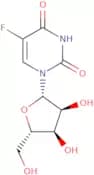
N4-Benzoyl-5'-O-DMT-2'-O-(2-methylacetamido)-5-methylcytidine 3'-CE phosphoramidite is a novel, antiviral, and anticancer agent. It has high purity and quality, and is modified with an acetyl group (N4-benzoyl) at the 5' position of the nucleotide sugar. This product has a CAS No. of 636371-27-0 and may be used as a monophosphate or diphosphate. The N4-benzoyl group is not present in natural nucleosides; therefore, this analog can serve as an activator for ribonucleoside kinase by mimicking the natural substrate.Degré de pureté :Min. 95%5-Fluoro-1-(b-L-ribofuranosyl)-uracil
CAS :5-Fluoro-1-(b-L-ribofuranosyl)-uracil is a triflate that is synthesized by the intramolecular, stereospecific reaction of l-guanosine and l-adenosine. It has been shown to have high yields in its synthesis. 5-Fluoro-1-(b-L-ribofuranosyl)-uracil can be used to produce glycosidations with d-galactose and l-thymidine. This product can also be used for the production of l-[5-(2,4,6-trimethoxybenzoyl)-1Hpyrazol]-3-[(2S,3R)-3-(bromomethyl)pyrrolidin]-2one (PBI), which is an inhibitor of protein kinase C.Degré de pureté :Min. 95%6-Methyl-thio-guanosine
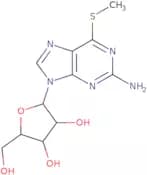
CAS :6-Methyl-thio-guanosine is a guanine analog that has been used for the treatment of asthma. It was found to be effective in reducing the number of neutrophils and responsiveness of these cells to stimuli. 6-Methyl-thio-guanosine is able to reduce the number of neutrophils in the airway and decrease the amount of sputum produced by patients with chronic obstructive pulmonary disease. 6-Methyl-thio-guanosine also prevents the release of mediators from these cells, which are important in inflammation. This drug has been shown to have an effect on bronchial epithelial cells, slowing their growth and increasing their ability to resist damage. 6-Methyl-thio-guanosine can be administered by inhalation or orally, through microlenses or expansion devices, or by suctioning bronchial secretions. Treatment may also involve injection directly into lung tissue using a bronFormule :C11H15N5O4SDegré de pureté :Min. 95%Masse moléculaire :313.33 g/mol2'-CMethylcytidine 5'-monophosphate
2'-CMethylcytidine 5'-monophosphate (2'-C-5MP) is a synthetic nucleoside that is chemically modified to inhibit viral replication. 2'-C-5MP inhibits the synthesis of DNA by binding to the polymerase enzyme of the virus and preventing it from synthesizing new DNA strands. This prevents the virus from replicating, which in turn prevents it from spreading through the body. The antiviral activity of 2'-C-5MP has been demonstrated in vitro against herpes simplex virus type 1 (HSV-1), herpes simplex virus type 2 (HSV-2), cytomegalovirus (CMV), respiratory syncytial virus (RSV), and human immunodeficiency virus type 1 (HIV-1). It also has anticancer activity and can be used as an alternative to chemotherapy for treating cancer cells. 2'-C-5MP is a novel compound with high purity and high quality, as evidencedDegré de pureté :Min. 95%6-Azathymidine
CAS :6-Azathymidine is an antiviral agent that prevents the synthesis of viral DNA. It is a nucleoside analogue that contains a hydroxyl group at the 6 position on a pyrimidine ring. This compound has been shown to be effective in treating HIV infection and cancer, as well as herpes simplex virus and influenza virus. 6-Azathymidine inhibits the enzyme ribonucleotide reductase, which is responsible for converting ribonucleotides into deoxyribonucleotides, thereby blocking DNA synthesis. The phosphate derivatives of this drug have been shown to inhibit the biosynthesis of human immunodeficiency virus (HIV) by interfering with intermolecular hydrogen bonding between guanine and adenine.
Formule :C9H13N3O5Degré de pureté :Min. 95%Masse moléculaire :243.22 g/mol6-Chloro-9-methylpurine
CAS :6-Chloro-9-methylpurine is an inhibitor of the enzyme kinase. It has been shown to inhibit the activity of 6-chloropurine phosphohydrolase and 6-chloropurine nucleoside phosphorylase, which are important enzymes in purine metabolism. 6-Chloro-9-methylpurine can be used to treat a number of diseases, including myeloid leukemia, where it inhibits the production of nucleic acids. This drug has also been shown to inhibit the growth of lettuce by inhibiting chlorophyll synthesis.Formule :C6H5ClN4Degré de pureté :Min. 95%Masse moléculaire :168.58 g/mol6,6'-Azopurine
CAS :6,6'-Azopurine is a hydrophobic organic compound that is used as an operational oxidant in the conversion of alcohols to aldehydes. It reacts with hydroxyl groups on the surface of the catalyst and undergoes nucleophilic attack to form a pyridinium salt. The reaction rate increases with increasing pH and temperature. 6,6'-Azopurine is also an immobilized oxidant that can be used for the oxidation of alcohols or hydrocarbons. Immobilization can be achieved by covalent coupling or adsorption on silica gel or alumina. 6,6'-Azopurine has been shown to have high activity against chlorides and is used for the oxidation of chlorides to produce chloride radicals.Formule :C10H6N10Degré de pureté :Min. 95%Masse moléculaire :266.22 g/mol5'-Tosyl-2'-deoxyadenosine
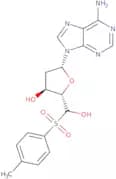
CAS :5'-Tosyl-2'-deoxyadenosine is a synthetic, novel nucleoside that has antiviral and anticancer activity. It is an activator of DNA synthesis and inhibits protein synthesis by blocking the enzyme ribonucleotide reductase. 5'-Tosyl-2'-deoxyadenosine is not active against Mycobacterium tuberculosis or Mycobacterium avium complex due to the lack of phosphoramidite incorporation into DNA. 5'-Tosyl-2'-deoxyadenosine is a high purity, high quality product that can be used as an antiviral agent or anticancer drug.Degré de pureté :Min. 95%4'-C-Azido-2'-deoxy-2'-fluoro-b-D-arabinouridine
CAS :4'-C-Azido-2'-deoxy-2'-fluoro-b-D-arabinouridine is a novel nucleoside analog that can be activated to the monophosphate form for incorporation into DNA. It has antiviral and anticancer properties. 4'-C-Azido-2'-deoxy-2'-fluoro-b-D-arabinouridine has been shown to inhibit the proliferation of cultured tumor cells, suggesting a potential use in cancer chemotherapy.
Formule :C9H10FN5O5Degré de pureté :Min. 95%Masse moléculaire :287.2 g/mol6-(Benzylamino)-3-methyl-1,2,3,4-tetrahydropyrimidine-2,4-dione
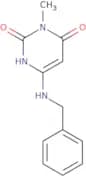
CAS :6-(Benzylamino)-3-methyl-1,2,3,4-tetrahydropyrimidine-2,4-dione (BMPT) is a synthetic cytokinin that belongs to the group of 6-benzylaminopurines. BMPT is an inhibitor of cytokinin receptor kinases, as it is a benzyl uracil derivative. BMPT can be used as a building block for the synthesis of other compounds and has been used as an inhibitor of cell growth in various organisms.
Formule :C12H13N3O2Degré de pureté :Min. 95%Masse moléculaire :231.25 g/mol2',3'-Dithiouridine
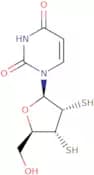
CAS :2',3'-Dithiouridine is a triamide that is synthesized from uridine and chloroacetic acid. The dimeric form of this compound has been shown to be the most stable and yields are high. 2',3'-Dithiouridine can be prepared by the reaction of uridine with chloroacetyl chloride in DMSO at room temperature. The disulfide linkage between the two thiouridines is stereospecifically oriented in a cis conformation. The synthesis of 2',3'-dithiouridine from uridine and chloroacetic acid is achieved by an efficient procedure that gives high yields. This synthetic pathway also produces a crystalline, cyclic, sodium salt form of 2',3',4'-trihydroxypentane-1,5-dione that has not been previously reported.Formule :C9H12N2O4S2Degré de pureté :Min. 95%Masse moléculaire :276.33 g/mol5'-O-Acetyllamivudine
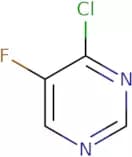
CAS :5'-O-Acetyllamivudine is an antiviral agent that has been shown to have antiretroviral activity against HIV-1 and influenza A virus. It is a nucleoside analog that inhibits the synthesis of viral DNA by competitively inhibiting the enzyme DNA polymerase. 5'-O-Acetyllamivudine is also used as an anticancer drug, which may be due to its ability to inhibit DNA replication in tumor cells.Formule :C10H13N3O4SDegré de pureté :Min. 95%Masse moléculaire :271.29 g/mol4-Chloro-5-fluoropyrimidine
CAS :4-Chloro-5-fluoropyrimidine is a fluoropyrimidine that is used in the synthesis of pharmaceuticals, such as 4-amino-2-chloro-5-fluoropyrimidine. This compound is synthesized by chlorinating 4-chloro-5-fluoropyrimidine with chlorine gas. The resulting product is hydrolyzed to yield 4-amino-2,4,5,6 tetrafluoro pyrimidines. 4CFP can also be obtained by hydrogenolysis of toluene with chlorine gas and sodium hydroxide or hydrolyzing an ammonium salt with hydrochloric acid.
Formule :C4H2ClFN2Degré de pureté :Min. 95%Masse moléculaire :132.52 g/mol3'-O-Aminoacetoxy-2'-deoxyadenosine 5'-O-triphosphate triethylammonium salt
Please enquire for more information about 3'-O-Aminoacetoxy-2'-deoxyadenosine 5'-O-triphosphate triethylammonium salt including the price, delivery time and more detailed product information at the technical inquiry form on this page
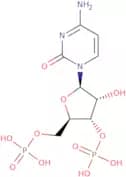
Formule :C13H21N6P3O12•NaxDegré de pureté :Min. 98 Area-%Couleur et forme :PowderMasse moléculaire :546.26 g/molCytidine 3',5'-bisphosphate sodium
CAS :Cytidine 3',5'-bisphosphate sodium is a phospholipid that is found in the cell membrane of gram-positive bacteria. Cytidine 3',5'-bisphosphate sodium has been shown to be produced by the enzyme phosphatidylcholine synthase, which converts phosphatidylethanolamine and cytidine 5'-monophosphate into phosphatidylcholine and cytidine 3',5'-bisphosphate. The presence of this compound in the cell membrane may be an indication of long-term survival and growth under laboratory conditions. It is also present in the ribosomal RNA of type strain organisms.
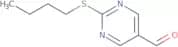
Formule :C9H15N3O11P2•NaxDegré de pureté :Min. 95%Masse moléculaire :403.18 g/mol2-(Butylthio)pyrimidine-5-carbaldehyde
CAS :2-(Butylthio)pyrimidine-5-carbaldehyde (BTPCA) is a neutralizing agent that inhibits the proliferation of cancer cells by binding to their cell membranes. It binds to the membrane and blocks the cyclic AMP receptor, thereby inhibiting the growth of cells. BTPCA has been shown to be effective in killing CD4+ T cells and may have therapeutic potential for autoimmune diseases. BTPCA also has diagnostic potential, as it can be used to detect epidermal growth factor receptors on cell membranes.
Formule :C9H12N2OSDegré de pureté :Min. 95%Masse moléculaire :196.27 g/mol4-Amino-6-methyl-8-(2'-deoxy-b-D-ribofuranosyl)-7-pteridone
CAS :4-Amino-6-methyl-8-(2'-deoxy-b-D-ribofuranosyl)-7-pteridone (4AMD) is an adenosine analog that is fluorescent. 4AMD is not hydrolyzed by adenosine deaminase and has a higher affinity for the A1 receptor than for the A2a receptor. This makes it a useful probe for the study of adenosine mediated, yields, and analogs. The fluorescence properties of 4AMD were studied in different solvents at various temperatures to monitor the interaction of 4AMD with catalysis. The monomeric form of 4AMD was used to measure its fluorescence properties.Formule :C12H15N5O4Degré de pureté :Min. 95%Masse moléculaire :293.28 g/mol