Nucléosides
Les nucléosides sont des building blocks fondamentaux des acides nucléiques, composés d'une base azotée attachée à une molécule de sucre. Dans cette section, vous trouverez une large gamme de nucléosides essentiels pour la recherche en biologie moléculaire, biochimie et pharmacologie. Ces composés jouent des rôles cruciaux dans la synthèse de l'ADN et de l'ARN, et sont également vitaux dans divers processus métaboliques. Les nucléosides sont utilisés pour étudier le matériel génétique, développer des thérapies antivirales et anticancéreuses, et comprendre les mécanismes cellulaires. Chez CymitQuimica, nous proposons des nucléosides de haute qualité pour soutenir vos besoins en recherche et développement, garantissant pureté et fiabilité pour vos applications expérimentales.
3569 produits trouvés pour "Nucléosides"
Trier par
Degré de pureté (%)
0
100
|
0
|
50
|
90
|
95
|
100
N2-DMF-9-(2'-deoxy-5'-O-DMT-b-D-ribofuranosyl)purine 3'-CE phosphoramidite
CAS :N2-DMF-9-(2'-deoxy-5'-O-DMT-b-D-ribofuranosyl)purine 3'-CE phosphoramidite is a novel, modified nucleoside analog with antiviral and anticancer properties. It is synthesized by the reaction of 2′,5′-O-(4,4′-dimethoxytrityl)-9-(2′deoxy-5′-O-DMT b D ribofuranosyl)purine 3′ with a phosphoramidite reagent in DMF at elevated temperature. The compound has been shown to inhibit viral replication in vitro and in vivo. In addition to its antiviral activity, N2DMFP3'-CE also inhibits tumor cell growth.Formule :C43H53N8O6PDegré de pureté :Min. 95%Couleur et forme :Off white solid.Masse moléculaire :808.93 g/mol4-Bromo-2-methoxypyrimidine
CAS :<p>4-Bromo-2-methoxypyrimidine is a synthetic compound that is used in the synthesis of other compounds. It reacts with alcohols, boronic acids, and benzyl halides to form heterocycles or pyrimidine compounds. The reaction system is catalytic and chemoselectively. 4-Bromo-2-methoxypyrimidine has been shown to have anticancer activity against various cell lines in vitro. It also possesses an ability to react with aryl boronic acids, such as those found in 2-pyridinones, to form new compounds. This reaction is catalyzed by palladium on carbon or copper chloride in the presence of a base. The new compounds have shown anti-inflammatory and cytotoxic activities against cancer cells.</p>Degré de pureté :Min. 95%3'-Deoxy-3'-fluorocytidine
CAS :<p>3'-Deoxy-3'-fluorocytidine is an activating agent that has been shown to inhibit coxsackie virus and other single-stranded RNA viruses. It is a nucleoside analogue that binds to the enzyme ribofuranoside, preventing the formation of the active site. 3'-Deoxy-3'-fluorocytidine has also been shown to inhibit the biochemical reactions involving S-adenosylhomocysteine hydrolase, which catalyzes the conversion of S-adenosylhomocysteine into adenosine, a precursor for DNA synthesis. Mechanistic studies have indicated that 3'-deoxy-3'-fluorocytidine inhibits enzymatic activity through stereochemical interactions with S-adenosylhomocysteine hydrolase.</p>Formule :C9H12FN3O4Degré de pureté :Min. 95%Masse moléculaire :245.21 g/mol2’-Deoxy-N2-dimethylguanosine
CAS :<p>2’-Deoxy-N2-dimethylguanosine is a novel antiviral agent that inhibits the replication of human DNA viruses by binding to their diphosphate or monophosphate regions and inhibiting ribonucleotide reductase. It has also been shown to have anticancer properties in vitro.</p>Degré de pureté :Min. 95%3'-deoxy-3',4'-didehydrouridine
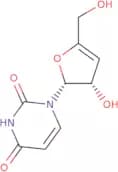
CAS :<p>3'-deoxy-3',4'-didehydrouridine is a synthetic nucleoside that inhibits viral replication. It is an antiviral agent that has been shown to be effective against DNA and RNA viruses. The synthesis of this compound has been described in the literature. This product is available in high purity and high quality, and CAS No. 2166167-51-5. 3'-deoxy-3',4'-didehydrouridine has also been shown to have anticancer activity, and is a novel synthetic nucleoside.</p>Formule :C9H10N2O5Degré de pureté :Min. 95%Masse moléculaire :226.19 g/mol2-Iodo-2’-deoxyadenosine
CAS :<p>2-Iodo-2’-deoxyadenosine is a novel nucleoside that is a modified adenosine. It has been shown to possess anticancer activity. 2-Iodo-2’-deoxyadenosine has a high degree of cytotoxicity and can induce apoptosis in cancer cells. This drug also inhibits the growth of herpes simplex virus type 1 (HSV) and HIV, which are both types of viruses that infect humans. The antiviral activity may be due to the inhibition of viral DNA synthesis or RNA transcription. 2-Iodo-2’-deoxyadenosine is synthesized from adenine, iodine, and sulfuric acid with high purity and quality. It is not active against bacteria because it does not inhibit bacterial DNA gyrase or topoisomerase IV enzymes.</p>Degré de pureté :Min. 95%8-(p-Chlorophenylthio)-cGMP
CAS :<p>8-(p-Chlorophenylthio)-cGMP is a modified nucleoside that has anticancer activity. It inhibits DNA synthesis and the activation of protein kinases, which are enzymes that transmit signals from the cell surface to the nucleus. 8-(p-Chlorophenylthio)-cGMP can also inhibit viral replication by inhibiting the production of new virus particles and by inhibiting the action of reverse transcriptase, an enzyme that converts RNA into DNA.</p>Formule :C16H15ClN5O7PSDegré de pureté :Min. 95%Masse moléculaire :487.81 g/mol5-Aza-3-deaza-N4-DMF-5'-O-DMT-2'-O-methylcytidine 3'-CE phosphoramidite
5-Aza-3-deaza-N4-DMF-5'-O-DMT-2'-O-methylcytidine 3'-CE phosphoramidite is a novel modified nucleoside that is synthesized by the reaction of 5-Aza-3,8-(N4,N4)-dimethyl-1,2:5,6:8:10,11:12,-tetradeoxyribonucleosides with 2'-O,O'-Dimethoxytrityl Chloride. This product has been shown to be an activator and to have antiviral and anticancer activities. It also has a high purity and quality.Formule :C43H55N6O8PDegré de pureté :Min. 95%Masse moléculaire :814.91 g/mol3'-Deoxy-3'-fluoroinosine
CAS :3'-Deoxy-3'-fluoroinosine is a nucleoside analog that has been shown to have cytotoxic effects. It inhibits the growth of nematodes and other parasites by blocking the deacetylation of lipids in the cell membrane, which leads to their death. 3'-Deoxy-3'-fluoroinosine has also been shown to inhibit trypanosomiasis and leishmania infections by preventing the synthesis of purines and pyrimidines. This drug binds to 6-chloropurine ribonucleotide reductase, thereby inhibiting the production of nucleic acids. 3'-Deoxy-3'-fluoroinosine is not active against mammalian cells, which may be due to its inability to penetrate cell membranes efficiently.Degré de pureté :Min. 95%2'-Deoxy-N4,5-dimethylcytidine
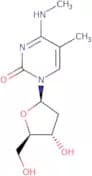
CAS :<p>2'-Deoxy-N4,5-dimethylcytidine is an activator that has the ability to activate a variety of nucleoside analogs. The compound is synthetically derived and used as an antiviral agent. It can be modified at the 5' position with phosphate groups or ribonucleosides. 2'-Deoxy-N4,5-dimethylcytidine is also a novel monophosphate nucleoside that has been shown to inhibit the growth of cancer cells in vitro and in vivo. This drug inhibits DNA synthesis by preventing the incorporation of diphosphate nucleotides into DNA during DNA replication. 2'-Deoxy-N4,5-dimethylcytidine is not active against RNA synthesis because it does not have any activity at this site.</p>Formule :C11H17N3O4Degré de pureté :Min. 95%Masse moléculaire :255.27 g/molAdenosine 5′-diphosphoribose monosodium
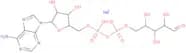
CAS :Adenosine 5′-diphosphoribose monosodium is a novel nucleotide that can be used in the synthesis of antiviral, anticancer, and anti-inflammatory drugs. Adenosine 5′-diphosphoribose monosodium is a modified form of adenosine 5′-triphosphate (ATP) with an added phosphate group at the 5′ position on the ribose sugar. It is synthesized from ATP by phosphoramidite chemistry. The CAS number for this product is 68414-18-6. Adenosine 5′-diphosphoribose monosodium has been shown to inhibit replication of human immunodeficiency virus type 1 (HIV-1) and herpes simplex virus type 1 (HSV-1).Formule :C15H23N5O14P2•NaDegré de pureté :Min. 95%Masse moléculaire :582.31 g/molFialuridine 5'-monophosphate
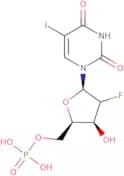
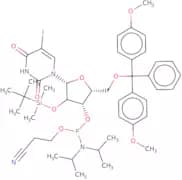
CAS :Fialuridine 5'-monophosphate is an analog of fialuridine, a drug used to treat HIV. Fialuridine 5'-monophosphate inhibits mitochondrial DNA synthesis by inhibiting hepg2 in the mitochondria and blocks the conversion of uracil to thymine in nuclear DNA. The inhibition of these two processes prevents viral replication and cell division. Fialuridine 5'-monophosphate also has antioxidant properties that protect cells from oxidative damage induced by reactive oxygen species. This drug may be beneficial for cancer treatment as well as hepatitis C or herpes simplex virus infection.Formule :C9H11FIN2O8PDegré de pureté :Min. 95%Masse moléculaire :452.07 g/mol2'-O-tert-Butyldimethylsilyl-5'-O-DMT-5-iodouridine 3'-CE phosphoramidite
<p>2'-O-tert-Butyldimethylsilyl-5'-O-DMT-5-iodouridine 3'-CE phosphoramidite is a modified nucleoside that can be used to synthesize oligonucleotides. The 2'-O group is a protecting group and the 5' hydroxyl group is the site of attachment for the phosphate group. This product is an anticancer, antiviral, and antiretroviral agent. It has been shown to inhibit the growth of cancer cells in vitro and in vivo.</p>Formule :C45H60IN4O9PSiDegré de pureté :Min. 95%Masse moléculaire :986.97 g/mol5'-O-DMTr-2'-O,4'-C-methyleneuridine 3'-CE-phosphoramidite
CAS :5'-O-DMTr-2'-O,4'-C-methyleneuridine 3'-CE-phosphoramidite is a novel nucleoside phosphoramidite. It is an activator of DNA polymerase for the synthesis of diphosphate analogues of ribonucleosides and deoxyribonucleosides. This compound has been used in the synthesis of antiviral and anticancer agents, as well as in research on the development of new antiviral drugs.Degré de pureté :Min. 95%Myristoyl coenzyme A lithium salt
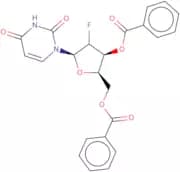
CAS :<p>Myristoyl coenzyme A lithium salt is an activator that can be used in the synthesis of Ribonucleosides and Deoxyribonucleosides. It has a high purity, which ensures high quality synthesis. Myristoyl coenzyme A lithium salt is a novel nucleotide precursor that can be used to synthesize DNA or RNA for use in anti-cancer or antiviral treatments.</p>Formule :C35H62N7O17P3S·xLiDegré de pureté :Min. 95%Masse moléculaire :977.89 g/mol3',5'-Di-O-benzoyl-2'-deoxy-2'-fluorouridine
<p>3',5'-Di-O-benzoyl-2'-deoxy-2'-fluorouridine is a novel nucleoside analog that has been shown to have anticancer activity in vitro. The compound is a monophosphate, which is synthesized from 2'-deoxyuridine and benzoyl chloride. 3',5'-Di-O-benzoyl-2'-deoxy-2'-fluorouridine was found to have antiviral activity against herpes simplex virus type 1 (HSV1) and cytomegalovirus (CMV). It also inhibited the production of HIV in human lymphocytes. This nucleoside analog can be activated by phosphorylation at the 5' position to form a diphosphate, which inhibits DNA synthesis by incorporating into the growing DNA chain and preventing the movement of RNA polymerase along the template strand.</p>Formule :C23H19FN2O7Degré de pureté :Min. 95%Masse moléculaire :454.42 g/mol2'-Deoxy-5'-O-DMT-uridine 3'-succinyl CPG 1000Å
<p>2'-Deoxy-5'-O-DMT-uridine 3'-succinyl CPG 1000Å is an anticancer drug that is used in the treatment of acute myeloid leukemia. This compound is a modified nucleoside. It has been shown to inhibit the growth of cultured cells and induce apoptosis by causing DNA damage. The anticancer properties of 2'-deoxy-5'-O-DMT-uridine 3'-succinyl CPG 1000Å are mediated by its inhibition of DNA synthesis, RNA synthesis, and protein synthesis.</p>Degré de pureté :Min. 95%3'-Azido-2',3'-dideoxy-N2-isobutyrylguanosine
<p>3'-Azido-2',3'-dideoxy-N2-isobutyrylguanosine is an antiviral agent that belongs to the class of nucleosides. It is a novel phosphoramidite which can be used in the synthesis of ribonucleosides and deoxyribonucleosides. 3'-Azido-2',3'-dideoxy-N2-isobutyrylguanosine has shown anticancer activity, with a potential use as an inhibitor of cellular proliferation, including tumor cells. 3'-Azido-2',3'-dideoxy-N2-isobutyrylguanosine also inhibits viral replication by interfering with the initiation and elongation steps of viral DNA synthesis.</p>Degré de pureté :Min. 95%6-Aminothymine
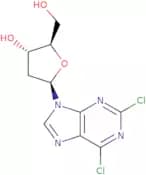
CAS :<p>6-Aminothymine is a polyamine that exerts its inhibitory activity by hydrogen bonding to the enzyme's active site. It has been shown to inhibit protein synthesis and growth factor synthesis in HL-60 cells. 6-Aminothymine also has cancer inhibiting properties, which may be due to its ability to bind DNA and interfere with replication or transcription.</p>Formule :C5H7N3O2Degré de pureté :Min. 95%Masse moléculaire :141.13 g/mol2,6-Dichloro-9-(2'-deoxy-b-D-ribofuranosyl)purine
CAS :<p>2,6-Dichloro-9-(2'-deoxy-β-D-ribofuranosyl)purine is a synthetic compound that is used in the treatment of certain types of cancer. It has been shown to be an activator of DNA synthesis and an inhibitor of RNA synthesis. It has also been shown to inhibit tumor growth and prolong the survival time for patients with leukemia. The antiviral activity of 2,6-dichloro-9-(2'-deoxy-β-D-ribofuranosyl)purine may be due to its ability to inhibit viral DNA polymerase. This drug is also known as dideoxyinosine (ddI).</p>Formule :C10H10Cl2N4O3Degré de pureté :Min. 95%Masse moléculaire :305.12 g/mol