Nucléosides
Les nucléosides sont des building blocks fondamentaux des acides nucléiques, composés d'une base azotée attachée à une molécule de sucre. Dans cette section, vous trouverez une large gamme de nucléosides essentiels pour la recherche en biologie moléculaire, biochimie et pharmacologie. Ces composés jouent des rôles cruciaux dans la synthèse de l'ADN et de l'ARN, et sont également vitaux dans divers processus métaboliques. Les nucléosides sont utilisés pour étudier le matériel génétique, développer des thérapies antivirales et anticancéreuses, et comprendre les mécanismes cellulaires. Chez CymitQuimica, nous proposons des nucléosides de haute qualité pour soutenir vos besoins en recherche et développement, garantissant pureté et fiabilité pour vos applications expérimentales.
3569 produits trouvés pour "Nucléosides"
Trier par
Degré de pureté (%)
0
100
|
0
|
50
|
90
|
95
|
100
Thymidine 3'-monophosphate sodium salt
CAS :<p>Thymidine 3'-monophosphate sodium salt (TMP) is a nucleoside that is involved in the synthesis of DNA. TMP has been shown to have minimal carcinogenic effects on the liver, with no effect on the rate of DNA synthesis or cell proliferation in vivo. It has been shown to be hepatotoxic and genotoxic in animal studies and can cause DNA strand breaks and chromosomal aberrations in liver cells. TMP also causes a specific adduct, crotonaldehyde, which is considered to be an indicator of hepatic injury. The detection method for this adduct uses gas chromatography-mass spectrometry, which identifies the presence of TMP by detecting its unique mass spectrum.</p>Formule :C10H15N2O8P•xNaDegré de pureté :Min. 95%Couleur et forme :Powder2'-Deoxy-5-fluorouridine-5'-triphosphate sodium salt - 100 mM solution in water
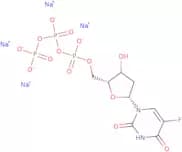
CAS :<p>2'-Deoxy-5-fluorouridine-5'-triphosphate sodium salt - 100 mM solution in water is a nucleotide analog that inhibits the synthesis of RNA. It is used for the treatment of cancer. This agent binds to DNA and prevents the formation of RNA by inhibiting the enzyme ribonucleotide reductase. 2'-Deoxy-5-fluorouridine-5'-triphosphate sodium salt - 100 mM solution in water also has a perchloric acid component, which may be responsible for its haematopoietic effects.</p>Formule :C9H14FN2O14P3·xNaDegré de pureté :Min. 95%Couleur et forme :PowderMasse moléculaire :486.13 g/mol5-Cyano-2'-deoxycytidine
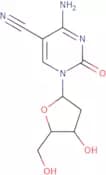
CAS :Nucleobase functionalised deoxynucleosideFormule :C10H12N4O4Degré de pureté :Min. 95%Masse moléculaire :252.23 g/mol2'-O-tert-Butyldimethylsilyl-N-(tert-butylphenoxyacetyl)-5'-O-DMT-guanosine 3'-CE phosphoramidite
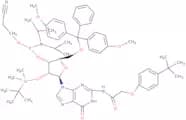
CAS :2'-O-tert-Butyldimethylsilyl-N-(tert-butylphenoxyacetyl)-5'-O-DMT-guanosine 3'-CE phosphoramidite is a synthetic nucleoside analog. The chemical name for this product is 2'-O-tert-butyldimethylsilyl-N-(tert-butylphenoxyacetyl)-5'-O-dimethoxytritylguanosine 3'-cyanoethylphosphoramidite. The molecular formula is C28H34N2O8PSi, and the molecular weight is 812.59 g/mol. This product has an EC Number of 61317 - CAS Number of 149989 - 68 - 4 and a melting point of 232°C (238°F). This compound can be used in the synthesis of oligonucleotides that are used to bind to RNA andFormule :C58H76N7O10PSiDegré de pureté :Min. 95%Masse moléculaire :1,090.32 g/molIDA-dAMP
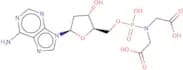
An iminodiacetic acid phophoramidite. This acts as a pyrophosphate mimic so behaves as a leaving group in the enzymatic polymerisation of deoxyribonucleic acids.Formule :C14H19N6PO9Masse moléculaire :446.31 g/mol2',3'-Dideoxy-3',5-difluorocytidine
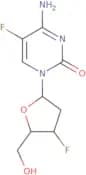
CAS :<p>2',3'-Dideoxy-3',5-difluorocytidine (ddF) is a nucleotide analogue that inhibits the viral polymerase. It binds to the enzyme and prevents it from synthesizing DNA, which is needed for viral replication. ddF has been shown to be effective against different types of cancer cells, including breast and prostate cancers. This drug also has antiviral properties and is used as an antiviral agent in AIDS therapy. ddF may also be used as a precursor in the synthesis of other nucleosides or nucleotides.</p>Degré de pureté :Min. 95%2',3'-Dehydro-5'-O-tritylthymidine
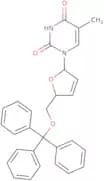
CAS :<p>2',3'-Dehydro-5'-O-tritylthymidine is an anticancer compound, which is a novel nucleoside phosphoramidite. It is synthesized from thymidine in two steps: first, the 2',3'-dideoxyribose phosphate moiety is prepared by reacting 2',3'-dideoxyribose with chloroacetic acid in the presence of triethylamine, followed by reaction with trityl chloride to form the 5' position of the thymidine. 2',3'-Dehydro-5'-O-tritylthymidine has been shown to inhibit DNA synthesis and antiviral activity.</p>Formule :C29H26N2O4Degré de pureté :Min. 95%Masse moléculaire :466.54 g/mol2’-Deoxy-N2-DMF-2’-fluoroguanosine
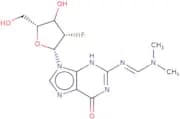
<p>Please enquire for more information about 2’-Deoxy-N2-DMF-2’-fluoroguanosine including the price, delivery time and more detailed product information at the technical inquiry form on this page</p>Formule :C13H17FN6O4Degré de pureté :Min. 95%Masse moléculaire :340.31 g/molLauroyl coenzyme A potassium salt
CAS :<p>Lauroyl coenzyme A potassium salt is a potent inhibitor of fatty acid synthase. It has the ability to inhibit the enzyme activity of fatty acid synthase in vitro, which belongs to the class of irreversible inhibitors. Lauroyl coenzyme A potassium salt inhibits the synthesis of fatty acids by inhibiting the enzyme activity of fatty acid synthase. This inhibitor also reversibly inhibits other enzymes with a similar mechanism, such as acetyl-coenzyme A carboxylase and phosphatidate phosphohydrolase. The reaction mechanism can be understood through titration calorimetry studies, demonstrating that lauroyl coenzyme A potassium salt binds to the active site of these enzymes and blocks access to substrates. The binding affinity is higher for wild type strains than for mutant strains, which may be due to differences in protein structure or other factors. Lauroyl coenzyme A potassium salt has been shown to have no effect on wild-type strains but inhibits polymer</p>Formule :C33H55N7O17P3SK3Degré de pureté :Min. 95%Couleur et forme :PowderMasse moléculaire :1,064.11 g/mol2'-Deoxy-5-methyl-isocytidine
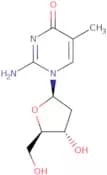
CAS :<p>2'-Deoxy-5-methyl-isocytidine is an analog of cytidine that is used in the synthesis of oligodeoxynucleotides. It has shown to be complementary to dsDNA and to inhibit hepatitis B virus replication in cell culture. 2'-Deoxy-5-methyl-isocytidine is synthesized by solid phase chemistry on a polystyrene support with monomers, depyrimidination, and purification by column chromatography. The chemical stability of this compound has been shown by its ability to withstand heating at 100°C for 10 minutes without decomposition.</p>Formule :C10H15N3O4Degré de pureté :Min. 95%Masse moléculaire :241.26 g/mol5'-O-DMT-8-Bromo-N6-(benzoyl)-2′-deoxyadenosine
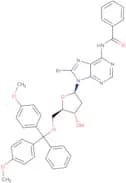
CAS :<p>Bromo substituted deoxyadenosine</p>Formule :C38H34BrN5O6Masse moléculaire :736.61 g/mol2'-O-tert-Butyldimethylsilyl-N6-(tert-butylphenoxyacetyl)-5'-O-DMT-adenosine 3'-CE phosphoramidite
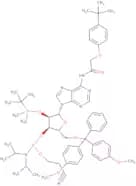
CAS :<p>2'-O-tert-Butyldimethylsilyl-N6-(tert-butylphenoxyacetyl)-5'-O-DMT-adenosine 3'-CE phosphoramidite is a high purity, diphosphate nucleoside. This is an anticancer drug that inhibits the growth of cancer cells by inhibiting DNA synthesis and RNA synthesis. It is a novel compound that has been shown to be an activator of cellular proliferation in vitro. 2'-O-tert-Butyldimethylsilyl-N6-(tert-butylphenoxyacetyl)-5'-O-DMT-adenosine 3'-CE phosphoramidite is used as a monophosphate nucleoside synthase inhibitor in the treatment of cancer.</p>Formule :C58H76N7O9PSiDegré de pureté :Min. 95%Masse moléculaire :1,074.33 g/mol5-Fluorouridine-5'-diphosphate sodium
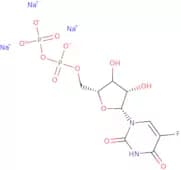
CAS :<p>5-Fluorouridine-5'-diphosphate sodium salt is a nucleoside analog that inhibits the synthesis of RNA and DNA. It is used to treat cancer, as well as opportunistic infections, such as cryptococcal disease. 5-Fluorouridine-5'-diphosphate sodium salt binds to the enzyme thymidylate synthase and prevents it from synthesizing dTMP, which is needed for DNA synthesis. This drug also has been shown to be effective against monoclonal antibodies in mice with cancer. 5-Fluorouridine-5'-diphosphate sodium salt may also be useful in gene therapy for cancer treatment. This drug can be taken up by cells where it is converted into uracil, which inhibits protein synthesis by competing with the natural substrate tRNA for binding sites on ribosomes.</p>Formule :C9H13FN2O12P2•NaxDegré de pureté :Min. 95%Couleur et forme :PowderMasse moléculaire :423.16 g/mol2'-Deoxy-5'-O-DMT-5-acetoxymethyluridine 3'-CE phosphoramidite
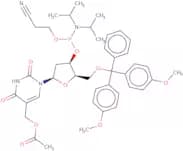
CAS :<p>2'-Deoxy-5'-O-DMT-5-acetoxymethyluridine 3'-CE phosphoramidite is a novel nucleoside analogue with anticancer activity. It is synthesized from 2'-deoxy-5'-O-DMT-5-acetoxymethyluridine and 3'-chloroethyl phosphate. The compound has been shown to inhibit DNA, RNA, and protein synthesis in vitro, as well as to induce apoptosis in human cancer cell lines. 2'-Deoxy-5'-O-DMT-5-acetoxymethyluridine 3'-CE phosphoramidite is a modified nucleoside that can be used in the production of oligonucleotides for use in gene therapy.</p>Formule :C42H51N4O10PDegré de pureté :Min. 95%Masse moléculaire :802.85 g/mol2-Amino-5'-O-(dimethoxytrityl)-N6-(dimethylaminomethylidene)-N2-(isobutyryl)-2'-O-methyladenosine
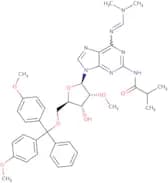
CAS :<p>DMF functionalised 2'-O-methyladenosine</p>Formule :C39H45N7O7Masse moléculaire :723.82 g/mol2'-O-Methylguanosine 5'-monophosphate sodium
CAS :<p>2'-O-Methylguanosine 5'-monophosphate sodium is a nucleoside analog that has been shown to inhibit the growth of human cancer cells. It is a modified monophosphate nucleotide, which is synthesized by the chemical modification of guanosine with 2'-O-methylation at the 5' position and phosphorylation at the 3' position. This drug is not active against viruses and may be used as an anticancer agent. 2'-O-Methylguanosine 5'-monophosphate sodium has also been shown to be effective in treating hepatitis B virus infection. The drug may act as an antiviral agent by interfering with viral DNA synthesis, causing viral particles to aggregate, or by inhibiting viral DNA polymerase activity.</p>Degré de pureté :Min. 95%2'-Amino-2'-deoxycytidine-5'-triphosphate
CAS :<p>2'-Amino-2'-deoxycytidine-5'-triphosphate is an inhibitor of viral RNA polymerase. It is a nucleoside analogue that mimics the natural substrate for the enzyme, 2'-deoxycytidine-5'-triphosphate. This compound binds to the active site of viral RNA polymerases and blocks their ability to synthesize RNA. The compound has been shown to inhibit the replication of norovirus and HIV in cell culture. 2'-Amino-2'-deoxycytidine-5'-triphosphate binds to metal ions in the active site of the enzyme, which prevents its binding with the template strand and prevents elongation of RNA synthesis.</p>Formule :C9H17N4O13P3Degré de pureté :Min. 95%Masse moléculaire :482.17 g/molLong trebler phosphoramidite
CAS :<p>Please enquire for more information about Long trebler phosphoramidite including the price, delivery time and more detailed product information at the technical inquiry form on this page</p>Formule :C89H107N2O15PMasse moléculaire :1,475.78 g/molOctanoyl coenzyme A lithium salt hydrate
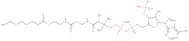
CAS :<p>Octanoyl coenzyme A lithium salt hydrate (OCCA) is a metabolite of octanoic acid, which is formed by the oxidation of fatty acids. OCCA has been shown to have relevance in the metabolism of fatty acids, as it can be conjugated with other molecules and transported into cells. This compound has been detected in human liver tissues and was found to be metabolized by primary rat hepatocytes in vitro. The metabolic pathway of OCCA is not yet fully understood, but it has been investigated in vivo studies.</p>Formule :C29H50N7O17P3S·xLi·yH2ODegré de pureté :Min. 95%Masse moléculaire :893.73 g/mol2,2'-Anhydro-L-thymidine
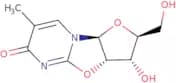
CAS :<p>2,2'-Anhydro-L-thymidine is an antiviral, anticancer agent and a synthetic nucleoside. It is a monophosphate that was first synthesized in 1967 and has been used as a potential antiviral agent. 2,2'-Anhydro-L-thymidine has been shown to be effective against the herpes simplex virus type 1 (HSV1). However, it does not inhibit viral nucleic acid synthesis or viral protein synthesis. It also does not inhibit the growth of tumor cells in culture.</p>Formule :C10H12N2O5Degré de pureté :Min. 95%Couleur et forme :PowderMasse moléculaire :240.21 g/mol