Nucléosides
Les nucléosides sont des building blocks fondamentaux des acides nucléiques, composés d'une base azotée attachée à une molécule de sucre. Dans cette section, vous trouverez une large gamme de nucléosides essentiels pour la recherche en biologie moléculaire, biochimie et pharmacologie. Ces composés jouent des rôles cruciaux dans la synthèse de l'ADN et de l'ARN, et sont également vitaux dans divers processus métaboliques. Les nucléosides sont utilisés pour étudier le matériel génétique, développer des thérapies antivirales et anticancéreuses, et comprendre les mécanismes cellulaires. Chez CymitQuimica, nous proposons des nucléosides de haute qualité pour soutenir vos besoins en recherche et développement, garantissant pureté et fiabilité pour vos applications expérimentales.
3569 produits trouvés pour "Nucléosides"
Trier par
Degré de pureté (%)
0
100
|
0
|
50
|
90
|
95
|
100
3'-Azido-3'-deoxy-b-L-cytidine
CAS :<p>3'-Azido-3'-deoxy-b-L-cytidine is a novel nucleoside that has been shown to be an activator of the ribonuclease activity of purified RNase A in vitro. This product is suitable for use in synthesis of oligodeoxynucleotides and phosphoramidites. 3'-Azido-3'-deoxy-b-L-cytidine can be used as a potential anticancer drug or antiviral agent.</p>Degré de pureté :Min. 95%2,2'-Anhydro-6-methoxycarbonyl-b-D-arabinofuranosyl uracil
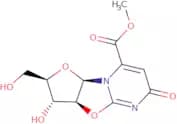
CAS :<p>2,2'-Anhydro-6-methoxycarbonyl-b-D-arabinofuranosyl uracil is a novel and high purity anticancer and antiviral agent. It is an activator that has been shown to exhibit antineoplastic activity in vitro. The compound also inhibits the formation of RNA and DNA, which are necessary for the replication of cells. 2,2'-Anhydro-6-methoxycarbonyl-b-D-arabinofuranosyl uracil is a modified nucleoside that has been synthesized by phosphoramidite chemistry. This product can be used for research purposes and as a starting material for the synthesis of other compounds with similar structures.</p>Formule :C11H12N2O7Degré de pureté :Min. 95%Masse moléculaire :284.22 g/mol2'-Deoxy-2'-fluoro-5-methyluridine
CAS :<p>2'-Deoxy-2'-fluoro-5-methyluridine is a nucleoside analog that is a modified version of uridine, where the sugar (deoxyribose) has a fluoro modification at the 2' position and a methyl group is attached at the 5' position of the uracil base.</p>Formule :C10H13FN2O5Degré de pureté :Min. 95%Couleur et forme :White PowderMasse moléculaire :260.22 g/molN4-Acetyl-2'-deoxycytidine
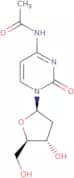
CAS :<p>N4-Acetyl-2'-deoxycytidine is a nucleoside analogue that acts as an inhibitor of DNA synthesis. It binds to the active site of the enzyme ribonucleotide reductase, blocking the conversion of ribonucleotides to deoxyribonucleotides. This prevents DNA synthesis and replication, which leads to cell death. N4-Acetyl-2'-deoxycytidine has been shown to be more efficient than other analogues in terms of energy efficiency, control levels, and constant linear model. This compound is reactive and can cause low yields when isolated from solutions with high concentrations. A diode can be used for analytical purposes, while calcium binding may be used as a mathematical model in order to analyze this drug.</p>Formule :C11H15N3O5Degré de pureté :Min. 98 Area-%Couleur et forme :PowderMasse moléculaire :269.25 g/mol5'-Deoxy-5-fluorocytidine
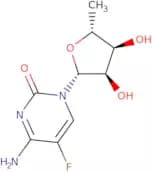
CAS :<p>5'-Deoxy-5-fluorocytidine is a cytosolic nucleoside analogue that is phosphorylated by cellular enzymes to the active form 5'-deoxy-5-fluorouridine monophosphate. It is a prodrug, which is activated in the body to release 5-FU and inhibits the growth of cancer cells. 5'-Deoxy-5-fluorocytidine has been shown to be effective against metastatic colorectal cancer in humans and resistant breast cancer in mice. The drug can also be used as an oral prodrug for 5-FU, which has a wide therapeutic index and low toxicity. Studies have shown that it selectively inhibits proliferation of solid tumours through inhibition of protein synthesis and cell division. The drug also has antiangiogenic effects, which are thought to contribute to its antitumor activity.</p>Formule :C9H12FN3O4Degré de pureté :Min. 98 Area-%Couleur et forme :White PowderMasse moléculaire :245.21 g/mol9-(b-D-Arabinofuranosyl)adenine
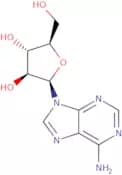
CAS :<p>9-(b-D-Arabinofuranosyl)adenine is a nucleoside that is used as an antiviral agent. It binds to viral RNA and inhibits viral replication. 9-(b-D-Arabinofuranosyl)adenine has been shown to have potent side-effect profiles, including myocardial infarct, neuronal death, and immunological reactions. These effects are due to its ability to inhibit the synthesis of guanine nucleotides in the heart and brain cells, which are essential for energy production and neurotransmitter release respectively. 9-(b-D-Arabinofuranosyl)adenine also binds to toll-like receptors (TLRs), which are proteins found on the surface of cells that recognize invading microbes or foreign substances. This binding leads to activation of immune response pathways.</p>Formule :C10H13N5O4Degré de pureté :Min. 95%Couleur et forme :White PowderMasse moléculaire :267.24 g/mol5’-O-Benzoyl-3’-O-(4-methoxybenzoyl)-2’-O,4’-C- methyleneuridine
5'-O-Benzoyl-3'-O-(4-methoxybenzoyl)-2'-O,4'-C-methyleneuridine is a nucleoside that is synthesized from 5'-O-benzoyl-2'-deoxyadenosine and 4'-methoxybenzoyl chloride. It has antiviral and anticancer properties. 5' - O - benzoyl - 3' - O - (4-methoxybenzoyl) - 2' - O,4' - C methyleneuridine is a novel nucleoside with anti-cancer and antiviral effects. It can also be used as an activator for the synthesis of oligonucleotides or as a ribonucleotide phosphoramidite. The chemical name for this compound is 5’ – O – benzoyl – 3’ – O – (4 methoxybenzoyl) – 2Degré de pureté :Min. 95%N4-Acetyl-5'-O-DMT-2'-O-methyl-5-methylcytidine 3'-CE phosphoramidite
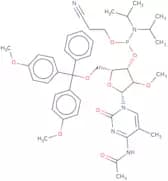
<p>N4-Acetyl-5'-O-DMT-2'-O-methyl-5-methylcytidine 3'-CE phosphoramidite is an antiviral, anticancer and nucleoside phosphoramidite. It is a novel DNA building block with antiviral activity against HIV and Hepatitis C. The synthesis of N4-acetyl-5'-O-DMT-2'-O-methyl-5-methylcytidine 3'-CE phosphoramidite is based on the reaction of cytosine monophosphate with 2,4,6,-trimethoxybenzoyl chloride. This compound has also been shown to inhibit the proliferation of leukemia cells in vitro and has potential as a chemotherapeutic agent for cancer treatment.</p>Formule :C43H54N5O9PDegré de pureté :Min. 95%Masse moléculaire :815.89 g/molCytidine 5'-monophosphate disodium salt
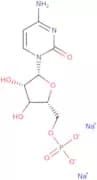
CAS :<p>Cytidine 5'-monophosphate disodium salt (CMPDS) is a prodrug that is converted to cytidine 5'-monophosphate, an active form, in the acidic environment of cancer cells. CMPDS has been shown to inhibit the growth of squamous carcinoma and other solid tumours by binding to survivin, which regulates cell growth and apoptosis. CMPDS also inhibits the activity of matrix metalloproteinases-9 (MMP-9), an enzyme that promotes tumor growth by breaking down connective tissue. This drug can be used as a therapeutic agent for treatment of congestive heart failure due to its ability to increase mitochondrial membrane potential and decrease myocardial infarct size.</p>Formule :C9H12N3Na2O8PDegré de pureté :Min. 95 Area-%Couleur et forme :White PowderMasse moléculaire :367.16 g/mol2'-Deoxy-2'-fluoroadenosine 5'-a-thiotriphosphate sodium salt
<p>2'-Deoxy-2'-fluoroadenosine 5'-a-thiotriphosphate sodium salt (2'F-ATP) is a nucleoside analog that inhibits viral DNA polymerase and induces apoptosis in cancer cells. It is a novel, modified nucleotide that can be phosphorylated to 2'F-dATP, 2'F-AMP, or 2'F-GMP. The phosphate group in 2'F-ATP is replaced by a thiophosphate group, which increases the stability of the molecule and prevents it from being hydrolyzed by phosphatases. This makes it an effective activator for DNA synthesis reactions.</p>Degré de pureté :Min. 95%4’,5’-Didehydro-2’,5’-dideoxyuridine
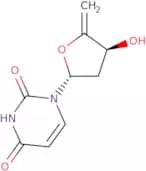
CAS :<p>4’,5’-Didehydro-2’,5’-dideoxyuridine (ddU) is a monophosphate of deoxyribonucleosides. It is an antiviral drug that was originally synthesized in the 1960s to combat viral infections. It has been used as a potential anticancer agent and as an activator for complex DNA synthesis. ddU has also been used in synthesis of phosphoramidites for DNA and RNA analogues.</p>Degré de pureté :Min. 95%Guanosine 5'-O-(2-thiodiphosphate) trilithium salt
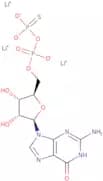
CAS :Guanosine 5'-O-(2-thiodiphosphate) trilithium salt (GTPTS) is a membrane-permeable molecule that hyperpolarizes cells by inhibiting the movement of ions through the cell membrane. GTPTS is activated by extracellular calcium and potassium ions, which are involved in signal transduction pathways. It has been shown to inhibit the release of neurotransmitters, such as acetylcholine, dopamine, serotonin, and norepinephrine. GTPTS also blocks voltage-gated sodium channels, which leads to a reduction in neuronal excitability. The drug has been shown to have analgesic effects in animal models of pain and can be used to treat chronic pain due to nerve damage.Formule :C10H12Li3N5O10P2SDegré de pureté :Min. 85 Area-%Couleur et forme :PowderMasse moléculaire :477.06 g/mol3'-Azido-3'-deoxy-5-fluoro-b-L-cytidine
CAS :3'-Azido-3'-deoxy-5-fluoro-b-L-cytidine is an antiviral drug. It is a modified nucleoside with phosphoramidite and azido groups. This product can be used as an activator for DNA synthesis, in anticancer drug development, as well as in the treatment of HIV. 3'-Azido-3'-deoxy-5-fluoro-b-L-cytidine has been shown to inhibit the growth of human tumor cells by inhibiting protein synthesis and enhancing the production of reactive oxygen species (ROS). It also inhibits the activity of ribonucleotide reductase, which is a critical enzyme for DNA synthesis.Degré de pureté :Min. 95%1-(2'-Deoxy-2'-fluoro-b-D-arabinofuranosyl)-5-ethyluracil
CAS :<p>1-(2'-Deoxy-2'-fluoro-b-D-arabinofuranosyl)-5-ethyluracil is a nucleoside analog with modifications to alter its biological activity. It contains a β-D-arabinofuranose sugar instead of the standard β-D-deoxyribose in natural nucleosides and<br>the fluorine (F) at the 2'-position increases resistance to enzymatic degradation and alters its biological activity. The 5-ethyl modification on the uracil ring enhances its interaction with viral polymerases.</p>Formule :C11H15FN2O5Degré de pureté :Min. 95%Couleur et forme :White PowderMasse moléculaire :274.25 g/molN4-Benzoyl-5'-O-DMT-5-methylcytidine
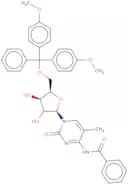
CAS :N4-Benzoyl-5'-O-DMT-5-methylcytidine is a deoxyribonucleoside that has been modified to make it resistant to nucleases. N4-Benzoyl-5'-O-DMT-5-methylcytidine is an antiviral agent, which inhibits the synthesis of viral DNA by inhibiting the activity of viral DNA polymerase. It also acts as an activator for cellular DNA polymerases and phosphoramidites. The drug can be used in the treatment of HIV and other retroviruses, herpes viruses, and certain types of cancer.Formule :C38H37N3O8Degré de pureté :Min. 95%Couleur et forme :White SolidMasse moléculaire :663.73 g/molCytidine 3'-monophosphate lithium salt
CAS :<p>Cytidine 3'-monophosphate lithium salt is a synthetic nucleoside that is used to inhibit the synthesis of DNA in cells. It is an analog of cytidine, with a phosphate group at the 3' position and a lithium cation at the 5' position. Cytidine 3'-monophosphate lithium salt has been shown to be effective in treating cancer and viral infections, although it does not have antiviral activity against influenza A virus.</p>Formule :C9H14N3O8P·xLiDegré de pureté :Min. 95%Masse moléculaire :323.2 g/mol8-(4-Chlorophenylthio)-2'-O-methyladenosine 3',5'-cyclic monophosphate sodium salt
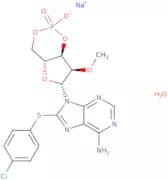
CAS :<p>8-(4-Chlorophenylthio)-2'-O-methyladenosine 3',5'-cyclic monophosphate sodium salt (8-CPT-cAMP) is a cyclic nucleotide that activates adenyl cyclase, which increases intracellular levels of the second messenger cAMP. It also inhibits P2Y receptors and other ion channels. 8-CPT-cAMP has been shown to be effective in activating cells expressing the enzyme camp levels, such as those found in heart muscle cells. This drug is used clinically to lower blood pressure, as it has been shown to activate amp-activated protein kinase and calcium chelator. 8-CPT-cAMP may have clinical applications for the treatment of cancer due to its ability to induce cell cycle arrest and apoptosis.</p>Formule :C17H16ClN5O6PS·NaDegré de pureté :Min. 95%Couleur et forme :PowderMasse moléculaire :507.82 g/molN3-Methyl-2’-O-(2-methoxyethyl)uridine
CAS :<p>N3-Methyl-2’-O-(2-methoxyethyl)uridine is a modified nucleoside that is synthesized from deoxyribonucleosides and ribonucleosides. It has antiviral, anticancer, and antifungal properties. N3-Methyl-2’-O-(2-methoxyethyl)uridine has been shown to be an effective inhibitor of HIV replication in vitro and in vivo. This drug also inhibits the growth of human cancer cells in vitro and has been shown to be active against breast cancer cells. N3-Methyl-2’-O-(2-methoxyethyl)uridine is phosphorylated by cellular enzymes to form its active form, which binds to the viral reverse transcriptase enzyme and prevents DNA synthesis.</p>Formule :C13H20N2O7Degré de pureté :Min. 95%Masse moléculaire :316.31 g/mol2'-Deoxy-5'-O-MMT-uridine
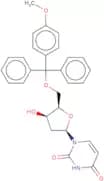
CAS :<p>2'-Deoxy-5'-O-MMT-uridine is a monophosphate nucleoside that is an antiviral and anticancer drug. It is synthesized from the pentaphosphate derivative of cytosine and uracil, and inhibits RNA synthesis by forming a covalent bond with the enzyme ribonucleotide reductase. This product can be used as a starting material for the synthesis of other nucleosides, such as 2'-deoxy-5'-O-methylcytidine. 2'-Deoxy-5'-O-MMT-uridine can also be used to modify DNA by replacing uracil residues in DNA with their corresponding 2'-deoxy counterparts.</p>Formule :C29H28N2O6Degré de pureté :Min. 95%Masse moléculaire :500.56 g/mol3'-O, N4-Diacetyl-2'-deoxycytidine
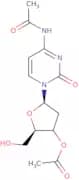
<p>3'-O, N4-Diacetyl-2'-deoxycytidine is a modified nucleoside that has anticancer and antiviral activities. It inhibits the synthesis of DNA by preventing the formation of deoxyribonucleotide triphosphates. 3'-O, N4-Diacetyl-2'-deoxycytidine is a novel nucleoside with high purity and high quality. The CAS number for this product is 61428-37-5. This product can be used as starting material in the synthesis of phosphoramidites or modified oligonucleotides.</p>Formule :C13H17N3O6Degré de pureté :Min. 95%Masse moléculaire :311.29 g/mol