Alpha-bloquants
Les alpha-bloquants sont des composés pharmaceutiques qui agissent en inhibant l'activité des récepteurs alpha-adrénergiques, responsables de la contraction des muscles lisses. Ces médicaments sont couramment utilisés pour traiter des affections telles que l'hypertension artérielle et l'hyperplasie bénigne de la prostate, en provoquant la relaxation et la dilatation des vaisseaux sanguins. Chez CymitQuimica, nous proposons une gamme d'alpha-bloquants adaptés à la recherche en pharmacologie et en santé cardiovasculaire.
658 produits trouvés pour "Alpha-bloquants"
Trier par
Degré de pureté (%)
0
100
|
0
|
50
|
90
|
95
|
100
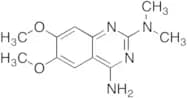
6,7-Dimethoxy-N2,N2-dimethylquinazoline-2,4-diamine
CAS :Produit contrôléFormule :C12H16N4O2Couleur et forme :NeatMasse moléculaire :248.281N-Nitroso Silodosin
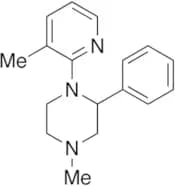
Produit contrôléFormule :C25H31F3N4O5Couleur et forme :NeatMasse moléculaire :524.5334-Methyl-1-(3-methyl-2-pyridinyl)-2-phenylpiperazine
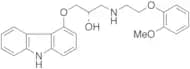
CAS :<p>Applications 4-Methyl-1-(3-methyl-2-pyridinyl)-2-phenylpiperazine is an impurity of Mirtazapine (M365000). Mirtazapine impurity E.<br>References De Boer, T., et al.: Neuropharmacology, 27, 399 (1988), Wynia, G., et al.: J. Chromatography, A 773, 339 (1997),<br></p>Formule :C17H21N3Couleur et forme :NeatMasse moléculaire :267.37(R)-(+)-O-Desmethyl Carvedilol
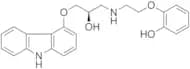
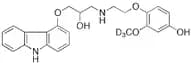
CAS :Produit contrôlé<p>Applications An optically active metabolite of Carvedilol (C184625), a nonselective ß-adrenergic blocker with α-1-blocking activity. [α]D= +18.7 (c= 0.1 methanol)<br> Not a dangerous good if item is equal to or less than 1g/ml and there is less than 100g/ml in the package<br>References Sponer, G., et al.: J. Cardiovasc. Pharmacol., 9, 317 (1987), Fujimaki, M., et al.: Xenobiotica, 20, 1025 (1990), Ruffolo, R., et al.: Eur. J. Clin. Pharmacol., 38, S82 (1990), Clohs, L., et al.: J. Pharm. Biomed. Anal., 31, 407 (2003),<br></p>Formule :C23H24N2O4Couleur et forme :NeatMasse moléculaire :392.454’-Hydroxyphenyl Carvedilol-d3
CAS :Produit contrôlé<p>Applications A labelled metabolite of Carvedilol (C184625). It is used in the treatment of hypertension.<br>References Sponer, G., et al.: J. Cardiovasc. Pharmacol., 9, 317 (1987), Fujimaki, M., ET AL.: Xenobiotica, 20, 1025 (1990), Ruffolo, R., et al.: Eur. J. Clin. Pharmacol., 38, S82 (1990), Schaefer, W.H., et al.: Drug Metab. Dispos., 26, 10, 958 (1998),<br></p>Formule :C242H3H23N2O5Couleur et forme :NeatMasse moléculaire :425.49(S)-(-)-Carvedilol
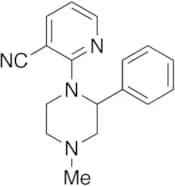
CAS :Produit contrôlé<p>Stability Hygroscopic<br>Applications The optically active isomer of Carvedilol (C184625), a nonselective ß-adrenergic blocker with a1-blocking activity. An antihypertensive used in the treatment of congestive heart failure.<br> Not a dangerous good if item is equal to or less than 1g/ml and there is less than 100g/ml in the package<br>References Hirohashi, M., et al.: Arzneim.-Forsch., 40, 735 (1990),<br></p>Formule :C24H26N2O4Couleur et forme :Off White SolidMasse moléculaire :406.471-(3-Cyano-2-pyridyl)-4-methyl-2-phenylpiperazine
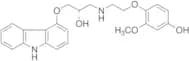
CAS :<p>Applications Used in the preparation of Mirtazapine (M365000) impurities.<br></p>Formule :C17H18N4Couleur et forme :Light Yellow To BrownMasse moléculaire :278.35(S)-(-)-4’-Hydroxyphenyl Carvedilol
CAS :Produit contrôlé<p>Applications An optically active metabolite of Carvedilol (C184625), a nonselective ß-adrenergic blocker with α1-blocking activity.<br> Not a dangerous good if item is equal to or less than 1g/ml and there is less than 100g/ml in the package<br>References Sponer, G., et al.: J. Cardiovasc. Pharmacol., 9, 317 (1987), Fujimaki, M., ET AL.: Xenobiotica, 20, 1025 (1990), Ruffolo, R., et al.: Eur. J. Clin. Pharmacol., 38, S82 (1990), Schaefer, W.H., et al.: Drug Metab. Dispos., 26, 10, 958 (1998),<br></p>Formule :C24H26N2O5Couleur et forme :NeatMasse moléculaire :422.47Tamsulosin Sulfonamide Chloroacetyl
Produit contrôléFormule :C14H18Cl2N2O5SCouleur et forme :NeatMasse moléculaire :397.2741-[3-(Dimethylamino)propyl]-3-ethylurea
CAS :Produit contrôlé<p>Applications 1-[3-(Dimethylamino)propyl]-3-ethylurea is a reagent used in the preparation of water soluble, multifunctional antibody-porphyrin gold nanoparticles.<br>References Penon, O. et al.: J. Colloid. Inter. Sci., 496, 100 (2017);<br></p>Formule :C8H19N3OCouleur et forme :NeatMasse moléculaire :173.26Desmethyl 2N-Nitroso Mirtazapine-d6 (major)
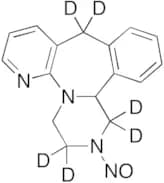
Produit contrôléFormule :C16D6H10N4OCouleur et forme :NeatCarvedilol b-D-Glucuronide (mixture of diasteromers)
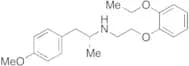
CAS :Produit contrôlé<p>Applications A metabolite of Carvedilol (C184625).<br>References McGurk, K., et al.: Biochem. Pharmacol., 55, 1005 (1998), Tukey, R., et al.: Annu. Rev. Pharmacol. Toxicol., 40, 581 (2000), Bowalgaha, K., et al.: Br. J. Clin. Pharmacol., 52, 605 (2001), Richardson, T., et al.: Drug Metab. Dispos., 34, 351 (2006),<br></p>Formule :C30H34N2O10Couleur et forme :NeatMasse moléculaire :582.60(R)-De(aminosulfonyl) Tamsulosin
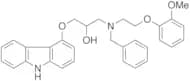
CAS :Produit contrôléFormule :C20H27NO3Couleur et forme :NeatMasse moléculaire :329.43N-Benzyl Carvedilol
CAS :Produit contrôlé<p>Impurity Carvedilol EP Impurity C; Carvedilol Impurity C; Carvedilol USP C<br>Applications N-Benzyl Carvedilol (Carvedilol EP Impurity C) is an impurity of Carvedilol (C184625) and a degradation product in Carvedilol tablets.<br>References Karle, C., et al.: Cardiovasc. Res., 49, 361 (2001), Chen, J., et al.: Acta Cardiol. Sin., 19, 93 (2003), Xiang, T., et al.: Pharm. Res., 22, 1205 (2005),<br></p>Formule :C31H32N2O4Couleur et forme :NeatMasse moléculaire :496.60Trazodone hydrochloride impurity H
<p>Trazodone hydrochloride impurity H is an impurity of the drug product Trazodone hydrochloride. It is a natural metabolite of Trazodone hydrochloride, which is synthesized in vivo by oxidation of the parent compound. Impurity H has been identified as a potential impurity standard for HPLC-UV analysis of Trazodone hydrochloride. The purity of this compound is 98.3% and it is available on a custom synthesis basis.</p>Formule :C23H30Cl2N4·HClDegré de pureté :Min. 95%Masse moléculaire :469.88 g/molTrazodone hydrochloride impurity C
<p>Trazodone is a psychotropic agent that belongs to the group of antidepressants. Trazodone hydrochloride impurity C is a metabolite of trazodone and can be used as an impurity standard for the drug product in pharmacopoeia. Trazodone hydrochloride impurity C has been found in urine, blood, and saliva after administration of trazodone. It is also found in the plasma of pregnant women who are taking trazodone to treat depression or anxiety during pregnancy. <br>Trazodone hydrochloride impurity C is synthesized using a custom synthesis with high purity. It has been shown to have a niche market as an analytical reference material for HPLC standards.</p>Formule :C19H23Cl2N5ODegré de pureté :Min. 95%Masse moléculaire :408.32 g/molTrazodone Hydrochloride Impurity G
<p>Trazodone Hydrochloride Impurity G is a synthetic compound that is an impurity found in Trazodone Hydrochloride, CAS No. 77893-17-6. This compound has the following physical properties: MW = 284.27, mp = 227-229°C, [α] D = -33.5° (c 1.0 in water), and UV max (λ max ) = 228 nm. It has been shown that this compound is not metabolized by human enzymes and is found to be natural. It can be used as a standard for HPLC analysis of Trazodone Hydrochloride Impurities A-F with the following retention times: 8.7 min for Impurity A, 9.2 min for Impurity B, 9.9 min for Impurity C, 10.4 min for Impurity D, 11.1 min for Impurity E, and 12.3 min for Impurity F.BR>BR</p>Formule :C17H27ClN2O·HClDegré de pureté :Min. 95%Masse moléculaire :347.32 g/mol[4-(4-Amino-6,7-dimethoxy-2-quinazolinyl)-1-piperazinyl]-2-furanyl-methanone
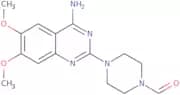
CAS :<p>Leflunomide is a drug that belongs to the class of pyridones. It is used in the treatment of rheumatoid arthritis, juvenile idiopathic arthritis, psoriatic arthritis, and ankylosing spondylitis. Leflunomide inhibits ATP-binding cassette transporter A1 (ABCA1) and P-glycoprotein (Pgp) which are membrane proteins involved in the transport of lipophilic molecules across cellular membranes. Leflunomide also has been shown to inhibit 5-hydroxytryptamine2 receptors (5HT2 receptors). This inhibition may be responsible for leflunomide's effect on water retention. Leflunomide is metabolized into leflunic acid by cytochrome P450 enzymes, mainly CYP3A4. The activity of leflunic acid is similar to that of leflunomide.</p>Formule :C19H21N5O4Degré de pureté :Min. 95%Masse moléculaire :383.4 g/mol4-(4-Amino-6,7-dimethoxy-2-quinazolinyl)-1-piperazinecarboxaldehyde
CAS :<p>4-(4-Amino-6,7-dimethoxy-2-quinazolinyl)-1-piperazinecarboxaldehyde is a synthetic chemical compound that has not been approved by the FDA. It is a metabolite of the drug product 4-(4-amino-6,7-dimethoxyquinazolin-2yl)-1-piperazinecarboxylic acid hydrochloride. The CAS number for this chemical is 102714-74-9. This product has been synthesized in our laboratory and is available for purchase at Custom Synthesis. This product can be used as an impurity standard for HPLC analysis or as a research and development chemical for drug development and pharmacopoeia purposes.</p>Formule :C15H19N5O3Degré de pureté :Min. 95%Masse moléculaire :317.34 g/mol



![1-[3-(Dimethylamino)propyl]-3-ethylurea](/_next/image/?url=https%3A%2Fstatic.cymitquimica.com%2Fproducts%2FTR%2Fthumb-webp%2FD492553.webp&w=3840&q=75)




![[4-(4-Amino-6,7-dimethoxy-2-quinazolinyl)-1-piperazinyl]-2-furanyl-methanone](/_next/image/?url=https%3A%2Fstatic.cymitquimica.com%2Fproducts%2F3D%2Fthumb-webp%2FIA63850.webp&w=3840&q=75)