Autres
6295 produits trouvés pour "Autres"
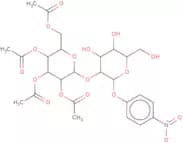
4-Nitrophenyl 2-O-(2,3,4,6-tetra-O-acetyl-a-D-mannopyranosyl)-a-D-mannopyranoside
4-Nitrophenyl 2-O-(2,3,4,6-tetra-O-acetyl-a-D-mannopyranosyl)-a-D-mannopyranoside is a fluorogenic substrate that is used as a diagnostic tool and can be used to detect the presence of β--glucosidase in the gut. It is also used as a conjugate with enzymes such as peroxidase or alkaline phosphatase for use in enzyme catalyzed reactions. The product has been shown to be active against a variety of bacteria, including Staphylococcus aureus and Escherichia coli. This product has been shown to produce chemiluminescence when incubated with horseradish peroxidase and hydrogen peroxide. This product is light sensitive and should be stored at room temperature away from direct sunlight.
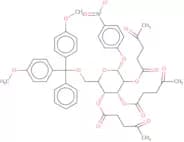
Degré de pureté :Min. 95%Masse moléculaire :631.54 g/mol4-Nitrophenyl 6-O-DMT-2,3,4-tri-O-levulinoyl-a-D-mannopyranoside
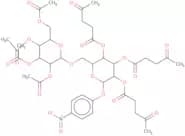
4-Nitrophenyl 6-O-DMT-2,3,4-tri-O-levulinoyl-a-D-mannopyranoside is a fluorogenic substrate that can be used for the detection of DMT (dihydroxyacetone) in food products. It has been shown to be an excellent alternative to the more commonly used 4,5′,6,7,8,-Tetrabromoindoxyl 3′,5′,6′,-tetraacetic acid (TBA). This product is also used as a chromogenic substrate for the determination of phenols in environmental testing and as a ligand conjugate for immunohistochemistry staining. The purity of this product is guaranteed and it has been tested extensively.
Degré de pureté :Min. 95%Masse moléculaire :897.92 g/mol2-Nitrophenyl 2-acetamido-2-deoxy-b-D-galactopyranoside
CAS :2-Nitrophenyl 2-acetamido-2-deoxy-b-D-galactopyranoside is a carboxymethyl derivative of the natural substrate of β-galactosidase, which is used as a substrate for the production of recombinant proteins in the corynebacterium glutamicum. The enzyme β-galactosidase hydrolyzes this substrate to produce an acid molecule and a sugar molecule. This product can be used in biotechnological processes for the production of recombinant proteins or other bioactive molecules. It can also be used in the isolation of nucleic acid from bacteria or fungi, or to study bacterial membrane transport systems. 2NPGAG can be expressed as a recombinant protein with expression vectors such as pET21a and pET24a. It has been shown that this product inhibits transport through membranes by binding to cellulose, which may be useful for studies on cellulose biosynthesis
Degré de pureté :Min. 95%Masse moléculaire :342.3 g/molS-(4-Nitrophenyl)mercapturic acid
CAS :S-(4-Nitrophenyl)mercapturic acid (S-NPMA) is the major metabolite of 4-nitrophenol, which is a precursor to dyes and pharmaceuticals. S-NPMA has been detected in urine samples from humans, rats, and mice. The main metabolic pathway for S-NPMA is an oxidative conversion by cytochrome P450 enzymes. S-NPMA has been found to be a useful biomarker for the presence of polycyclic aromatic hydrocarbons in wastewater and human urine. The levels of this compound have also been shown to increase with age in humans.
Degré de pureté :Min. 95%Masse moléculaire :284.29 g/molAldol® 515 N-glutaryl-L-phenylalanine amide potassium salt, Biosynth Patent: EP 2427431 and US 8940909
CAS :Aldol® 515 N-glutaryl-L-phenylalanine amide is a chromogenic and fluorogenic enzyme substrate used for detection of L-glutamate-phenylalanine (GluPhe)-specific peptidase activity. The colorless enzyme substrate is cleaved the GluPhe-specific peptidase, yielding development of orange-red coloration. In addition, red fluorescence is generated when Aldol® 355 fluorescence enhancer or a suitable matrix is present. Aldol® 515 N-glutaryl-L-phenylalanine amide can be used in enzyme assays and live bacterial cultures. Aldol® 515 N-glutaryl-L-phenylalanine amide is suitable for use in liquid and solid media, under aerobic as well as anaerobic conditions.
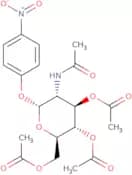
Formule :C37H35KN4O5Degré de pureté :Min. 95.0 Area-%Masse moléculaire :654.80 g/mol4-Nitrophenyl 2-acetamido-3,4,6-tri-O-acetyl-2-deoxy-a-D-glucopyranoside
CAS :4-Nitrophenyl 2-acetamido-3,4,6-tri-O-acetyl-2-deoxy-a-D-glucopyranoside is a synthetic compound with the ability to inhibit the enzyme glutamicum. It is a radionuclide that can be used as a focusing agent for gamma cameras and has been shown to be effective against corynebacterium glutamicum and other organisms. 4NP2AG was synthesized by reacting nitrophenol with acetamide in the presence of an acid catalyst and hydrogenating the product. The synthesis employs precession chemistry, which involves rotating a molecule around its axis at high speed to increase its concentration in one area. This treatment leads to a higher yield of desired product. 4NP2AG contains two acetamido groups on the glucopyranoside moiety, which are esterified with nitrophenol and acetic acid respectively. These moieties are
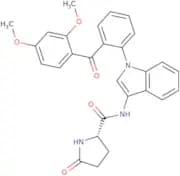
Degré de pureté :Min. 95%Masse moléculaire :468.41 g/molAldol® 470 L-pyroglutamic acid amide, Biosynth Patent: EP 2427431 and US 8940909
CAS :Produit contrôléAldol® 470 L-pyroglutamic acid amide is a chromogenic and fluorogenic enzyme substrate used for detection of pyrrolidonyl peptidase (PYRase) activity. The colorless enzyme substrate is cleaved by PYRase-producing bacteria grown in liquid or solid media, yielding orange color. In addition, green fluorescence is generated when a suitable matrix is present, such as, the surface of cellulose acetate filters, polypropylene tubes or microplates, and polyethylene vials. Aldol® 470 L-pyroglutamic acid amide is suitable for use under aerobic and anaerobic conditions.
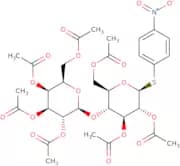
Formule :C28H25N3O5Degré de pureté :Min. 95.0 Area-%Masse moléculaire :483.52 g/mol4-Nitrophenyl 4-O-(2,3,4,6-tetra-O-acetyl-b-D-galactopyranosyl)-2,3,6-tri-O-acetyl-b-D-thioglucopyranoside
CAS :4-Nitrophenyl 4-O-(2,3,4,6-tetra-O-acetyl-b-D-galactopyranosyl)-2,3,6-tri-O-acetyl-b-D-thioglucopyranoside is a superior chromogenic substrate for the detection of enzymes. Specifically designed for optimal performance, it provides exquisite sensitivity and definitive results in enzyme assays. Its exceptional properties make it a top choice among researchers and professionals in biochemistry, enabling accurate analysis and quantification of enzymatic activities.Degré de pureté :Min. 95%Masse moléculaire :773.71 g/mol2-Nitrophenyl 2,3,4-tri-O-acetyl-b-D-glucuronide methyl ester
CAS :2-Nitrophenyl-2,3,4-tri-O-acetyl-b-D-glucuronide methyl ester is a tri-O-acetylated glucuronide substrate commonly used in chromogenic assays to detect the activity of beta-glucuronidase. Upon hydrolysis by the enzyme, the substrate releases 2-nitrophenol, which can be spectrophotometrically. The substrate is widely used in diagnostic tests to assess bacterial and fungal infections, as well as in drug metabolism studies.
Degré de pureté :Min. 95%Masse moléculaire :455.37 g/mol4-Nitrophenyl 3,4,6-tri-O-(a-D-mannopyranosyl)-b-D-mannopyranoside
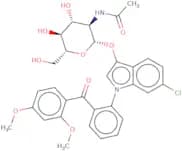
CAS :This compound inhibits the enzyme protein kinase. It has been shown to inhibit the activity of a number of protein kinases including those that are involved in cell proliferation, differentiation and apoptosis. This drug is also known to be a potent inhibitor of human c-Jun N-terminal kinase (JNK) and other types of kinases such as cyclin-dependent protein kinases. The inhibition of these enzymes results in the prevention of tumorigenesis, inflammation and immunological responses.Degré de pureté :Min. 95%Masse moléculaire :787.67 g/molAldol® 467 N-acetyl-beta-D-glucosaminide, Biosynth Patent: EP 2427431 and US 8940909
CAS :Aldol® 467 N-acetyl-beta-D-glucosaminide is a chromogenic and fluorogenic enzyme substrate used for detection of beta-N-acetyl-glucosaminidase activity. The colorless enzyme substrate is cleaved in the presence of beta-N-acetyl-glucosaminidase yielding development of a yellow product. In addition, green fluorescence is generated when a suitable matrix or Aldol® 355 fluorescence enhancer is present. Aldol® 467 N-acetyl-beta-D-glucosaminide amide can be used in enzymatic assays or in live bacterial cultures. Aldol® 467 N-acetyl-beta-D-glucosaminide is suitable for use in liquid and solid media, under aerobic as well as anaerobic conditions.
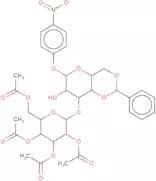
Formule :C31H31ClN2O9Degré de pureté :Min. 95%Couleur et forme :PowderMasse moléculaire :611.04 g/mol4-Nitrophenyl 4,6-O-benzylidene-3-O-(2,3,4,6-tetra-O-acetyl-b-D-glucopyranosyl)-b-D-glucopyranoside
4-Nitrophenyl 4,6-O-benzylidene-3-O-(2,3,4,6-tetra-O-acetyl-b-D-glucopyranosyl)-b-D-glucopyranoside is a high purity fluorescent reagent that can be used as a substrate for many enzymes. It is also used in environmental testing and to detect the presence of nitrophenols in food. This product has CAS number 545414.
Degré de pureté :Min. 95%Masse moléculaire :719.64 g/mol5-Bromo-3-indoxyl-β-D-galactopyranoside-6-sulfate sodium salt
CAS :5-Bromo-3-indoxyl-beta-D-galactopyranoside (5BIG) is a fluorogenic substrate that has been shown to be an effective enzyme substrate. It is used in the chemiluminescence, bioluminescence, and fluorescence detection of enzymes. 5BIG is also a chromogenic substrate for nucleic acid staining and can be used in food testing as well as diagnostics. 5BIG is highly pure and high quality with a CAS number of 1301706-59-1.
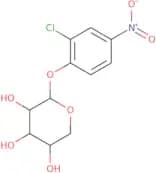
Formule :C14H15BrNNaO9SDegré de pureté :Min. 98 Area-%Masse moléculaire :476.24 g/mol2-Chloro-4-nitrophenyl β-D-xylopyranoside
CAS :2-Chloro-4-nitrophenyl β-D-xylopyranoside is a fluorogenic substrate that can be used for the detection of β-glucuronidase activity in food testing, environmental testing, and diagnostics. It has been shown to be an effective substrate for detecting β-glucuronidase activity with a high degree of sensitivity and specificity. 2CNPX can also be used as a chromogenic substrate for the detection of β-glucuronidase activity in food testing and environmental testing. The conjugate form of this substrate is useful for immunochemical assays, such as enzyme linked immunosorbent assay (ELISA) or radioimmunoassay (RIA). This product is also used as a ligand in fluorescence resonance energy transfer (FRET) assays.
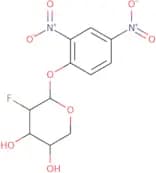
2CNPX can be used to detect β-glucuronidase activity by chemiluminescenceFormule :C11H12ClNO7Degré de pureté :Min. 95%Masse moléculaire :305.67 g/mol2,4-Dinitrophenyl 2-deoxy-2-fluoro-b-D-xylopyranoside
CAS :2,4-Dinitrophenyl 2-deoxy-2-fluoro-b-D-xylopyranoside (DNFX) is a transglycosylation reagent that can be used to inactivate enzymes that catalyze the synthesis of xylosides. DNFX undergoes a covalent reaction with these enzymes and inhibits them by binding to the active site. DNFX catalyses the reaction between xylose and nucleophiles such as hydroxide ions, thiols, or amines. DNFX also has a catalytic effect on electrospray ionization and can be used for the detection of nucleophile activity.Degré de pureté :Min. 95%Couleur et forme :White PowderMasse moléculaire :318.21 g/mol4-Nitrophenyl 4,6-O-isopropylidene-a-D-galactopyranoside
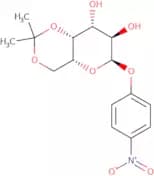
CAS :4-Nitrophenyl 4,6-O-isopropylidene-a-D-galactopyranoside is a fluorogenic substrate that can be used to measure the activity of beta-galactosidase. This product is high purity, high quality and has a CAS number of 29781-31-5. It is an enzyme substrate with chromogenic and diagnostic properties that are used for conjugation to other molecules, as well as for culture media, chemiluminescence and food testing. 4NP4IPG is also used in bioluminescence assays to detect the presence of beta-galactosidase.
Degré de pureté :Min. 95%Masse moléculaire :341.31 g/molNaphthol AS-BI b-D-glucopyranoside
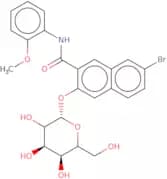
CAS :Naphthol AS-BI b-D-glucopyranoside is a substrate for enzymes such as β-glucosidase and β-glycosidase. It has been used in diagnostic tests to detect the presence of amylase, lipase, α-amylase, or maltase in urine and feces. In biochemistry, naphthol AS-BI b-D-glucopyranoside is often used as a chromogenic or fluorogenic substrate for the detection of β-galactosidases and other glycosidases. This product has also been used in the detection of bacteria in culture media. Naphthol AS-BI b-D-glucopyranoside is a high quality reagent that can be used for chemiluminescence experiments, food testing, and environmental testing.
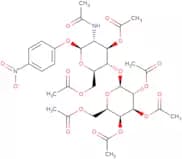
Degré de pureté :Min. 95%Masse moléculaire :534.35 g/mol4-Nitrophenyl 2-acetamido-4-O-(2-acetamido-3,4,6-tri-O-acetyl-2-deoxy-b-D-glucopyranosyl)-3,6-di-O-acetyl-2-deoxy-b-D-glucopyranosid e
CAS :4-Nitrophenyl 2-acetamido-4-O-(2-acetamido-3,4,6-tri-O-acetyl-2-deoxy-b-D-glucopyranosyl)-3,6-di-O -acetyl2 deoxy b D glucopyranosid e is a chemiluminescence substrate that reacts with hydrogen peroxide to produce light. It is used in diagnostics for the detection of bacterial and fungal cultures. The reaction between 4NPAA and hydrogen peroxide generates light at 540 nm. This product has been tested for purity and quality using various methods including culture media, environmental testing, bioluminescence, staining, fluorogenic substrate, enzyme substrate, food testing and conjugate.Degré de pureté :Min. 95%Masse moléculaire :755.68 g/mol4-Nitrophenyl lacto-N-tetraoside
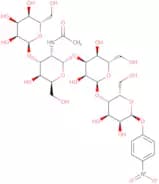
CAS :4-Nitrophenyl lacto-N-tetraoside is a chromogenic substrate for enzymes that cleave lactose-specific linkages, such as beta-galactosidases. Upon enzyme cleavage, the pNP group is released, resulting in a yellow-colored solution that can be spectrophotometrically quantified at 405 nm. This substrate is commonly used in detecting lactose hydrolysis activity, such as in dairy industry for production optimization studies, or in microbiology for bacterial lactose fermentation assays. Its tetrasaccharide structure resembles that of lactose and makes it a specific substrate for lactose-utilizing enzymes. The properties of 4-nitrophenyl lacto-N-tetraoside make it a useful tool in enzyme kinetics studies and screening of new lactose-utilizing microorganisms.
Degré de pureté :Min. 95%Masse moléculaire :828.72 g/mol4-Nitrophenyl 2-acetamido-3,6-di-O-acetyl-4-O-(2,3,4,6-tetra-O-acetyl-b-D-galactopyranosyl)-2-deoxy-b-D-glucopyranoside
CAS :4-Nitrophenyl 2-acetamido-3,6-di-O-acetyl-4-O-(2,3,4,6-tetra-O-acetyl-b-D-galactopyranosyl)-2-deoxy-b-D-glucopyranoside is modified acetylated chromogenic substrate designed for the detection and quantification of enzyme activity. This highly specific substrate is cleaved by enzymes, releasing a yellow 4-nitrophenol product that can be easily measured spectrophotometrically. This allows for accurate and sensitive analysis of enzyme kinetics, inhibition studies, and substrate specificity determination.
Degré de pureté :Min. 95%Masse moléculaire :756.66 g/molAldol® 455 beta-D-glucopyranoside - Biosynth Patent: EP 2427431 and US 8940909
Aldol® 455 is a substrate for the enzyme beta-galactosidase. It is used in food testing, staining, and environmental testing. Aldol® 455 has been shown to be a good substrate for fluorogenic and chromogenic substrates. It can be conjugated with an antibody or other ligand for use in immunoassays. Aldol® 455 is of high purity and high quality, making it suitable for use in diagnostics and as an enzyme substrate. This product can also be used as a culture media additive.
Degré de pureté :Min. 95%5-Bromo-4-chloro-3-indoxyl-a-D-xylopyranoside
5-Bromo-4-chloro-3-indoxyl-a-D-xylopyranoside is a fluorogenic substrate that can be used in food testing and environmental testing. This product is a conjugate of the xylosidase enzyme (EC 3.2.1.37) with 5-bromo-4-chloroindoxyl, which has been shown to have a high affinity for the enzyme's active site and enzymatic activity. The purity of this product is > 95% and the CAS number is 68618-41-5.
Degré de pureté :Min. 95%4-Chloro-3-indoxyl-1,3-diacetate
CAS :4-Chloro-3-indoxyl-1,3-diacetate is a chromogenic substrate used in the identification of bile acids. It reacts with 4-chlorophenol to form a red dye. This compound is also used as a ligand for metal ions.
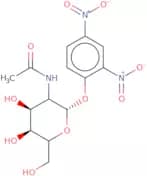
Formule :C12H10ClNO3Masse moléculaire :251.67 g/mol2,4-Dinitrophenyl 2-acetamido-2-deoxy-b-D-glucopyranoside
2,4-Dinitrophenyl 2-acetamido-2-deoxy-b-D-glucopyranoside is a fluorogenic substrate for use in diagnostic testing. It reacts with the enzyme β -galactosidase to produce a blue color. This product is used as an indicator of β -galactosidase activity in bacterial cultures or as an indicator of the presence of this enzyme in food or other materials. It can be used to detect and measure the level of β -galactosidase in a sample. The reaction can be monitored by measuring light emission at 450 nm. 2,4-Dinitrophenyl 2 acetamido 2 deoxy b D glucopyranoside has a CAS number of 47868-87-0 and is available in high purity (>97%).Degré de pureté :Min. 95%Masse moléculaire :387.31 g/molMethyl 4-nitrophenyl hexyl phosphonate
CAS :Methyl 4-nitrophenyl hexyl phosphonate is a lipase suicide inhibitor that is a chromogenic substrate for lipases which upon enzymatic action, binds irreversibly to the lipase and inactivates it. The substrate can be used for the determination of active sites in lipases.
Degré de pureté :Min. 95%Masse moléculaire :301.284-Nitrophenyl 2,6-di-O-benzoyl-a-D-galactopyranoside
CAS :4-Nitrophenyl 2,6-di-O-benzoyl-a-D-galactopyranoside is a specialized chromogenic substrate for the accurate evaluation of α-galactosidase activity. Upon enzymatic hydrolysis, it generates the chromophore 4-nitrophenol, which can be conveniently quantified by absorbance spectroscopy. The substrate features a unique benzoylated galactopyranoside moiety for enhanced selectivity and compound stability. This high-quality substrate is perfect for various research, analytical, and diagnostic applications involving α-galactosidase detection or quantification.
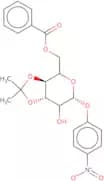
Degré de pureté :Min. 95%Masse moléculaire :509.46 g/mol4-Nitrophenyl 6-O-benzoyl-3,4-O-isopropylidene-a-D-galactopyranoside
CAS :4-Nitrophenyl 6-O-benzoyl-3,4-O-isopropylidene-a-D-galactopyranoside (4NBP) is a fluorogenic substrate for β-galactosidase. It has been used as an enzyme substrate in the detection of β-galactosidase activity. 4NBP is also used to detect the presence of galactose in culture media and as a chromogenic substrate in diagnostics.
Degré de pureté :Min. 95%Masse moléculaire :445.42 g/mol4-Nitrophenyl b-D-galactopyranoside hydrate
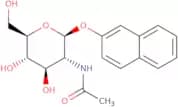
CAS :4-Nitrophenyl b-D-galactopyranoside hydrate is a water-soluble pNP-based enzyme substrate ideal for quantifying b-galactosidase activity in a variety of sample types. This chromogenic substrate features a unique hydrate composition, which allows for enhanced solubility and stability when compared to standard pNP-galactosides. With its high sensitivity and robust performance, this substrate is widely used in biotechnology, biochemistry, and molecular biology fields, including the investigation of enzyme kinetics, characterization of glycoside hydrolase specificity, and assessment of gene expression levels.Degré de pureté :Min. 95%Masse moléculaire :319.27 g/mol2-Naphthyl 2-acetamido-2-deoxy-β-D-glucopyranoside
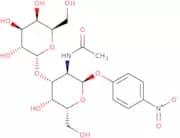
CAS :2-Naphthyl 2-acetamido-2-deoxy-b-D-glucopyranoside is a chromogenic substrate used for staining and diagnostic purposes. It is a ligand that has been shown to bind to certain enzymes and can be used for the detection of those enzymes. This product is also a chemiluminescence substrate, which can be used in bioluminescent reactions. This product has been shown to have high purity and quality, as well as being a conjugate.Formule :C18H21NO6Degré de pureté :Min. 95%Masse moléculaire :347.36 g/mol4-Nitrophenyl 2-acetamido-2-deoxy-4-O-[2-O-(a-L-fucopyranosyl)-b-D-galactopyranosyl]-b-D-glucopyranoside
CAS :The 4-Nitrophenyl 2-acetamido-2-deoxy-4-O-[2-O-(a-L-fucopyranosyl)-b-D-galactopyranosyl]-b-D-glucopyranoside is a specialized pNP enzyme substrate designed to study fucosyl-galactose-dependent enzymes. This chromogenic substrate is valuable for researchers investigating glycosyltransferase activity, structure-function relationships of glycan-binding proteins, and regulation of cellular signaling pathways involving fucose modifications. Its high specificity and sensitivity ensure accurate measurements in diverse experimental setups, and its chromogenic detection system facilitates rapid and reliable analysis.Degré de pureté :Min. 95%Masse moléculaire :650.58 g/mol5-Bromo-4-chloro-3-indolyl b-D-galactopyranoside-6-sulphate
CAS :5-Bromo-4-chloro-3-indolyl b-D-galactopyranoside 6-sulphate (BCIGS) is a chemiluminescent substrate that reacts with an enzyme to produce light. It has been used for the detection of various substances, including 5'-nucleotidase, 5'-adenosine monophosphate phosphohydrolases, and alkaline phosphatase. BCIGS can be used as a chromogenic substrate in the fluorometric assay of glucose oxidase and galactose oxidase. BCIGS is also used as a ligand in immunological reactions such as immunodiffusion, immunoelectrophoresis, and radioimmunoassay.Formule :C14H15BrClNO9SDegré de pureté :Min. 95%Masse moléculaire :488.69 g/mol5-Bromo-4-chloro-3-indoxyl-α-D-xylopyranoside
CAS :5-Bromo-4-chloro-3-indoxyl-alpha-D-xylopyranoside is an enzyme substrate that can be used in the detection of β-galactosidase activity. This product has been shown to be a good ligand for various xanthine oxidoreductases, including xanthine dehydrogenase and uricase. 5BBIX is also a chromogenic substrate for horseradish peroxidase and can be used to detect hydrogen peroxide in the presence of osmium tetroxide or potassium permanganate. 5BBIX has been extensively tested for use in diagnostics, food, and environmental testing.
Formule :C13H13BrClNO5Degré de pureté :Min. 98.0 Area-%Masse moléculaire :378.61 g/mol[2-Methoxy-4-(2-nitrovinyl)phenyl] b-D-glucopyranoside
CAS :[2-Methoxy-4-(2-nitrovinyl)phenyl] beta-D-galactopyranoside is a chromogenic substrate (505 nm) for β-glucosidase.
Degré de pureté :Min. 95%Masse moléculaire :357.31 g/mol4-Nitrophenyl 6-O-(2,3,4,6-tetra-O-acetyl-a-D-mannopyranosyl)-2,3,4-tri-O-levulinoyl-a-D-mannopyranoside
4-Nitrophenyl 6-O-(2,3,4,6-tetra-O-acetyl-a-D-mannopyranosyl)-2,3,4-tri-O-levulinoyl-a-D-mannopyranoside is a fluorogenic substrate that is used in assays for detecting nitrates. This compound reacts with 4-(methylnitrosamino)pyridine (MNAP) to produce an intense light that can be detected by a luminometer. It has been shown to react with the enzyme nitrate reductase and is used in food testing and environmental testing as a means of measuring the amount of nitrates present.Degré de pureté :Min. 95%Masse moléculaire :925.84 g/mol2-Nitrophenyl laurate
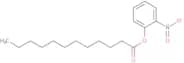
CAS :2-Nitrophenyl laurate is a fatty acid that is not able to be degraded and has a high affinity for magnetic particles. It can be used in the immobilization of bacteria, such as Stenotrophomonas maltophilia, which are resistant to many antibiotics. 2-Nitrophenyl laurate also inhibits the enzyme lipolytic enzymes, which are responsible for the degradation of phospholipids in the cell membrane. This inhibition may lead to an increase in bacterial susceptibility to antibiotics. 2-Nitrophenyl laurate is a synthetic substrate that can be used to study the regulation of lipolytic enzymes by regulatory proteins.
Degré de pureté :Min. 95%Couleur et forme :Pale yellow to yellow solid.Masse moléculaire :321.41 g/mol2-Nitrophenyl 2,3-di-O-acetyl-4-O-triethylsilyl-b-D-xylopyranoside
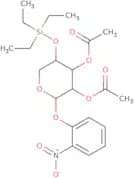
CAS :2-Nitrophenyl 2,3-di-O-acetyl-4-O-triethylsilyl-b-D-xylopyranoside is a chromogenic substrate for enzmatic assays to measure xylosidase activity. It is a derivative of xylose that can be hydrolyzed by xylosidase to release the yellow-colored 2-nitrophenyl group, which can be detected spectrophotometrically. By modifying the xylose molecule with acetyl and triethylsilyl groups, the enzyme substrate becomes more stable and resistant to degradation. This substrate is commonly used in the study of plant biomass degradation and in the detection of xylosidase activity in microorganisms.
Degré de pureté :Min. 95%Masse moléculaire :469.56 g/mol4-Nitrophenyl trimethylacetate
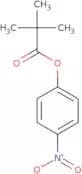
CAS :4-Nitrophenyl trimethylacetate is a cytosolic proteinase inhibitor. It binds to the active site of trypsin and other enzymes that hydrolyze peptide bonds, thereby inhibiting the activity of these enzymes. 4-Nitrophenyl trimethylacetate has been shown to inhibit soybean trypsin, which has led to its use as a model system for studying enzyme inhibition. The binding site on 4-Nitrophenyl trimethylacetate is competitive with respect to substrate binding but not with respect to the enzyme's catalytic triad. This inhibitor also has a high buffer capacity and can be used in low pH systems.
Degré de pureté :Min. 95%Masse moléculaire :223.23 g/mol4-Nitrophenyl 2-acetamido-2-deoxy-3-O-(a-D-galactopyranosyl)-a-D-galactopyranoside
CAS :4-Nitrophenyl 2-acetamido-2-deoxy-3-O-(a-D-galactopyranosyl)-a-D-galactopyranoside is a fluorescent substrate that can be used in chemiluminescent assays. It is a high purity, high quality chemical that has been tested for culture media, environmental testing and bioluminescence. This product is an excellent choice for use in diagnostics, chromogenic substrates, enzyme substrates and food testing.
Degré de pureté :Min. 95%Masse moléculaire :504.44 g/mol4-Nitrophenyl 6-O-DMT-a-D-mannopyranoside
4-nitrophenyl 6-O-DMT-a-D-mannopyranoside is a fluorescent substrate for the enzyme beta-glucosidase. It reacts with an acyl group at the C2 position of the glycoside moiety, producing an aldehyde group at the C1 position and a hydroxymethylene group at the C4 position. This reaction is catalyzed by beta-glucosidase, which cleaves the glycosidic linkage in sucrose and other disaccharides. The product can be detected using luminescence methods, such as chemiluminescence or bioluminescence.
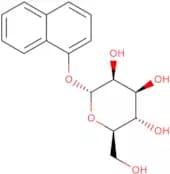
4-nitrophenyl 6-O-DMT-a-D-mannopyranoside is used to detect β glucosidase activity in bacteria. This substrate has been shown to be sensitive and specific for β glucosidase activity when combined with fluorescence detection technologyDegré de pureté :Min. 95%Masse moléculaire :603.62 g/mol1-Naphthyl-α-D-mannopyranoside
CAS :1-Naphthyl-alpha-D-mannopyranoside is a chromogenic substrate. It is used in diagnostics and as a reagent for enzymatic analysis of alpha-mannosidase activity in culture media, food testing, and environmental testing.
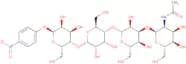
Formule :C16H18O6Degré de pureté :Min. 95%Couleur et forme :PowderMasse moléculaire :306.31 g/mol4-Nitrophenyl a-D-maltotetraoside
CAS :4-Nitrophenyl alpha-D-maltotetraoside is a chromogenic substrate used for the detection of alpha-glucosidase and alpha-amylase activity. The four glucose units in the molecule are hydrolyzed by the enzyme, releasing 4-nitrophenol and allowing for easy colorimetric measurement of enzymatic activity
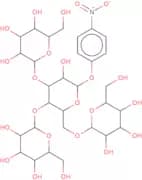
Degré de pureté :Min. 95%Masse moléculaire :787.67 g/mol4-Nitrophenyl b-globo-N-tetraoside
CAS :4-Nitrophenyl beta-galactoside (pNP-Gal) is a chromogenic substrate commonly used in enzymatic assays to detect and quantify the presence of beta-galactosidase. It is hydrolyzed by the enzyme to release 4-nitrophenol, which produces a yellow color that can be measured spectrophotometrically. Similarly, 4-Nitrophenyl beta-glucoside (pNP-Glc) can be used to assay beta-glucosidase activity. 4-Nitrophenyl beta-globotrioside (pNP-Glo) is a similar compound that has been designed as a substrate for glycosidases that cleave terminal beta-galactosyl-(1->3)-N-acetylgalactosamine residues. In these assays, the release of 4-nitrophenol can be measured to determine the activity of the enzyme under study. The use of chromogenic substrates like pNP-Glo allows for the rapid and reliable detection of glycosidase activity in a variety of biological samples.
Degré de pureté :Min. 95%Couleur et forme :PowderMasse moléculaire :828.72 g/molNaphthol AS-CL phosphate
CAS :Modified naphtol AS substrate used in histochemical and cytochemical staining
Degré de pureté :Min. 95%Masse moléculaire :407.74 g/mol4-Nitrophenyl-myo-inositol-1-yl phosphate
CAS :4-Nitrophenyl-myo-inositol-1-yl phosphate is a highly specific chromogenic substrate used for the detection, quantification, and characterization of phosphoinositide phosphatases. When cleaved by the target enzyme, it generates a highly absorbing 4-nitrophenyl moiety, producing a yellow color that can be measured spectrophotometrically. This versatile substrate is valuable in examining phosphoinositide phosphatase activity, enzyme kinetics, substrate specificity, and inhibition studies in various cellular processes, including signal transduction, lipid metabolism, and membrane trafficking.
Degré de pureté :Min. 95%Masse moléculaire :381.23 g/mol2-O-(4-Nitrophenyl)-a-D-N-glycolylneuraminic acid
CAS :2-O-(4-Nitrophenyl)-a-D-N-glycolylneuraminic acid is commonly used to measure the activity of sialidase enzymes, specifically those that cleave glycoconjugates containing 2-O-(4-nitrophenyl)-alpha-D-N-glycolylneuraminic acid. The resulting product can be detected by measuring the absorbance at a specific wavelength using a spectrophotometer. This substrate offers a high degree of specificity for glycolylneuraminic acid-containing substrates and is useful for both research and diagnostic purposes.Degré de pureté :Min. 95%Couleur et forme :PowderMasse moléculaire :446.36 g/mol











![4-Nitrophenyl 2-acetamido-2-deoxy-4-O-[2-O-(a-L-fucopyranosyl)-b-D-galactopyranosyl]-b-D-glucopyra…](/_next/image/?url=https%3A%2Fstatic.cymitquimica.com%2Fproducts%2F3D%2Fthumb-webp%2FEN04931.webp&w=3840&q=75)


![[2-Methoxy-4-(2-nitrovinyl)phenyl] b-D-glucopyranoside](/_next/image/?url=https%3A%2Fstatic.cymitquimica.com%2Fproducts%2F3D%2Fthumb-webp%2FEM06789.webp&w=3840&q=75)