Autres
6305 produits trouvés pour "Autres"
Ostazin brilliant red H-3B galactomannan
Ostazin Brilliant Red H-3B Galactomannan is a chemiluminescent substrate used for the detection of β-1,4-galactomannans. It reacts with the glucose residues on the mannan backbone to produce a red fluorescent product. This product can be detected by spectrophotometry at an excitation wavelength of 395 nm and emission wavelength of 510 nm. The Ostazin Brilliant Red H-3B Galactomannan substrate is useful in detecting Staphylococcus aureus, Streptococcus pyogenes, Streptococcus pneumoniae, Group A streptococci, Group B streptococci, Group D streptococci, Group G streptococci, and Group C streptococci.
Degré de pureté :Min. 95%BCM® Histamine-producing bacteria Broth
Growth medium for the detection of histamine-producing bacteria in food and water samples. The medium contains an indicator that turns orange/red (absorbance at 555 nm) due to metabolites released by histidine decarboxylase. The BCM® Histamine-producing bacteria Broth contains tryptone (FT09555) and yeast extract, together with the chromogenic agent. High-level histamine-producing bacteria yield orange to red coloration in less than 2 days and even after 24 hours, while cultures of other bacteria remain yellow.Degré de pureté :Min. 95%6-Chloro-3-indoxyl phosphate, p-toluidine salt
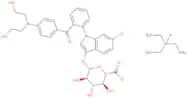
CAS :A substrate for visualising alkaline phosphatase activity. Produces a red colored insoluble end product that is detected visually, when used together with nitroblue tetrazolium. The substrate system is versatile and functions in a variety of applications, including Northern, Southern, and Western blotting, in situ hybridization, ELISAs and immunohistochemistry. DMF soluble.Formule :C15H16ClN2O4PDegré de pureté :Min. 98.0 Area-%Masse moléculaire :354.73 g/molAldol® 584 β-D-glucuronic acid, triethylammonium salt, Biosynth Patent: EP 2427431 and US 8940909
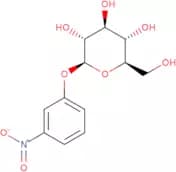
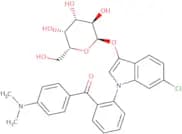
CAS :Aldol 584 is a chromogenic substrate that is used in enzymatic assays to detect the presence of an enzyme. It is a triethylammonium salt with beta-D-glucuronic acid. Aldol 584 is used in diagnostic procedures and can be used as a substrate for fluorogenic substrates and chemiluminescent substrates. This product has been shown to be effective in detecting the presence of bile in feces, erythrocyte hemolysis, and the presence of proteinases in human urine. It can also be used as a food testing agent or to measure bacterial activity in culture media.Formule :C37H46ClN3O10Degré de pureté :Min. 95%Couleur et forme :PowderMasse moléculaire :728.2 g/mol3-Nitrophenyl β-D-glucopyranoside
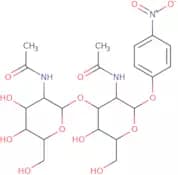
CAS :3-Nitrophenyl beta-D-glucopyranoside is a chromogenic enzyme substrate commonly used to assay for beta-glucosidase activity. Upon hydrolysis by the enzyme, it produces a yellow product that can be easily detected by spectrophotometry. This substrate is often used in the field of carbohydrate chemistry and biochemistry to study enzyme kinetics and inhibition in both in vitro and in vivo systems.Formule :C12H15NO8Degré de pureté :Min. 95%Couleur et forme :White Yellow PowderMasse moléculaire :301.25 g/mol4-Nitrophenyl 2-acetamido-3-O-(2-acetamido-2-deoxy-b-D-glucopyranosyl)-2-deoxy-a-D-galactopyranoside
CAS :4-Nitrophenyl 2-acetamido-3-O-(2-acetamido-2-deoxy-beta-D-glucopyranosyl)-2-deoxy-alpha-D-galactopyranoside is a chromogenic substrate for alpha-galactosidase. Upon hydrolysis, para-nitrophenol is released yielding a yellowish colour. 4-Nitrophenyl 2-acetamido-3-O-(2-acetamido-2-deoxy-beta-D-glucopyranosyl)-2-deoxy-alpha-D-galactopyranoside is used in different applications such as the Fabry disease diagnosis, glycolipid metabolism studiesDegré de pureté :Min. 98 Area-%Couleur et forme :White PowderMasse moléculaire :545.49 g/molAldol® 470 phosphate, disodium salt, Biosynth Patent: EP 2427431 and US 8940909
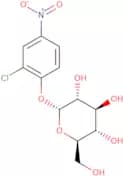
CAS :Aldol 470 phosphate is a chromogenic substrate for phosphatases yielding a yellow precipitate. Furthermore it shows some fluorescence (excitationat 320 nm to 490 nm). In contrast to classical indoxyl substrates, Aldolsubstrates work not only under aerobic but also under anaerobic conditions.Formule :C23H18NNa2O7PDegré de pureté :Min. 95.0 Area-%Masse moléculaire :497.34 g/mol2-Chloro-4-nitrophenyl a-D-glucopyranoside
CAS :2-Chloro-4-nitrophenyl a-D-glucopyranoside is an an enzyme-activated irreversible inhibitor of alpha-glucosidase. The substrate 2-Chloro-4-nitrophenyl a-D-glucopyranoside is covalently attached to the enzyme enabling mechanistic studies of glycosidase activity, especificallyt in carbohydrate metabolism studies.Degré de pureté :Max. 97 Area-%Couleur et forme :White Off-White PowderMasse moléculaire :335.69 g/molAldol® 470 acetate, Biosynth Patent: EP 2427431 and US 8940909
CAS :Produit contrôléAldol 470 acetate is a chromogenic substrate for carboxylesterases yielding a yellow precipitate. Furthermore it shows some fluorescence(excitation at 320 nm to 490 nm). In contrast to classical indoxylsubstrates, Aldol substrates work not only under aerobic but also under anaerobic conditions.Formule :C25H21NO5Degré de pureté :Min. 95.0 Area-%Masse moléculaire :415.44 g/mol5-Bromo-3-indolyl-a-D-galactopyranoside
5-Bromo-3-indolyl-a-D-galactopyranoside (5BIG) is a bioluminescent substrate that is used in various applications, including environmental testing, diagnostics, and the detection of bacterial activity. 5BIG is a ligand for luciferase enzymes and is used as a chromogenic substrate. It also has the ability to be conjugated with other molecules for use in enzyme substrates or fluorescence assays. 5BIG has been shown to be an effective fluorogenic substrate for enzymes such as alkaline phosphatase and beta-glucuronidase.Degré de pureté :Min. 95%6-Chloro-4-(2-chlorophenyl)-2-quinazolinecarboxaldehyde
CAS :6-Chloro-4-(2-chlorophenyl)-2-quinazolinecarboxaldehyde is a colorimetric reagent that can be used to detect Cl. It has been shown to react with Cl in the presence of an acidic solution and produce a red color. The reagent is stable in organic solvents, such as chloroform, but decomposes in water. 6-Chloro-4-(2-chlorophenyl)-2-quinazolinecarboxaldehyde is also used to detect chloride by titrimetric or polarographic methods.Formule :C15H8Cl2N2ODegré de pureté :Min. 95%Couleur et forme :Off-White PowderMasse moléculaire :303.14 g/mol4-Nitrophenyl-alpha-L-arabinofuranoside
CAS :Chromogenic substrate for α-L-arabinofuranosidase yielding a yellow solution upon cleavage.Formule :C11H13NO7Degré de pureté :Min. 99.0 Area-%Masse moléculaire :271.22 g/mol3-Nitrophenyl b-D-galactopyranoside
CAS :Chromogenic substrate targeting beta-galactosidaseFormule :C12H15NO8Couleur et forme :PowderMasse moléculaire :301.25 g/molNaphthol AS-BI β-L-fucopyranoside
CAS :Substrate for the detection of beta-D-fucosidaseFormule :C24H24BrNO7Degré de pureté :Min. 95%Masse moléculaire :518.35 g/molAldol® 518 alpha-D-galactopyranoside, Biosynth Patent: EP 2427431 and US 8940909
CAS :Aldol® 518 alpha-D-galactopyranoside is a chromogenic and fluorogenic enzyme substrate used for detection of alpha-galactosidase activity. The enzyme substrate is cleaved by alpha-galactosidase positive bacteria and yeasts in liquid or solid media, yielding red color and red fluorescence signal. Aldol® 518 alpha-D-galactopyranoside can also be used to detect alpha-galactosidase (encoded by the Mel1 gene) in yeast gene reporter assays or for identification of alpha-gal positive transformants on agar plates. Aldol® 518 alpha-D-galactopyranoside can be used under aerobic and anaerobic conditions.Formule :C29H29ClN2O7Degré de pureté :Min. 95.0 Area-%Masse moléculaire :553.01 g/mol5-Bromo-4-chloro-3-indoxyl sulfate, potassium salt
CAS :Chromogenic substrate for aryl-sulfatase. Yields a blue precipitate upon cleavage.Formule :C8H4BrClKNO4SDegré de pureté :Min. 98.0 Area-%Masse moléculaire :364.65 g/mol4-Nitrophenyl phosphate, bis(cyclohexylammonium) salt
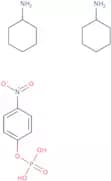
CAS :Chromogenic substrate yielding a soluble yellow chromophor for the colorimetric assay of phosphatases.Formule :C18H32N3O6PDegré de pureté :97.0 To 103.0%Masse moléculaire :417.45 g/mol6-Fluoro-3-indoxyl-beta-D-galactopyranoside
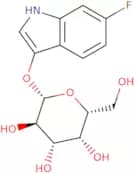
CAS :6-Fluoro-3-indoxyl-beta-D-galactopyranoside is a fluorescent chromogenic substrate that is commonly used for the detection and quantification of beta-galactosidase activity. When this substrate is hydrolyzed by beta-galactosidase, it produces a fluorescent blue product that can be easily detected and measured using a fluorometer or spectrophotometer. This substrate is often used in microbiology and molecular biology research to study gene expression and enzyme kinetics, and is also used in medical diagnostics as a marker for specific diseases and conditions.Formule :C14H16FNO6Degré de pureté :Min. 98.0 Area-%Masse moléculaire :313.29 g/mol4-Nitrophenyl 4,6-ethylidene-a-D-maltoheptaoside
CAS :4-Nitrophenyl 4,6-ethylidene-?-D-maltoheptaoside is a substrate used in a reference measurement method for ?-amylase activity in the diagnosis of acute pancreatitis, approved by the International Federation of Clinical Chemistry (IFCC). The substrate is hydrolysed by serum ?-amylase into shorter 4-nitrophenylated oligosaccharides and their free counterparts. These reaction products are channeled into an indicator reaction with ?-glucosidase and are degraded into glucose and the chromophore, 4-nitrophenol.Formule :C50H77NO38Degré de pureté :Min. 90%Couleur et forme :Off-White Yellow PowderMasse moléculaire :1,300.13 g/mol3-Indoxyl-beta-D-glucopyranoside anhydrous
CAS :The maunfacturing of blue jeans started 150 years ago as workwear, and are found nowadays in almost every wardrobe. Their renowned indigo color tone is truly unique; nevertheless, the high demand for the dye poses serious sustainability and environmental problems connected with its manufacturing process. Recently, a group of scientists presented an alternative indigo dyeing method inspired by the indoxyl glucoconjugate present in the plant P.tinctorium. The researchers proposed as an alternative approach a biocatalytic process using recombinant E.coli to access water soluble β-gluco-indoxyl (indican). At the point of coloring, indican gets hydrolyzed by β-glucosidase enzymes forming indoxyl, which suddenly undergoes oxidation to leucoindigo and further crystallizes to indigo giving the typical blue denim its signature character.Formule :C14H17NO6Degré de pureté :Min. 99.0 Area-%Masse moléculaire :295.29 g/mol4-Chloro-1-naphthol
CAS :Substrate for horseradish peroxidase (HRP). HRP catalyzes oxidation of 4-chloro-1-naphthol in the presence of peroxide to the blue insoluble product 4-chloro-1-naphthon. It is used for both blotting and immunohistochemical staining but is less sensitive than other precipitating HRP substrates.Formule :C10H7ClODegré de pureté :Min. 97.0 Area-%Masse moléculaire :178.62 g/molRef: 3D-C-5180
-Unit-ggÀ demander1kgÀ demander100gÀ demander250gÀ demander500gÀ demander2500gÀ demander1-Naphthyl β-D-glucuronide
CAS :1-Naphthyl beta-D-glucuronide (NPG) is a chromogenic enzyme substrate used to detect the presence of β-glucuronidase activity. Upon hydrolysis by the enzyme, it produces a yellow product that can be detected by spectrophotometry or visually. It is commonly used in clinical assays to detect the presence of the enzyme in urine samples, as elevated levels can indicate liver or urinary tract diseases. It is also utilized in environmental testing, as some bacteria strains can produce the enzyme as a by-product, making NPG a useful tool for detecting these strains in contaminated water or food sources.Formule :C16H16O7Degré de pureté :Min. 95%Couleur et forme :White PowderMasse moléculaire :320.29 g/molAldol® 484 α-D-glucopyranoside, Biosynth Patent: EP 2427431 and US 8940909
CAS :Aldol® 484 alpha-D-glucopyranoside is a chromogenic and fluorogenic enzyme substrate for ?-glucosidase activity (EC 3.2.1.20, ?-1,4-glucosidase, also known as maltase). The colorless enzyme substrate is cleaved by bacteria producing this enzyme in liquid or solid media, yielding orange color. Green fluorescence is also generated if a suitable matrix is present such as: cellulose acetate filters, polypropylene tubes or microplates and polyethylene vials. Aldol® 484 alpha-D-glucopyranoside can be used under aerobic and anaerobic conditions.
Formule :C26H24ClFN2O7Degré de pureté :Min. 95.0 Area-%Masse moléculaire :530.93 g/molAldol® 495 nonanoate solution, 0.75 M in DMSO, Biosynth Patent: EP 2427431 and US 8940909
CAS :Produit contrôléAldol® 495 nonanoate is a chromogenic and fluorogenic enzyme substrate used for detection of lipase activity. The colorless enzyme substrate is cleaved by C9 esterases, yielding development of an orange coloration. In addition, green fluorescence is generated when Aldol® 355 fluorescence enhancer or a suitable matrix is present. Aldol® 495 nonanoate can be used in enzyme assays and live bacterial cultures. Aldol® 495 nonanoate is suitable for use in liquid and solid media, under aerobic as well as anaerobic conditions.Formule :C29H31ClN2O3Degré de pureté :Of Solute (Hplc) 95.0 To 100.0 Area-%Masse moléculaire :491.02 g/mol4-Nitrophenyl-beta-D-xylopyranoside
CAS :Chromogenic β-xylosidase substrate yielding a yellow solution upon cleavage.Formule :C11H13NO7Degré de pureté :Min. 99 Area-%Masse moléculaire :271.23 g/mol3,4-Cyclohexenoesculetine phosphate disodium
Chromogenic substrate for phosphataseDegré de pureté :Min. 95%6-Chloro-3-indoxyl-3-acetate
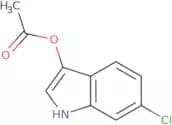
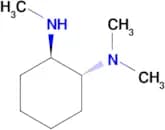
CAS :6-Chloro-3-indoxyl-3-acetate is a chromogenic substrate for carboxylesterase yielding a salmon colored precipitate upon cleavage. Mainly used in histochemistry.Degré de pureté :Min. 95%Couleur et forme :White PowderMasse moléculaire :209.63 g/mol(1R,2R)-N1,N1,N2-Trimethylcyclohexane-1,2-diamine
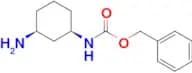
CAS :Formule :C9H20N2Degré de pureté :95%Couleur et forme :OilMasse moléculaire :156.273Methyl 1-(2-(benzyloxy)ethyl)cyclohexanecarboxylate
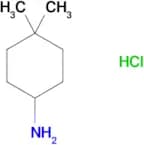
CAS :Degré de pureté :95%Masse moléculaire :276.3764,4-Dimethylcyclohexanamine hydrochloride
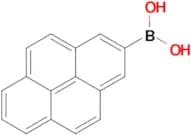
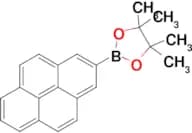
CAS :Formule :C8H18ClNDegré de pureté :98%Masse moléculaire :163.694,4,5,5-Tetramethyl-2-(pyren-2-yl)-1,3,2-dioxaborolane
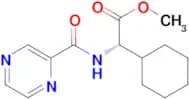
CAS :Degré de pureté :97%Masse moléculaire :328.2200012(S)-methyl 2-cyclohexyl-2-(pyrazine-2-carboxamido)acetate
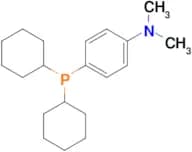
CAS :Degré de pureté :98%Masse moléculaire :277.32400514-(Dicyclohexylphosphino)-N,N-dimethylaniline
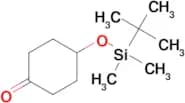
CAS :Formule :C20H32NPDegré de pureté :95%Masse moléculaire :317.4574-((tert-Butyldimethylsilyl)oxy)cyclohexanone
CAS :Formule :C12H24O2SiDegré de pureté :95%Couleur et forme :LiquidMasse moléculaire :228.407trans-4-(Methylamino)cyclohexanol
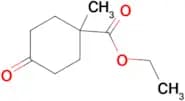
CAS :Formule :C7H15NODegré de pureté :98%Couleur et forme :Solid, White powderMasse moléculaire :129.203Ethyl 1-methyl-4-oxocyclohexanecarboxylate
CAS :Formule :C10H16O3Degré de pureté :97%Couleur et forme :Liquid, No data available.Masse moléculaire :184.235Ref: 10-F222247
100mg29,00€250mg57,00€500mg96,00€1g99,00€5g271,00€10g508,00€25g875,00€50g1.633,00€100g3.264,00€1-PYRENECARBOXYLIC ACID
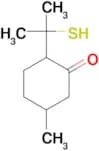
CAS :Formule :C17H10O2Degré de pureté :97%Couleur et forme :Solid, Crystalline Powder or PowderMasse moléculaire :246.265p-Mentha-8-thiol-3-one
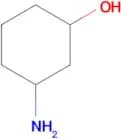
CAS :Formule :C10H18OSDegré de pureté :97%Couleur et forme :LiquidMasse moléculaire :186.313-Aminocyclohexanol
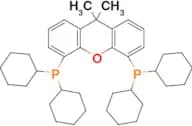
CAS :Formule :C6H13NODegré de pureté :95%Couleur et forme :Off-white to pale pink solidMasse moléculaire :115.1764,5-Bis(dicyclohexylphosphino)-9,9-dimethyl-9H-xanthene
CAS :Degré de pureté :95%Masse moléculaire :602.8239746[S(R)]-N-[(R)-[2-(Dicyclohexylphosphanyl)phenyl](4-methoxyphenyl)methyl]-N,2-dimethyl-2-propanesulfinamide
CAS :Degré de pureté :95%Masse moléculaire :527.75Dicyclohexyl(3-isopropoxy-2′,4′,6′-triisopropyl-[1,1′-biphenyl]-2-yl)phosphine
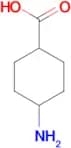
CAS :Degré de pureté :98%Couleur et forme :SolidMasse moléculaire :534.8090214-Aminocyclohexanecarboxylic acid (cis/trans mixture)
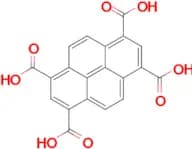
CAS :Formule :C7H13NO2Degré de pureté :95%Couleur et forme :SolidMasse moléculaire :143.186Pyrene 1,3,6,8-tetracarboxylic acid
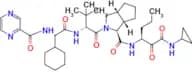
CAS :Degré de pureté :95%Couleur et forme :SolidMasse moléculaire :378.2919922(1S,3aR,6aS)-2-((R)-2-((R)-2-cyclohexyl-2-(pyrazine-2-carboxamido)acetamido)-3,3-dimethylbutanoyl)-N-((S)-1-(cyclopropylamino)-1,2-dioxohexan-3-yl)octahydrocyclopenta[c]pyrrole-1-carboxamide
CAS :Degré de pureté :98%Masse moléculaire :679.406













![[S(R)]-N-[(R)-[2-(Dicyclohexylphosphanyl)phenyl](4-methoxyphenyl)methyl]-N,2-dimethyl-2-propanesul…](/_next/image/?url=https%3A%2Fstatic.cymitquimica.com%2Fproducts%2F10%2Fthumb-webp%2FF988156.webp&w=3840&q=75)
![Dicyclohexyl(3-isopropoxy-2′,4′,6′-triisopropyl-[1,1′-biphenyl]-2-yl)phosphine](/_next/image/?url=https%3A%2Fstatic.cymitquimica.com%2Fproducts%2F10%2Fthumb-webp%2FF635135.webp&w=3840&q=75)