Dérivés du Benzimidazole et de l’Imidazole
Le benzimidazole est un composé constitué d’un noyau benzénique fusionné à un noyau imidazole, une structure à cinq membres contenant deux atomes d’azote. Les dérivés du benzimidazole, comme l’albendazole, sont connus pour leur activité antiparasitaire et antifongique, utilisés dans le traitement des infections parasitaires et de certaines maladies parasitaires chez les animaux et les humains. L’imidazole, quant à lui, est une structure à cinq membres avec deux atomes d’azote, présente dans divers composés biologiquement actifs. Les dérivés de l’imidazole, comme le métronidazole, possèdent des propriétés antimicrobiennes et antiparasitaires. Ces composés sont également utilisés dans l’industrie pharmaceutique pour le traitement des infections bactériennes, des maladies parasitaires et de certaines infections fongiques, ainsi qu’en chimie organique comme catalyseurs.
Chez CymitQuimica, nous proposons des benzimidazoles et des imidazoles de haute pureté pour la recherche en chimie médicinale, pharmacologie et biotechnologie.
10373 produits trouvés pour "Dérivés du Benzimidazole et de l’Imidazole"
Trier par
Degré de pureté (%)
0
100
|
0
|
50
|
90
|
95
|
100
Solifenacin EP impurity F succinate
CAS :<p>Solifenacin is an anti-cholinergic drug that has been shown to have a potent antagonistic effect on muscarinic receptors. It is used in the treatment of overactive bladder, urinary incontinence, and irritable bowel syndrome. Solifenacin succinate is a metabolite of solifenacin and it has been found to be an antagonist of M3 muscarinic receptors. The presence of solifenacin and its metabolites in wastewater can interfere with treatment processes by inhibiting the removal of other organic chemicals such as tamsulosin hydrochloride. Optimisation studies for solifenacin production have shown that famotidine can be used as a process aid to reduce solifenacin impurities. Famotidine is also an antagonist of M3 muscarinic receptors and can be used to remove solifenacin from wastewater. Analytes detected in wastewater samples include solifenacin, famot</p>Formule :C27H32N2O6Degré de pureté :Min. 95%Masse moléculaire :480.55 g/mol2-[(4-Chloro-3-methyl-2-pyridinyl)methylthio]-1H-benzimidazole
CAS :<p>2-[(4-Chloro-3-methyl-2-pyridinyl)methylthio]-1H-benzimidazole is a drug product. It is an impurity standard for the analytical determination of 2-[(4-chloro-3-methylpyridin)-2yl]thiohydantoin in pharmaceuticals and other chemical products. This compound is also used as a research and development (R&D) metabolite and impurity standard for the synthesis of 4-(4,5,6,7-tetrahydrobenzo[b]thiophen-2-yl)pyridine. The CAS number for this compound is 103312-62-5./END></p>Formule :C14H12ClN3SDegré de pureté :Min. 95%Masse moléculaire :289.78 g/molAlbendazole sulfone
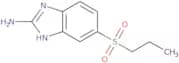
CAS :<p>Albendazole sulfone is a metabolite of the drug albendazole. It is used as an analytical standard to measure the concentration of albendazole in human plasma and urine samples. The concentration-time curve for albendazole sulfone can be determined using a nonlinear regression analysis, with the rate constant being calculated from the slope and intercept. This method has been shown to be accurate for predicting pharmacokinetic parameters in humans. Albendazole sulfone is also used as a probe in wastewater treatment studies, where it binds to colloidal gold particles that are used to visualize the removal of small particles by microorganisms.</p>Formule :C12H15N3O4SDegré de pureté :Min. 95 Area-%Couleur et forme :PowderMasse moléculaire :297.33 g/molCarbamazepine impurity
CAS :<p>Carbamazepine is a drug that has been used to treat epileptic seizures and trigeminal neuralgia. Impurities in the drug are removed by using chromatographic methods, such as high-performance liquid chromatography (HPLC). The rotarod test is an animal model of motor coordination and balance that can be used to assess the effects of drugs on these functions. Carbamazepine impurities may cause depression and have an epileptic effect on animals. Chronic exposure to carbamazepine can lead to drug reactions and gene polymorphisms, which may alter the metabolism of the drug. Analytical methods for determining carbamazepine impurities include HPLC, gas chromatography mass spectrometry (GC-MS), and thin-layer chromatography (TLC).</p>Formule :C15H14N2ODegré de pureté :Min. 95%Masse moléculaire :238.28 g/molcis-(±)-4-[4-[4-[4-[[2-(2,4-Dichlorophenyl)-2-(1H-1,2,4-triazol-1-ylmethyl)-1,3-dioxolan-4-yl]methoxy]phenyl]-1-piperazinyl]phenyl]- 2,4-dihydro-2-propyl-3H-1,2,4-triazol-3-one
CAS :<p>cis-(±)-4-[4-[4-[4-[[2-(2,4-Dichlorophenyl)-2-(1H-1,2,4-triazol-1-ylmethyl)-1,3-dioxolan-4-yl]methoxy]phenyl]-1-piperazinyl]phenyl]- 2,4-dihydro-2-propyl-3H-1,2,4-triazol-3-one is a drug product that is used as a research and development tool. It is an impurity standard for HPLC. This compound has a chemical name of cis-(±)-4-[4-[4-[4-(hydroxymethyl)phenyl]-1piperazinyl]phenyl]-2, 4dihydro 2propyl 3H 1 2 4 triazol 3one. The CAS number for this compound is 7485591 7. This compound</p>Formule :C34H36Cl2N8O4Degré de pureté :Min. 95%Masse moléculaire :691.61 g/mol(R,R)-Solifenacin succinate
CAS :<p>(R,R)-Solifenacin succinate is a pharmaceutical agent that acts as an antimuscarinic drug. It has been shown to be effective in wastewater treatment, where it was found to reduce the amount of solifenacin and optimised organic chemicals in the water. This drug has also been shown to have antagonist properties against the muscarinic receptor M3.</p>Formule :C23H26N2O2•C4H6O4Degré de pureté :Min. 95%Couleur et forme :PowderMasse moléculaire :480.55 g/molOxybutynin EP Impurity E
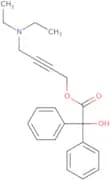
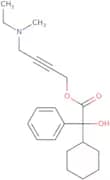
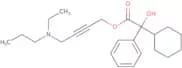
CAS :<p>Oxybutynin EP Impurity E is a research and development impurity standard that is used in the synthesis of Oxybutynin. It can be synthesized by reacting 2-chloro-4-nitroaniline with potassium tert-butoxide, followed by acetylation with acetic anhydride. The purity and structure of this compound have been verified by gas chromatography, mass spectrometry, and melting point analysis. This impurity standard has a CAS number of 1215677-72-7.<br>Oxybutynin EP Impurity E is used as a drug product for the treatment of overactive bladder, urinary incontinence, and painful bladder syndrome/interstitial cystitis. It also helps to reduce pain due to spinal cord injury or multiple sclerosis. <br>The pharmacopoeia name for this compound is 4-(2-Chloroethyl)-1H-imidazoleacetic acid. It has been found to be</p>Formule :C23H33NO3Degré de pureté :Min. 95%Masse moléculaire :371.51 g/molAmino albendazole sulfone
CAS :<p>Amino albendazole sulfone is an anthelmintic drug that is used to treat worm infestations in animals. It is the active metabolite of fenbendazole sulfone and has a terminal half-life of 12 hours in humans. Amino albendazole sulfone can be prepared by chromatographic methods, such as liquid chromatography or gas chromatography, and it can be analyzed with a fluorescence detector. This drug has been shown to have a concentration–time curve following administration to rats and results in an increase in the number of worms eliminated from the body.</p>Formule :C10H13N3O2SDegré de pureté :Min. 95%Masse moléculaire :239.3 g/molPregabalin impurity PD 0312236 and Pregabalin impurity PD 0312237 (mixture of tautomeric isomers)
CAS :<p>Lactose conjugate degradation product of pregabalin</p>Formule :C20H35NO11Degré de pureté :Min. 95%Masse moléculaire :465.49 g/mol(1R,3S,5S)-3-(2-Hydroxy-2,2-di(thiophen-2-yl)acetoxy)-8,8-dimethyl-8-azabicyclo[3.2.1]oct-6-en bromide
CAS :<p>The human red blood cell (RBC) is a non-nucleated cell in the human blood that carries oxygen to the body's cells. The erythrocyte is characterized by its biconcave shape and its lack of organelles. It has a volume of about 80 fL, and a diameter of about 7 micrometers. The RBCs are produced in bone marrow from precursor cells that differentiate into erythroid progenitor cells. This drug binds to the hemoglobin molecules in the red blood cells and alters their shape, causing an increase in their deformability. In addition, this drug decreases the viscosity of the plasma outside of the red blood cell, which increases its extravascular sensitivity. Evaluations have been performed on low doses to evaluate sensitivities within capillaries with microscopy parameters such as magnification and resolution. These evaluations have shown that this drug can be used for quantifying changes in capillary size due to low doses (</p>Formule :C19H22NO3S2·BrDegré de pureté :Min. 95%Masse moléculaire :456.42 g/mol2,12-Dihydro-1,3-dimethyl-8-methoxy-12-thioxobenzo [4,5] pyrido [1,2-c] imidazo [1,2-a] imidazol-2-one
CAS :<p>2,12-Dihydro-1,3-dimethyl-8-methoxy-12-thioxobenzo [4,5] pyrido [1,2-c] imidazo [1,2-a] imidazol-2-one is a metabolite of the drug 2-[2-(4,5,-dihydroimidazo[1,2a]imidazol -2(3H)-yl)ethoxy]-N-(methylsulfonyl)benzamide. It can be used as an impurity standard for the manufacture of drugs and as a research chemical.</p>Formule :C16H13N3O2SDegré de pureté :Min. 95%Masse moléculaire :311.36 g/mol(4R)-1-(4-O-b-D-Galactopyranosyl-b-D-glucopyranosyl)-4-(2-methylpropyl)-2-pyrrolidinone
CAS :<p>(4R)-1-(4-O-b-D-Galactopyranosyl-b-D-glucopyranosyl)-4-(2-methylpropyl)-2-pyrrolidinone is a synthetic, impurity standard and research and development compound. (4R)-1-(4-O-b-D-Galactopyranosyl-b-D-glucopyranosyl)-4-(2-methylpropyl)-2pyrrolidinone is used as an analytical reference in the synthesis of other compounds. It is also used in drug development for the treatment of tuberculosis. This product has a high purity level and is pharmacopoeia grade.</p>Formule :C20H35NO11Degré de pureté :Min. 95%Masse moléculaire :465.49 g/mol7-Hydroxyhyoscyamine
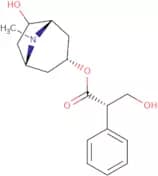
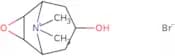
CAS :<p>7-Hydroxyhyoscyamine is an antibacterial agent that is used in the treatment of bacterial infections. It has been shown to inhibit the growth of a number of bacteria including Staphylococcus aureus, Streptococcus pyogenes, and Escherichia coli. 7-Hydroxyhyoscyamine has been shown to be more potent than 6-hydroxyhyoscyamine (6-OH Hya) for inhibiting protein synthesis in the bacteria. The compound does not have any psychoactive effects, unlike atropine sulfate, which is also an alkaloid found in plants from the Solanaceae family. 7-Hydroxyhyoscyamine can be synthesized by reacting atropine with nitrous acid or hydrochloric acid. This synthetic process leads to n-oxides as impurities, which can be removed by using a reversed phase high performance liquid chromatography (RP HPLC). Validation of this</p>Formule :C17H23NO4Degré de pureté :Min. 95%Couleur et forme :PowderMasse moléculaire :305.4 g/mol3,4-Dimethoxy-2-methylpyridine-N-oxide
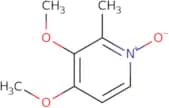
CAS :<p>3,4-Dimethoxy-2-methylpyridine-N-oxide is a potent inhibitor of somatostatin, which is known to play a role in the regulation of cancer cell growth and apoptosis. This compound has been shown to inhibit the activity of human kinases, including those involved in tumor cell proliferation. 3,4-Dimethoxy-2-methylpyridine-N-oxide is an anticancer agent that can be used to treat various types of cancer. It has also been found to have inhibitory effects on urine quetiapine and Chinese hamster ovary cells. The compound is a potent analog of kinase inhibitors and can be used as a lead compound for developing new drugs with anticancer properties.</p>Formule :C8H11NO3Degré de pureté :Min. 95%Masse moléculaire :169.18 g/molAlbendazole impurity F
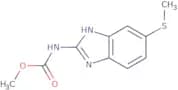
CAS :<p>Albendazole is an anti-helminthic drug that is structurally classified as a benzimidazole. It has been shown to be effective against a variety of helminths, including roundworms, pinworms, hookworms, and tapeworms. Albendazole impurity F is an analytical standard for the determination of albendazole in pharmaceutical products by HPLC. It also serves as a reference substance to establish the purity of drug products containing albendazole and its metabolites. Albendazole impurity F is not considered to be a metabolite of albendazole because it has been shown to be stable under acidic conditions and can be synthesized from other starting materials.</p>Formule :C10H11N3O2SDegré de pureté :Min. 95%Masse moléculaire :237.28 g/molOxybutynin EP impurity B
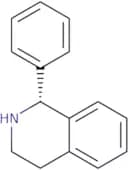
CAS :<p>Oxybutynin EP impurity B is a metabolite of oxybutynin and is a natural product. It is used as an analytical reference substance, to develop new drugs, and in pharmacopoeia in order to measure the purity of oxybutynin. The compound is synthesized by chemical synthesis and can be used as a standard for HPLC analysis.</p>Degré de pureté :Min. 95%(R)-1-Phenyl-1,2,3,4-tetrahydroisoquinoline
CAS :<p>(R)-1-Phenyl-1,2,3,4-tetrahydroisoquinoline is a chiral molecule with four stereocenters. It is synthesized by the reaction of sulfamic acid and cyclohexene in the presence of p-toluenesulfonic acid. The product formed is then dehydrogenated to produce (R)-1-phenyl-1,2,3,4-tetrahydroisoquinoline. This compound is soluble in organic solvents such as benzene and ethane and can be used as an acceptor for chiral stationary phases.</p>Formule :C15H15NDegré de pureté :Min. 95%Couleur et forme :PowderMasse moléculaire :209.29 g/molPantoprazole impurity
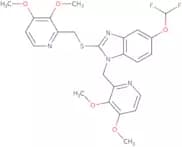
CAS :<p>Pantoprazole is a proton pump inhibitor. It is used in the treatment of gastroesophageal reflux disease and other conditions involving excessive stomach acid production. The chemical name for Pantoprazole impurity is (E)-1-(4-chlorophenyl)ethyl-3-[(pyrrolidin-2-yl)oxy]propanediol. This substance is an enantiomer of pantoprazole, which has been determined to be inactive. Pantoprazole impurity can be identified by its melting point, crystallizing habit, and optical rotation. Active carbon filtration can be used to remove this substance from the final product.</p>Formule :C24H24F2N4O5SDegré de pureté :Min. 95%Masse moléculaire :518.53 g/molTiotropium Bromide EP Impurity G
CAS :<p>Tiotropium Bromide EP Impurity G is an anticholinergic bronchodilator that is used in the treatment of asthma. Tiotropium Bromide EP Impurity G has been shown to have long-acting properties, with a half-life of about 20 hours. It has a high affinity for the muscarinic receptor and acts as a competitive antagonist at this site. Tiotropium Bromide EP Impurity G also has a cavity, which may be necessary for its activity.</p>Formule :C9H6BrNO2Degré de pureté :Min. 95%Masse moléculaire :240.05 g/molOxybutynin impurity C
CAS :<p>Oxybutynin impurity C is a metabolite of the drug product Oxybutynin (CAS No. 1199574-70-3). It is an analytical standard for HPLC, and a natural impurity in the synthesis of Oxybutynin. This is a synthetic compound that has been shown to be metabolized through oxidation by cytochrome P450 enzymes, reduction by glutathione reductase, or conjugation with glucuronic acid. Oxybutynin impurity C has been used as an analytical reference material for drug development and research and development.</p>Degré de pureté :Min. 95%


![2-[(4-Chloro-3-methyl-2-pyridinyl)methylthio]-1H-benzimidazole](/_next/image/?url=https%3A%2Fstatic.cymitquimica.com%2Fproducts%2F3D%2Fthumb-webp%2FIC21227.webp&w=3840&q=75)


![cis-(±)-4-[4-[4-[4-[[2-(2,4-Dichlorophenyl)-2-(1H-1,2,4-triazol-1-ylmethyl)-1,3-dioxolan-4-yl]meth…](/_next/image/?url=https%3A%2Fstatic.cymitquimica.com%2Fproducts%2F3D%2Fthumb-webp%2FID27219.webp&w=3840&q=75)

![(1R,3S,5S)-3-(2-Hydroxy-2,2-di(thiophen-2-yl)acetoxy)-8,8-dimethyl-8-azabicyclo[3.2.1]oct-6-en bro…](/_next/image/?url=https%3A%2Fstatic.cymitquimica.com%2Fproducts%2F3D%2Fthumb-webp%2FIH42882.webp&w=3840&q=75)
![2,12-Dihydro-1,3-dimethyl-8-methoxy-12-thioxobenzo [4,5] pyrido [1,2-c] imidazo [1,2-a] imidazol-2…](/_next/image/?url=https%3A%2Fstatic.cymitquimica.com%2Fproducts%2F3D%2Fthumb-webp%2FID57924.webp&w=3840&q=75)