


Dérivés de Quinazoline et de Quinoléine
Les quinazolines et les quinoléines sont des composés hétérocycliques azotés à structure aromatique qui jouent un rôle clé dans la synthèse de médicaments à activité anticancéreuse, antimicrobienne et anti-inflammatoire. Leurs dérivés présentent des modifications structurelles qui optimisent leur biodisponibilité et leur sélectivité, permettant ainsi le développement de nouveaux principes actifs pour diverses applications thérapeutiques. Ces composés sont utilisés dans la fabrication d’API destinés au traitement du cancer, des infections, des maladies neurodégénératives et cardiovasculaires. De plus, les dérivés de quinazoline et de quinoléine sont essentiels dans la recherche d’inhibiteurs enzymatiques et dans la conception de molécules bioactives innovantes.
Chez CymitQuimica, nous proposons des dérivés de quinazoline et de quinoléine de haute pureté pour des applications en synthèse chimique, développement pharmaceutique et biotechnologie.
65630 produits trouvés pour "Dérivés de Quinazoline et de Quinoléine"
Trier par
Degré de pureté (%)
0
100
|
0
|
50
|
90
|
95
|
100
Regorafenib metabolite M5
CAS :<p>Regorafenib metabolite M5 is a drug product that is custom synthesized by our company and has high purity. It can be used in metabolism studies, drug development, and pharmacopoeia due to its natural origin. It is also a synthetic compound that can be used as an impurity standard or research and development standard in HPLC.</p>Formule :C20H13ClF4N4O4Degré de pureté :Min. 95%Masse moléculaire :484.79 g/mol3-[(1E)-2-[4-[[(2-Carboxyethyl)amino]carbonyl]phenyl]diazenyl] balsalazide
CAS :<p>3-[(1E)-2-[4-[[(2-Carboxyethyl)amino]carbonyl]phenyl]diazenyl] balsalazide is a white to off-white solid that is soluble in water and acidic solutions. It has an impurity level of less than 0.5%. The melting point of 3-[(1E)-2-[4-[[(2-Carboxyethyl)amino]carbonyl]phenyl]diazenyl] balsalazide is approximately 195°C. This compound has been shown to have antibiotic activity against a variety of bacteria, including methicillin resistant Staphylococcus aureus (MRSA).</p>Formule :C27H24N6O9Degré de pureté :Min. 95%Masse moléculaire :576.51 g/molSolifenacin EP impurity F succinate
CAS :<p>Solifenacin is an anti-cholinergic drug that has been shown to have a potent antagonistic effect on muscarinic receptors. It is used in the treatment of overactive bladder, urinary incontinence, and irritable bowel syndrome. Solifenacin succinate is a metabolite of solifenacin and it has been found to be an antagonist of M3 muscarinic receptors. The presence of solifenacin and its metabolites in wastewater can interfere with treatment processes by inhibiting the removal of other organic chemicals such as tamsulosin hydrochloride. Optimisation studies for solifenacin production have shown that famotidine can be used as a process aid to reduce solifenacin impurities. Famotidine is also an antagonist of M3 muscarinic receptors and can be used to remove solifenacin from wastewater. Analytes detected in wastewater samples include solifenacin, famot</p>Formule :C27H32N2O6Degré de pureté :Min. 95%Masse moléculaire :480.55 g/mol5,6-Dehydro-17β-dutasteride
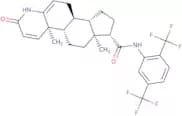
CAS :<p>5,6-Dehydro-17beta-dutasteride is a synthetic drug product that is used as an analytical standard for the determination of metabolites and impurities in pharmaceuticals. It also has been used as a natural metabolite, which can be found in human urine. 5,6-Dehydro-17beta-dutasteride is a metabolite of dutasteride, which is an antiandrogen medication for the treatment of benign prostatic hyperplasia (BPH). It is also known to inhibit the metabolism of other drugs such as ketoconazole and metoprolol.</p>Formule :C27H28F6N2O2Degré de pureté :Min. 95%Masse moléculaire :526.51 g/molSalbutamol EP Impurity F
CAS :<p>Salbutamol EP Impurity F is a drug impurity that is an analytical standard and pharmacopoeia reference material. It is used in the manufacture of pharmaceuticals to ensure that the product meets quality standards. Salbutamol EP Impurity F has been shown to be a metabolite of salbutamol, which is produced as a result of oxidative metabolism by cytochrome P450 enzymes such as CYP3A4. The compound has also been observed in human urine and plasma.</p>Formule :C26H40N2O5Degré de pureté :Min. 95%Masse moléculaire :460.61 g/molBrexpiprazole impurity 2
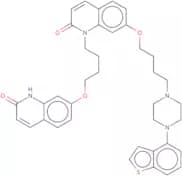
CAS :<p>Brexpiprazole impurity 2 is a product of research and development. It is an impurity standard that can be custom-synthesized in high purity. This product is a synthetic, pharmacopoeia-grade drug product that can be used as a metabolite in metabolism studies or as a QC in analytical assays. Brexpiprazole impurity 2 has CAS No. 2094559-58-5, and is available in natural form. It is also available for HPLC analysis with a purity of 99%.</p>Formule :C38H40N4O4SDegré de pureté :Min. 95%Masse moléculaire :648.81 g/mol5-Oxo pitavastatin
CAS :<p>5-Oxo pitavastatin is a research and development drug product that is synthesized by custom synthesis. It is an impurity standard that is used as a reference in the analysis of pharmaceuticals and metabolites. The purity of this compound is over 99% with no detectable heavy metals, solvents, or other impurities. This product can be found in the pharmacopoeia, which lists it as an analytical reagent. 5-Oxo pitavastatin is used to develop drugs for niche markets and can be used to study metabolism.</p>Formule :C25H22FNO4Degré de pureté :Min. 95%Couleur et forme :PowderMasse moléculaire :419.45 g/molDefluoropitavastatin calcium Salt
CAS :<p>Defluoropitavastatin calcium salt is a synthetic, high purity, pharmacopoeia drug product. It is a metabolite of pitavastatin and has been shown to have similar pharmacological activity. Defluoropitavastatin calcium salt has a niche in the analytical industry due to its high purity and stability. It has been used as an impurity standard for HPLC analysis. Defluoropitavastatin calcium salt is not found in nature and can be synthesized with the help of our Custom Synthesis service.</p>Degré de pureté :Min. 95%4-[(2,3,4-Trimethoxyphenyl)methyl]-1-piperazinecarboxylic acid ethyl ester
CAS :<p>4-[(2,3,4-Trimethoxyphenyl)methyl]-1-piperazinecarboxylic acid ethyl ester is an impurity standard for HPLC. It is a white or off-white solid that is soluble in organic solvents. The compound has been shown to be a metabolite of the drug product, and can also be found as an impurity in the API. 4-[(2,3,4-Trimethoxyphenyl)methyl]-1-piperazinecarboxylic acid ethyl ester can be synthesized from 2,3,4-trimethoxybenzoic acid and 1-(2-chloroethyl)piperazine.</p>Formule :C17H26N2O5Degré de pureté :Min. 95%Masse moléculaire :338.4 g/molN-(Aminosulphonyl)-2-[[[2-[(Aminoiminomethyl)amino]-4-thiazolyl]methylsulphinyl]propanimidamide
CAS :<p>N-(Aminosulphonyl)-2-[[[2-[(aminoiminomethyl)amino]-4-thiazolyl]methylsulphinyl]propanimidamide (NTSX) is an analytical standard and a metabolite of the drug product N-(aminosulphonyl)-2-[[[2-[(aminothiazolyl)methyl]sulfinyl]propanimidamide (NTST). The CAS number is 109467-06-3. NTSX is a white to off-white crystalline powder that is soluble in water and has a molecular weight of 296.37. It has been shown to be active against ampicillin resistant strains of Staphylococcus aureus, but not against methicillin resistant strains. NTSX can be synthesized from the drug NTST or obtained as an impurity from the synthesis of NTST.</p>Formule :C8H15N7O3S3·C4H4O4Degré de pureté :Min. 95%Masse moléculaire :469.52 g/mol2-((2-Methyl-1-(propionyloxy)propoxy)(4-phenylbutyl)phosphoryl)acetic acid
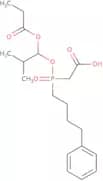
CAS :<p>2-((2-Methyl-1-(propionyloxy)propoxy)(4-phenylbutyl)phosphoryl)acetic acid (KZPBA) is a zoonotic antibiotic that has been shown to be active against agalactiae. It is a prodrug, which is metabolized to the active form, KZPBA, in humans and other mammals. The mechanism of action of KZPBA is not yet known; however, it has been hypothesized that its activity may be due to inhibition of DNA gyrase and topoisomerase IV. This drug has also been shown to have an effect on mastitis in dairy cows.</p>Formule :C19H29O6PDegré de pureté :Min. 95%Masse moléculaire :384.4 g/mol[6-Hydroxy-2-(4-hydroxyphenyl)benzo[b]thien-3-yl](4-hydroxyphenyl)-methanone
CAS :<p>MDM2 inhibitors are a class of cancer drugs that inhibit the activity of MDM2, which is an oncoprotein that prevents the degradation of p53. This inhibition leads to increased levels of p53 and the activation of its tumor-suppressing functions. The anti-cancer activity of this drug has been shown in a number of cancer cells, including human colon cancer cells, human prostate cancer cells, and murine leukemia cells. Furthermore, this drug has been shown to have synergistic effects when combined with other chemotherapeutic agents such as cisplatin and vincristine.</p>Formule :C21H14O4SDegré de pureté :Min. 95%Masse moléculaire :362.4 g/molN-Hydroxy-6-(trifluoromethoxy)-2-benzothiazolamine
CAS :<p>N-Hydroxy-6-(trifluoromethoxy)-2-benzothiazolamine (NHTB) is a drug that has been shown to have clinical use as an anticonvulsant. NHTB is a metabolite of diazepam, which is used to treat seizures and anxiety. It binds to the GABA receptor and increases the duration of time that the chloride channel remains open, leading to inhibition of neural activity and in turn seizure control. NHTB has been found to be more potent than diazepam and has also been shown to bind to other receptors, such as dopamine receptors.</p>Formule :C8H5F3N2O2SDegré de pureté :Min. 95%Masse moléculaire :250.2 g/molEthyl 2-(6-amino-2,3-dichlorobenzyl)glycine
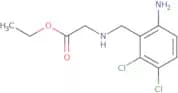
CAS :<p>Ethyl 2-(6-amino-2,3-dichlorobenzyl)glycine is a drug product with a CAS number of 70406-92-7. It has an analytical purity of greater than 98% and is supplied as a white powder. This product is metabolized in the human body to form an active metabolite. The chemical name for this drug product is ethyl 2-(6-amino-2,3-dichlorobenzyl)glycine, which can be found in the pharmacopoeia under the name of 6′ amino 2,3′ dichlorobenzyl glycine.</p>Formule :C11H14Cl2N2O2Degré de pureté :Min. 95%Masse moléculaire :277.15 g/molrac-Benzyl phenylephrone hydrochloride
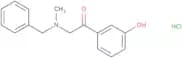
CAS :Produit contrôlé<p>Rac-Benzyl phenylephrone hydrochloride is a synthetic compound that is not found in nature. It can be used as an analytical standard or a pharmacopoeia impurity standard. Rac-Benzyl phenylephrone hydrochloride has been shown to inhibit the activity of CYP3A4, an enzyme which metabolizes many drugs. As a result, it may be useful for drug development and research and could have applications in niche markets such as natural products.</p>Formule :C16H18ClNO2Degré de pureté :Min. 95%Masse moléculaire :291.77 g/mol1-Glycoloyl-L-prolinamide
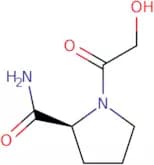
CAS :<p>1-Glycoloyl-L-prolinamide is a drug product that is an analytical standard for the impurity 1-glycoloyl-L-proline (CAS No. 96166-39-1) in the API 1,4,5,6-tetrahydrobenzothiazole (CAS No. 86687-93-0). It has been synthesized to be used as an impurity standard and is provided at a purity of 98.0% or greater by weight. This chemical compound can be used in research and development for the production of drugs as well as in pharmaceutical manufacturing.</p>Formule :C7H12N2O3Degré de pureté :Min. 95%Masse moléculaire :172.18 g/mol1-[[3-Methyl-4-(2,2,2-trifluoroethoxy)-2-pyridinyl]methyl]-2-[[[3-methyl-4-(2,2,2-trifluoroethoxy)-2-pyridinyl]methyl]thio]-1H-benzi midazole
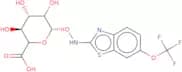
CAS :<p>1-[[3-Methyl-4-(2,2,2-trifluoroethoxy)-2-pyridinyl]methyl]-2-[[[3-methyl-4-(2,2,2-trifluoroethoxy)-2-pyridinyl]methyl]thio]-1H-benzi midazole is a high purity analytical standard that is used to calibrate HPLC. It is found as an impurity in the drug product and as a metabolite. 1-[(3-Methyl-4-(2,2,2 -trifluoroethoxy) - 2 - pyridinyl) methyl] - 2 - [[[3 - methyl (4 ( 2 , 2 , 2 - trifluoroethoxy) - 2 pyridinyl) methyl] thio] - 1 H benzimidazole is the IUPAC name for this compound. This chemical has been synthesized</p>Formule :C25H22F6N4O2SDegré de pureté :Min. 95%Masse moléculaire :556.52 g/molN-Hydroxy riluzole O-b-D-glucuronide
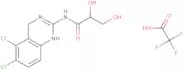
CAS :<p>N-Hydroxy riluzole O-b-D-glucuronide is an analytical standard and drug development metabolite. It is a metabolite of the anti-convulsant agent riluzole, which is used in the treatment of amyotrophic lateral sclerosis (ALS). Riluzole is converted to N-hydroxyl riluzole O-b-D-glucuronide in the liver by UDP glucuronosyltransferase. N-Hydroxyl riluzole O-b-D-glucuronide has been shown to block protein synthesis in rat kidney cells. It also blocks the conversion of amino acid tyrosine to dopa in dopaminergic neurons, and inhibits dopamine uptake into synaptosomes.</p>Formule :C14H13F3N2O8SDegré de pureté :Min. 95%Masse moléculaire :426.32 g/molN-(5,6-Dichloro-1,4-dihydro-2-quinazolinyl)-2,3-dihydroxypropanamide 2,2,2-trifluoroacetate
CAS :<p>N-(5,6-Dichloro-1,4-dihydro-2-quinazolinyl)-2,3-dihydroxypropanamide 2,2,2-trifluoroacetate is an analytical reference standard that can be used as a high purity drug product impurity in HPLC. It also has niche application as an API impurity and is a metabolite of the drug quinine.</p>Formule :C13H12Cl2F3N3O5Degré de pureté :Min. 95%Masse moléculaire :418.15 g/mol2,12-Dihydro-1,3-dimethyl-8-methoxy-12-thioxobenzo [4,5] pyrido [1,2-c] imidazo [1,2-a] imidazol-2-one
CAS :<p>2,12-Dihydro-1,3-dimethyl-8-methoxy-12-thioxobenzo [4,5] pyrido [1,2-c] imidazo [1,2-a] imidazol-2-one is a metabolite of the drug 2-[2-(4,5,-dihydroimidazo[1,2a]imidazol -2(3H)-yl)ethoxy]-N-(methylsulfonyl)benzamide. It can be used as an impurity standard for the manufacture of drugs and as a research chemical.</p>Formule :C16H13N3O2SDegré de pureté :Min. 95%Masse moléculaire :311.36 g/mol[5-[(Dimethylamino)methyl]furan-2-yl]methanol
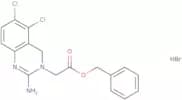
CAS :<p>Dimethylaminoethyl methacrylate is a chemical compound that belongs to the group of dimeric monomers. It is an activated form of methacrylates, which are compounds containing the -C(O)OC-CH2-CH2-O-CO-R functional group. The activated form is prepared by the reaction of a primary amine with acetic acid and acrylic acid. Dimethylaminoethyl methacrylate has been used as a carbohydrate adduct to create glycoconjugates and it has been shown to have anti-mutagenic properties. This product can be found in high concentrations in China.</p>Formule :C8H13NO2Degré de pureté :Min. 95%Masse moléculaire :155.19 g/mol2-Amino-5,6-dichloro-3(4H)-quinazoline acetic acid benzyl ester hydrobromide
CAS :<p>2-Amino-5,6-dichloro-3-(4H)-quinazoline acetic acid benzyl ester hydrobromide is a drug product that is used as an analytical reference standard for the identification of impurities in aminoglycosides. 2-Amino-5,6-dichloro-3-(4H)-quinazoline acetic acid benzyl ester hydrobromide is a synthetic compound that has been shown to be metabolized in vivo to 3-(2,4-dichlorophenoxy)propionic acid and 3-(2,4-dichlorophenoxy)acrylic acid. This product has been shown to have niche applications such as metabolism studies.</p>Formule :C17H15Cl2N3O2Degré de pureté :Min. 95%Masse moléculaire :364.23 g/mol4-Dibenzo[b,f][1,4]thiazepin-11-yl-1-piperazineethanol hydrochloride
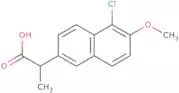
CAS :<p>4-Dibenzo[b,f][1,4]thiazepin-11-yl-1-piperazineethanol hydrochloride is a drug product that is custom synthesized for research and development purposes. It has been shown to be an active metabolite of diazepam with a half life of 3 hours and low toxicity. 4-Dibenzo[b,f][1,4]thiazepin-11-yl-1-piperazineethanol hydrochloride is used as an analytical standard in the pharmaceutical industry. This compound has been studied in metabolism studies and pharmacopoeia. It has also been shown to have antiinflammatory properties.</p>Formule :C19H23Cl2N3OSDegré de pureté :Min. 95%Couleur et forme :Off-white solid.Masse moléculaire :412.38 g/mol(S)-5-Chloronaproxen
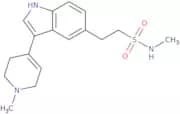
CAS :<p>(S)-5-Chloronaproxen is a synthetic drug product with a purity of 99.9%. It has been synthesized from natural, custom synthesis and analytical grade raw materials. Metabolism studies have been conducted to determine the metabolic pathways of (S)-5-chloronaproxen. The metabolite profile was analyzed by HPLC, and the impurity standard was developed for use in pharmacopoeia, niche research and development, and quality control laboratories.</p>Formule :C14H13ClO3Degré de pureté :Min. 95%Masse moléculaire :264.7 g/mol3,4-Dihydro naratriptan
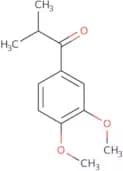
CAS :<p>3,4-Dihydro naratriptan is a medicinal compound that is used as an anti-migraine drug. It is a hydrogenated form of the parent molecule naratriptan and has been shown to have a reaction time of about 30 minutes when catalyzed by palladium. The impurity, 3,4-dihydro naratriptan sulfonamide, has been found to be less potent than the target compound and can be eliminated from the synthesis by using catalytic hydrogenation. 3,4-Dihydro naratriptan sulfonamide can also be reduced by catalytic hydrogenation to yield 3,4-dihydro naratriptan.</p>Formule :C17H23N3O2SDegré de pureté :Min. 95%Masse moléculaire :333.45 g/mol3,4-Dimethoxyphenyl isopropyl ketone
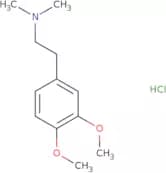
CAS :<p>3,4-Dimethoxyphenyl isopropyl ketone (DMPK) is a calcium antagonist that has been shown to be hypotensive in rats. It is also used as a pharmacological agent to study muscle physiology and biotransformations. DMPK has been shown to have microbial uptake and chronotropic properties, which may explain its use in the treatment of bacterial infections. DMPK binds to sulfoxides and chiral compounds, blocking their activity by inhibiting the enzyme systems involved in oxidation reactions. The drug is an analog of benzyl alcohol, with which it shares similar pharmacological profile.</p>Formule :C12H16O3Degré de pureté :Min. 95%Masse moléculaire :208.25 g/mol3,4-Dimethoxy-N,N-dimethyl-benzeneethanamine hydrochloride
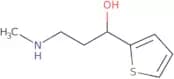
CAS :Produit contrôlé<p>3,4-Dimethoxy-N,N-dimethyl-benzeneethanamine hydrochloride is a drug product that is used as an analytical standard. This drug development chemical is not found in nature and has been synthesized in the laboratory. The chemical's structure closely resembles that of amphetamine and methamphetamine. 3,4-Dimethoxy-N,N-dimethyl-benzeneethanamine hydrochloride is used to develop analytical methods for determining impurities in APIs such as 3,4-dimethoxyamphetamine (DMA). It is also used to help identify metabolites of amphetamines. 3,4-Dimethoxy-N,N-dimethyl-benzeneethanamine hydrochloride has been shown to have a half life of approximately 12 hours and is excreted through the urine.</p>Formule :C12H19NO2·HClDegré de pureté :Min. 95%Masse moléculaire :245.75 g/mol3-(Methylamino)-1-(2-thienyl)propan-1-ol
CAS :<p>3-(Methylamino)-1-(2-thienyl)propan-1-ol is a lipase inhibitor that belongs to the group of 1-fluoronaphthalene. It is an efficient method for the demethylation of 1-fluoronaphthalene, which is used in the synthesis of many pharmaceuticals. The synthesis of this compound was achieved through a kinetic study and confirmed by x-ray crystallography. This compound has been shown to be an analytical method for the determination of impurities in other drugs. 3-(Methylamino)-1-(2-thienyl)propan-1-ol can also be used as a drug substance for other pharmaceuticals and has been shown to inhibit the transfer of chiral centers mediated by enzymes and substrates.</p>Formule :C8H13NOSDegré de pureté :Min. 95%Masse moléculaire :171.26 g/molValdecoxib impurity I
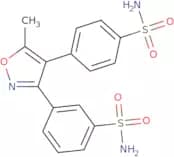
CAS :<p>Valdecoxib impurity I is a synthetic compound that is used as an impurity standard for the drug product Valdecoxib. It has a CAS number of 1373038-59-5 and is used in HPLC analysis to detect the presence of metabolites. Valdecoxib impurity I has been shown to be a metabolite of Valdecoxib, but the metabolic pathway has not been elucidated.</p>Formule :C16H15N3O5S2Degré de pureté :Min. 95%Masse moléculaire :393.44 g/molLabetalol EP impurity D
CAS :<p>Labetalol EP impurity D is a metabolite of labetalol that is used as an impurity standard for HPLC. This impurity has been identified in the drug product and also in the drug development process. Labetalol EP impurity D is one of many metabolites that can be formed by cytochrome P450 enzymes. Labetalol EP impurity D is a natural metabolite of labetalol, which can be found in the urine of humans and other mammals. It is also present in various plants and fungi, including mushrooms, lichens, yeast, and barley. Synthetic labetalol EP impurity D can also be produced by various chemical reactions.</p>Formule :C9H12N2O3Degré de pureté :Min. 95%Masse moléculaire :196.2 g/molN2-Methyl alfuzosin
CAS :<p>N2-Methyl alfuzosin is an impurity of Alfuzosin, a drug used to treat benign prostatic hyperplasia. It can be used as an HPLC standard for the detection and quantification of Alfuzosin in pharmaceutical products. N2-Methyl alfuzosin is a metabolite of Alfuzosin that is formed by cytochrome P450 3A4. It has been shown to have anti-inflammatory effects, which may be due to its inhibition of prostaglandin synthesis.</p>Formule :C19H27N5O4Degré de pureté :Min. 95%Masse moléculaire :389.45 g/mol2-Phenylbutyramide
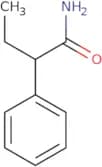
CAS :<p>2-Phenylbutyramide is a drug that acts as a potent, nonselective agonist at adenosine A3 receptors. It has been shown to have therapeutic potential for the treatment of bowel disease and cardiac diseases. 2-Phenylbutyramide binds to the adenosine A3 receptor and triggers an increase in intracellular calcium levels, which leads to smooth muscle relaxation in the gut. This drug also has been found to be effective against autoimmune diseases and organometallic toxicity. It is not active against bacterial infections such as hepatitis or inflammatory bowel disease.</p>Formule :C10H13NODegré de pureté :Min. 95%Masse moléculaire :163.22 g/molN-(1-Oxobutyl)-N-[[2'-(2H-tetrazol-5-yl)[1,1'-biphenyl]-4-yl]methyl]-L-valine
CAS :<p>N-(1-Oxobutyl)-N-[[2'-(2H-tetrazol-5-yl)[1,1'-biphenyl]-4-yl]methyl]-L-valine (GW1929) is a potent vasodilator that is used for the treatment of hypertension. It is synthesized by condensation of sodium hydroxide with 2-(4′-chlorophenyl)piperazine followed by methyl esterification and chloride acylation. The synthesis of GW1929 has been accomplished in two steps: carbonate cyclization and valsartan hydrolysis. In the first step, the carboxylic acid group of GW1929 was converted to its corresponding chloride compound which was then reacted with methyl bromide to yield the desired product. The second step involved hydrolysis of GW1929 with potassium carbonate, after which it was oxidized with azide to form an ester. Sodium</p>Formule :C23H27N5O3Degré de pureté :Min. 95%Couleur et forme :White PowderMasse moléculaire :421.49 g/mol5-Dimethylaminobutyryl citalopram
CAS :<p>5-Dimethylaminobutyryl citalopram is a metabolite of the antidepressant drug, Citalopram. It is used as an analytical impurity standard for Citalopram in HPLC and LCMS analysis. 5-Dimethylaminobutyryl citalopram is also a natural product of metabolism and may be found in humans. 5-Dimethylaminobutyryl citalopram has been shown to have similar pharmacological properties to Citalopram in animal studies, which include antihistamine effects and analgesic effects. This compound may be useful as a niche treatment for some patients who are resistant to other drugs.</p>Formule :C25H33FN2O2Degré de pureté :Min. 95%Masse moléculaire :412.54 g/mol3-[2-[4-(6-Fluoro-1,2-benzisoxazol-3-yl)-1-piperidinyl]ethyl]-7,8-dihydro-2-methyl-4H-pyrido[1,2-a]pyrimidine-4,9(6H)-dione
CAS :<p>3-[2-[4-(6-Fluoro-1,2-benzisoxazol-3-yl)-1-piperidinyl]ethyl]-7,8-dihydro-2-methyl-4H-pyrido[1,2-a]pyrimidine-4,9(6H)-dione is a research and development impurity standard. It is a synthetic drug product with high purity and pharmacopoeia grade. 3-[2-[4-(6-Fluoro-1,2-benzisoxazol-3-yl)-1 piperidinyl]ethyl]-7,8 dihydro 2 methyl 4 H pyrido [ 1 , 2 - a ] pyrimidine 4 9 ( 6 H ) dione has CAS No. 118951665 1 and is an analytical standard for HPLC analysis. 3-[2-[4-(6 Fluoro 1 , 2 benzisox</p>Formule :C23H25FN4O3Degré de pureté :Min. 95%Masse moléculaire :424.47 g/mol[4-(4-Amino-6,7-dimethoxy-2-quinazolinyl)-1-piperazinyl][(5S)-tetrahydro-5-methyl-2-furanyl]-methanone
CAS :<p>Furegrelate is an analytical reference standard for the hydroxylation of 4-(4-amino-6,7-dimethoxy-2-quinazolinyl)-1-piperazinyl[(5S)-tetrahydro-5-methyl-2-furanyl]-methanone. Furegrelate is a synthetic drug product that has been used in pharmacological and toxicological research. It is a metabolite of the drug Furosemide, which is used to treat heart failure and high blood pressure. Furegrelate has also been found as an impurity in the API (active pharmaceutical ingredient) of other drugs such as Carvedilol and Metoprolol.</p>Formule :C20H27N5O4Degré de pureté :Min. 95%Masse moléculaire :401.46 g/molAripiprazole dimer
CAS :<p>Aripiprazole dimer is a drug product that is used for analytical purposes. It is an impurity standard for the research and development of drugs. The CAS number for this compound is 1797986-18-5. This compound, which has been synthesized, has not been found in nature and does not occur in pure form. Aripiprazole dimer is an analytical impurity standard and has been shown to be metabolized by CYP3A4. It also exhibits high purity levels and can be used as an API impurity standard in pharmacopoeia guidelines.</p>Formule :C48H56Cl4N6O4Degré de pureté :Min. 95%Masse moléculaire :922.81 g/mol2-Amino-5,6-dichloro-3(4H)-quinazoline acetic acid hydrobromide
CAS :<p>2-Amino-5,6-dichloro-3(4H)-quinazoline acetic acid hydrobromide is a drug product that is Custom synthesized. It has a high purity and analytical quality. Metabolism studies have been conducted on this compound. Natural and synthetic sources are available for this compound. It is found in the Drug Development section of the pharmacopoeia. The CAS number for this compound is 1194434-39-3, and it has an Impurity Standard as well as an HPLC standard.</p>Formule :C10H10BrCl2N3O2Degré de pureté :Min. 95%Masse moléculaire :355.02 g/molAlfuzosin hydrochloride EP Impurity F hydrochloride
CAS :<p>Alfuzosin EP Impurity F hydrochloride is a drug product that is used as an analytical standard for Alfuzosin hydrochloride. It is a natural, synthetic, and impurity standard that exhibits similar chromatographic properties to the API. The CAS number of this impurity is 19216-68-3. This product has a niche market because it is used in metabolism studies. It also exhibits high purity and pharmacopoeia grade quality.</p>Formule :C12H16N4O2•HClDegré de pureté :Min. 95%Masse moléculaire :284.74 g/molChlorhexidine diacetate EP Impurity O
CAS :<p>Chlorhexidine diacetate EP Impurity O is an analytical reference material that is used as a pharmaceutical impurity. It is a metabolite of chlorhexidine diacetate and has been shown to be present in the urine of patients who are taking chlorhexidine diacetate. Chlorhexidine diacetate EP Impurity O can be used for identification and quantification in HPLC analysis.</p>Formule :C22H30Cl2N10Degré de pureté :Min. 95%Masse moléculaire :505.45 g/molIndoxacarb impurity 6
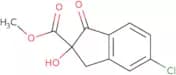
CAS :<p>Indoxacarb is a racemic compound that is used as an insecticide. It belongs to the class of carbamate insecticides and is marketed under the trade name of "Provaunt". Indoxacarb inhibits acetylcholinesterase, which leads to increased acetylcholine in the synapse, resulting in death. The production of indoxacarb has been optimized to yield a high-level of stereoselectivity. This optimization was achieved through a biocatalytic process that uses a strain of Escherichia coli with high stereoselectivity. This strain produces indoxacarb with a high level of stereoselectivity, which can be confirmed by NMR analysis.</p>Formule :C11H9ClO4Degré de pureté :Min. 95%Couleur et forme :PowderMasse moléculaire :240.64 g/molBisoprolol impurity G
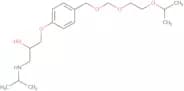
CAS :<p>Bisoprolol impurity G is a metabolite of bisoprolol. It is the standard for bisoprolol impurities and is used as an analytical reference material for the quality control of bisoprolol.</p>Formule :C19H33NO5Degré de pureté :Min. 95%Masse moléculaire :355.47 g/mol6,7,8,9-Tetrahydro-3-[2-[4-(6-hydroxy-1,2-benzisoxazol-3-yl)-1-piperidinyl]ethyl]-2-methyl-4H-pyrido[1,2-a]pyrimidin-4-one
CAS :<p>Tetrahydro-3-[2-[4-(6-hydroxy-1,2-benzisoxazol-3-yl)-1-piperidinyl]ethyl]-2-methyl-4H-pyrido[1,2-a]pyrimidin-4-one (THPP) is a drug product that belongs to the class of drugs used for research and development. It has been shown to have antiinflammatory properties in animal models. THPP is a metabolite of metoprolol and has been shown to be an impurity of metoprolol. The analytical properties of THPP are not yet known. Tetrahydro-3-[2-[4-(6-hydroxy-1,2-benzisoxazol-3--yl)-1--piperidinyl]ethyl]-2--methyl--4H--pyrido[1,2--a]pyrimidin--4one</p>Formule :C23H28N4O3Degré de pureté :Min. 95%Masse moléculaire :408.49 g/mol3-[[[2-[(Aminoiminomethyl)amino]-4-thiazolyl]methyl]sulfinyl]-N-(aminosulfonyl)propanimidamide
CAS :<p>3-[[[2-[(Aminoiminomethyl)amino]-4-thiazolyl]methyl]sulfinyl]-N-(aminosulfonyl)propanimidamide is a drug product that is custom synthesized. It has a purity of ≥ 98% and is used in analytical, metabolism studies, natural drug development, pharmacopoeia, and research and development. 3-[[[2-[(Aminoiminomethyl)amino]-4-thiazolyl]methyl]sulfinyl]-N-(aminosulfonyl)propanimidamide has an impurity standard of 5% and can be found under CAS No. 90237-03-9.</p>Formule :C8H15N7O3S3Degré de pureté :Min. 95%Masse moléculaire :353.45 g/molLosartan imidazo[1,5-b]isoquinoline impurity
CAS :<p>Losartan is a drug product that belongs to the class of losartan impurity. It is an impurity standard for research and development, as well as a custom synthesis. Losartan is also used in the synthesis of other drugs, such as losartan potassium, which is classified as a niche compound. Losartan impurity has been shown to be metabolized by several enzymes including CYP2C9 and CYP3A4. The metabolite identified from this study was N-desmethyl losartan.</p>Formule :C22H21ClN6Degré de pureté :Min. 95%Masse moléculaire :404.9 g/mol2-Methoxy-5-sulfamoylbenzoic acid
CAS :<p>2-Methoxy-5-sulfamoylbenzoic acid (2MSBA) is a reactive compound that reacts with the proton of vancomycin to form a dianion. This reaction is reversible and can be catalyzed by chloride ions. 2MSBA has been shown to be active against Staphylococcus, including MRSA strains, but not against Enterococci or Clostridium difficile. 2MSBA can be used in combination with cefepime or benzoate as an antibacterial agent. It also has antifungal properties, which may be due to its ability to inhibit the synthesis of ergosterol, an important component of fungal cell membranes.<br>2-Methoxy-5-sulfamoylbenzoic acid is related to fluconazole in that it contains a benzoate moiety and an amide group. These structural features confer antibacterial and antif</p>Formule :C8H9NO5SDegré de pureté :Min. 95%Masse moléculaire :231.23 g/molDi(N-desethyl) amiodarone hydrochloride
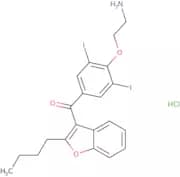
CAS :<p>Di(N-desethyl) amiodarone hydrochloride is an impurity of Amiodarone Hydrochloride, which is a drug that is used to treat and prevent serious ventricular arrhythmias. Di(N-desethyl) amiodarone hydrochloride can be synthesized from the corresponding parent compound by desmethylation with trifluoroacetic acid. It has been shown to have a low solubility in water and it is soluble in acetones, ethers, and chloroform. This impurity can be used as a HPLC standard for the analysis of Amiodarone Hydrochloride or as an analytical reference material for other liquid chromatography methods.</p>Formule :C21H22ClI2NO3Degré de pureté :Min. 95%Masse moléculaire :625.67 g/mol1,1'-[(1-Methylethyl)imino]bis[3-[4-(2-methoxyethyl)phenoxy]-2-propanol
CAS :<p>1,1'-[(1-Methylethyl)imino]bis[3-[4-(2-methoxyethyl)phenoxy]-2-propanol] is a synthetic drug product that has been custom synthesized for testing purposes. It is one of the metabolites of the drug product 1,1'-[(1-Methylethyl)imino]bis[3-[4-(2-hydroxypropyl)phenoxy]-2-propanol]. The metabolite has not been found in nature and its structure is unknown. Metabolism studies have been performed on this metabolite to determine its metabolic pathway. This metabolite is an impurity standard for HPLC analysis.</p>Formule :C27H41NO6Degré de pureté :Min. 95%Masse moléculaire :475.62 g/mol(2Z)-1-[5,6-Dihydro-3-(trifluoromethyl)-1,2,4-triazolo[4,3-α]pyrazin-7(8H)-yl]-4-(2,4,5-trifluorophenyl)-2-buten-1-one
CAS :<p>Please enquire for more information about (2Z)-1-[5,6-Dihydro-3-(trifluoromethyl)-1,2,4-triazolo[4,3-α]pyrazin-7(8H)-yl]-4-(2,4,5-trifluorophenyl)-2-buten-1-one including the price, delivery time and more detailed product information at the technical inquiry form on this page</p>Formule :C16H12F6N4ODegré de pureté :Min. 95%Masse moléculaire :390.28 g/molTopiramate impurity C
CAS :<p>Topiramate impurity C is an analytical reference standard, which is primarily sourced from the chemical synthesis of topiramate-related compounds. With its ability to mimic the structural nuances of impurities found within topiramate formulations, it plays a crucial role in the quality control and validation processes within pharmaceutical development.Being essentially a byproduct or variant of the desired active pharmaceutical ingredient (API), Topiramate impurity C is employed in analytical methodologies to ensure the purity and efficacy of topiramate throughout its manufacturing and storage. Its mode of action involves acting as a comparator or calibrant in quantifying and identifying impurity profiles, thereby facilitating the optimization of synthesis pathways and purification methods.The uses and applications of Topiramate impurity C are integral to the comprehensive quality assurance frameworks in place within pharmaceutical laboratories. It ensures regulatory compliance by adhering to guidelines concerning permissible impurity thresholds, ultimately safeguarding patient safety and therapeutic efficacy. Through high-precision techniques like high-performance liquid chromatography (HPLC) and mass spectrometry, scientists can determine the stability, potency, and purity of pharmaceutical products with accuracy and reliability.</p>Formule :C12H19ClO8SDegré de pureté :Min. 95%Masse moléculaire :358.79 g/mol

![3-[(1E)-2-[4-[[(2-Carboxyethyl)amino]carbonyl]phenyl]diazenyl] balsalazide](/_next/image/?url=https%3A%2Fstatic.cymitquimica.com%2Fproducts%2F3D%2Fthumb-webp%2FIC19769.webp&w=3840&q=75)



![4-[(2,3,4-Trimethoxyphenyl)methyl]-1-piperazinecarboxylic acid ethyl ester](/_next/image/?url=https%3A%2Fstatic.cymitquimica.com%2Fproducts%2F3D%2Fthumb-webp%2FIT145543.webp&w=3840&q=75)
![N-(Aminosulphonyl)-2-[[[2-[(Aminoiminomethyl)amino]-4-thiazolyl]methylsulphinyl]propanimidamide](/_next/image/?url=https%3A%2Fstatic.cymitquimica.com%2Fproducts%2F3D%2Fthumb-webp%2FIA58086.webp&w=3840&q=75)
![[6-Hydroxy-2-(4-hydroxyphenyl)benzo[b]thien-3-yl](4-hydroxyphenyl)-methanone](/_next/image/?url=https%3A%2Fstatic.cymitquimica.com%2Fproducts%2F3D%2Fthumb-webp%2FIH44805.webp&w=3840&q=75)

![1-[[3-Methyl-4-(2,2,2-trifluoroethoxy)-2-pyridinyl]methyl]-2-[[[3-methyl-4-(2,2,2-trifluoroethoxy)…](/_next/image/?url=https%3A%2Fstatic.cymitquimica.com%2Fproducts%2F3D%2Fthumb-webp%2FIM25690.webp&w=3840&q=75)
![2,12-Dihydro-1,3-dimethyl-8-methoxy-12-thioxobenzo [4,5] pyrido [1,2-c] imidazo [1,2-a] imidazol-2…](/_next/image/?url=https%3A%2Fstatic.cymitquimica.com%2Fproducts%2F3D%2Fthumb-webp%2FID57924.webp&w=3840&q=75)
![[5-[(Dimethylamino)methyl]furan-2-yl]methanol](/_next/image/?url=https%3A%2Fstatic.cymitquimica.com%2Fproducts%2F3D%2Fthumb-webp%2FID57850.webp&w=3840&q=75)
![4-Dibenzo[b,f][1,4]thiazepin-11-yl-1-piperazineethanol hydrochloride](/_next/image/?url=https%3A%2Fstatic.cymitquimica.com%2Fproducts%2F3D%2Fthumb-webp%2FID27364.webp&w=3840&q=75)


![N-(1-Oxobutyl)-N-[[2'-(2H-tetrazol-5-yl)[1,1'-biphenyl]-4-yl]methyl]-L-valine](/_next/image/?url=https%3A%2Fstatic.cymitquimica.com%2Fproducts%2F3D%2Fthumb-webp%2FIO28664.webp&w=3840&q=75)

![3-[2-[4-(6-Fluoro-1,2-benzisoxazol-3-yl)-1-piperidinyl]ethyl]-7,8-dihydro-2-methyl-4H-pyrido[1,2-a…](/_next/image/?url=https%3A%2Fstatic.cymitquimica.com%2Fproducts%2F3D%2Fthumb-webp%2FIF24786.webp&w=3840&q=75)
![[4-(4-Amino-6,7-dimethoxy-2-quinazolinyl)-1-piperazinyl][(5S)-tetrahydro-5-methyl-2-furanyl]-metha…](/_next/image/?url=https%3A%2Fstatic.cymitquimica.com%2Fproducts%2F3D%2Fthumb-webp%2FIA63848.webp&w=3840&q=75)



![6,7,8,9-Tetrahydro-3-[2-[4-(6-hydroxy-1,2-benzisoxazol-3-yl)-1-piperidinyl]ethyl]-2-methyl-4H-pyri…](/_next/image/?url=https%3A%2Fstatic.cymitquimica.com%2Fproducts%2F3D%2Fthumb-webp%2FIT21195.webp&w=3840&q=75)
![3-[[[2-[(Aminoiminomethyl)amino]-4-thiazolyl]methyl]sulfinyl]-N-(aminosulfonyl)propanimidamide](/_next/image/?url=https%3A%2Fstatic.cymitquimica.com%2Fproducts%2F3D%2Fthumb-webp%2FIA182983.webp&w=3840&q=75)
![Losartan imidazo[1,5-b]isoquinoline impurity](/_next/image/?url=https%3A%2Fstatic.cymitquimica.com%2Fproducts%2F3D%2Fthumb-webp%2FIL24943.webp&w=3840&q=75)

![1,1'-[(1-Methylethyl)imino]bis[3-[4-(2-methoxyethyl)phenoxy]-2-propanol](/_next/image/?url=https%3A%2Fstatic.cymitquimica.com%2Fproducts%2F3D%2Fthumb-webp%2FIM63789.webp&w=3840&q=75)
![(2Z)-1-[5,6-Dihydro-3-(trifluoromethyl)-1,2,4-triazolo[4,3-α]pyrazin-7(8H)-yl]-4-(2,4,5-trifluorop…](/_next/image/?url=https%3A%2Fstatic.cymitquimica.com%2Fproducts%2F3D%2Fthumb-webp%2FID183167.webp&w=3840&q=75)
