Peptides et Protéines
Les peptides sont de courtes chaînes d'acides aminés reliées par des liaisons peptidiques, tandis que les protéines sont des chaînes d'acides aminés plus longues et complexes pouvant adopter des structures tridimensionnelles fonctionnelles. Ces deux types de composés sont essentiels à diverses fonctions biologiques, comme la catalyse des réactions (enzymes), la défense immunitaire (anticorps) et la signalisation cellulaire. Les protéines ont une structure hiérarchique comprenant la séquence d’acides aminés, ainsi que les structures secondaire, tertiaire et quaternaire. Les peptides sont utilisés dans les thérapies pharmaceutiques et cosmétiques pour leurs propriétés biologiques spécifiques, notamment dans le traitement des maladies métaboliques ou l’amélioration de la régénération cellulaire. Les protéines, quant à elles, ont des applications en biotechnologie, en nutrition et en médecine régénérative.
Chez CymitQuimica, nous proposons des peptides et des protéines de haute pureté pour la recherche en biotechnologie et les applications thérapeutiques.
3159 produits trouvés pour "Peptides et Protéines"
Trier par
Degré de pureté (%)
0
100
|
0
|
50
|
90
|
95
|
100
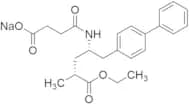
Sacubitril Sodium Salt
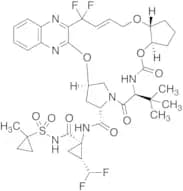
CAS :Formule :C24H28NO5·NaCouleur et forme :White To Off-WhiteMasse moléculaire :433.473Glecaprevir
CAS :Produit contrôlé<p>Applications Glecaprevir is an antiviral drug used in the treatment of patients with hepatitis C virus (HCV) genotype 1-6, of special interest for the treatment of patients with chronic kidney disease also suffering from HCV.<br>References Kwo, P., et. al.: J. Hepatol, 67, 263 (2017)Gane, E., et. al.: N. Engl. J. Med, 377, 1448 (2017)<br></p>Formule :C38H46F4N6O9SCouleur et forme :NeatMasse moléculaire :838.86(S)-2-((S)-4-Methyl-2-((S)-2-(2-morpholinoacetamido)-4-phenylbutanamido)pentanamido)-3-phenylpropanoic Acid
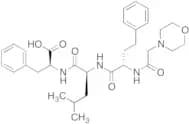
CAS :Produit contrôlé<p>Applications (S)-2-((S)-4-Methyl-2-((S)-2-(2-morpholinoacetamido)-4-phenylbutanamido)pentanamido)-3-phenylpropanoic Acid is an intermediate for Carfilzomib (C183460), which is a second-generation proteasome inhibitor that is used as a treatment in relapsed and refractory multiple myeloma.<br>References Fostier, K., et al.: Oncotargets. Therap., 5, 237 (2012); Geurink, P.P., et al.: J. Med. Chem., 56, 1262 (2013); McCormack, P.L., et al.: Drugs., 72, 2023 (2012);<br></p>Formule :C31H42N4O6Couleur et forme :NeatMasse moléculaire :566.69(R)-3-Carboxy-2-hydroxy-N,N,N-trimethylpropan-1-aminium Chloride
CAS :Produit contrôlé<p>Stability Hygroscopic<br>Applications (R)-3-Carboxy-2-hydroxy-N,N,N-trimethylpropan-1-aminium chloride is an important co-factor of mammalian mitochondrial energy metabolism. It is also a good active ingredient for dry-skin.<br>References Geier, David A., et al.: Neurochem. Res., 38(11), 2336-2341 (2013);Tanno, Osamu, et al.: Fragrance J., 33(8), 82-85 (2005);<br></p>Formule :C7H16NO3·ClCouleur et forme :White To Off-WhiteMasse moléculaire :197.660N-[(1S)-2-Amino-2-oxo-1-(phenylmethyl)ethyl]-2-pyrazinecarboxamide
CAS :<p>Impurity Bortezomib USP Impurity B<br>Applications N-[(1S)-2-Amino-2-oxo-1-(phenylmethyl)ethyl]-2-pyrazinecarboxamide is a metabolite of Bortezomib (B675700), a proteasome inhibitor for the treatment of multiple myeloma and is known to also target the ubiquitin-proteasome pathway.<br>References Pekol, T., et al.: Drug. Meta. Disp., 33, 771 (2005); Hsieh, F.Y., et al.: J. Pharma. Biomed. Anal., 49, 115 (2009);<br></p>Formule :C14H14N4O2Couleur et forme :NeatMasse moléculaire :270.29Tabimorelin
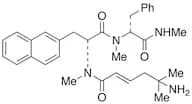
CAS :Produit contrôlé<p>Applications NN703 (Tabimorelin) is an orally active growth hormone (GH) secretagogue intended for use as an alternative to daily injections of GH. In vitro studies in human liver microsomes have indicated that NN703 is a mechanism-based inhibitor of CYP3A4.<br>References Fabre, G., et al.: Biochem. Pharmacol., 37, 4389 (1988), Thummel, K., et al.: Clin. Pharmacol. Ther., 59, 491 (1996), Yu, D., et al.: J. Clin. Pharmacol., 39, 1203 (1999),<br></p>Formule :C32H40N4O3Couleur et forme :NeatMasse moléculaire :528.68(R)-1,2,3,4-Tetrahydroisoquinoline-3-carboxylic Acid
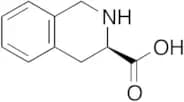
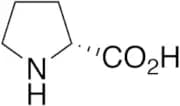
CAS :Produit contrôlé<p>Applications (R)-1,2,3,4-Tetrahydroisoquinoline-3-carboxylic Acid, is an amino acid building block used in peptide synthesis. With a growing peptide drug market the fast, reliable synthesis of peptides is of great importance.<br></p>Formule :C10H11NO2Couleur et forme :NeatMasse moléculaire :177.20DL-Methionyl-DL-methionine
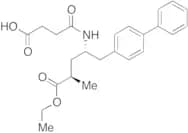
CAS :Produit contrôléFormule :C10H20N2O3S2Couleur et forme :NeatMasse moléculaire :280.4Sacubitril
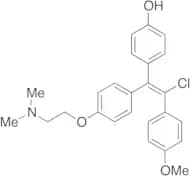
CAS :Formule :C24H29NO5Couleur et forme :Off-White To Light YellowMasse moléculaire :411.49N,N-Dimethyl-4-hydroxymethoxy Clomiphene (~90%, contains ~10% Z-isomer)
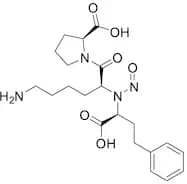
CAS :Produit contrôléFormule :C25H26ClNO3Couleur et forme :NeatMasse moléculaire :423.93N-Nitroso Lisinopril
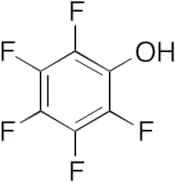
CAS :Formule :C21H30N4O6Couleur et forme :White To Light YellowMasse moléculaire :434.486Perfluorophenol
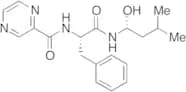
CAS :Produit contrôlé<p>Applications Perfluorophenol is used in the synthesis of PGA-films as biodegradable polymers. It also participates in the synthesis of tripod macrocyclic Gd(III) chelates for cancer molecular MRI.<br>References Lee, K. et al.: Langmuir., 20, 2531 (2004); Zhou, Z. et al.: Biomater., 34, 7683 (2013);<br></p>Formule :C6HF5OCouleur et forme :NeatMasse moléculaire :184.06(R)-Hydroxy Des(boric Acid) Bortezomib
CAS :Produit contrôlé<p>Impurity Bortezomib USP Impurity I<br>Applications (R)-Hydroxy Des(boric acid) Bortezomib is an impurity in the synthesis of Bortezomib (B675700), the first proteasome inhibitor to be approved by the US FDA for multiple myeloma, a blood cancer. A reversible inhibitor of the 26S proteasome-a barrel-shaped multiprotein particle found in the nucleus and cytosol of all eukaryotic cells. Targets the ubiquitin-proteasome pathway.<br>References Nawrocki, S.T., et al: Cancer Research, 65, 11510 (2005); Drahl C. et al.: Chem. and Eng. News, 87, 41 (2009)<br></p>Formule :C19H24N4O3Couleur et forme :NeatMasse moléculaire :356.42Bortezomib
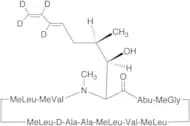
CAS :Produit contrôlé<p>Stability Hygroscopic and Moisture Sensitive<br>Applications Bortezomib is the first proteasome inhibitor to be approved by the US FDA for multiple myeloma, a blood cancer. A reversible inhibitor of the 26S proteasome-a barrel-shaped multiprotein particle found in the nucleus and cytosol of all eukaryotic cells. Targets the ubiquitin-proteasome pathway.<br> Not a dangerous good if item is equal to or less than 1g/ml and there is less than 100g/ml in the package<br>References Nawrocki, S.T., et al: Cancer Research, 65, 11510 (2005); Drahl C.: Chem. and Eng. News, 87, 41 (2009);<br></p>Formule :C19H25BN4O4Couleur et forme :White To Off-WhiteMasse moléculaire :384.24Voclosporin-d4
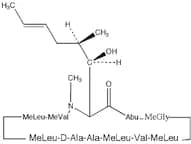
CAS :Produit contrôlé<p>Applications Labelled Voclosporin (V678500). A new agent for the treatment of noninfectious uveitis. Uveitis is an inflammatory, putative Th1-mediated autoimmune disease that affects various parts of the eye and is a leading cause of visual loss. Voclosporin, a rationally designed novel calcineurin inhibitor, exhibits a favorable safety profile, a strong correlation between pharmacokinetic and pharmacodynamic response, and a wide therapeutic window. Immunosuppressant.<br>References Aspeslet, L., et al.: Transplant Proc., 33, 1048 (2001), Cho, M., et al.: Arthritis Rheum., 46, 1202 (2002), Staatz, C., et al.: Clin. Pharmacokinet., 43, 623 (2004),<br></p>Formule :C63H107D4N11O12Couleur et forme :NeatMasse moléculaire :1218.65Cyclosporin D
CAS :Produit contrôlé<p>Applications A group of nonpolar cyclic oligopeptides with immunosupppressant activity.<br>References van Wartburg, A., et al.: Prog. Med. Chem., 25, 1 (1988), Jorgensen, K.A., et al.: Scand. J. Imunol., 57, 93 (2003), Vollenbroeker, et al.: Transplant. Proc., 37, 1741 (2005),<br></p>Formule :C63H113N11O12Couleur et forme :Off-WhiteMasse moléculaire :1216.643,3’,5-Triiodo-L-thyronine 4’-O-Sulfate
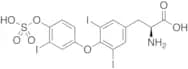
CAS :<p>Applications 3,3’,5-Triiodo-L-thyronine 4’-O-Sulfate is the sulfoconjugated metabolite of 3,3’,5-Triiodo-L-thyronine (T795380).<br>References Rooda, S.J. et al.: J. Clin. Endocrinol. Metab., 69, 552 (1989); Everts, M. E. et al.: Metab. Clin. Exp., 43, 1282 (1994); Pinna, G. et al.: Endocrinology, 143, 1789 (2002);<br></p>Formule :C15H12I3NO7SCouleur et forme :NeatMasse moléculaire :731.04Romidepsin
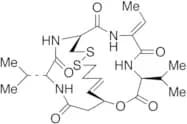
CAS :Produit contrôlé<p>Applications Romidepsin is a histone deacetylase inhibitor that can alter chromatin structure and gene transcription leading to multiple changes in cellular protein production. This may result in cell cycle arrest and tumor growth inhibition. Romidepsin has shown anti-proliferative activity in vitro against multiple mouse and human tumor cell lines and in vivo in human tumor xenograft models. Romidepsin can be administered with a second agent, such as a cytotoxic agent, a steroidal agent, a proteasome inhibitor, or a kinase inhibitor.<br>References Ueda, H., et al.: J. Antibiot., 47, 301 (1994), Weidle, U., et al.: Anticancer Res., 20, 1471 (2000), Kitazono, M., et al.: Cancer Res., 61, 6328 (2001), Sandor, V., et al.: Clin. Cancer Res., 8, 718 (2002),<br></p>Formule :C24H36N4O6S2Couleur et forme :White To Off-WhiteMasse moléculaire :540.70Lopinavir-d8
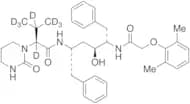
CAS :Produit contrôlé<p>Applications A labelled selective HIV protease inhibitor. An analogue of Ritonavir. Antiviral. It is a COVID19-related research product.<br>References Sham, H.L., et al.: Antimicrob. Ag. Chemother., 42, 3218 (1998), Kumar, G.N., et al.: Drug Metab. Dispos., 27, 86 (1999), Murphy, R.L., et al.: Antiviral Ther., 4, Suppl. 3, 85 (1999)<br></p>Formule :C37D8H40N4O5Couleur et forme :Light YellowMasse moléculaire :636.85


![N-[(1S)-2-Amino-2-oxo-1-(phenylmethyl)ethyl]-2-pyrazinecarboxamide](/_next/image/?url=https%3A%2Fstatic.cymitquimica.com%2Fproducts%2FTR%2Fthumb-webp%2FA622540.webp&w=3840&q=75)