Détergents
Sous-catégories appartenant à la catégorie "Détergents"
745 produits trouvés pour "Détergents"
Rhamnolipids C10
CAS :Rhamnose based 'green' surfactantFormule :C32H58O13Degré de pureté :Min. 95%Couleur et forme :PowderMasse moléculaire :650.8 g/molTween 40
CAS :Tween 40 is a non-ionic surfactant that has been used in the reaction mechanism of lipolytic enzymes. It has been shown to have metabolic effects on fatty acids, with an increase in the rate at which they are metabolized. Tween 40 is also a component of particle suspensions and may be used as a medium for chemiluminescence reactions. Sodium salts such as sodium benzoate or sodium chloride may be added to the solution to produce light emission. Tween 40 has also been shown to provide linear calibration curves for quantitative measurement of glutamate levels in biological fluids by fluorescence photometry. The use of Tween 40 can prevent eye disorders, such as dry eye syndrome, due to its lubricating properties. Tween 40 is synthesized by the esterification of sorbitol and oleic acid with ethylene oxide.Degré de pureté :Min. 95%Heptyl b-D-thioglucopyranoside
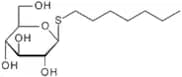
CAS :Heptyl b-D-thioglucopyranoside is a small molecule that is used as a regulator of the phosphatase enzyme (PP1). PP1 is an important enzyme in the regulation of cellular signaling pathways. Heptyl b-D-thioglucopyranoside interacts with the regulatory domain of PP1, which is required for its activity. The ligand binds to an antenna on the regulatory domain and induces conformational changes in the protein, leading to increased phosphatase activity. This small molecule also has two binding sites for ATP and L-phenylalanine, which are required for its regulatory function.Formule :C13H26O5SDegré de pureté :Min. 95%Masse moléculaire :294.41 g/molCyclohexylpropanoyl-N-Hydroxyethylglucamide
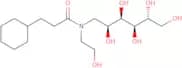
CAS :Cyclohexylpropanoyl-N-Hydroxyethylglucamide is a custom synthesis of a complex carbohydrate with high purity and high quality. This compound is an Oligosaccharide, Polysaccharide, and Modification. It is also a CAS No. 864434-14-0, Methylation, Glycosylation, Carbohydrate, Click modification, sugar and Fluorination. Cyclohexylpropanoyl-N-Hydroxyethylglucamide has been synthesized with Fluorination for use in the synthesis of new compounds.Formule :C17H33NO7Degré de pureté :Min. 95%Masse moléculaire :363.45 g/molTween 65
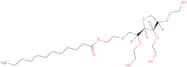
CAS :Tween 65 is a polyoxyethylene sorbitan monooleate (polysorbate) surfactant that is used as a film-forming polymer and dispersing agent in solid preparations. Tween 65 has been shown to inhibit the proliferation of prostate cancer cells, which may be due to its ability to bind to anti-prostate specific antigen (anti-pcsk9) antibody causing the antibody to aggregate and form a particle. This process inhibits the interaction between the antibody and its target, preventing it from binding with PCSK9 protein. The addition of propranolol hydrochloride has been shown to increase the effectiveness of Tween 65.Octyl D-glucopyranoside
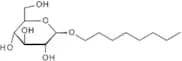
CAS :Octyl D-glucopyranoside is a glucoside that is used as an analytical reagent. It has been shown to have detergent properties and can be used for the extraction of proteins. Octyl D-glucopyranoside also has a high binding affinity for guanine nucleotides, protein, and glycol ethers. The rate constant for the reaction between octyl D-glucopyranoside with the guanine nucleotide was found to be 0.25 x 10^(-5) s^(-1). This product can be used in biochemical research and chromatographic analysis.Formule :C14H28O6Degré de pureté :Min. 98 Area-%Couleur et forme :White PowderMasse moléculaire :292.37 g/molPolysorbate 60
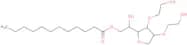
CAS :Polysorbate 60 is a polyoxyethylene-polyoxypropylene block copolymer that is composed of two different saturated fatty acid chains. It has been used as a surfactant and stabilizer in the manufacture of pharmaceuticals, foods, cosmetics, and other products. Polysorbate 60 has been shown to inhibit the growth of epidermal cells by binding to epidermal growth factor (EGF) receptors on the cell surface. The effects of polysorbate 60 are also mediated through hydrogen bonding with the EGF receptor. The pharmacokinetic properties of polysorbate 60 have been studied in vitro using human serum. This polymer is used as an excipient in solid dispersions for oral administration and can be administered intravenously or subcutaneously. Polysorbate 60 is chemically stable at acidic pH levels and hydrochloric acid does not affect its structure. Polysorbate 60 also has protease activity against trypsin at high temperatures,
Formule :C64H126O26Degré de pureté :Min. 95%Couleur et forme :Light (Or Pale) Yellow To Yellow Solid Or Liquid (May Vary)Masse moléculaire :1,311.67 g/molOleylamine, min. 95%
CAS :Oleylamine, min. 95%
Formule :CH3(CH2)7CHCH(CH2)7CH2NH2Degré de pureté :min. 95%Couleur et forme :colorless liq.Masse moléculaire :267.49Glyceryl Monolinoleate
CAS :Oleic, linoleic or linolenic acidsFormule :C21H38O4Couleur et forme :Yellow Liquid May Solidify At Room TemperatureMasse moléculaire :354.27701Oleoyl Polyoxylglycerides
Fatty substances of animal or vegetable orgin and mixtures thereof not elsewhere specified or includedCouleur et forme :Clear Amber LiquidPropylene Glycol Dicaprylate/Dicaprate
CAS :Fatty substances of animal or vegetable orgin and mixtures thereof not elsewhere specified or includedFormule :C10H20O2·C8H16O2·C3H8O2Couleur et forme :Colorless OilMasse moléculaire :392.31379Polyoxyl 20 Stearyl Ether
CAS :Polyethers, nesoiFormule :(C2H4O)nC18H38OCouleur et forme :White Waxy SolidMasse moléculaire :314.5463Polyglyceryl 3 Diisostearate
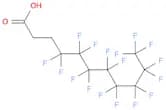
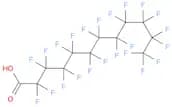
CAS :Polyethers, nesoiFormule :C18H36O2(C3H8O3)xCouleur et forme :Yellow Liquid4,4,5,5,6,6,7,7,8,8,9,9,10,10,11,11,11-Heptadecafluoroundecanoic acid
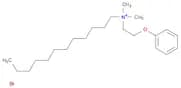
CAS :Formule :C11H5F17O2Degré de pureté :97%Couleur et forme :SolidMasse moléculaire :492.12911-Dodecanaminium, N,N-dimethyl-N-(2-phenoxyethyl)-, bromide
CAS :Formule :C22H40BrNODegré de pureté :97%Couleur et forme :SolidMasse moléculaire :414.4631Dodecanoic acid, 2,2,3,3,4,4,5,5,6,6,7,7,8,8,9,9,10,10,11,11,12,12,12-tricosafluoro-
CAS :Formule :C12HF23O2Degré de pureté :95%Couleur et forme :SolidMasse moléculaire :614.0984Sodium Dodecylbenzenesulfonate (soft type) (mixture) (62%, wetted with Water)
CAS :Formule :C18H29NaO3SCouleur et forme :White or Colorless to Light yellow powder to lump to clear liquidMasse moléculaire :348.48Sodium Dodecylbenzenesulfonate (hard type) (mixture)
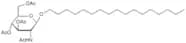
CAS :Formule :C18H29NaO3SDegré de pureté :>95.0%(T)Couleur et forme :White to Light yellow to Light orange powder to crystalMasse moléculaire :348.48Heptadecyl 2-acetamido-3,4,6-tri-O-acetyl-2-deoxy-b-D-glucopyranoside
CAS :Heptadecyl 2-acetamido-3,4,6-tri-O-acetyl-2-deoxy-b-D-glucopyranoside is a custom synthesis, fluorinated carbohydrate.
Formule :C31H55NO9Degré de pureté :Min. 95%Masse moléculaire :585.77 g/molOctyl glucose neopentyl glycol
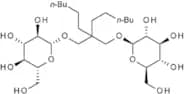
CAS :Octyl glucose neopentyl glycol is a ubiquitin ligase inhibitor that prevents the ubiquitination and degradation of target proteins. It has been shown to inhibit protein synthesis in bacteria. Octyl glucose neopentyl glycol has been used to study the role of cytosolic proteins in emphysema. It was found that octyl glucose neopentyl glycol inhibits the production of these proteins by preventing the interaction between an ubiquitin-like protein and its substrate, thereby inhibiting protein synthesis. Octyl glucose neopentyl glycol also inhibits cancer cells by blocking fatty acid synthase, which is necessary for cell proliferation. This inhibitor can be used as a structural probe to determine enzyme-substrate interactions, such as those that occur with bacterial strain and protein synthesis. It can also be used to study the structure of proteins by exposing them to light or using inhibitors drugs.
Formule :C27H52O12Degré de pureté :Min. 98 Area-%Couleur et forme :PowderMasse moléculaire :568.69 g/mol