Métaux
Les métaux sont des éléments connus pour leurs propriétés caractéristiques telles que la haute conductivité électrique et thermique, la malléabilité, la ductilité et la brillance, ce qui les rend essentiels dans une large gamme d'applications industrielles et de recherche. Ces éléments, y compris le fer, le cuivre, l'aluminium et l'or, jouent des rôles critiques dans des secteurs tels que la construction, l'électronique, le transport et la fabrication. Chez CymitQuimica, nous offrons une sélection diversifiée de métaux de haute pureté conçus pour répondre aux exigences strictes des applications de recherche et industrielles. Notre catalogue comprend des métaux purs, des alliages métalliques et des composés métalliques, tous rigoureusement testés pour leur qualité et leurs performances. En fournissant des métaux de haute qualité, nous soutenons les chercheurs et les professionnels de l'industrie dans l'obtention de résultats précis et efficaces dans leurs projets, facilitant ainsi les avancées en technologie, science des matériaux et ingénierie.
Sous-catégories appartenant à la catégorie "Métaux"
4493 produits trouvés pour "Métaux"
Trier par
Degré de pureté (%)
0
100
|
0
|
50
|
90
|
95
|
100
Dichloro[rel-[N(S)]-N-[2-(diphenylphosphinyl-κO)ethyl]-2-[(R)-phenylthio-κS]ethanamine-κN](triphenylphosphine) ruthenium
Formule :C40H39Cl2NOP2RuSCouleur et forme :dark red xtl.Masse moléculaire :815.74Bis(pentamethylcyclopentadienyl)magnesium, elec. gr. (99.999%-Mg) PURATREM
CAS :<p>Bis(pentamethylcyclopentadienyl)magnesium, elec. gr. (99.999%-Mg) PURATREM</p>Formule :(CH3)5C5MgDegré de pureté :(99.999%-Mg)Couleur et forme :white to yellow xtl.Masse moléculaire :294.77Magnesium trifluoroacetylacetonate dihydrate, min. 98%
CAS :<p>Magnesium trifluoroacetylacetonate dihydrate, min. 98%</p>Formule :Mg(CF3COCHCOCH3)2H2ODegré de pureté :min. 98%Couleur et forme :white pwdr.Masse moléculaire :330.47 (366.50)Dichloro[rel-[N(S)]-N-[2-[(R)-phenylthio-κS]ethyl]-[1-pyrrolidineethanamine-κNN1,κN1](triphenylphosphine)ruthenium(II)
CAS :<p>Dichloro[rel-[N(S)]-N-[2-[(R)-phenylthio-κS]ethyl]-[1-pyrrolidineethanamine-κNN1,κN1](triphenylphosphine)ruthenium(II)</p>Formule :C32H37Cl2N2PRuSCouleur et forme :pink pwdr.Masse moléculaire :684.67Dichloro[N-[2-(diphenylphosphino-κP)ethyl]-2-(methylthio-κS)ethanamine-κN](triphenylphosphine) ruthenium
CAS :Formule :C35H37Cl2NP2RuSCouleur et forme :yellow solidMasse moléculaire :737.67Bis(cyclopentadienyl)ruthenium, 99% (99.9%-Ru) (Ruthenocene)
CAS :<p>Bis(cyclopentadienyl)ruthenium, 99% (99.9%-Ru) (Ruthenocene)</p>Formule :(C5H5)2RuDegré de pureté :(99.9%-Ru)Couleur et forme :light yellow xtl.Masse moléculaire :231.26Magnesium (N,N,N',N'-tetramethylethylenediamine)bis[BREW] (99.99+%-Mg) PURATREM
<p>Magnesium (N,N,N',N'-tetramethylethylenediamine)bis[BREW] (99.99+%-Mg) PURATREM</p>Formule :Mg(C6H16N2)CHyC(O)CHC(O)CHy(xyxDegré de pureté :(99.99+%-Mg)Couleur et forme :pale yellow liq.Bis(N,N’-di-t-butylacetamidinato)ruthenium(II) dicarbonyl, 98% (99.99%-Ru) PURATREM
CAS :<p>Bis(N,N-di-t-butylacetamidinato)ruthenium(II) dicarbonyl, 98% (99.99%-Ru) PURATREM</p>Formule :C22H42N4O2RuDegré de pureté :98% (99.99%-Ru)Couleur et forme :beige to yellow solidMasse moléculaire :495.67Bis(ethylcyclopentadienyl)ruthenium(II), 98% (99.9%-Ru), 44-0040, contained in high-temp 50 ml Swagelok® cylinder (96-1071) for CVD/ALD
CAS :<p>Bis(ethylcyclopentadienyl)ruthenium(II), 98% (99.9%-Ru), 44-0040, contained in high-temp 50 ml Swagelok® cylinder (96-1071) for CVD/ALD</p>Formule :(CH3CH2)C5H4RuDegré de pureté :(99.9%-Ru)Couleur et forme :pale yellow liq.Masse moléculaire :287.37Bis(2,2,6,6-tetramethyl-3,5-heptanedionato)magnesium, anhydrous, min. 98% [Mg(TMHD)2] , 12-0900, contained in high-temp 50 ml Swagelok® cylinder (96-1071) for CVD/ALD
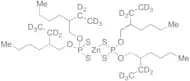
CAS :<p>Bis(2,2,6,6-tetramethyl-3,5-heptanedionato)magnesium, anhydrous, min. 98% [Mg(TMHD)2] , 12-0900, contained in high-temp 50 ml Swagelok® cylinder (96-1071) for CVD/ALD</p>Formule :Mg(C11H19O2)2Degré de pureté :min. 98%Couleur et forme :white pwdr.Masse moléculaire :390.85Zinc Bis(2-Ethylhexyl) Phosphorodithioate-d20
CAS :Produit contrôlé<p>Applications Isotope labelled Zinc Bis(2-Ethylhexyl) Phosphorodithioate is an analytical standard with antioxidant properties.<br>References Cermak, S. et al.: J. Am. Oil Chem. Soc., 91, 2101 (2014); Chemija. et al.: 25, 161 (2014);<br></p>Formule :C32D20H48O4P2S4ZnCouleur et forme :NeatMasse moléculaire :792.62Copper(II) Acetate Monohydrate
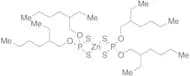
CAS :Produit contrôlé<p>Applications Copper(II) Acetate Monohydrate is a versatile and cost-effective reagent that is used as a catalyst for N-monoalkylation of amino derivatives that are poor nucleophiles, and also for the synthesis of symmetrical 1,3-diynes. Copper(II) Acetate is also used as a mild caustic in the medical field.<br> Not a dangerous good if item is equal to or less than 1g/ml and there is less than 100g/ml in the package<br>References Balaraman, K. & Kesavan, V.: Synthesis, 2010, 3461 (2010); Martinez-Ascencio, A., et al.: Tetrahedron Lett., 51, 325 (2010); Theophanides, T. & Anastassopoulou, J.: Crit. Rev. Oncol. Hematol., 42, 57 (2002)<br></p>Formule :C4H8O4·Cu·H2OCouleur et forme :NeatMasse moléculaire :183.65 + (18.02)Zinc Bis(2-Ethylhexyl) Phosphorodithioate
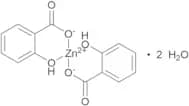
CAS :Produit contrôlé<p>Applications Zinc Bis(2-Ethylhexyl) Phosphorodithioate is an analytical standard with antioxidant properties.<br>References Cermak, S. et al.: J. Am. Oil Chem. Soc., 91, 2101 (2014); Chemija. et al.: 25, 161 (2014);<br></p>Formule :C32H68O4P2S4ZnCouleur et forme :NeatMasse moléculaire :772.47Zinc Salicylate Hydrate
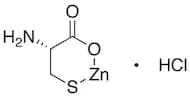
CAS :<p>Applications Zinc salicylate trihydrate (CAS# 16283-36-6) is a useful research chemical compound.<br></p>Formule :C14H10O6Zn·2H2OCouleur et forme :NeatMasse moléculaire :375.665Zinc Cysteinate Hydrochloride
CAS :Produit contrôlé<p>Applications Increases activity of the antioxidative enzymes Catalase and Glutathione Peroxidase, thereby protecting retinal epithelial cells from high hydrogen peroxide concentrations.<br>References Hanley, W., et al.: Chem-Biol. Interactions, 21, 263 (1978),<br></p>Formule :C3H5NO2S·HCl·ZnCouleur et forme :NeatMasse moléculaire :221.012Iron Triabietate
CAS :Produit contrôléFormule :C20H30O2FeCouleur et forme :NeatMasse moléculaire :321.0633333333Copper turnings
CAS :<p>Copper turnings are used in analytical chemistry as a chemical biology reagent. They can be used to measure enzyme activities and thermodynamic data of water vapor and copper chloride. Copper turnings have been shown to inhibit the growth of Hl-60 cells, which is a type of human leukemia. Copper turnings also have an electrochemical impedance spectroscopy (EIS) response that can be used for the determination of phase transition temperature.</p>Formule :CuDegré de pureté :Min. 95%Masse moléculaire :63.55 g/molZinc chloride
CAS :Zinc chloride is a salt that is used as an ingredient in the production of polymer compositions. Zinc chloride has been shown to have significant cytotoxicity for tumor cells and to inhibit leukemia inhibitory factor, which may be due to its ability to bind copper ions. It also inhibits the activity of toll-like receptors, which are involved in the angiogenic process, by binding copper ions. Zinc chloride has been shown to have a potent rate constant for inhibition of hyperproliferative diseases such as cancer and HIV. This may be due to zinc's coordination geometry and its ability to bind copper ions.Formule :ZnCl2Degré de pureté :Min. 95%Masse moléculaire :136.29 g/molNickel bis(dimethyldithiocarbamate)
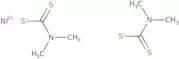
CAS :Nickel bis(dimethyldithiocarbamate) is an inorganic compound that inhibits the growth of bacteria and other microorganisms. It is a thuringiensis, strain, antibacterial and nematicide. Nickel bis(dimethyldithiocarbamate) has been shown to be effective against subtilis, a mutant strain of subtilis that is resistant to many antibiotics. Nickel bis(dimethyldithiocarbamate) also has an effect on nicotinic acetylcholine receptor-mediated transmission in acarids.Formule :C6H12N2NiS4Degré de pureté :Min. 95%Masse moléculaire :299.13 g/molChromium(III) chloride hexahydrate
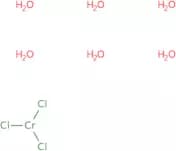
CAS :<p>Chromium(III) chloride hexahydrate is a coordination compound with the chemical formula CrCl3·6H2O. It is soluble in water and has a basic, hexagonal crystal structure. In vitro studies have shown that this compound binds to DNA and inhibits enzymes such as tyrosinase, which plays an essential role in the biosynthesis of melanin. Chromium(III) chloride hexahydrate also inhibits the activity of other enzymes that are involved in the transfer of phosphate groups in reactions involving zirconium oxide and hydrogen fluoride. This compound also has hypoglycemic effects, leading to lower blood sugar levels in rats.</p>Formule :CrCl3•(H2O)6Degré de pureté :Min. 95%Couleur et forme :Green PowderMasse moléculaire :266.45 g/mol
![Dichloro[rel-[N(S)]-N-[2-(diphenylphosphinyl-κO)ethyl]-2-[(R)-phenylthio-κS]ethanamine-κN](triphen…](/_next/image/?url=https%3A%2Fstatic.cymitquimica.com%2Fproducts%2F08%2Fthumb-webp%2F44-3240.webp&w=3840&q=75)


![Dichloro[rel-[N(S)]-N-[2-[(R)-phenylthio-κS]ethyl]-[1-pyrrolidineethanamine-κNN1,κN1](triphenylpho…](/_next/image/?url=https%3A%2Fstatic.cymitquimica.com%2Fproducts%2F08%2Fthumb-webp%2F44-0570.webp&w=3840&q=75)
![Dichloro[N-[2-(diphenylphosphino-κP)ethyl]-2-(methylthio-κS)ethanamine-κN](triphenylphosphine) rut…](/_next/image/?url=https%3A%2Fstatic.cymitquimica.com%2Fproducts%2F08%2Fthumb-webp%2F44-3210.webp&w=3840&q=75)


![Bis(2,2,6,6-tetramethyl-3,5-heptanedionato)magnesium, anhydrous, min. 98% [Mg(TMHD)2] , 12-0900, c…](/_next/image/?url=https%3A%2Fstatic.cymitquimica.com%2Fproducts%2F08%2Fthumb-webp%2F98-4069.webp&w=3840&q=75)