Métaux
Les métaux sont des éléments connus pour leurs propriétés caractéristiques telles que la haute conductivité électrique et thermique, la malléabilité, la ductilité et la brillance, ce qui les rend essentiels dans une large gamme d'applications industrielles et de recherche. Ces éléments, y compris le fer, le cuivre, l'aluminium et l'or, jouent des rôles critiques dans des secteurs tels que la construction, l'électronique, le transport et la fabrication. Chez CymitQuimica, nous offrons une sélection diversifiée de métaux de haute pureté conçus pour répondre aux exigences strictes des applications de recherche et industrielles. Notre catalogue comprend des métaux purs, des alliages métalliques et des composés métalliques, tous rigoureusement testés pour leur qualité et leurs performances. En fournissant des métaux de haute qualité, nous soutenons les chercheurs et les professionnels de l'industrie dans l'obtention de résultats précis et efficaces dans leurs projets, facilitant ainsi les avancées en technologie, science des matériaux et ingénierie.
Sous-catégories appartenant à la catégorie "Métaux"
4493 produits trouvés pour "Métaux"
Trier par
Degré de pureté (%)
0
100
|
0
|
50
|
90
|
95
|
100
Nickel sulfate
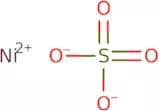
CAS :<p>Nickel sulfate is an inorganic compound that has been shown to have a carcinogenic potential. It is also a strong reducing agent and can be used to reduce metal hydroxides. Nickel sulfate has been shown to inhibit the activity of enzymes, such as catalase, in human serum at high concentrations. This compound is not soluble in water but dissolves in acidic solutions or reacts with sodium citrate, forming nickel citrate. Nickel sulfate is structurally similar to the group p2 metals (i.e., copper, zinc) and can be used for structural analysis of these metals. Nickel sulfate is soluble in water vapor and hydrogen bonding interactions occur between nickel sulfate and other compounds containing sulfur atoms (e.g., hydrogen sulfide).</p>Formule :NiO4SDegré de pureté :Min. 95%Masse moléculaire :154.76 g/molZinc (II) Protoporphyrin IX
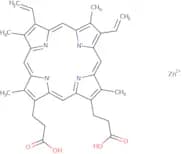
CAS :<p>Zinc protoporphyrin is a heme-based biochemical compound that is used as a calibration standard for spectrophotometric analysis. It has been shown to have an adverse effect on the cardiovascular system, such as atherosclerotic lesion formation in response to oxidative injury. Zinc protoporphyrin also has an effect on brain functions and bowel disease, which may be due to its ability to inhibit iron absorption and promote iron homeostasis.</p>Formule :C34H32N4O4ZnDegré de pureté :Min. 95%Masse moléculaire :626.03 g/molNeodymium(III) Chloride
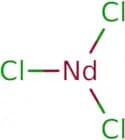
CAS :<p>Neodymium chloride is a reactive metal compound that can be used in the preparation of other neodymium compounds. Neodymium chloride is prepared by dissolving neodymium metal in hydrochloric acid and then heating the solution to about 100 degrees Celsius. The solution is then evaporated to yield the desired product, which includes magnesium salt and several nitrates. The thermal expansion coefficient of neodymium chloride is 0.063 x 10^-6/degree C, while its matrix effect on MgCl2 at 25 degrees Celsius is -0.0032 x 10^-6/degree C. Neodymium chloride has a particle size of 1-2 microns and a density of 4.4 g/cm^3. The thermal properties of this compound are important when considering how it will react with other substances during processing, such as magnesium salts and nitrogen atoms in plasma mass spectrometry due to their similar chemical properties.</p>Formule :Cl3NdDegré de pureté :Min. 95%Masse moléculaire :250.6 g/molCopper turnings
CAS :<p>Copper turnings are used in analytical chemistry as a chemical biology reagent. They can be used to measure enzyme activities and thermodynamic data of water vapor and copper chloride. Copper turnings have been shown to inhibit the growth of Hl-60 cells, which is a type of human leukemia. Copper turnings also have an electrochemical impedance spectroscopy (EIS) response that can be used for the determination of phase transition temperature.</p>Formule :CuDegré de pureté :Min. 95%Masse moléculaire :63.55 g/molNickel bis(dimethyldithiocarbamate)
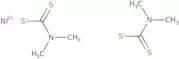
CAS :Nickel bis(dimethyldithiocarbamate) is an inorganic compound that inhibits the growth of bacteria and other microorganisms. It is a thuringiensis, strain, antibacterial and nematicide. Nickel bis(dimethyldithiocarbamate) has been shown to be effective against subtilis, a mutant strain of subtilis that is resistant to many antibiotics. Nickel bis(dimethyldithiocarbamate) also has an effect on nicotinic acetylcholine receptor-mediated transmission in acarids.Formule :C6H12N2NiS4Degré de pureté :Min. 95%Masse moléculaire :299.13 g/molZinc chloride
CAS :<p>Zinc chloride is a salt that is used as an ingredient in the production of polymer compositions. Zinc chloride has been shown to have significant cytotoxicity for tumor cells and to inhibit leukemia inhibitory factor, which may be due to its ability to bind copper ions. It also inhibits the activity of toll-like receptors, which are involved in the angiogenic process, by binding copper ions. Zinc chloride has been shown to have a potent rate constant for inhibition of hyperproliferative diseases such as cancer and HIV. This may be due to zinc's coordination geometry and its ability to bind copper ions.</p>Formule :ZnCl2Degré de pureté :Min. 95%Masse moléculaire :136.29 g/molCopper (II) phosphate
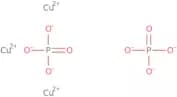
CAS :Copper (II) phosphate is a chemical compound consisting of copper and phosphate ions. It has been used for wastewater treatment, as an analytical chemistry reagent, and as an oxidation catalyst. Copper (II) phosphate is also used in the synthesis of pharmaceuticals, such as alkylating agents and antibiotics. Copper (II) phosphate is stable in the presence of acids, alkalis, and organic solvents. It can be synthesized by reacting copper chloride with sodium carbonate in water at a temperature between 40-50 degrees Celsius. This reaction produces hydrogen bonds between the hydroxyl groups on the surface of the copper ion with those on the phosphorus atom. Thermal expansion measurements have shown that copper (II) phosphate expands at a rate that is dependent on temperature. The addition of nitrogen atoms to this compound increases its thermal expansion rate.Formule :Cu3O8P2Degré de pureté :Min. 95%Masse moléculaire :380.58 g/mol2-Bromohexane (contains 3-Bromohexane) (stabilized with Copper chip)
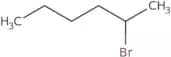
CAS :<p>2-Bromohexane is an organic compound and a chemical building block. It is produced by the reaction of 1,3-dibromohexane with copper. 2-Bromohexane is used in the production of epoxides and other chemicals. The synthesis of 2-bromohexane starts with the addition of bromine to 1,3-dibromohexane followed by the addition of copper (II) chloride. This reaction produces 3-bromohexane as a byproduct which can be removed from the reaction mixture using a Dean–Stark trap. In this process, two moles of hydrogen are used to convert one mole of bromine into one mole of hydrogen bromide gas, which can be easily condensed into liquid form. The monoalkylation product 2-bromohexane reacts with an alkyl halide to produce a mixture containing two different alkyl halides. These</p>Formule :C6H13BrDegré de pureté :85%Masse moléculaire :165.07 g/molIron(II) ethylenediammonium sulfate tetrahydrate
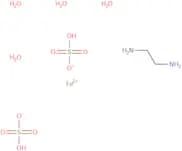
CAS :<p>Please enquire for more information about Iron(II) ethylenediammonium sulfate tetrahydrate including the price, delivery time and more detailed product information at the technical inquiry form on this page</p>Formule :FeSO4·NH3CH2CH2NH3SO4·4H2ODegré de pureté :Min. 95%Masse moléculaire :382.15 g/molChromium(III) nitrate nonahydrate
CAS :<p>Chromium(III) nitrate nonahydrate is a chemical compound that has the formula CrO(NO)(OH)·9H2O. It is the product of a redox reaction between sodium carbonate and water vapor. The compound's structure consists of octahedral chromium ions and nitrate ions, which are connected by hydrogen bonds. The synthesis of this compound involves the reaction of n-dimethyl formamide with pinoresinol diglucoside in the presence of sodium citrate.</p>Formule :CrH18N3O18Degré de pureté :Min. 95%Masse moléculaire :400.15 g/molErbium(III) acetate hydrate
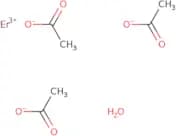
CAS :<p>Erbium(III) acetate hydrate is a crystal form of erbium. It is a rare earth metal which has been used as an optical material and in the production of optic fibers, lasers, and amplifiers. Erbium is also used in the treatment of cancer, where it can be used to destroy tumor cells by heating them with laser light. Erbium(III) acetate hydrate is typically obtained by reacting erbium oxide with acetic acid or acetic anhydride. The crystal has a linear range from 0.5-1.5 micrometers and diffraction peaks at 1.0 and 2.2 micrometers. Erbium(III) acetate hydrate has been shown to have fluorescence resonance energy transfer (FRET) properties, which may be useful in the development of aptasensors for biomolecule detection systems such as antibody-antigen interactions or DNA hybridization reactions.br>br></p>Formule :C6H9ErO6•(H2O)xDegré de pureté :Min. 95%Masse moléculaire :362 g/molZinc citrate dihydrate
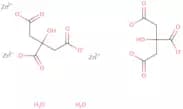
CAS :Zinc citrate dihydrate is a photocatalyst that can be used to clean contaminated materials. It has been shown to have strong disinfectant properties, especially in the presence of sodium carbonate or citric acid. This substance is also used as a structural analysis agent for fabricating cavities and for gravimetric analysis of carbon sources. Zinc citrate dihydrate has also been found to have phototoxic effects, which are due to its ability to generate reactive oxygen species such as singlet oxygen and superoxide anion radicals. The active substances in zinc citrate dihydrate may cause genetic damage, as well as changes in the NMR spectra of rat primary hepatocytes.Formule :(C6H8O7)2•Zn3•(H2O)2Degré de pureté :Min. 95%Couleur et forme :PowderMasse moléculaire :616.46 g/molChromium(III) chloride hexahydrate
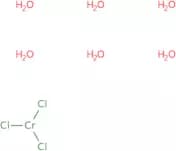
CAS :<p>Chromium(III) chloride hexahydrate is a coordination compound with the chemical formula CrCl3·6H2O. It is soluble in water and has a basic, hexagonal crystal structure. In vitro studies have shown that this compound binds to DNA and inhibits enzymes such as tyrosinase, which plays an essential role in the biosynthesis of melanin. Chromium(III) chloride hexahydrate also inhibits the activity of other enzymes that are involved in the transfer of phosphate groups in reactions involving zirconium oxide and hydrogen fluoride. This compound also has hypoglycemic effects, leading to lower blood sugar levels in rats.</p>Formule :CrCl3•(H2O)6Degré de pureté :Min. 95%Couleur et forme :Green PowderMasse moléculaire :266.45 g/molRubidium (99.9+%) (breakseal ampoule)
CAS :<p>Rubidium (99.9+%) (breakseal ampoule)</p>Formule :RbDegré de pureté :(99.9+%)Couleur et forme :under argonMasse moléculaire :85.47Nickel(II) oxide
CAS :<p>Nickel oxide is a compound of nickel and oxygen with the chemical formula NiO. It has been used in biological studies as a model system for lung tissue and to study the effects of nanoparticles on cell function. Nickel oxide undergoes phase transitions at temperatures near 500 degrees Celsius, which can be monitored by electrochemical impedance spectroscopy. The structure of nickel oxide can be analyzed by x-ray diffraction data collected from samples produced via laser ablation. Nickel oxide has been shown to have high reactivity with hydrogen fluoride and water vapor, making it difficult to synthesize in large quantities.</p>Formule :NiODegré de pureté :Min. 95%Masse moléculaire :74.69 g/molCopper(I) Trifluoromethanesulfonate
CAS :Produit contrôlé<p>Copper(I) Trifluoromethanesulfonate (Cu(OTf)) is a diazo compound that reacts with alkyl halides to form terminal alkynes. It can be used in the synthesis of thioacetals, which are important intermediates for the synthesis of milbemycin A4. Cu(OTf) also undergoes reversible binding to chloride ions and undergoes a number of reactions including alkylation, aziridination, and acetonitrile. Copper(I) Trifluoromethanesulfonate has been shown to have antibiotic properties and binds tightly to bacterial ribosomes. Copper(I) Trifluoromethanesulfonate has also been shown to bind x-ray crystal structures of Milbemycin A4.</p>Formule :C9H8Cu2F6O6S2Degré de pureté :Min. 95%Masse moléculaire :517.37 g/molNiobium disulphide
CAS :<p>Niobium disulphide is a low-energy solid that has been shown to have a high surface area and good thermal expansion. It can be synthesized by reacting niobium oxide with ethylene diamine in the presence of boron nitride. Niobium disulphide reacts with water to form hydrogen sulphide, which can be detected by infrared spectroscopy. This material is used as an additive for polymers and coatings, as well as in filaments for light bulbs.</p>Formule :NbS2Degré de pureté :Min. 95%Couleur et forme :PowderMasse moléculaire :157.04 g/molNickel(II) oxalate dihydrate
CAS :<p>Nickel(II) oxalate dihydrate is a white crystalline powder that is soluble in water and has a particle size of 0.3-2.0 mm. This compound can be used to study the optimal reaction temperature for chemical reactions, such as the thermal expansion of nickel oxide, or the energy metabolism of fungi. Nickel(II) oxalate dihydrate is produced by reacting an aryl halide with an inorganic acid. The quantum theory is used to calculate the activation energies for this reaction. Dehydration of nickel(II) oxalate dihydrate takes place at temperatures between 140-160 ˚C and can be monitored using electrochemical impedance spectroscopy (EIS). The morphology of this compound can be observed through electron microscopy (EM).</p>Formule :NiC2O4·2H2ODegré de pureté :Min. 95%Masse moléculaire :182.74 g/molNickel(II) bromide trihydrate
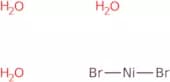
CAS :<p>Nickel(II) bromide trihydrate is an inorganic compound that is soluble in water and alcohol. It has been shown to be a good acceptor for both electron-rich and electron-deficient systems, which makes it useful for cross-coupling reactions. Nickel(II) bromide trihydrate is also a good catalyst for the synthesis of polymers with various functional groups. In addition, it can be used to synthesize ketones from imines and anions. Nickel(II) bromide trihydrate has been shown to have potential applications in cancer therapy as well as magnetic resonance imaging (MRI). The magnetic properties of this compound are due to the presence of unpaired electrons on nickel ions. X-ray crystal structures have revealed that the molecule consists of two nickel ions that are coordinated by six bromide ligands arranged in a trigonal bipyramid shape. This structure gives the molecule a dipole moment, which may be responsible for</p>Formule :NiBr2·3H2ODegré de pureté :Min. 95%Masse moléculaire :272.55 g/moltrans-1-Bromo-1-propene - stablised with Copper
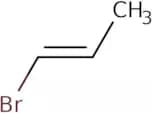
CAS :<p>Trans-1-bromo-1-propene is a compound that has been stabilized by copper. It is used in the synthesis of quinoline derivatives and alkanoic acids. Trans-1-bromo-1-propene is an antimicrobial agent, which kills bacteria by interfering with the fatty acid synthesis. This substance also has antioxidant properties.</p>Formule :C3H5BrDegré de pureté :95%NmrCouleur et forme :Clear LiquidMasse moléculaire :120.98 g/mol