Monosaccharides
Les monosaccharides sont la forme la plus simple des glucides et servent de building blocks fondamentaux pour les sucres plus complexes et les polysaccharides. Ces molécules de sucre unique jouent des rôles critiques dans le métabolisme énergétique, la communication cellulaire et les composants structuraux des cellules. Dans cette section, vous trouverez une large gamme de monosaccharides essentiels pour la recherche en biochimie, biologie moléculaire et glycosciences. Ces composés sont cruciaux pour étudier les voies métaboliques, les processus de glycosylation et le développement d'agents thérapeutiques. Chez CymitQuimica, nous proposons des monosaccharides de haute qualité pour répondre à vos besoins de recherche, garantissant précision et fiabilité dans vos investigations scientifiques.
Sous-catégories appartenant à la catégorie "Monosaccharides"
- Alloses(11 produits)
- Arabinoses(21 produits)
- Erythroses(11 produits)
- Fructoses(9 produits)
- Fucoses(36 produits)
- Galactosamine(41 produits)
- Galactoses(261 produits)
- Glucoses(365 produits)
- Acides glucuroniques(52 produits)
- Glyco-substrats pour l'enzyme(78 produits)
- Guloses(6 produits)
- Idoses(4 produits)
- Inositols(15 produits)
- Lyxoses(4 produits)
- Mannoses(65 produits)
- O-Glycanes(48 produits)
- Psicoses(3 produits)
- Rhamnoses(10 produits)
- Ribos(61 produits)
- Acides sialiques(100 produits)
- Sorboses(4 produits)
- Sucres(173 produits)
- Tagatoses(4 produits)
- Taloses(8 produits)
- Xyloses(20 produits)
Affichez 17 plus de sous-catégories
6088 produits trouvés pour "Monosaccharides"
Trier par
Degré de pureté (%)
0
100
|
0
|
50
|
90
|
95
|
100
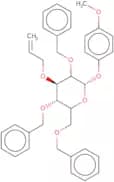
4-Methoxyphenyl-3-O-allyl-2,4,6-tri-O-benzyl-β-D-galactopyranoside
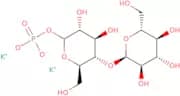
CAS :4-Methoxyphenyl-3-O-allyl-2,4,6-tri-O-benzyl-b-D-galactopyranoside is a synthetic monosaccharide that is used for glycosylation reactions. It has been used in the synthesis of oligosaccharides and polysaccharides. This product is available for custom synthesis and can be ordered with a purity of >98% (w/w).Formule :C37H40O7Degré de pureté :Min. 95%Couleur et forme :White to off-white solid.Masse moléculaire :596.71 g/molD-Maltose 1-phosphate dipotassium salt
CAS :D-Maltose 1-phosphate dipotassium salt is a disaccharide that can be used in the synthesis of oligosaccharides and polysaccharides. It is also an excellent candidate for further modification.Formule :C12H21O14PK2Degré de pureté :Min. 95%Masse moléculaire :498.46 g/molPhenyl 2,4,6-Tri-O-acetyl-3-O-allyl-b-D-thioglucopyranoside
CAS :Phenyl 2,4,6-tri-O-acetyl-3-O-allyl-β-D-thioglucopyranoside is an enantiomer that can be synthesized from the commercially available 2,4,6-triacetylphenyl boronic acid. It has been shown to have a positive effect on insulin sensitivity and uptake in plasma glucose in diabetic patients. Phenyl 2,4,6-tri-O-acetyl-3-O-allyl β D thioglucopyranoside also has a safety profile that is similar to other antidiabetic drugs. This drug has been shown to inhibit influenza virus uptake into cells by competitive inhibition of a transporter type.Formule :C21H26O8SDegré de pureté :Min. 98 Area-%Couleur et forme :White Off-White PowderMasse moléculaire :438.49 g/molMethyl 2,3-O-isopropylidene-5-O-p-toluenesulfonyl-β-D-ribofuranoside
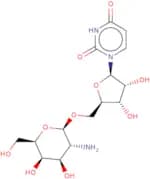
CAS :Methyl 2,3-O-isopropylidene-5-O-p-toluenesulfonyl-b-D-ribofuranoside is a nucleoside that is used to synthesize nucleoside derivatives. It is also used as a reagent for the alkylation of thiols, alcohols, and phenols. This compound can be prepared from 5'-methylthioadenosine by treatment with sodium methoxide in methanol. Methyl 2,3-O-isopropylidene-5-O-p-toluenesulfonyl-b-D ribofuranoside is soluble in water and has a melting point of about 165°C.Formule :C16H22O7SDegré de pureté :Min. 95%Couleur et forme :PowderMasse moléculaire :358.41 g/mol5'-O-(2-Amino-2-deoxy-D-galactopyranosyl)-uridine
CAS :5'-O-(2-Amino-2-deoxy-D-galactopyranosyl)-uridine is a fluorinated sugar that is synthesized from uridine. 5'-O-(2-Amino-2-deoxy-D-galactopyranosyl)-uridine is used as a building block in the synthesis of saccharide and oligosaccharide molecules. This product can be custom synthesized for customers. It has high purity, methylation, glycosylation and click modification.Formule :C15H23N3O10Degré de pureté :Min. 95%Masse moléculaire :405.36 g/mol1,3,5-Tri-O-benzoyl-2-deoxy-2-fluoro-a-D-arabinofuranose
CAS :Resource for the synthesis of Clofarabine and other bioactive arabinosidesFormule :C26H21FO7Degré de pureté :Min. 98 Area-%Couleur et forme :White Off-White PowderMasse moléculaire :464.44 g/molCharantoside
Charantoside is a natural flavone glycoside that belongs to the group of c-glycosides. It has significant anti-inflammatory activity, inhibiting tumor necrosis factor-α (TNF-α) and matrix metalloproteinase-7 (MMP-7), which are proinflammatory cytokines. Charantoside also has anti-diabetic properties, as it inhibits glucose uptake and stimulates insulin release from pancreatic β cells in vitro. Charantoside is found in plants of the Cucurbitaceae family, such as cucumber and pumpkin. This compound can be detected by fingerprinting techniques and was found to have been present in at least two plant families. Charantoside has been shown to inhibit TNF-α production in vivo studies conducted on mice.Degré de pureté :Min. 95%1,2-Dideoxy-3,5-di-O-toluoyl-D-ribose
CAS :1,2-Dideoxy-3,5-di-O-toluoyl-D-ribose is a synthetic sugar that can be used in the synthesis of complex carbohydrates. It has been modified with fluorine, methylation, and click chemistry. It is also available as a high purity product. 1,2-Dideoxy-3,5-di-O-toluoyl-D-ribose is an oligosaccharide that is used in glycosylation reactions to form polysaccharides or saccharides. Click chemistry allows for the modification of this sugar with other molecules such as amino acids or peptides. This modification may be useful for studying protein interactions or for drug development.Formule :C21H22O5Degré de pureté :Min. 95%Masse moléculaire :354.4 g/mol(2R,3R,4R)-N-Benzyloxycarbonyl-2-hydroxymethyl-3,4-pyrrolidinediol
(2R,3R,4R)-N-Benzyloxycarbonyl-2-hydroxymethyl-3,4-pyrrolidinediol is a custom synthesis of polysaccharide that is modified with methylation and glycosylation. It is a complex carbohydrate that has been synthesized using Click chemistry. The product is fluorinated and has high purity.Degré de pureté :Min. 95%(3R, 5S, 6R) -2, 6-Bis(hydroxymethyl) - 3, 4, 5- piperidinetriol
(3R, 5S, 6R) -2, 6-Bis(hydroxymethyl) - 3, 4, 5- piperidinetriol is a Custom synthesis. The chemical modification of the monosaccharide (3R, 5S, 6R)-2,6-bis(hydroxymethyl)-3,4,5-piperidinetriol to form (3R, 5S, 6R) -2,6-bis(hydroxymethyl) - 3-O-(α-D-galactopyranosyl)-β-D-glucopyranose and its subsequent methylation with formaldehyde and sodium methoxide yields a product that is structurally related to the naturally occurring oligosaccharides. This modification has been shown to inhibit the activity of bacterial glycosyltransferases and thus inhibits bacterial growth.Degré de pureté :Min. 95%2-Acetamido-1,3,4,6-tetra-O-acetyl-2-deoxy-D-galactopyranose
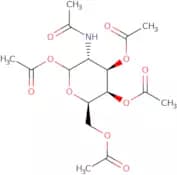
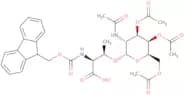
CAS :2-Acetamido-1,3,4,6-tetra-O-acetyl-2-deoxy-D-galactopyranose is fully acetylated D-Galactosamine (C4 epimer of D-Glucosamine). 2-Acetamido-1,3,4,6-tetra-O-acetyl-2-deoxy-D-galactopyranose is used in the synthesis of α- and β-linked acetamido pyranosides, which have anti-inflammatory properties as inhibitors of TLR4.Formule :C16H23NO10Degré de pureté :Min. 95%Couleur et forme :White PowderMasse moléculaire :389.35 g/mol2-Acetamido-3,4,6-tri-O-acetyl-2-deoxy-α-D-galactopyranosyl-Fmoc threonine
CAS :2-Acetamido-3,4,6-tri-O-acetyl-2-deoxy-α-D-galactopyranosyl-Fmoc threonine is a glycoside that has been synthesized on a solid phase. The synthesis of this compound has been accomplished by the stepwise addition of Fmoc protected amino acids to the growing peptide chain. Cleavage from the resin and deprotection of the side chains are followed by purification by RP HPLC.Formule :C33H38N2O13Degré de pureté :Min. 95 Area-%Masse moléculaire :670.67 g/molMethyl 3-Deoxy-3-fluoro-6-O-triphenylmethyl-b-D-glucopyranoside
Methyl 3-Deoxy-3-fluoro-6-O-triphenylmethyl-b-D-glucopyranoside is a synthetic sugar that belongs to the class of carbohydrates. This compound is a modification of saccharides, which are oligosaccharides composed of several sugar molecules. Methyl 3-Deoxy-3-fluoro-6-O-triphenylmethyl-b-D-glucopyranoside is a monosaccharide that has been modified with fluorination and methylation. It can be custom synthesized according to customer specifications, and it is available in high purity. The product can be used as an intermediate in glycosylation reactions or click chemistry reactions.Degré de pureté :Min. 95%Hyacinthine crystals
Hyacinthine is a sugar that is synthesized in the laboratory. It is modified with fluorine, methyl, and click chemistry. Hyacinthine has been shown to have antifungal, antiviral, and antitumour properties. It also has been shown to have anti-inflammatory effects. Hyacinthine can be used as a probe for the study of glycosylation reactions or as a model for the synthesis of complex carbohydrates.Degré de pureté :Min. 95%b-D-Galactoheptose
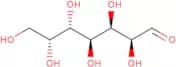
CAS :B-D-Galactoheptose is a short-chain carbohydrate that is found in Citrus. It can be used as a food additive, but it also serves as an intermediate in the synthesis of other sugars. The stereospecificity of this sugar is determined by the orientation of its hydroxyl group on carbon atom 2. This sugar has been shown to inhibit the growth of food-borne pathogens, such as Salmonella and Staphylococcus, and has been shown to have anti-inflammatory properties. The biosynthesis of b-D-galactoheptose begins with the conversion of glucose into erythrose 4 phosphate. This process requires ATP and pyruvate kinase and proceeds through two reactions: erythrose 4 phosphate dehydrogenase, which converts erythrose 4 phosphate into erythronate 4 phosphate; and aldolase, which converts erythronate 4 phosphate into b-DFormule :C7H14O7Degré de pureté :Min. 95%Couleur et forme :PowderMasse moléculaire :210.18 g/mol(5R, 8R, 9S) -8- [(4R) - 2, 2-Dimethyl- 1, 3- dioxolan- 4- yl] - 9- hydroxy- 2, 2- dimethyl- 1, 3, 7- trioxaspiro[4.4] nonan- 6- one
5,8-Dihydroxy-6-fluoro-2,2-dimethyl-1,3,7-trioxaspiro[4.4]nonane - 8-[(4R)-2,2-dimethyl-1,3-dioxolan-4-yl]-9-(hydroxymethyl) - 2,2-dimethyl - 1,3,7 - trioxaspiro[4.4]nonane is a synthetic glycosylated fluorinated octahydropyrrole (5R)-8-(hydroxymethyl)-9-(hydroxymethyl)-6-[(methyloxy)methyl]-2,2,- dimethylpiperidine that is used as an intermediate in the synthesis of oligosaccharides and polysaccharides. It is also used to modify complex carbohydrates for click chemistry applications. This product has a CAS number of 9248411–67–0 and a purity of >Degré de pureté :Min. 95%N-(Benzyloxycarbonyl)-2,3-5,6-di-O-isopropylidene-L-gulofuranosylamine
N-(Benzyloxycarbonyl)-2,3-5,6-di-O-isopropylidene-L-gulofuranosylamine is a glycosylation reagent that was custom synthesized for the synthesis of oligosaccharides and polysaccharides. It has been fluorinated at the 2 position of the benzyloxycarbonyl group to provide protection against oxidation. The methyl group in this compound is used for Click chemistry, which is a modification that adds a reactive vinyl or allyl moiety to an organic molecule. This compound can be used for the synthesis of complex carbohydrates with high purity.Degré de pureté :Min. 95%D-Mannitol 1-phosphate lithium salt
CAS :D-Mannitol 1-phosphate lithium salt (DMPL) is a bacterial growth-inhibiting agent that inhibits the ribitol dehydrogenase enzyme that converts mannitol to ribitol. The wild-type strain of bacteria is more sensitive to DMPL than the mutant strains, which lack this enzyme. This compound has been shown to be active against Aerobacter aerogenes, and it can be used as an antimicrobial agent in plant physiology, where it prevents cell lysis. DMPL is also effective against wild-type strains of E. coli K-12 and has a broad range of pH optima with a maximum at pH 6.0 to 7.0. The reaction mechanism for this drug is not well understood, but it may involve inhibition of the polymerase chain reaction or other enzyme activities.Formule :C6H15O9P·xLiDegré de pureté :Min. 95 Area-%Couleur et forme :White Off-White PowderMasse moléculaire :262.15 g/mol(1S) -1- [(2S, 3R,4S) - 3- Hydroxy-4-hydroxymethyl- 1- benzyl - 2- azetidinyl] -1, 2- ethanediol
(1S) -1- [(2S, 3R,4S) - 3- Hydroxy-4-hydroxymethyl- 1- benzyl - 2- azetidinyl] -1, 2- ethanediol is a sugar that is made synthetically. It has a CAS number of 76577-11-7 and is available for custom synthesis. The chemical name for this product is (1S)-1-[(2S,3R,4S)-3-[(2E)-3-(hydroxymethyl)oxirane]-4-(hydroxymethyl)-2-(benzyloxy)methyl]-1,2-ethanediol. This product has high purity and can be used for glycosylation or methylation reactions.Degré de pureté :Min. 95%(-)-D-Noviose
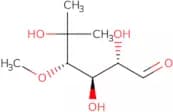
CAS :(-)-D-Noviose is a naturally occurring sulfoxide that was first isolated from the tubercles of tuberculosis patients. It is a biosynthetic precursor to tiacumicin, an antibacterial agent. In addition, (-)-D-Noviose has been shown to act as a chaperone and inhibit cancer cells in vitro. (-)-D-Noviose binds to the cysteine residues of proteins, preventing their oxidation and subsequent aggregation. This prevents the cross-linking of proteins that leads to cellular damage and death.
Formule :C8H16O5Degré de pureté :Min. 95%Masse moléculaire :192.21 g/mol





![(5R, 8R, 9S) -8- [(4R) - 2, 2-Dimethyl- 1, 3- dioxolan- 4- yl] - 9- hydroxy- 2, 2- dimethyl- 1, 3,…](/_next/image/?url=https%3A%2Fstatic.cymitquimica.com%2Fproducts%2F3D%2Fthumb-webp%2FMD170665.webp&w=3840&q=75)
![(1S) -1- [(2S, 3R,4S) - 3- Hydroxy-4-hydroxymethyl- 1- benzyl - 2- azetidinyl] -1, 2- ethanediol](/_next/image/?url=https%3A%2Fstatic.cymitquimica.com%2Fproducts%2F3D%2Fthumb-webp%2FMH163532.webp&w=3840&q=75)