Monosaccharides
Sous-catégories appartenant à la catégorie "Monosaccharides"
- Alloses(11 produits)
- Arabinoses(21 produits)
- Erythroses(11 produits)
- Fructoses(9 produits)
- Fucoses(36 produits)
- Galactosamine(41 produits)
- Galactoses(261 produits)
- Glucoses(365 produits)
- Acides glucuroniques(52 produits)
- Glyco-substrats pour l'enzyme(78 produits)
- Guloses(6 produits)
- Idoses(4 produits)
- Inositols(15 produits)
- Lyxoses(4 produits)
- Mannoses(65 produits)
- O-Glycanes(48 produits)
- Psicoses(3 produits)
- Rhamnoses(10 produits)
- Ribos(61 produits)
- Acides sialiques(100 produits)
- Sorboses(4 produits)
- Sucres(173 produits)
- Tagatoses(4 produits)
- Taloses(8 produits)
- Xyloses(20 produits)
6088 produits trouvés pour "Monosaccharides"
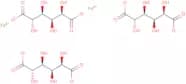
myo-Inositol 1,3,4,5,6-pentakisphosphate decasodium salt
CAS :Myo-inositol 1,3,4,5,6-pentakisphosphate decasodium salt is a complex carbohydrate that has been modified with fluorine. This modification has been shown to increase the solubility of myo-inositol 1,3,4,5,6-pentakisphosphate decasodium salt in organic solvents. Myo-inositol 1,3,4,5,6-pentakisphosphate decasodium salt is used in the synthesis of oligosaccharides and polysaccharides. It also serves as a substrate for methylation and glycosylation reactions. The synthesis of this compound can be achieved by a Click reaction.Formule :C6H17O21P5·10NaDegré de pureté :Min. 95%Couleur et forme :PowderMasse moléculaire :809.95 g/molCaffeic acid 3-O-b-D-glucopyranoside
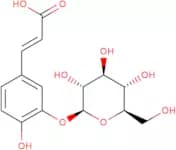
CAS :Caffeic acid 3-O-b-D-glucopyranoside is a naturally occurring phenolic compound found in plants. It is a white to off-white powder that is soluble in methanol, ethanol, and water. Caffeic acid 3-O-b-D-glucopyranoside has been shown to have antioxidant properties by increasing the mitochondrial membrane potential in erythrocytes and reducing free radicals. It also may have anticancer activity due to its ability to inhibit tumor growth in vivo studies.Formule :C15H18O9Degré de pureté :Min. 98 Area-%Couleur et forme :Off-White PowderMasse moléculaire :342.3 g/molN-Butyldeoxynojirimycin hydrochloride
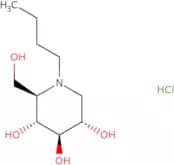
CAS :Competitive inhibitor of ceramide-glycosyltransferase used for substrate reduction therapy in lysosomal storage disorders. It inhibits glucosylceramide synthase, which catalyses the initial step in glycosphingolipid biosynthetic pathway. This compound delays the onset of symptoms in type 1 Gaucher disease, Sandhoff disease and Tay-Sachs disease. It also reduces brain abnormalities in mucolipidosis type IV.
Formule :C10H21NO4•HClDegré de pureté :Min. 95%Couleur et forme :PowderMasse moléculaire :255.74 g/mol2-Acetamido-1,3,4,6-tetra-O-benzyl-2-deoxy-a-D-glucopyranoside
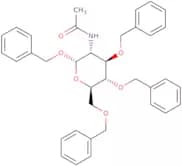
CAS :2-Acetamido-1,3,4,6-tetra-O-benzyl-2-deoxy-a-D-glucopyranoside is a modification of the natural carbohydrate. It is an oligosaccharide synthesized with custom synthesis. The synthetic process involves the methylation and glycosylation of the monosaccharides. Fluorination and saccharide linkages are also used in the production of this compound. 2-Acetamido-1,3,4,6-tetra-O-benzyl-2-deoxyglucopyranoside can be used as a building block for complex carbohydrates or as a research reagent for glycobiology.Formule :C36H39NO6Degré de pureté :Min. 95 Area-%Couleur et forme :PowderMasse moléculaire :581.7 g/molN-Acetyl-D-glucosamine - plant source
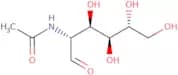
CAS :N-acetyl D-glucosamine (GlcNAc) is an aldohexose (2-acetamido-2-deoxyglucose) in which the hydroxyl group at position 2 is replaced by NHAc (Collins, 2006). N-acetyl D-glucosamine forms the exoskeletons of molluscs and insects as the building block of the polysaccharide chitin (Rudrapatnam, 2003). N-acetyl D-glucosamine is a key component of N- and O-linked glycans, present in glycolipids and the glycosaminoglycan hyaluronic acid (Fallacara, 2018). A recent study has suggested that N-acetyl D-glucosamine may have therapeutic potential for COVID-19 as it affects the spike protein-ACE2 receptor interaction during the infection with SARS-CoV-2 virus (Baysal, 2021).Formule :C8H15NO6Degré de pureté :Min. 98 Area-%Couleur et forme :PowderMasse moléculaire :221.21 g/molN-[2-(4'-Methoxyphenylacetonitrile)]-2,3,4,6-tetra-O-pivaloyl-D-glucopyranoside
N-[2-(4'-Methoxyphenylacetonitrile)]-2,3,4,6-tetra-O-pivaloyl-D-glucopyranoside is a custom synthesis of a carbohydrate. It is a synthetic saccharide that is modified by fluorination and methylation. This compound has high purity and can be custom synthesized to order.
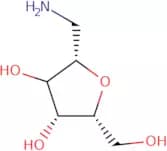
Formule :C35H52N2O10Degré de pureté :Min. 95%Masse moléculaire :660.79 g/mol1-Amino-2,5-anhydro-D-glucitol
CAS :1-Amino-2,5-anhydro-D-glucitol is a synthetic monosaccharide with the chemical formula C6H12O6. It is often used in custom synthesis and click modification of polysaccharides and oligosaccharides. The fluorination of this compound can be done to obtain a fluorinated 1-amino-2,5-anhydro-D-glucitol. 1AADG can also be modified at its methyl group to produce N,N'-diacetylmethylenecyclohexane carboxamide (CAS No. 2166517-07). This product has been shown to inhibit the growth of bacteria such as Clostridium perfringens and Mycobacterium tuberculosis.Formule :C6H13NO4Degré de pureté :Min. 95%Masse moléculaire :163.17 g/molSunitinib N-glucuronide
Sunitinib N-glucuronide is a synthetic small molecule with a molecular weight of 517.63 Da and a chemical formula of C14H18F3N5O6S. Sunitinib N-glucuronide is a monosaccharide sugar that is modified with fluorine. It is one of the products of the methylation, custom synthesis, and click modification reactions. The CAS number for this product is 70698-74-7. Sunitinib N-glucuronide has a purity level of 98%, which means that it has less than 2% impurities. This product can be used in oligosaccharides, polysaccharides, or saccharides as a complex carbohydrate or high purity carbohydrate. It can also be used as an additive to modify the properties of monosaccharides and sugars.Degré de pureté :Min. 95%Iron sucrose - 20% Iron
CAS :Iron sucrose is a form of iron that is used in the treatment of iron deficiency anemia. Iron sucrose is administered orally and absorbed in the small intestine. The amounts of iron absorbed are not sufficient to correct the underlying cause of iron deficiency anemia, but can be used as a substitute for oral iron therapy. Iron sucrose has been shown to be safe and effective in treating chronic bowel disease and may be useful in other diseases with inflammatory components, such as infectious diseases and inflammatory bowel disease. Iron sucrose may also be helpful for patients with congestive heart failure or nephrology dialysis who require supplemental erythropoietin.Formule :C12H22O11FeDegré de pureté :Min. 95%Masse moléculaire :398.14 g/molN-Acetyl-5-bromo-3-indoxyl-2,3,4-tri-O-acetyl-β-D-glucuronic acid methyl ester
CAS :N-Acetyl-5-bromo-3-indoxyl-2,3,4-tri-O-acetyl-b-D-glucuronic acid methyl ester is a custom synthesis of an acetylated bromoglycoside. This compound is a synthetic modification of the natural product and has been shown to be effective against various bacteria. The synthesis of this compound can be achieved by the click reaction with methyl 2,2'-dithiopropionate and 5,5'-dimethoxytrityl chloride in the presence of trimethylsulfonium iodide. N—Acetyl—5—bromo—3—indoxyl—2,3,4—tri—O—acetyl--b--D--glucuronic acid methyl ester is also a monosaccharide sugar that is a carbohydrate with a high purity and modifies proteins at their active site. It also has
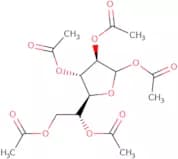
Formule :C23H24BrNO11Degré de pureté :Min. 95%Masse moléculaire :570.34 g/mol1,2,3,5,6-Penta-O-acetyl-D-galactofuranose
CAS :1,2,3,5,6-Penta-O-acetyl-D-galactofuranose is a condensation product of a 4-methylumbelliferone with the anomeric form of D-galactose. It is a white crystalline solid that can be obtained in yields up to 200 g per multigram of reactants. This compound has been shown to react with chloride ion and zinc chloride at elevated temperatures to yield the corresponding chloride or zinc salt. The crystal structure of this compound has been studied by x-ray diffraction and found to have an anomeric configuration and a space group P2(1)22(1). Carbohydrates are polyhydroxyaldehydes or polyhydroxyketones containing at least one hemiacetal or hemiketal group in their structure. The general formula for carbohydrates is (Cx(H2O)y)z where x is usually 2 or 3, y isFormule :C16H22O11Degré de pureté :Min. 95%Couleur et forme :PowderMasse moléculaire :390.4 g/mol1-O-Acetyl-3,5-bis(4-chlorobenzoyl)-2-deoxy-D-ribose
CAS :1-O-Acetyl-3,5-bis(4-chlorobenzoyl)-2-deoxy-D-ribose is a methylated saccharide that can be synthesized from D-ribose and 4-(chloromethyl)benzaldehyde. It has been used for the modification of polysaccharides with click chemistry to produce oligosaccharides. This compound has also been used in the synthesis of glycosyls such as N,N'-diacetylchitobiose and N,N'-diacetylchitotriose. 1-O-Acetyl 3,5 bis (4 chlorobenzoyl)-2 deoxy D ribose is an Oligosaccharide that is soluble in water and is stable at high temperatures. The purity of this compound exceeds 99% and it's CAS number is 1207459-15-1.Formule :C21H18Cl2O7Degré de pureté :(%) Min. 95%Couleur et forme :White PowderMasse moléculaire :453.27 g/molD-Galactose non-animal origin
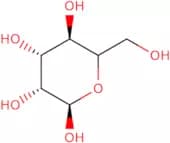
CAS :D-Galactose is a monosaccharide that is found in the cells of plants and animals. It can be synthesized from D-glucose by adding a D-galactose molecule to the alpha carbon of an existing glucose molecule. The resulting bond is called a glycosidic linkage. This process is called glycosylation. Glycosylation occurs when a sugar molecule reacts with another molecule, such as an amino acid, lipid, or nucleotide, to form what is known as a glycoside linkage. In this case, the sugar is D-galactose and the other molecules are either amino acids or lipids. The reaction between D-galactose and other molecules often results in polysaccharides and complex carbohydrates such as cellulose, chitin, and glycogen.
Methylation of D-galactose can produce methyl galactoside (CAS No. 1881-42-7), whichFormule :C6H12O6Degré de pureté :Min. 98 Area-%Masse moléculaire :180.16 g/molADP-D-glucose disodium salt
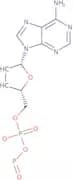
CAS :ADP-D-glucose disodium salt is a synthetic saccharide with the chemical formula C6H14N2O8. It is used as a building block for the synthesis of complex carbohydrates, such as polysaccharides and oligosaccharides. ADP-D-glucose disodium salt can be modified to create methylated, glycosylated, and fluorinated derivatives. These modifications allow ADP-D-glucose disodium salt to be used in Click chemistry and other advanced applications.br>br>ADP-D-glucose disodium salt is also known by its CAS number 102129-65-7.br>br> br>br>Formule :C16H23N5O15P2·2NaDegré de pureté :Min. 95%Couleur et forme :PowderMasse moléculaire :633.31 g/mol6-Azido-6-deoxy-L-galactose
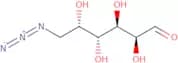
CAS :6-Azido-6-deoxy-L-galactose is an analog of the natural L-galactose. It has been shown to inhibit the growth and survival of a number of human pathogens, including those that cause tuberculosis, staphylococcal infections, and meningitis. 6-Azido-6-deoxygalactose is reactive with cellular structures and glycoconjugates, which may have contributed to its antimicrobial activity in tissue culture. 6A6DG blocks fatty acid synthesis by inhibiting enzymes called acyltransferases. It also inhibits glycolysis by interfering with the conversion of glucose into glycogen through inhibition of glycogen synthase kinase 3β (GSK3β), which leads to decreased levels of ATP in cells. This compound also inhibits glutaminase activity in the brain, leading to impaired neurotransmitter release and subsequent neuronal cell death.Formule :C6H11N3O5Degré de pureté :Min. 95%Couleur et forme :White PowderMasse moléculaire :205.17 g/mol2-C-(Hydroxymethyl)-2,3-O-isopropylidene-L-lyxono-1.4-lactone
2-C-(Hydroxymethyl)-2,3-O-isopropylidene-L-lyxono-1.4-lactone is a synthetic modification of the oligosaccharide, 2,3-O-isopropylidene L-lyxonic acid lactone. It is a white to off-white crystalline powder that is soluble in water. This product has been custom synthesized and can be used as a monosaccharide or methylated in the glycosylation step. The CAS number for this product is 72893-21-6 and it has a molecular weight of 252.24 g/mol.Degré de pureté :Min. 95%2,3-O-Isopropylidene-D-lyxofuranose
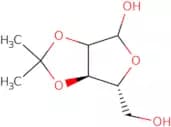
CAS :2,3-O-Isopropylidene-D-lyxofuranose is a synthetic disaccharide that is used as an antiinflammatory agent. It has been shown to inhibit the production of e-selectin, a protein that mediates inflammation by binding to cells in the vicinity of the site of injury. This compound has also been shown to inhibit diacetate formation from oxocarbenium ions and glycosidic linkage formation. 2,3-O-Isopropylidene-D-lyxofuranose may be synthesized via a Wittig reaction with phytosphingosine or wittig reaction with acetone.Formule :C8H14O5Degré de pureté :Min. 98 Area-%Couleur et forme :White PowderMasse moléculaire :190.19 g/mol3,4-O-(1',1',3',3'-Tetraisopropyl-1,3-disiloxanediyl)-L-rhamnal
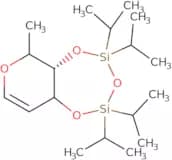
CAS :3,4-O-(1',1',3',3'-Tetraisopropyl-1,3-disiloxanediyl)-L-rhamnal is a synthetic sugar that is used as a building block for the synthesis of glycoproteins and other polymers. It can be methylated to give 3,4-O-(1',1',3',3'-tetramethyl-1,3-disiloxanediyl)-L-rhamnal, which is an inhibitor of protein glycosylation. 3,4-O-(1',1',3',3'-Tetraisopropyl-1,3-disiloxanediyl)-L-rhamnal has been fluorinated to give 3,4-O-(2'-fluoroethylidene) -L-rhamnal and used in Click chemistry reactions.Formule :C18H36O4Si2Degré de pureté :Min. 95%Masse moléculaire :372.65 g/molMethyl 2,3,4-tri-O-benzoyl-6-O-trityl-a-D-glucopyranoside
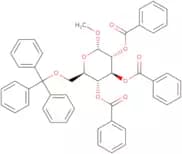
CAS :Methyl 2,3,4-tri-O-benzoyl-6-O-trityl-a-D-glucopyranoside is a synthetic compound that has been modified. This modification includes the addition of fluorine at the 6th carbon on the right side of the molecule. The methylation and tritylation of the molecule have also been performed to create a new product with a better stability. Methyl 2,3,4-tri-O-benzoyl-6-O-trityl-aDglucopyranoside can be used as a monosaccharide or oligosaccharide in glycosylation reactions. It can also be used as an intermediate in the synthesis of complex carbohydrate molecules.Formule :C47H40O9Degré de pureté :Min. 95%Masse moléculaire :748.84 g/molDucheside A pentaacetate
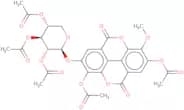
Ducheside A pentaacetate is a fluorescent sugar that can be used as a fluorescent probe to study the glycosylation of proteins. This compound has been shown to be effective in inhibiting the growth of Gram-positive bacteria such as Mycobacterium tuberculosis, Clostridium perfringens, and Streptococcus pyogenes. Ducheside A pentaacetate is synthesized from duchesidin I and an acetyl group, which is then fluorinated with N-fluorobenzenesulfonamide. The product can be modified through methylation or click chemistry reactions. Ducheside A pentaacetate is soluble in water and has a molecular weight of 585.5 g/mol. It has CAS number 314965-07-8 and purity greater than 99%.Degré de pureté :Min. 95%


![N-[2-(4'-Methoxyphenylacetonitrile)]-2,3,4,6-tetra-O-pivaloyl-D-glucopyranoside](/_next/image/?url=https%3A%2Fstatic.cymitquimica.com%2Fproducts%2F3D%2Fthumb-webp%2FMM08496.webp&w=3840&q=75)