Monosaccharides
Les monosaccharides sont la forme la plus simple des glucides et servent de building blocks fondamentaux pour les sucres plus complexes et les polysaccharides. Ces molécules de sucre unique jouent des rôles critiques dans le métabolisme énergétique, la communication cellulaire et les composants structuraux des cellules. Dans cette section, vous trouverez une large gamme de monosaccharides essentiels pour la recherche en biochimie, biologie moléculaire et glycosciences. Ces composés sont cruciaux pour étudier les voies métaboliques, les processus de glycosylation et le développement d'agents thérapeutiques. Chez CymitQuimica, nous proposons des monosaccharides de haute qualité pour répondre à vos besoins de recherche, garantissant précision et fiabilité dans vos investigations scientifiques.
Sous-catégories appartenant à la catégorie "Monosaccharides"
- Alloses(11 produits)
- Arabinoses(21 produits)
- Erythroses(11 produits)
- Fructoses(9 produits)
- Fucoses(36 produits)
- Galactosamine(41 produits)
- Galactoses(261 produits)
- Glucoses(365 produits)
- Acides glucuroniques(51 produits)
- Glyco-substrats pour l'enzyme(77 produits)
- Guloses(6 produits)
- Idoses(4 produits)
- Inositols(15 produits)
- Lyxoses(4 produits)
- Mannoses(65 produits)
- O-Glycanes(48 produits)
- Psicoses(3 produits)
- Rhamnoses(10 produits)
- Ribos(61 produits)
- Acides sialiques(100 produits)
- Sorboses(4 produits)
- Sucres(173 produits)
- Tagatoses(4 produits)
- Taloses(8 produits)
- Xyloses(20 produits)
Affichez 17 plus de sous-catégories
6090 produits trouvés pour "Monosaccharides"
Trier par
Degré de pureté (%)
0
100
|
0
|
50
|
90
|
95
|
100
5-Deoxy-D-arabinose
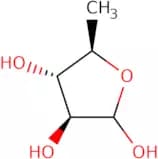
CAS :<p>5-Deoxy-D-arabinose is a phenylhydrazone compound that is soluble in water and alcohol. It has a molecular weight of 176.20, and its chemical formula is C6H8N2O3. The substance has been shown to be an inhibitor of the bacterial enzyme d-threose synthase, which catalyzes the formation of d-threose from D-ribose 5-phosphate and glycerone phosphate. This substance also inhibits fungal pteridine reductase; however, it does not inhibit mammalian pteridine reductase. 5-Deoxy-D-arabinose has analogues that are biologically active.</p>Formule :C5H10O4Degré de pureté :Min. 95%Masse moléculaire :134.13 g/molMethyl a-D-mannofuranoside
CAS :<p>Methyl a-D-mannofuranoside is a synthetic sugar that has been modified by the addition of fluorine at C-1 and methylation at C-2. This modification provides the compound with desired physical properties, such as increased stability and solubility. Methyl a-D-mannofuranoside can be used in the synthesis of oligosaccharides, which are complex carbohydrates consisting of three to ten monosaccharides linked together by glycosidic bonds. It is also used for click chemistry modifications.</p>Formule :C7H14O6Degré de pureté :Min. 95%Masse moléculaire :194.18 g/mol1,2,3,4-Tetra-O-acetyl-D-xylopyranose
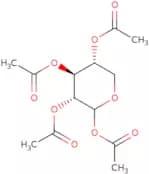
CAS :<p>1,2,3,4-Tetra-O-acetyl-D-xylopyranose is a molecule that is derived from D-xylose. It has been shown to inhibit the growth of fungi such as T. rubrum and L. candidum by acetylation of l-threonine at the C2 position. This molecule can be recycled and its inhibitory activity can be increased through acetylation of the hydroxymethyl group on the C4 position. The mechanism of inhibition is not known but it may be due to steric hindrance or peracylation.</p>Formule :C13H18O9Degré de pureté :Min. 95%Masse moléculaire :318.28 g/molMirabegron N-glucuronide
CAS :<p>Mirabegron is a drug that is used to treat overactive bladder. Mirabegron N-glucuronide is the major metabolite of mirabegron, which has been shown to be excreted in urine. This metabolite can be detected using a validated assay and can be measured using a mass spectrometer. The concentration of mirabegron N-glucuronide in the blood sample was measured at various timepoints after administration of mirabegron. Pharmacokinetic studies were performed in humans and human liver tissue, giving information on how long it takes for the drug to reach its maximum concentration in the body and how long it stays there before being eliminated.</p>Degré de pureté :Min. 95%3-Deoxy-3-fluoro-D-myo-inositol
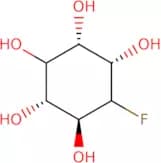
CAS :<p>3-Deoxy-3-fluoro-D-myo-inositol, also known as myo-inositol 3-O-(2'-deoxy) (dFMI), is a natural product found in the brain that has been shown to selectively inhibit the growth of trophozoites. It can bind to nonselective cations and block intracellular Ca2+ channels. This causes an increase in cytosolic Ca2+ concentration, which activates a cytosolic Ca2+ signal cascade. These effects show that dFMI is capable of inhibiting the growth of trophozoites by blocking the function of Ca2+ channels and increasing cytosolic Ca2+.</p>Formule :C6H11FO5Degré de pureté :Min. 95%Masse moléculaire :182.15 g/mol2,3,5-Tri-O-benzoyl-b-D-ribofuranose
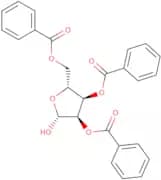
CAS :<p>2,3,5-Tri-O-benzoyl-b-D-ribofuranose is a custom synthesis of an oligosaccharide. It has been modified with fluorination and methylation. This is a synthetic carbohydrate that belongs to the class of saccharides. It has been synthesized from a monosaccharide and has glycosylation. The chemical formula for 2,3,5-Tri-O-benzoyl-b-D-ribofuranose is C10H14O7.</p>Formule :C26H22O8Degré de pureté :Min. 95%Masse moléculaire :462.45 g/molD-Gluconic acid sodium salt
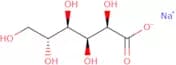
CAS :<p>D-Gluconic acid sodium salt - USP grade is a biochemical reagent that is used in the synthesis of nucleotides and various other biomolecules. It is also used as an antimicrobial agent, with broad-spectrum activity against bacteria, fungi, and viruses. In addition to its antimicrobial activity, D-gluconic acid has been shown to inhibit carcinoma cell lines in vitro. This inhibition may be due to the inhibition of enzymes involved in phosphorylation reactions such as adenylate kinase, glyceraldehyde 3-phosphate dehydrogenase (GAPDH) and hexokinase. X-ray diffraction data on wild-type strains of E. coli have shown that D-gluconic acid binds to the enzyme phosphogluconate dehydrogenase (PGD), which catalyzes a reaction between D-gluconic acid and NAD+ or NADP+. The matrix effect for this reaction was</p>Formule :C6H11NaO7Degré de pureté :Min. 95%Masse moléculaire :218.14 g/mola-D-Galactofuranosyl nitromethane
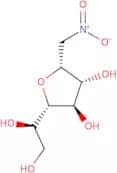
CAS :<p>a-D-Galactofuranosyl nitromethane is a sugar with a galactose (galactosyl) and a nitro group. It is used as a starting material for the synthesis of other glycosides, such as the synthesis of 3-indoxyl-6-fluoro β-D-galactopyranoside. This compound is also used for the synthesis of saccharides with fluorinated or methylated groups.<br>a-D-Galactofuranosyl nitromethane has CAS number 81812-46-6 and can be synthesized from 2,4,5,7 trichloroacetophenone and 1,2,3,4 benzene tetracarboxylic acid in the presence of sodium ethoxide.</p>Formule :C7H14NO7Degré de pureté :Min. 95%Masse moléculaire :224.19 g/molThiamine galactoside
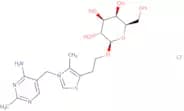
CAS :<p>Thiamine galactoside is a custom synthesis of a monosaccharide. It is modified with fluorination, methylation and saccharide. The resulting product has a molecular weight of 578.08 g/mol and the chemical formula C24H34N6O18S2.</p>Formule :C18H27O6N4S·C2H3O2Degré de pureté :Min. 95%Masse moléculaire :486.54 g/molD-[UL-13C6,15N]Glucosamine HCl
<p>D-[UL-13C6,15N]Glucosamine HCl is a complex carbohydrate that can be custom synthesized to order. It is a synthetic sugar that has been modified by Click chemistry. The synthesis of this product requires the use of fluorination and glycosylation reactions. This product can be used in a variety of applications including methylation, modification, or oligosaccharide synthesis. D-[UL-13C6,15N]Glucosamine HCl is also known as glucosamine hydrochloride and has CAS number 1088-96-4.</p>Formule :C6H13NO5·HClDegré de pureté :Min. 95%Couleur et forme :White PowderMasse moléculaire :222.58 g/molL-Sorbosone
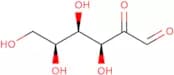
CAS :<p>L-Sorbosone is an antioxidant that can be used as a food additive or dietary supplement. It has been shown to have antioxidative properties and has the ability to inhibit oxidation reactions. The optimum concentration of L-sorbosone is 0.1 milligrams per liter and it is effective at inhibiting chemical reactions in a wide range of pH levels, from 2 to 8. L-Sorbosone belongs to the genus sorbose, which is a sugar alcohol that does not contain an aldehyde group. It also converts sorbose into dehydroascorbic acid and inhibits the enzyme activities of two important enzymes involved in cell culture, namely glutathione reductase and cytochrome p450, which are necessary for maintaining cellular redox balance.</p>Formule :C6H10O6Degré de pureté :Min. 95%Masse moléculaire :178.14 g/molp-Coumaroyl-b-D-glucose
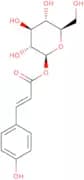
CAS :<p>P-Coumaroyl-b-D-glucose is a flavanone that belongs to the class of flavonoids. It is an intermediate in the synthesis of many other flavonoids, such as apigenin, labiatae, and rhamnetin. P-Coumaroyl-b-D-glucose has been shown to downregulate the expression of genes encoding proteins involved in the biosynthesis of proanthocyanidins and anthocyanins. This compound also induces apoptosis by binding to the mitochondria membrane and increasing reactive oxygen species production. P-Coumaroyl-b-D-glucose can be used as a marker for phenylpropanoid metabolism in plants.</p>Formule :C15H18O8Degré de pureté :Min. 95%Couleur et forme :White PowderMasse moléculaire :326.3 g/mol1,2,3,4-Tetra-O-benzoyl-a-D-glucuronide methyl ester
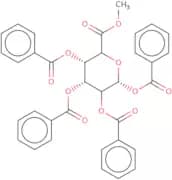
CAS :1,2,3,4-Tetra-O-benzoyl-a-D-glucuronide methyl ester is a synthetic compound that belongs to the class of complex carbohydrates. It has been custom synthesized and modified using glycosylation, methylation, and click chemistry. It is composed of one monosaccharide and four oligosaccharides linked together by O-glycosidic bonds. The carbohydrate moiety contains a benzoyl group attached to the 1 position on the glucose molecule through an ether linkage. This product is available in high purity (≥ 99%) at CAS No. 201789-32-4.Formule :C35H28O11Degré de pureté :Min. 95%Masse moléculaire :624.59 g/molDaunorubicin
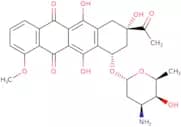
CAS :<p>Anthracycline antibiotic with potent anti-tumoral activity. The compound interferes with DNA replication and RNA transcription since it intercalates between the base pairs of nucleic acids. It also inhibits the topoisomerase II, proteasome and generates free radicals, which leads to cell death of treated cells. Moreover, daunorubicin triggers apoptosis trough the stimulation of ceramide synthesis. It has been used as chemotherapy agent for the treatment of myeloid leukaemia (AML) and acute lymphocytic leukaemia (ALL).</p>Formule :C27H29NO10Degré de pureté :Min. 95%Masse moléculaire :527.52 g/molLaninamivir
CAS :<p>Laninamivir is an antiviral drug that inhibits the neuraminidase activity of influenza A and B viruses. It is a prodrug that is activated by esterases to form the active metabolite laninamivir carboxylate, which inhibits virus replication. Laninamivir has been shown to be effective against oseltamivir-resistant mutants and has been used in combination with oseltamivir as a treatment for pandemic influenza. Laninamivir has also been studied in pediatric patients with influenza-like symptoms, with significant reductions in symptom severity, duration of symptoms, and viral load.</p>Formule :C13H22N4O7Degré de pureté :Min. 95%Couleur et forme :PowderMasse moléculaire :346.34 g/molN-Acetyl-D-[UL-13C6]glucosamine
CAS :<p>N-Acetyl-D-[UL-13C6]glucosamine is a complex carbohydrate that contains a sugar at the end of a glycosidic bond. This product is modified with methylation, glycosylation, and fluorination. It has CAS No. 127959-06-2, High purity, and is custom synthesized for your specific needs.</p>Formule :C6C2H15NO6Degré de pureté :Min. 95%Masse moléculaire :227.21 g/molMethyl b-D-thioxylopyranoside
CAS :<p>Methyl b-D-thioxylopyranoside is a synthetic sugar that is used in the synthesis of saccharides and oligosaccharides. It is also used to modify saccharides, such as glucosamine, by adding methyl groups to the sugar's hydroxyl group. Methyl b-D-thioxylopyranoside can be used for glycans with high purity and high yield. This product does not contain any other substances except for water and ethanol. The chemical formula for this product is C6H8O6.</p>Degré de pureté :Min. 95%5-(β-D-Galactopyranosyloxy)-DL-lysine
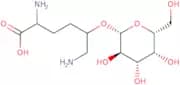
CAS :<p>5-(β-D-Galactopyranosyloxy)-DL-lysine is a custom synthesized compound that has been modified with 5-(β-D-galactopyranosyloxy) groups. It is an oligosaccharide, polysaccharide, and saccharide that belongs to the category of carbohydrates. This product is available for purchase in high purity and has been fluorinated. The CAS number for this product is 35910-05-5.</p>Formule :C12H24N2O8Degré de pureté :Min. 95%Couleur et forme :PowderMasse moléculaire :324.33 g/molSucralose-d6
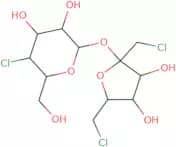
CAS :<p>Sucralose is a non-nutritive artificial sweetener that has no calories and is used in place of sugar. It is made from sucrose by substituting three hydrogen-oxygen groups with three chlorine atoms. The deuterium isotope, D6, was used to prepare this compound for analysis because it only emits positrons that can be detected using a PET scanner. Sucralose-d6 was shown to have high resistance to degradation due to its strong bond between the carbon and oxygen atoms in the molecule. This property makes it more stable than other sugars and carbohydrates which are subject to hydrolysis by enzymes in wastewater treatment plants. Deionized water can be used as a sample preparation solvent for sucralose-d6 because it does not contain any ions that may react with this compound.</p>Formule :C12H19Cl3O8Degré de pureté :Min. 95%Masse moléculaire :403.7 g/molPyrocatechol monoglucoside
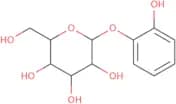
CAS :<p>Pyrocatechol monoglucoside is a phenolic compound that is found in many plants. It has an anti-thrombotic effect, inhibits bacterial growth, and has anticarcinogenic effects. Pyrocatechol monoglucoside is also hepatoprotective and can be used as a natural food preservative. It has a bitter taste and can be found in leuconostoc mesenteroides and mesenteroides strains of bacteria.</p>Degré de pureté :Min. 95%


![D-[UL-13C6,15N]Glucosamine HCl](/_next/image/?url=https%3A%2Fstatic.cymitquimica.com%2Fproducts%2F3D%2Fthumb-webp%2FMG15630.webp&w=3840&q=75)

![N-Acetyl-D-[UL-13C6]glucosamine](/_next/image/?url=https%3A%2Fstatic.cymitquimica.com%2Fproducts%2F3D%2Fthumb-webp%2FMA44797.webp&w=3840&q=75)