Glucoses
Le glucose est le monosaccharide le plus largement reconnu et il est fondamental pour le métabolisme énergétique des organismes vivants. Il joue un rôle central dans divers processus biochimiques, notamment la glycolyse, la photosynthèse et la respiration cellulaire. Chez CymitQuimica, nous fournissons du glucose de qualité recherche pour soutenir vos études et processus industriels.
365 produits trouvés pour "Glucoses"
Trier par
Degré de pureté (%)
0
100
|
0
|
50
|
90
|
95
|
100
AR 231453
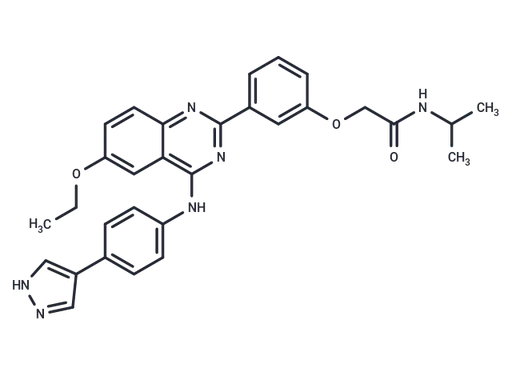
CAS :<p>Azenosertib (ZN-c3) is an orally active, specific GPR119 agonist. Cost-effective and quality-assured.</p>Formule :C21H24FN7O5SDegré de pureté :99.31% - 99.34%Couleur et forme :SolidMasse moléculaire :505.52Sucrose
CAS :<p>Sucrose (D-(+)-Saccharose) is a nonreducing disaccharide composed of glucose and fructose linked via their anomeric carbons.</p>Formule :C12H22O11Degré de pureté :99.87% - 99.88%Couleur et forme :White Crystals Or PowderMasse moléculaire :342.30Tiliroside
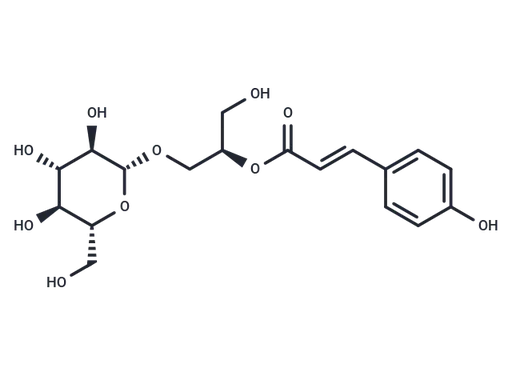
CAS :<p>1.</p>Formule :C30H26O13Degré de pureté :99.81% - ≥95%Couleur et forme :SolidMasse moléculaire :594.521-Deoxynojirimycin
CAS :<p>1-Deoxynojirimycin (Moranoline) is a potent α-glucosidase inhibitor, suppressing postprandial blood glucose, thereby possibly preventing diabetes mellitus.</p>Formule :C6H13NO4Degré de pureté :99.65% - 99.98%Couleur et forme :White-Beige Solid CrystallineMasse moléculaire :163.17AS1269574
CAS :<p>AS1269574 is a potent, orally available GPR119 agonist. AS1269574(AS 1269574) has the potential for the research of type 2 diabetes.</p>Formule :C13H14BrN3ODegré de pureté :99.99%Couleur et forme :SolidMasse moléculaire :308.17Ponalrestat
CAS :<p>Ponalrestat is an aldose reductase inhibitor.</p>Formule :C17H12BrFN2O3Degré de pureté :97.34% - 99.86%Couleur et forme :SolidMasse moléculaire :391.19BMS-309403
CAS :<p>BMS309403 is a potent and selective inhibitor of adipocyte fatty acid binding protein aFABP.Cost-effective and quality-assured.</p>Formule :C31H26N2O3Degré de pureté :99.52% - 99.76%Couleur et forme :SolidMasse moléculaire :474.55STF-31
CAS :<p>STF-31 is an inhibitor of glucose transporter 1 (GLUT1) with IC50 of 1 μM.</p>Formule :C23H25N3O3SDegré de pureté :99.55% - >99.99%Couleur et forme :SolidMasse moléculaire :423.53β-D-Fructofuranosyl α-D-glucopyranoside Heptakis Ammonium Salt
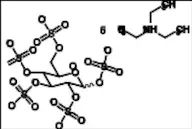
Formule :C12H43N7O32S7Masse moléculaire :1021.913-Deoxyglucosone
CAS :<p>Stability Hygroscopic, Light Sensitive, Temperature Sensitive<br>Applications An intermediate in the Maillard reaction of proteins with glucose, which is metabolised to 3-Deoxyfructose. An intermediate in the formation of pyrraline, which might contribute to a pathological effect, such as carcinogenesis.<br>References Kato, H. et al.: Agric. Biol. Chem., 51, 683 (1987), Hayase, F. et al.: J. Biol. Chem., 264, 3758 (1989), Kato, H. et al.: Biochimica et Biophysica Acta, 1035, 71 (1990)<br></p>Formule :C6H10O5Couleur et forme :White To YellowMasse moléculaire :162.14D-Glucose
CAS :<p>Applications D-Glucose is a simple sugar that is present in plants. A monosaccharide that may exist in open chain or cyclic conformation if in solution. It plays a vital role in photosynthesis and fuels the energy required for cellular respiration. D-Glucose is used in various metabolic processes including enzymic synthesis of cyclohexyl-α and β-D-glucosides. Can also be used as a diagnostic tool in detection of type 2 diabetes mellitus and potentially Huntington's disease through analysis of blood-glucose in type 1 diabetes mellitus.<br>References Wang, R., et al.: J. Mol. Catal. B. Enz., 56, 131 (2009); Springhorn, C. et al.: J. Clin. Endocrinol. Metab., 97, 4640 (2012); Hashimoto, K. et al.: J. Clin. Endocrinol. Metab., 97, 3016 (2012); Avelange, M. et al.: Plant. Phys., 94, 1157 (1990); Cramer, C. et al.: J. Chem. Soc., 115, 5745 (1993);<br></p>Formule :C6H12O6Couleur et forme :NeatMasse moléculaire :180.161,3,4,6-Tetra-O-acetyl-2-O-trifluoromethanesulfonyl-β-D-mannopyranose
CAS :Produit contrôlé<p>Applications A radiolabelled pharmaceutical preparation for diagnostic aims used in positron emission tomography.<br>References Chirakal, R., et al.: Applied Radiation Isotopes, 46, 149 (1995), Kuge, Y., et al.: Nuclear Med. Biol., 29, 275 ( 2002),<br></p>Formule :C15H19F3O12SCouleur et forme :NeatMasse moléculaire :480.36