Étalons relatives aux composés organiques volatils (COV)
193 produits trouvés pour "Étalons relatives aux composés organiques volatils (COV)"
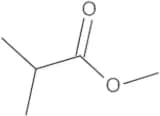
Isobutyric acid-methyl ester
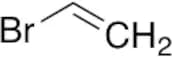
CAS :Produit contrôléFormule :C5H10O2Couleur et forme :NeatMasse moléculaire :102.13Vinyl Bromide
CAS :Produit contrôléFormule :C2H3BrCouleur et forme :Single SolutionMasse moléculaire :106.954-Chlorodiphenyl Ether
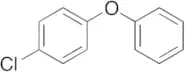
CAS :Produit contrôléApplications 4-Chlorodiphenyl Ether is a standard for environmental testing and research. Biodegradability studies with organic priority pollutant compounds.
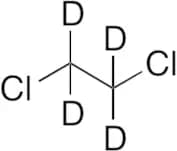
References Tabak, H. H., et al.: J. Water Pollut. Control Fed., 53, 1503 (1981)Formule :C12H9ClOCouleur et forme :NeatMasse moléculaire :204.651,2-Dichloroethane-D4
CAS :Produit contrôléStability Volatile
Applications 1,2-Dichloroethane-D4 is a labelled analogue of 1,2-Dichloroethane (D434325). 1,2-Dichloroethane is one of the major waste products of the Vinyl Chloride industries, and has also been classified as a potential human carcinogen.
Not a dangerous good if item is equal to or less than 1g/ml and there is less than 100g/ml in the package
References Hung, W., et al.: Appl. Surf. Sci., 255, 2205 (2008); Rannug, U., et al.: Chem.-Biol. Int., 20, 1 (1978)Formule :C22H4Cl2Couleur et forme :ColourlessMasse moléculaire :102.981-Propanol
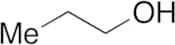
CAS :Produit contrôléStability Volatile
Applications 1-Propanol is a low molecular weight alcohol that is currently being investigated as an alternative fuel for direct methanol/oxygen fuel cells. 1-Propanol is also used as a coupling and dispersing agent in the pharmaceutical and chemicals industries.
Not a dangerous good if item is equal to or less than 1g/ml and there is less than 100g/ml in the package
References Gupta, M., et al.: Fluid Phase Equil., 244, 26 (2006); Lamy, C., et al.: J. Appl. Electrochem., 31, 799 (2001); Wang, J., et al.: J. Electrochem. Soc., 142 (1995)Formule :C3H8OCouleur et forme :ClearMasse moléculaire :60.11,4-Dichlorobenzene
CAS :Produit contrôléApplications 1,4-Dichlorobenzene, is a versatile building block and a small bioactive molecule, used in various organic synthesis. It is also used as disinfectant, deodorant, and pesticide.This compound is a contaminant of emerging concern (CECs).
Not a dangerous good if item is equal to or less than 1g/ml and there is less than 100g/ml in the package
References Fahey, D. R., et al.: Macromolecules, 24 (15), 4242 (1991); Rossberg, M., et al.: Ullmann's Encyclopedia of Industrial Chemistry, (2006);Formule :C6H4Cl2Couleur et forme :WhiteMasse moléculaire :147.00Tetraglyme
CAS :Produit contrôléApplications It is used as a solvent.
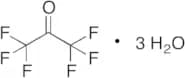
Formule :C10H22O5Couleur et forme :NeatMasse moléculaire :222.28Hexafluoroacetone Trihydrate
CAS :Produit contrôléFormule :C3F6O·3H2OCouleur et forme :NeatMasse moléculaire :220.07Mesityl Oxide
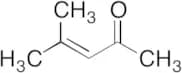
CAS :Stability Light Sensitive, Polymerize easily
Applications Mesityl Oxide, a α,β-unsaturated ketone, and has a strong peppermint odor. It is mainly used as a solvent and in the production of methyl isobutyl ketone by hydrogenation.
Not a dangerous good if item is equal to or less than 1g/ml and there is less than 100g/ml in the package
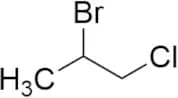
References Conant, J. B., et al.: Org. Synth.: Coll., 1, 345 (1941); Jalali-Heravi, M., et al.: J. Chromatography A, 1218, 2569 (2011);Formule :C6H10OCouleur et forme :ColourlessMasse moléculaire :98.142-Bromo-1-chloropropane
CAS :Formule :C3H6BrClDegré de pureté :>90%Couleur et forme :Colourless LiquidMasse moléculaire :157.442,2,2-Trichloroethanol
CAS :Applications 2,2,2-trichloroethanol (TCE) is an active metabolite of Trichloroacetaldehyde monohydrate [chloral hydrate (CH)] (T774055), a sedative/hypnotic that increases cerebral blood flow (CBF).
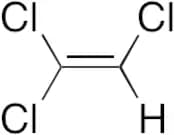
References Parelkar, N., et al.: J. Pharma. Exper. Ther., 332, 803 (2010); Merdink, J., et al.: Toxicol, 245, 130 (2008)Formule :C2H3Cl3OCouleur et forme :NeatMasse moléculaire :149.4Trichloroethylene
CAS :Applications Trichloroethylene is a common industrial solvent that is used in dry cleaning and metal degreasing. Trichloroethylene is also a suspected carcinogen to humans, and is a common groundwater contaminant.
Not a dangerous good if item is equal to or less than 1g/ml and there is less than 100g/ml in the package
References Little, D., et al., Appl. Env. Microb., 54, 951 (1988); Vogel, T. & McCarty, P.: Appl. Environ. Microb., 49, 1080 (1985); Wartenberg, D., et al.: Environ. Health Persp., 108, 161 (2000)Formule :C2HCl3Couleur et forme :ColourlessMasse moléculaire :131.391,3-Dichloropropane
CAS :Produit contrôléApplications 1,3-Dichloropropane is an intermediate used to prepare analogs of tamoxifen with improved calmodulin antagonism.
Not a dangerous good if item is equal to or less than 1g/ml and there is less than 100g/ml in the package
References Hardcastle, I., et al.: J. Med. Chem., 38, 241 (1995);Formule :C3H6Cl2Couleur et forme :NeatMasse moléculaire :112.991-Bromo-3-chloropropane
CAS :Produit contrôléApplications 1-Bromo-3-chloropropane can be used safer and equally efficient alternative to chloroform as a phase-separation agent in the 1-step method of RNA isolation from biological samples such as animal and plant tissue.
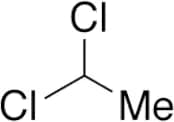
References Chomczynski, P. et al.: Anal. Biochem., 225, 163 (1995); Chey, S. et al.: Anal. Biochem., 411, 164 (2011);Formule :C3H6BrClCouleur et forme :Colourless LiquidMasse moléculaire :157.441,1-Dichloroethane (Stabilized with Nitromethane, ~0.5%) (>90%)
CAS :Produit contrôléStability Very Volatile
Applications 1,1-Dichloroethane is used as a chemical solvent in the preparation of precursors of quinolizine, isoquinoline and indole alkaloids(1). Groundwater contaminant, DDT biodegredation product(2,3). Drinking water contaminant candidate list 3 (CCL 3) compound as per United States Environmental Protection Agency (EPA). Environmental contaminants; Food contaminants.
Not a dangerous good if item is equal to or less than 1g/ml and there is less than 100g/ml in the package
References 1. Butler, E. et al.: Env. Sci. Tech. 2000, 34 (3), pp 422–429.2. Ren, L. et al.: Chemosphere. 2017 Feb;168:244-253.3. Grewal, J. et al.: J. Environ. Sci. Health. B. 2016 Dec;51(12):809-816.Formule :C2H4Cl2Degré de pureté :>90%Couleur et forme :NeatMasse moléculaire :98.96