APIs pour la recherche et les impuretés
Sous-catégories appartenant à la catégorie "APIs pour la recherche et les impuretés"
- Acides Aminés et Dérivés(12.316 produits)
- Anthraquinones et Dérivés(402 produits)
- Dérivés du Benzimidazole et de l’Imidazole(10.375 produits)
- Dérivés des Benzodiazépines(323 produits)
- Glucides et Glycoconjugués(5.038 produits)
- Esters et Dérivés(42.239 produits)
- Acides Gras et Dérivés Lipidiques(32.360 produits)
- Flavonoïdes et Polyphénols(17.066 produits)
- Radicaux Libres et Agents Oxydants/Réducteurs(208 produits)
- Cétones et Dérivés(2.393 produits)
- Antibiotiques Naturels et Semi-Synthétiques(6.307 produits)
- Nitriles et Dérivés Cyano(3.068 produits)
- Nitrosamines et Dérivés(55 produits)
- Nucléosides et Nucléotides(3.409 produits)
- Phosphates et Phosphonates Organiques(1.192 produits)
- Sulfonates et Sulfates Organiques(10.415 produits)
- Composés Organométalliques(4.417 produits)
- Autres(6.257 produits)
- Peptides et Protéines(3.129 produits)
- Polymères et Dérivés(99 produits)
- Dérivés des Purines et Pyrimidines(8.889 produits)
- Dérivés de Quinazoline et de Quinoléine(65.574 produits)
- Quinones et Dérivés(24.334 produits)
- Sels et Dérivés d’API(81.501 produits)
- Stéroïdes et Dérivés(4.905 produits)
- Sulfamides et Dérivés(2.539 produits)
- Terpénoïdes et Dérivés(3.827 produits)
- Thiazolidinediones et Thiopyranes(2.752 produits)
- Composés β-Adrénergiques(227 produits)
58881 produits trouvés pour "APIs pour la recherche et les impuretés"
(2S,4R)-Fosinopril sodium salt
CAS :(2S,4R)-Fosinopril sodium salt is a prodrug that is converted to the active form fosinopril in the body. It is used to treat high blood pressure and heart failure. Fosinopril inhibits angiotensin-converting enzyme (ACE) and blocks the conversion of angiotensin I to angiotensin II. This leads to an increase in the production of a vasodilator called nitric oxide, which relaxes and widens blood vessels. Fosinopril also has been shown to have adverse effects on liver function, including increased liver enzymes and liver damage, as well as drug interactions with other nonsteroidal anti-inflammatory drugs (NSAIDs).
Formule :C30H45NNaO7PDegré de pureté :Min. 95%Masse moléculaire :585.64 g/molDoxorubicin Impurity 15
CAS :Doxorubicin impurity 15 is a natural product that is used as an analytical reference standard in pharmacopoeia. It has been synthesized for use in drug development and research and development, and is available as a high-purity HPLC standard. Doxorubicin impurity 15 has a CAS number of 131086-18-5.
Formule :C31H38BrNO11Degré de pureté :Min. 95%Masse moléculaire :680.54 g/molElsinochrome A
CAS :Elsinochrome A is a drug product that has not been approved for human use. It belongs to the class of drugs called natural products and has not been synthesized. Elsinochrome A is a metabolite of erythromycin, which is produced by the fungus Elsinoë sp. The chemical structure of this natural product was determined using spectral analysis, and it was found to be similar to the antibiotic erythromycin. Elsinochrome A has shown promising results in pharmacological studies as a potential drug candidate for tuberculosis treatment because it inhibits bacterial growth by binding to DNA-dependent RNA polymerase, thereby preventing transcription and replication.
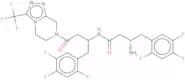
Formule :C30H24O10Degré de pureté :Min. 95%Masse moléculaire :544.50 g/molSitagliptin Hydrazine Diamide impurity
CAS :Sitagliptin Hydrazine Diamide impurity is an analytical reference material that has been manufactured in accordance with the requirements of the United States Pharmacopeia (USP) and the European Pharmacopoeia (EP). The material is a white to off-white crystalline powder. It has a purity of 99.9% with a specific gravity of 1.06 g/cm3 and a melting point of 176-177°C. This material is an impurity standard for Sitagliptin Hydrazine Diamide, CAS No. 2072867-07-1, which is used as an anti-diabetic drug product in niche markets.
Formule :C26H23F9N6O2Degré de pureté :Min. 95%Masse moléculaire :622.49 g/molDesfluoro impurity
CAS :Desfluoro impurity is a drug product that is an analytical standard for the identification of impurities in API. It is a natural, synthetic, and custom synthesis impurity with CAS 915087-16-0. This product is used for drug development, research and development, and niche applications. Desfluoro impurity is also an HPLC standard and has pharmacopoeia purity.
Formule :C21H17F3N4O2SDegré de pureté :Min. 95%Couleur et forme :PowderMasse moléculaire :446.45 g/molDiethyl methylphenylmalonate
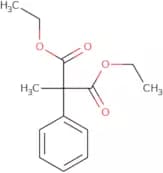
CAS :Diethyl methylphenylmalonate is a halogenated organic compound that can be prepared by the reaction of magnesium with diethyl malonate and methylbromide. Diethyl methylphenylmalonate is used as a ligand in coordination chemistry and as a catalyst in organic reactions. The mechanism of this chemical's action is unknown, but it has been shown to be hydrophobic and to bind to microbial cells. It also has been demonstrated to have an oxidation catalyst activity. Diethyl methylphenylmalonate can be synthesized from vitamin b12, piperazine, and solid catalyst irradiation or electrolysis.
Formule :C14H18O4Degré de pureté :Min. 95%Masse moléculaire :250.29 g/molMethyl 2-sulfinobenzoate
CAS :Methyl 2-sulfinobenzoate (MSB) is an analytical, research and development, and drug development impurity that is used as an API impurity and HPLC standard. It is a metabolite of sulfadiazine, which belongs to the family of drugs known as sulfonamides. MSB has been shown to have pharmacopoeia activity for the treatment of bacterial infections. It is a natural product found in plants, such as garlic and onion, or it can be synthesized from benzene and sulfur chloride.
Formule :C8H8O4SDegré de pureté :Min. 95%Masse moléculaire :200.21 g/molTerbutaline impurity b
CAS :Terbutaline impurity b is a pharmacopoeia grade drug product that is used as an analytical standard. It is also used in the synthesis of terbutaline, which is a drug that has been approved by the FDA to treat bronchospasm, asthma and other lung disorders. Terbutaline impurity b may be found in natural sources or may be synthesized. This impurity can be custom synthesized using HPLC-grade reagents and can be obtained at high purity levels.
Degré de pureté :Min. 95%6-Acetoxymethyl-4-methoxy-5-methyl-3-pyridylmethanol o-toluate
CAS :6-Acetoxymethyl-4-methoxy-5-methyl-3-pyridylmethanol o-toluate is a synthetic compound that is used as an analytical reference standard for the metabolism studies. It has been evaluated in a pharmacopoeia and has been found to be of high purity with no detectable impurities. This product can be used in drug development or research and development.
Formule :C19H21NO5Degré de pureté :Min. 95%Masse moléculaire :343.40 g/molFluocortolone Impurity 4
CAS :Fluocortolone Impurity 4 is a drug product that is custom synthesized to meet the high purity requirement of analytical standards. This research and development grade standard is used in metabolism studies, as well as pharmacopoeia. Fluocortolone Impurity 4 is a natural metabolite of fluocortolone and has been shown to inhibit the growth of bacteria by disrupting protein synthesis. It can be found in the urine, feces, and plasma of humans. Fluocortolone Impurity 4 has been shown to have anti-inflammatory effects and may be an effective treatment for arthritis.
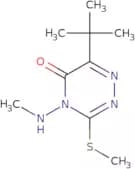
Degré de pureté :Min. 95%N-Methyl metribuzin
CAS :N-Methyl metribuzin is a drug product that belongs to the class of organic compounds known as phenylureas. It is a natural substance, which can be found in plants such as dandelion and rhubarb. Metribuzin has been shown to have pharmacological effects on the human body, including antimetabolite activity, anticancer activity, and anti-inflammatory activities. Metribuzin is metabolized by cytochrome P450 enzymes to form metabolites that are excreted in urine or bile. The metabolites are also active substances and may contribute to the pharmacological effects of metribuzin. Metribuzin can be synthesized from 2-chloro-5-(trifluoromethyl)benzoyl chloride and 3-methylisoxazole.
Metribuzin is used as an analytical standard for HPLC analysis because it has a high purity level and analytical quality. It is also used inFormule :C9H16N4OSDegré de pureté :Min. 95%Couleur et forme :PowderMasse moléculaire :228.32 g/mol1-[1-(4-Methoxyphenyl)-2-(methylamino)ethyl]-cyclohexanol hydrochloride
CAS :1-[1-(4-Methoxyphenyl)-2-(methylamino)ethyl]-cyclohexanol hydrochloride is a drug product that is not yet approved for use in humans. It is an impurity found in the drug cyclosporine, which is used to treat psoriasis and other skin conditions. 1-[1-(4-Methoxyphenyl)-2-(methylamino)ethyl]-cyclohexanol hydrochloride has been shown to be inactive in the metabolism studies of rats and dogs. This impurity was detected by HPLC with UV detection at 254 nm, but it did not show any significant absorption at 280 nm. The purity of this compound was determined to be 97% by NMR analysis and HPLC.
Formule :C16H25NO2·HClDegré de pureté :Min. 95%Masse moléculaire :299.84 g/molN-[1-[3-(4-Ethoxyphenyl)-3,4-dihydro-4-oxopyrido[2,3-d]pyrimidin-2-yl]ethyl]-4-fluoro-N-(3-pyridinylmethyl)-3-(trifluoromethyl)-benz eneacetamide
CAS :N-[1-[3-(4-Ethoxyphenyl)-3,4-dihydro-4-oxopyrido[2,3-d]pyrimidin-2-yl]ethyl]-4-fluoro-N-(3-pyridinylmethyl)-3-(trifluoromethyl)-benz eneacetamide is a drug product that is used in the development of new drugs. It is an analytical standard for HPLC and was created as a natural metabolite from the antibiotic Cefazolin. N-[1-[3-(4-Ethoxyphenyl)-3,4-dihydro-4-oxopyrido[2,3-d]pyrimidin-2-yl]ethyl]-4 -fluoro -N-(3 -pyridinylmethyl) - 3 (trifluoromethyl) - benzeneacetic acid has been shown to inhibit
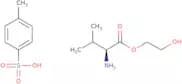
Formule :C32H27F4N5O3Degré de pureté :Min. 95%Masse moléculaire :605.6 g/molL-Valine 2-hydroxyethyl ester tosylate
CAS :L-Valine 2-hydroxyethyl ester tosylate (L-V2HT) is a drug product that is synthesized by custom synthesis. It has high purity, analytical, and natural properties. L-V2HT is metabolized through a number of metabolic transformations, including hydrolysis by esterases or glucuronidases, oxidation by cytochrome P450 enzymes, reduction by glutathione reductase, or conjugation with glucuronic acid. The active form of L-V2HT is metabolized through a number of metabolic transformations, including hydrolysis by esterases or glucuronidases, oxidation by cytochrome P450 enzymes, reduction by glutathione reductase, or conjugation with glucuronic acid. L-V2HT also specifically binds to markers expressed at high levels in Mycobacterium tuberculosis strains (e.g., ESX-1 secretion system protein) and inhibits cell
Formule :C14H23NO6SDegré de pureté :Min. 95%Masse moléculaire :333.4 g/mol(-)-Bornyl ferulate
CAS :Produit contrôlé(-)-Bornyl ferulate is a natural compound, specifically a type of ferulic acid ester, which is a secondary metabolite found in certain plants. Its source is primarily the essential oils and resins of various coniferous species, where it contributes to the plant's defense mechanisms. The mode of action of (-)-Bornyl ferulate involves its ability to scavenge free radicals, thus exhibiting antioxidant activity. It also modulates inflammatory pathways, suggesting possible anti-inflammatory effects.
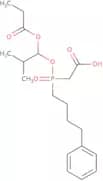
Formule :C20H26O4Degré de pureté :Min. 95%Masse moléculaire :330.42 g/mol2-((2-Methyl-1-(propionyloxy)propoxy)(4-phenylbutyl)phosphoryl)acetic acid
CAS :2-((2-Methyl-1-(propionyloxy)propoxy)(4-phenylbutyl)phosphoryl)acetic acid (KZPBA) is a zoonotic antibiotic that has been shown to be active against agalactiae. It is a prodrug, which is metabolized to the active form, KZPBA, in humans and other mammals. The mechanism of action of KZPBA is not yet known; however, it has been hypothesized that its activity may be due to inhibition of DNA gyrase and topoisomerase IV. This drug has also been shown to have an effect on mastitis in dairy cows.Formule :C19H29O6PDegré de pureté :Min. 95%Masse moléculaire :384.4 g/molAminopentamide sulfate
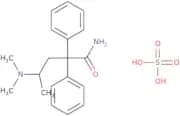
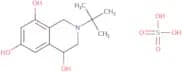
CAS :Aminopentamide sulfate is a pharmaceutical dosage form that is a polymeric matrix containing glycol ether, fatty acid ester, and glycol ester. It is used as a local anesthetic to numb the skin and other tissues. Aminopentamide sulfate can be administered topically or by injection into the body. It has been shown to have therapeutic effects on animals with pain-related conditions such as arthritis and neuropathy. The intramolecular hydrogen bonds in aminopentamide sulfate are thought to be formed between the carbonyl group of atropine sulfate and the hydroxyl groups of benzimidazole derivatives. These functional groups form hydrogen bonds with fatty alcohols in the matrix, which may help stabilize it.
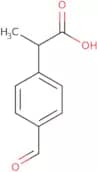
Formule :C19H26N2O5SDegré de pureté :Min. 95%Masse moléculaire :394.5 g/mol2-(4-Formylphenyl)propionic acid - Racemic
CAS :2-(4-Formylphenyl)propionic acid is a racemic mixture of 2-formylphenylacetic acid and 4-formylphenylacetic acid. This compound is used in the treatment of bacterial infections and inflammation. It is an organic solution that can be injected, administered orally, or applied topically. The 2-(4-formylphenyl)propionic acid has been shown to have anti-inflammatory properties, but also has side effects such as skin irritation when it is applied topically. This drug can also cause nausea, vomiting, and diarrhea when administered orally.
Formule :C10H10O3Degré de pureté :Min. 95%Couleur et forme :White PowderMasse moléculaire :178.18 g/molMethyl mycophenolate impurity E
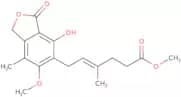
CAS :Methyl mycophenolate impurity E is a reactive, propargylamine-containing, monosodium salt with immunosuppressive properties. It is used in the treatment of cancer by inhibiting the production of white blood cells, which are needed to fight infection. Methyl mycophenolate impurity E has shown antitumor activity and can be used for the treatment of some types of cancer. It is metabolized in vivo to methyl mycophenolate and inhibits protein synthesis by alkylating DNA.
Formule :C18H22O6Degré de pureté :Min. 95%Couleur et forme :White PowderMasse moléculaire :334.36 g/molRjr 2429 dihydrochloride
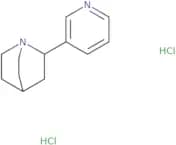
CAS :Rjr 2429 dihydrochloride is a tumor promoter that has been shown to induce tumor growth in tissues and in cell culture. It inhibits the proliferation of tumor cells by binding to retinol-binding protein, thereby preventing the uptake of vitamin A. Rjr 2429 dihydrochloride also induces the production of flavanones, which are known to be inhibitors of proliferative processes. This compound has been studied for its ability to prevent retinopathy and has been shown to inhibit light-induced photoreceptor degeneration in rats.
Formule :C12H18Cl2N2Degré de pureté :Min. 95%Masse moléculaire :261.19 g/mol

![1-[1-(4-Methoxyphenyl)-2-(methylamino)ethyl]-cyclohexanol hydrochloride](/_next/image/?url=https%3A%2Fstatic.cymitquimica.com%2Fproducts%2F3D%2Fthumb-webp%2FIM63866.webp&w=3840&q=75)
![N-[1-[3-(4-Ethoxyphenyl)-3,4-dihydro-4-oxopyrido[2,3-d]pyrimidin-2-yl]ethyl]-4-fluoro-N-(3-pyridin…](/_next/image/?url=https%3A%2Fstatic.cymitquimica.com%2Fproducts%2F3D%2Fthumb-webp%2FYTA72268.webp&w=3840&q=75)