APIs pour la recherche et les impuretés
Sous-catégories appartenant à la catégorie "APIs pour la recherche et les impuretés"
- Acides Aminés et Dérivés(12.322 produits)
- Anthraquinones et Dérivés(402 produits)
- Dérivés du Benzimidazole et de l’Imidazole(10.402 produits)
- Dérivés des Benzodiazépines(327 produits)
- Glucides et Glycoconjugués(5.049 produits)
- Esters et Dérivés(42.242 produits)
- Acides Gras et Dérivés Lipidiques(32.379 produits)
- Flavonoïdes et Polyphénols(17.075 produits)
- Radicaux Libres et Agents Oxydants/Réducteurs(212 produits)
- Cétones et Dérivés(2.399 produits)
- Antibiotiques Naturels et Semi-Synthétiques(6.335 produits)
- Nitriles et Dérivés Cyano(3.068 produits)
- Nitrosamines et Dérivés(55 produits)
- Nucléosides et Nucléotides(3.454 produits)
- Phosphates et Phosphonates Organiques(1.195 produits)
- Sulfonates et Sulfates Organiques(10.422 produits)
- Composés Organométalliques(4.418 produits)
- Autres(6.272 produits)
- Peptides et Protéines(3.140 produits)
- Polymères et Dérivés(99 produits)
- Dérivés des Purines et Pyrimidines(8.907 produits)
- Dérivés de Quinazoline et de Quinoléine(65.744 produits)
- Quinones et Dérivés(24.344 produits)
- Sels et Dérivés d’API(81.161 produits)
- Stéroïdes et Dérivés(4.928 produits)
- Sulfamides et Dérivés(2.569 produits)
- Terpénoïdes et Dérivés(3.838 produits)
- Thiazolidinediones et Thiopyranes(2.753 produits)
- Composés β-Adrénergiques(228 produits)
58514 produits trouvés pour "APIs pour la recherche et les impuretés"
1-[1-(4-Methoxyphenyl)-2-(methylamino)ethyl]-cyclohexanol hydrochloride
CAS :1-[1-(4-Methoxyphenyl)-2-(methylamino)ethyl]-cyclohexanol hydrochloride is a drug product that is not yet approved for use in humans. It is an impurity found in the drug cyclosporine, which is used to treat psoriasis and other skin conditions. 1-[1-(4-Methoxyphenyl)-2-(methylamino)ethyl]-cyclohexanol hydrochloride has been shown to be inactive in the metabolism studies of rats and dogs. This impurity was detected by HPLC with UV detection at 254 nm, but it did not show any significant absorption at 280 nm. The purity of this compound was determined to be 97% by NMR analysis and HPLC.
Formule :C16H25NO2·HClDegré de pureté :Min. 95%Masse moléculaire :299.84 g/molMethyl 2-hydrazinecarboxylate
CAS :Methyl 2-hydrazinecarboxylate, also known as methylene diazohydroxide, is a synthetic compound. It has been used in research and development as an analytical standard and impurity standard for HPLC methods.
Formule :C4H8ClN3O2Degré de pureté :Min. 95%Masse moléculaire :165.58 g/mol1-[[4-(3-Methoxypropoxy)-3-methyl-2-pyridinyl]methyl]-2-[[[4-(3-methoxypropoxy)-3-methyl-2-pyridinyl]methyl]sulfonyl]-1H-benzimidazo le
CAS :1-[[4-(3-Methoxypropoxy)-3-methyl-2-pyridinyl]methyl]-2-[(4-(3-methoxypropoxy)-3-methyl-2-pyridinyl)methylsulfonyl]-1H-benzimidazole (MKC1807) is a synthetic drug product. MKC1807 is an analytical standard in the HPLC assay for the determination of Epiandrosterone sulfate and its metabolites. 1-[4-(3-Methoxypropoxy)-3,5,6,7,8 -pentamethylcyclohexyl]methyl 2-[(4-(3 -methoxypropoxy) 3,5,6,7,8 -pentamethylcyclohexyl)methylsulfonyl]-1H benzimidazole has been shown to be a natural metabolite of Epiandrosterone sulfate. This compoundFormule :C29H36N4O6SDegré de pureté :Min. 95%Masse moléculaire :568.69 g/molDiltiazem EP Impurity H
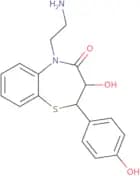
CAS :Diltiazem EP Impurity H is a metabolite of diltiazem that is used as an impurity standard for the drug product. Diltiazem EP Impurity H has a purity level of 99% and is soluble in water. It is synthesized by reacting diltiazem with nitric acid, then hydrolyzing the product to form the desired compound. Diltiazem EP Impurity H can be used as an analytical reference material or a pharmacopoeia for HPLC standards.
Diltiazem EP Impurity H is a metabolite of diltiazem that is used as an impurity standard for the drug product. Diltiazem EP Impurity H has a purity level of 99% and is soluble in water. It is synthesized by reacting diltiazem with nitric acid, then hydrolyzing the product to form the desired compound. Diltiazem EP Impurity H can be used as an analytical reference materialFormule :C17H18N2O3SDegré de pureté :Min. 95%Masse moléculaire :330.4 g/molN’-(4-Acetylaminophenyl)-N,N-dimethylacetamidine
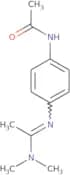
CAS :N’-(4-Acetylaminophenyl)-N,N-dimethylacetamidine is a drug product that is used in the development of new drugs. It has high purity, analytical grade and natural origin. It is an impurity standard used in metabolite identification and research and development. The CAS number for this compound is 1358054-66-6.Formule :C12H17N3ODegré de pureté :Min. 95%Masse moléculaire :219.28 g/mol11-[3-(Dimethylamino)propyl]-6,11-dihydrodibenz[b,e]oxepin-11-ol
CAS :Dispersants are substances that are used to break up and disperse particles in a liquid. The dispersant 11-[3-(dimethylamino)propyl]-6,11-dihydrodibenz[b,e]oxepin-11-ol is an active substance that is used in the production of granules, tablets or other solidified forms of medicaments. It is a substance that has a physiologically active effect on humans and animals. This product can be applied as droplets or particles.
Formule :C19H23NO2Degré de pureté :Min. 95%Couleur et forme :PowderMasse moléculaire :297.39 g/molAlfuzosin hydrochloride EP Impurity F hydrochloride
CAS :Alfuzosin EP Impurity F hydrochloride is a drug product that is used as an analytical standard for Alfuzosin hydrochloride. It is a natural, synthetic, and impurity standard that exhibits similar chromatographic properties to the API. The CAS number of this impurity is 19216-68-3. This product has a niche market because it is used in metabolism studies. It also exhibits high purity and pharmacopoeia grade quality.
Formule :C12H16N4O2•HClDegré de pureté :Min. 95%Masse moléculaire :284.74 g/mol(E,Z)-Epalrestat methyl ester
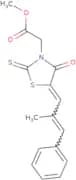
CAS :(E,Z)-Epalrestat methyl ester is a drug product that is custom-synthesized for research and development purposes. It is a natural metabolite of (E,Z)-epalrestat acid. The chemical name for this compound is 3-[(2-chlorophenyl)methyl]-N-(1H-indol-3-ylmethylene)malonamide. The molecular weight of this compound is 284.87 g/mol and it has an empirical formula of C24H27ClN2O2. It has been found to inhibit the activity of phosphodiesterase (PDE), which plays a role in the breakdown of cyclic nucleotides such as cAMP and cGMP. This product has high purity and analytical data that can be used for metabolism studies or clinical trials.
Formule :C16H15NO3S2Degré de pureté :Min. 95%Masse moléculaire :333.43 g/molOxybutynin impurity C
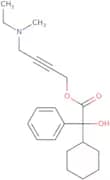
CAS :Oxybutynin impurity C is a metabolite of the drug product Oxybutynin (CAS No. 1199574-70-3). It is an analytical standard for HPLC, and a natural impurity in the synthesis of Oxybutynin. This is a synthetic compound that has been shown to be metabolized through oxidation by cytochrome P450 enzymes, reduction by glutathione reductase, or conjugation with glucuronic acid. Oxybutynin impurity C has been used as an analytical reference material for drug development and research and development.
Degré de pureté :Min. 95%22,23-Dihydroavermectin B1b (Ivermectin B1b)
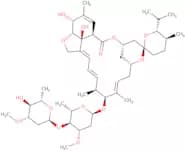
CAS :Ivermectin is a drug that belongs to the anthelmintic class of drugs. It is active against roundworms, pinworms, and hookworms. Ivermectin has been shown to have an effect on autoimmune diseases such as multiple sclerosis, systemic lupus erythematosus, and rheumatoid arthritis by inhibiting the inflammatory response. The drug has been shown to inhibit matrix metalloproteinases in vitro and in vivo. The matrix effect is seen when the drug binds to proteins in the blood plasma or tissue matrix, where it inhibits their activity. This inhibition prevents the degradation of collagen, which can lead to tissue damage or renal failure. Ivermectin also binds to striatal dopamine receptors and inhibits dry weight gain in animals infected with Ostertagia ostertagi. Ivermectin is given orally in a single dose of 200 micrograms/kg body weight for treatment of intestinal worms (roundworm,
Formule :C47H72O14Degré de pureté :Min. 95%Masse moléculaire :861.07 g/moltert-Butyl 4-(4-amino-6,7-dimethoxyquinazolin-2-yl)piperazine-1-carboxylate
CAS :tert-Butyl 4-(4-amino-6,7-dimethoxyquinazolin-2-yl)piperazine-1-carboxylate is an impurity that is found in the production of tert-butyl 4-(4,5,6,7,8,9,10-hexahydrobenzo[a]pyrido[1,2:4,3]triazin-2(3H)-yl)piperazine-1 carboxylate. It has been used as a reference standard for HPLC. This compound is not active when administered orally and does not exhibit any pharmacological activity.Formule :C19H27N5O4Degré de pureté :Min. 95%Masse moléculaire :389.4 g/molCarfilzomib (2R,4S)-diol
CAS :Carfilzomib is a drug product that belongs to the class of drugs called proteasome inhibitors. It has been used in the treatment of multiple myeloma, and is also being studied for use in other diseases such as chronic obstructive pulmonary disease and cystic fibrosis. Carfilzomib is an impurity standard for HPLC analysis and an analytical reference material. It is also used as a pharmacopoeia reference material. Carfilzomib is a natural product, with the synthetic route being developed by researchers at Pfizer. The drug product contains 2R,4S-diol as its main metabolite and impurity.
Formule :C40H59N5O8Degré de pureté :Min. 95%Masse moléculaire :737.90 g/molDioctyl carbonate
CAS :Dioctyl carbonate is a pharmaceutical preparation used to treat skin conditions. It is a fatty acid ester of carbonic and carbonyl groups in which the two esters are in the same molecule. Dioctyl carbonate is a reaction product obtained by reacting an inorganic acid, such as hydrochloric acid or sulfuric acid, with an alcohol containing two hydroxyl groups and one double bond. This reaction may be facilitated by heating. The film-forming polymer may be polyvinylpyrrolidone, polyvinyl alcohol, or polyacrylic acid. Dioctyl carbonate has been shown to stimulate colony-stimulating factor production and inhibit the proliferation of human epidermal keratinocytes.
Formule :C17H34O3Degré de pureté :Min. 95%Couleur et forme :Clear LiquidMasse moléculaire :286.4 g/molRef: 3D-BAA68031
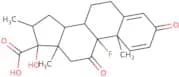
Produit arrêté11-Oxo-betamethasone-17-carboxylic acid
CAS :Produit contrôléPlease enquire for more information about 11-Oxo-betamethasone-17-carboxylic acid including the price, delivery time and more detailed product information at the technical inquiry form on this page
Formule :C21H25FO5Degré de pureté :Min. 95%Masse moléculaire :376.4 g/molBrexpiprazole impurity 10
CAS :Brexpiprazole impurity 10 is a drug product that is used as an analytical reference standard for the quality control of brexpiprazole. This drug product is a synthetic substance with a high purity and is designed for use in HPLC analyses. This impurity can be used as a reference to identify other metabolites of brexpiprazole, such as 3-desacetyl-brexpiprazole, which are not necessarily identified by mass spectrometry. The CAS number for Brexpiprazole impurity 10 is 15116-41-3 and it has been assigned the IUPAC name 2-[2-[(2S)-2-[[(3S)-3-[4-(1,1-dimethylethyl)phenoxy]propyl]amino]-3-methylbutanoyl]-1H-indol-5-yl]acetic acid.
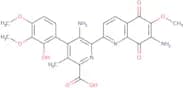
Formule :C16H15NO2Degré de pureté :Min. 95%Masse moléculaire :253.3 g/molSteptonigrin
CAS :Streptonigrin is an anticancer drug that is derived from the bacterium Streptomyces flocculus. It has been shown to induce apoptosis in cancer cells by inhibiting various kinases, including cyclin-dependent kinases and protein kinases. Streptonigrin has been found to be effective against a variety of tumors, including those of Chinese hamster ovary cells and human urine-derived cancer cells. This inhibitor analog also has a potent inhibitory effect on tumor growth in vivo.
Formule :C25H22N4O8Degré de pureté :Min. 95%Masse moléculaire :506.5 g/molN-Desmethyl trimeprazine
CAS :N-Desmethyl trimeprazine is a synthetic compound, which is an impurity of the drug product. It is not active and does not possess any biological activity. It is a metabolite of the parent drug, Trimeprazine. N-Desmethyl trimeprazine has been studied for its pharmacological properties and metabolism in the body, but no conclusive results have been found. The chemical structure and purity of N-Desmethyl trimeprazine are not listed in the USP or BP. This compound can be custom synthesized on request.
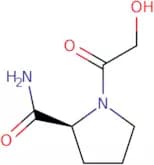
Formule :C17H20N2SDegré de pureté :Min. 95%Masse moléculaire :284.40 g/mol1-Glycoloyl-L-prolinamide
CAS :1-Glycoloyl-L-prolinamide is a drug product that is an analytical standard for the impurity 1-glycoloyl-L-proline (CAS No. 96166-39-1) in the API 1,4,5,6-tetrahydrobenzothiazole (CAS No. 86687-93-0). It has been synthesized to be used as an impurity standard and is provided at a purity of 98.0% or greater by weight. This chemical compound can be used in research and development for the production of drugs as well as in pharmaceutical manufacturing.
Formule :C7H12N2O3Degré de pureté :Min. 95%Masse moléculaire :172.18 g/molPseudomonic acid D sodium
CAS :Pseudomonic acid D sodium is a drug product that is used for the development of novel drugs. It is a natural metabolite of pseudomonic acid A, which is found in the fungus Pseudomonas sp. Pseudomonic acid D sodium is used as an analytical standard to aid in the identification of pseudomonic acid A and its metabolites. Pseudomonic acid D sodium can be synthesized by reacting 2-chloro-4-nitrobenzene with sodium bisulfate. The synthesis proceeds through a sequence of three reactions, namely nucleophilic substitution, electrophilic substitution, and hydrolysis. The structure of pseudomonic acid D sodium has been confirmed using nuclear magnetic resonance spectroscopy (NMR) and mass spectrometry (MS).
Formule :C26H41NaO9Degré de pureté :90%MinMasse moléculaire :520.59 g/molL(+)-2-Amino-5-phosphonovaleric acid
CAS :L-2-Amino-5-phosphonovaleric acid is an inhibitory neurotransmitter that binds to the GABAA receptor. It is used in the treatment of bladder disorders, such as urinary frequency, urgency, and incontinence. L-2-Amino-5-phosphonovaleric acid has been shown to have a depressant effect on the central nervous system and can cause symptoms such as nausea, vomiting, and headache. This drug also has antimicrobial properties due to its ability to inhibit bacterial enzyme activities. L-2-Amino-5-phosphonovaleric acid blocks glutamate receptors in mouse hippocampal cells by binding the alpha1 subunit of the GABAA receptor. This prevents the influx of calcium ions into cells and inhibits phosphorylation of protein kinase C. L(+)-2-Amino-5-phosphonovaleric acid also inhibits pentosan polysulfate sodium,
Formule :C5H12NO5PDegré de pureté :Min. 95%Masse moléculaire :197.13 g/mol
![1-[1-(4-Methoxyphenyl)-2-(methylamino)ethyl]-cyclohexanol hydrochloride](/_next/image/?url=https%3A%2Fstatic.cymitquimica.com%2Fproducts%2F3D%2Fthumb-webp%2FIM63866.webp&w=3840&q=75)

![1-[[4-(3-Methoxypropoxy)-3-methyl-2-pyridinyl]methyl]-2-[[[4-(3-methoxypropoxy)-3-methyl-2-pyridin…](/_next/image/?url=https%3A%2Fstatic.cymitquimica.com%2Fproducts%2F3D%2Fthumb-webp%2FIM25352.webp&w=3840&q=75)
![11-[3-(Dimethylamino)propyl]-6,11-dihydrodibenz[b,e]oxepin-11-ol](/_next/image/?url=https%3A%2Fstatic.cymitquimica.com%2Fproducts%2F3D%2Fthumb-webp%2FID45253.webp&w=3840&q=75)