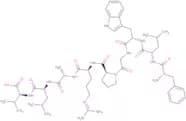
Peptides
Sous-catégories appartenant à la catégorie "Peptides"
29635 produits trouvés pour "Peptides"
Abl Cytosolic Substrate
CAS :Custom research peptide; min purity 95%. For different specs please use the Peptide Quote ToolFormule :C64H101N15O16Degré de pureté :Min. 95%Masse moléculaire :1,336.61 g/molLeptin (93-105) (human)
Custom research peptide; min purity 95%.Formule :C64H110N20O23Degré de pureté :Min. 95%Masse moléculaire :1,527.7 g/molMastoparan X
Custom research peptide; min purity 95%.Formule :C73H126N20O15SDegré de pureté :Min. 95%Masse moléculaire :1,556.01 g/molHIV-1 env Protein gp120 (278- 292) (strains BH10, BH8, HXB2, HXB3, PV22)
Custom research peptide; min purity 95%.Formule :C73H126N26O18Degré de pureté :Min. 95%Masse moléculaire :1,655.98 g/molBradykinin
CAS :Custom research peptide; min purity 95%.Formule :C50H73N15O11Degré de pureté :Min. 95%Masse moléculaire :1,060.22 g/molGastric Juice Peptide Fragmentc
Custom research peptide; min purity 95%.Formule :C62H98N16O22Degré de pureté :Min. 95%Masse moléculaire :1,419.56 g/molBiotinyl-Omega-Agatoxin IVA
A biotinylated, synthetic spider toxin, which can be used as a reagent for a localization study of the omega-Agatoxin IVA binding site. This product has disulfide bonds between Cys4-Cys20, Cys12-Cys25, Cys19-Cys36 and Cys27-Cys34 and is available as a trifluoroacetate salt and as a 0.1mg vial.Formule :C227H374N70O62S11Degré de pureté :Min. 95%Masse moléculaire :5,428.5 g/mol[D-Trp34]-Neuropeptide Y, human; [D-Trp34]-NPY, human
Custom research peptide; min purity 95%.Formule :C195H287N55O56SDegré de pureté :Min. 95%Masse moléculaire :4,329.8 g/molHIV-1 tat Protein (47-57)
Custom research peptide; min purity 95%.Formule :C64H118N32O14Degré de pureté :Min. 95%Masse moléculaire :1,559.86 g/molSubstance P-Gly-Lys-Arg
Custom research peptide; min purity 95%.
Formule :C77H124N24O17SDegré de pureté :Min. 95%Masse moléculaire :1,690.06 g/molMART-1 (27-35) (human)
Custom research peptide; min purity 95%.Formule :C37H67N9O11Degré de pureté :Min. 95%Masse moléculaire :814 g/molβ-Amyloid (11- 40)
Custom research peptide; min purity 95%.
Formule :C143H228N38O40SDegré de pureté :Min. 95%Masse moléculaire :3,151.71 g/mol[Asn1,Val5]-Angiotensin II
Custom research peptide; min purity 95%.Formule :C49H70N14O11Degré de pureté :Min. 95%Masse moléculaire :1,031.19 g/molβ-Amyloid (1-15)
Custom research peptide; min purity 95%.
Formule :C78H107N25O27Masse moléculaire :1,826.87 g/mol[Ser140]-Myelin Proteolipid Protein (139-151) (depalmitoylated), human, bovine, dog, mouse, rat
Custom research peptide; min purity 95%.
Formule :C72H104N20O17Degré de pureté :Min. 95%Masse moléculaire :1,521.7 g/molNeuromedin (U8), porcine
Custom research peptide; min purity 95%.Formule :C54H78N16O10Degré de pureté :Min. 95%Masse moléculaire :1,111.32 g/molPB1(703-711), Influenza
Custom research peptide; min purity 95%.Formule :C45H75N15O13Degré de pureté :Min. 95%Masse moléculaire :1,034.19 g/molKisspeptin-13 (4-13) (human)
Custom research peptide; min purity 95%.
Formule :C63H83N17O14Degré de pureté :Min. 95%Masse moléculaire :1,302.47 g/molβ-MSH, human
CAS :Custom research peptide; min purity 95%.
Formule :C118H174N34O35SDegré de pureté :Min. 95%Masse moléculaire :2,660.9 g/molDynorphin A (1-12), porcine
Custom research peptide; min purity 95%.Formule :C69H114N22O14Degré de pureté :Min. 95%Masse moléculaire :1,475.82 g/molE75, Her-2/neu (369-377)
Custom research peptide; min purity 95%.Formule :C50H78N10O11Degré de pureté :Min. 95%Masse moléculaire :995.24 g/molAngiotensin I [Des-Asp1-], Human
Custom research peptide; min purity 95%.
Formule :C58H84N16O11Degré de pureté :Min. 95%Masse moléculaire :1,181.42 g/molBradykinin (1-5)
CAS :Custom research peptide; min purity 95%.Formule :C27H40N8O6Degré de pureté :Min. 95%Masse moléculaire :572.67 g/molEndothelin 3, human, rat
CAS :Custom research peptide; min purity 95%.Formule :C121H168N26O33S4Degré de pureté :Min. 95%Masse moléculaire :2,643.1 g/molParathyroid Hormone (1-34), human
Custom research peptide; min purity 95%.Formule :C181H291N55O51S2Degré de pureté :Min. 95%Masse moléculaire :4,117.8 g/molACTH (1-13), human
CAS :Custom research peptide; min purity 95%.Formule :C75H106N20O19SDegré de pureté :Min. 95%Masse moléculaire :1,623.9 g/molGLP-1 (1-37) (human, bovine, guinea pig, mouse, rat)
Custom research peptide; min purity 95%.Formule :C186H275N51O59Degré de pureté :Min. 95%Masse moléculaire :4,169.57 g/molTyrosinase (243-251) (human)
Custom research peptide; min purity 95%.Formule :C44H68N10O18S2Degré de pureté :Min. 95%Masse moléculaire :1,089.2 g/mol[Trp63, 64]-C3a (63-77)
Custom research peptide; min purity 95%.Formule :C86H134N26O18Degré de pureté :Min. 95%Masse moléculaire :1,820.19 g/molNS2(114-121), Influenza
Custom research peptide; min purity 95%.
Formule :C48H74N12O12Degré de pureté :Min. 95%Masse moléculaire :1,011.2 g/molC-Peptide 2 (rat)
Custom research peptide; min purity 95%.Formule :C135H222N38O49Degré de pureté :Min. 95%Masse moléculaire :3,161.5 g/molPhthalimidooxy-dPEG®12-NHS Ester
Phthalimidooxy-dPEG®12-NHS Ester is a PEG compound with two different functional groups (also known as heterobifunctional). Unlike homobifunctional PEG compounds (same functional group on both ends), this type of compounds are more versatile as have two different anchor points. Phthalimidooxy-dPEG®12-NHS Ester is used as a linker and spacer to add a PEG moiety, via pegylation (a bioconjugation technique) to proteins, peptides, oligonucleotides, small molecules and nanoparticles.
Formule :C39H60N2O19Degré de pureté :Min. 95%Masse moléculaire :860.9 g/molBid BH3 Peptide
Custom research peptide; min purity 95%.Formule :C95H161N33O32SDegré de pureté :Min. 95%Masse moléculaire :2,309.61 g/molLMP2 (419-427), TYG
Custom research peptide; min purity 95%.Formule :C48H71N9O12S2Degré de pureté :Min. 95%Masse moléculaire :1,030.27 g/molBax-BH3
Custom research peptide; min purity 95%.Formule :C77H136N22O27SDegré de pureté :Min. 95%Masse moléculaire :1,834.13 g/molMelanocyte Associated Antigen gp 100 (17-25)
Custom research peptide; min purity 95%.Formule :C38H70N10O11Degré de pureté :Min. 95%Masse moléculaire :843.04 g/molGlucagon (1-29), bovine, human, porcine
CAS :Glucagon (1-29), bovine, human, porcine, is a peptide hormone, which is derived from bovine, human, and porcine sources. It comprises 29 amino acids and functions as a crucial regulator of glucose metabolism by promoting the increase of blood glucose levels. The mode of action involves binding to receptors on liver cells, activating adenylate cyclase, and subsequently increasing intracellular cyclic AMP. This cascade triggers glycogenolysis and gluconeogenesis, leading to elevated blood glucose.In scientific research, Glucagon (1-29), bovine, human, porcine, is utilized to study metabolic pathways and the regulation of glucose homeostasis. Its applications extend to diabetes research, where it serves as a model for understanding glucagon's role in insulin resistance and pancreatic beta-cell dysfunction. Furthermore, this product is employed in the development of therapeutic strategies for hypoglycemic events experienced by diabetic patients. It also serves as a tool in pharmacological studies to elucidate receptor-ligand interactions and signaling mechanisms in different species.Formule :C153H225N43O49SDegré de pureté :Min. 95%Masse moléculaire :3,482.78 g/molMelanocyte Protein PMEL 17 (185-193) (human, bovine, mouse)
Custom research peptide; min purity 95%.Formule :C46H72N10O15Degré de pureté :Min. 95%Masse moléculaire :1,005.14 g/molMet-Enkephalin
Custom research peptide; min purity 95%.Formule :C27H35N5O7SDegré de pureté :Min. 95%Masse moléculaire :573.67 g/molCINC-1/gro (Rat)
CINC-1/gro is a recombinant protein of the rat CINC-1. It is used as an activator or ligand for the caspase-1/caspase-4 cascade and as a receptor for TNF-α, IL-1β, and IL-18. CINC-1 is a member of the NODO family of cytoplasmic proteins that are involved in intracellular signaling pathways. CINC-1 can be activated by different stimuli such as apoptotic cells, dsRNA, or ATP and then binds to various receptors on the cell surface including those for TNFα, IL1β, and IL18. CINC-1 has been shown to activate caspases by cleaving Bid into tBid and activating caspase 8. This activation leads to subsequent cleavage of procaspases 3, 6, 7, 9, 10, 11 which eventually results in apoptosis or programmed cellFormule :C343H572N98O97S7Degré de pureté :Min. 95%Masse moléculaire :7,845.3 g/molGH Bovine
GH Bovine is a peptide hormone that stimulates the production of IGF-1, which is an important regulator of growth and metabolism. GH Bovine binds to the GH receptor, a G protein-coupled receptor, and triggers its activation. It also interacts with other receptors, such as the insulin receptor. GH Bovine is a research tool for studying the interactions between proteins. GH Bovine has been used in pharmacology to study the role of GH in humans, including its effects on cancer cells. GH Bovine has been shown to have an inhibitory effect on cell proliferation and DNA synthesis in vitro. This product is highly purified and has a CAS number of 714-69-2.
Degré de pureté :Min. 95%α-Defensin-6, human
α-defensin-6 is a human protein that belongs to the α-defensin family. It has been shown to have antibacterial activity against Gram-positive bacteria and is thought to be involved in the innate immune response. α-Defensin-6 has been shown to inhibit ion channels, receptor activation, and cell biology. This product is available as a 0.1mg vial and contains disulfide bonds between Cys4-Cyc31, Cys6-Cys20 and Cys10-Cys30. It can be used as an antimicrobial peptide in Paneth cells.Formule :C156H228N46O46S7Degré de pureté :Min. 95%Masse moléculaire :3,708.2 g/molFRETS-25Glu (1 umol) (1umol)
Frets-25Glu is a peptide inhibitor of the alpha subunit of the voltage-gated potassium channel. It is a high purity, water-soluble, stable peptide that can be used as a research tool to study the function of ion channels and receptors. Frets-25Glu has been shown to inhibit potassium channel currents in rat dorsal root ganglion neurons and rat dorsal spinal cord neurons. It also binds to the alpha subunit of voltage-gated potassium channels in rat brain tissue.Degré de pureté :Min. 95%RLN2
RLN2 is an oncogene that encodes a protein with a sequence of amino acids similar to the anti-cancer drug docetaxel. It is expressed in resistant prostate cancer cells and has been shown to modulate cytogenetics, haematology, and tissue microarrays. The RLN2 gene is also expressed in ligaments and may be associated with chemoresistance.Degré de pureté :Min. 95%IFN b 1a Human
Interferon-beta 1a is a cytokine that is used to treat multiple sclerosis and other diseases. It is the product of human recombinant DNA technology and has been shown to be an effective treatment for MS. Interferon-beta 1a inhibits the growth of neuroblastoma cells by inducing apoptosis, or programmed cell death. The drug also down-regulates the expression of proinflammatory cytokines in sh-sy5y neuroblastoma cells. Interferon-beta 1a has been shown to inhibit the proliferation of CHO (Chinese Hamster Ovarian) cells in vitro and may have therapeutic potential for the treatment of breast cancer, colorectal cancer, and ovarian cancer.Degré de pureté :Min. 95%Exendin (5-39)
Exendin (5-39) is a synthetic Mexican beaded lizard venom-derived peptide and is available as a 0.5mg vial. This product has has a GLP-1 Receptor antagonist application..Formule :C169H262N44O54SDegré de pureté :Min. 95%Masse moléculaire :3,806.2 g/molDBCO-dPEG®4-TFP Ester
DBCO-dPEG®4-TFP Ester is a PEG compound with two different functional groups (also known as heterobifunctional). Unlike homobifunctional PEG compounds (same functional group on both ends), this type of compounds are more versatile as have two different anchor points. DBCO-dPEG®4-TFP Ester is used as a linker and spacer to add a PEG moiety, via pegylation (a bioconjugation technique) to proteins, peptides, oligonucleotides, small molecules and nanoparticles.Degré de pureté :Min. 95%Masse moléculaire :714.7 g/mol[Asn1,Val5]-Angiotensin II
Angiotensin II is a peptide hormone that regulates blood pressure and fluid balance. It is also known as a vasopressor and as an activator of the renin-angiotensin system. Angiotensin II is synthesized from the precursor protein angiotensinogen, which is cleaved by renin to form angiotensin I. Angiotensin I is then converted to angiotensin II by the enzyme ACE (angiotensin-converting enzyme). Angiotensin II is found in the lungs, kidneys, adrenal glands, brain and blood. The biological effects of angiotensin II are mediated by its receptor on cells which stimulates G proteins to activate phospholipase C activity. This leads to increased levels of inositol triphosphate (IP3) and diacylglycerol (DAG) which cause release of calcium ions from intracellular stores such as the endoplasmicFormule :C49H70N14O11•CH3COOH•4H2ODegré de pureté :Min. 95%Masse moléculaire :1,163.31 g/molAdrenomedullin 2, human
Adrenomedullin 2, a peptide hormone product with a disulfide bond between Cys10-Cys15. Adrenomedullin 2 can be applied as a potent cardiovascular and renal regulator as well as a suppressor for food intake and gastric emptying. This product is available as a 0.1mg vial.Formule :C219H349N69O66S3Degré de pureté :Min. 95%Masse moléculaire :5,100.7 g/molAnti GIP (Rat) Serum
Anti-GIP (Rat) Serum is a recombinant, affinity-purified antibody that recognizes the peptide sequence of rat GIP. Anti-GIP (Rat) Serum is an important research tool used in the study of protein interactions, activation, ligand binding, and receptor activation. It can also be used to inhibit GIP activity by blocking the binding site on the receptor. Anti-GIP (Rat) Serum is available in high purity and at competitive pricing.Degré de pureté :Min. 95%FGF 19 Human
FGF-19 is a protein that has been shown to be an activator of the FGF receptor. It also has been shown to act as a ligand for the FGF receptor, which is a cell surface-bound protein. This protein is involved in the regulation of ion channels and other cellular processes that are important for growth and development. Recent studies have demonstrated that FGF-19 can inhibit the binding of peptides to antibodies, which may have an effect on pharmacology and immunology.Degré de pureté :Min. 95%Biotin-dPEG®12-DBCO
Biotin-dPEG®12-DBCO is a PEG compound with two different functional groups (also known as heterobifunctional). Unlike homobifunctional PEG compounds (same functional group on both ends), this type of compounds are more versatile as have two different anchor points. Biotin-dPEG®12-DBCO is used as a linker and spacer to add a PEG moiety, via pegylation (a bioconjugation technique) to proteins, peptides, oligonucleotides, small molecules and nanoparticles.Degré de pureté :Min. 95%Masse moléculaire :1,102.34 g/molDOTA-tris(Acid)-Amido-dPEG®11-Bromoacetamide
DOTA-tris(Acid)-Amido-dPEG®11-Bromoacetamide is a PEG compound with two different functional groups (also known as heterobifunctional). Unlike homobifunctional PEG compounds (same functional group on both ends), this type of compounds are more versatile as have two different anchor points. DOTA-tris(Acid)-Amido-dPEG®11-Bromoacetamide is used as a linker and spacer to add a PEG moiety, via pegylation (a bioconjugation technique) to proteins, peptides, oligonucleotides, small molecules and nanoparticles.Degré de pureté :Min. 95%Masse moléculaire :1,280.06 g/molMethoxytrityl-S-dPEG®8 Acid
CAS :Methoxytrityl-S-dPEG®8 Acid is a PEG compound with two different functional groups (also known as heterobifunctional). Unlike homobifunctional PEG compounds (same functional group on both ends), this type of compounds are more versatile as have two different anchor points. Methoxytrityl-S-dPEG®8 Acid is used as a linker and spacer to add a PEG moiety, via pegylation (a bioconjugation technique) to proteins, peptides, oligonucleotides, small molecules and nanoparticles.
Degré de pureté :Min. 95%Masse moléculaire :730.91 g/molG CSF Mouse
G CSF Mouse is a recombinant protein that is an inhibitor of the G-CSF receptor. It has been shown to inhibit the activity of ion channels in cells. G CSF Mouse is a research tool that can be used to study the biology of proteins and peptides. This product can also be used for antibody production and as a reagent for cell biology and pharmacology experiments.
Degré de pureté :Min. 95%Human s-IgA (Saliva) ELISA (1ea)
Human s-IgA (Saliva) ELISA (1ea) is a human IgA immunoglobulin that is found in saliva. It is used to detect the presence of antibodies against specific substances such as drugs, food, and other allergens.
Degré de pureté :Min. 95%Mastoparan
Produit contrôléA cell-penetrating peptide toxin whose sequence is derived from wasp venom and a potent activator of heterotrimeric G proteins. One letter code: INLKALAALAKKIL-NH2Formule :C70H131N19O15•4CH3COOH•6H2ODegré de pureté :Min. 95%Masse moléculaire :1,827.2 g/molPhthalimidooxy-dPEG®4-NHS Ester
Phthalimidooxy-dPEG®4-NHS Ester is a PEG compound with two different functional groups (also known as heterobifunctional). Unlike homobifunctional PEG compounds (same functional group on both ends), this type of compounds are more versatile as have two different anchor points. Phthalimidooxy-dPEG®4-NHS Ester is used as a linker and spacer to add a PEG moiety, via pegylation (a bioconjugation technique) to proteins, peptides, oligonucleotides, small molecules and nanoparticles.Formule :C23H28N2O11Degré de pureté :Min. 95%Masse moléculaire :508.48 g/molTRAIL Human
TRAIL is a peptide that belongs to the group of cytokines. It activates the receptor-mediated apoptosis pathway in cells that have been stimulated by tumor necrosis factor-α (TNF-α) and other pro-inflammatory cytokines. TRAIL has also been shown to inhibit protein interactions, such as those between the TNF receptors and their ligands or receptors, like CD4. TRAIL also binds to the Fas receptor and its ligand, FasL, which leads to activation of caspases in a similar manner as FADD binding. The recombinant human TRAIL is a research tool for studying cell biology and pharmacology.
Degré de pureté :Min. 95%Cbz-N-Amido-dPEG®8-Acid
Cbz-N-Amido-dPEG®8-Acid is a PEG compound with two different functional groups (also known as heterobifunctional). Unlike homobifunctional PEG compounds (same functional group on both ends), this type of compounds are more versatile as have two different anchor points. Cbz-N-Amido-dPEG®8-Acid is used as a linker and spacer to add a PEG moiety, via pegylation (a bioconjugation technique) to proteins, peptides, oligonucleotides, small molecules and nanoparticles.Degré de pureté :Min. 95%IL 12 Mouse
IL-12 is a heterodimeric cytokine that can be produced by T cells and natural killer cells. IL-12 is composed of two subunits, p35 and p40. It has been shown to induce the production of Interferon-gamma (IFN-γ) and other cytokines in response to infection with intracellular bacteria, such as Mycobacterium tuberculosis and M. avium complex. IL 12 Mouse is an antibody against the protein IL 12 that blocks its interaction with cell surface receptors on T cells, thus preventing the activation of these cells.Degré de pureté :Min. 95%Polystyrene AM RAM particle size: 250 - 315 µm
Polystyrene is a resin used in peptide synthesis. Polystyrene AM is a particle size of 250-315 µm. It is a building block for the synthesis of peptides. The polystyrene polymer has a high affinity for the amino acid side chains, which makes it an excellent choice for building blocks in peptide synthesis.Degré de pureté :Min. 95%Vasoactive Intestinal Peptide (VIP) Antiserum
Vasoactive Intestinal Peptide (VIP) Antiserum is a research tool that can be used to investigate the function of VIP in different cell types. VIP Antiserum is also an inhibitor of Protein interactions and may have applications in pharmacology.Degré de pureté :Min. 95%SPDP-dPEG®24-Acid
CAS :SPDP-dPEG®24-Acid is a PEG compound with two different functional groups (also known as heterobifunctional). Unlike homobifunctional PEG compounds (same functional group on both ends), this type of compounds are more versatile as have two different anchor points. SPDP-dPEG®24-Acid is used as a linker and spacer to add a PEG moiety, via pegylation (a bioconjugation technique) to proteins, peptides, oligonucleotides, small molecules and nanoparticles.Formule :C99H197N5O47Degré de pureté :Min. 95%Masse moléculaire :2,209.63 g/molAzido-dPEG®36-TFP ester
Azido-dPEG®36-TFP ester is a PEG compound with two different functional groups (also known as heterobifunctional). Unlike homobifunctional PEG compounds (same functional group on both ends), this type of compounds are more versatile as have two different anchor points. Azido-dPEG®36-TFP ester is used as a linker and spacer to add a PEG moiety, via pegylation (a bioconjugation technique) to proteins, peptides, oligonucleotides, small molecules and nanoparticles.Formule :C65H115F4NO27S2Degré de pureté :Min. 95%Masse moléculaire :1,482.72 g/molNH2-dPEG®4-Glu(OH)-NH-dPEG®4-Glu(OH)-NH-m-dPEG®24
NH2-dPEG®4-Glu(OH)-NH-dPEG®4-Glu(OH)-NH-m-dPEG®24 is a peptide containing polyethylene glycol (PEG) as spacer to alter their pharmacokinetic properties and pharmodynamics.Formule :C81H157N5O40Degré de pureté :Min. 95%Masse moléculaire :1,841.12 g/molHIV-1 TAT Clade-B Recombinant
HIV-1 TAT Clade-B Recombinant is the recombinant protein that belongs to HIV-1. It is a regulatory protein that binds to the human immunodeficiency virus type 1 (HIV-1) RNA genome and regulates viral replication. HIV-1 TAT Clade-B Recombinant has been shown to be highly infectious and can be used for the study of HIV infection, pathogenesis, and transmission.sequence: MEPVDPRLEP WKHPGSQPKT ACTNCYCKKC CFHCQVCFIT KALGISYGRK KRRQRRRPPQ GSQTHQVSLS KQPTSQSRGD PTGPKE.Degré de pureté :>90% By Sds-Page.Glicentin (Rat)-EIA Kit (1ea)
Glicentin is a rat-specific serum protein that is the major component of the alpha-2 macroglobulin (A2M) in the rat. Glicentin binds to various peptides, including beta-endorphin, vasopressin, angiotensin II, and oxytocin. This kit contains 1 vial of antibody against glicentin. The antibody has been purified by immunoaffinity chromatography on a column of immobilized peptide-glicentin complex. This kit can be used for detection of glicentin in rats.Degré de pureté :Min. 95%Azido-dPEG®4-OH
Azido-dPEG®4-OH is a PEG polymer categorised as monofunctional (OH-PEG-X). Used as a linker, azido-dPEG®4-OH is used to attached PEG to proteins, peptides, oligonucleotides, nanoparticles and small molecules via pegylation, a bioconjugation technique.Formule :C40H60F4N2O17Degré de pureté :Min. 95%Masse moléculaire :916.9 g/molPolystyrene M NH2 (5 µm)
Polystyrene is a thermoplastic polymer that is used in the production of polystyrene resins, which are used as building blocks for peptide synthesis. New England Peptide offers a variety of polystyrene resin products including particle resins and Rapp Polymere resins. The particle size of the resin ranges from 5-100 µm. Polymers can be synthesized using various methods including solid-phase synthesis and solution phase synthesis, which both require polystyrene resins. This product is available with a variety of functionalities, such as amine, hydroxyl and carboxyl groups.
Degré de pureté :Min. 95%1-Deoxyfructosyl-Gly
CAS :1-Deoxyfructosyl-Gly is a multifunctional inhibitor that has been shown to inhibit the activity of protein interactions, activator, ligand, and receptor. It is a research tool used to investigate the role of ion channels in cell biology. The antibody has high purity and is suitable for use in life science research.
Formule :C8H15NO7Degré de pureté :Min. 95%Masse moléculaire :237.21 g/molTentaGel® HL-Br Resin
A gelatinous resin, an important support for solid phase synthesis. TentaGel; resins are constructed with a backbone of low crosslinked polystyrene grafted with polyoxyethylene (polyethylene glycol). The typical chain length of POE (n) is approximately 68 ethylene oxide units or an average MW of 3000. This long chain creates a spacer that effectively separates the reactive site (X) from the crosslinked backbone matrix.
TentaGel; HL (High Load) (mean particle size 75 µm: capacity 04-06 meq/g)
Substitution Functional Group: -O-CH2-CH2-BrTentaGelDegré de pureté :Min. 95%BMP 7 Human
BMP 7 is a cytokine that belongs to the transforming growth factor beta (TGF-β) superfamily. It is produced by many cell types, including E. coli, in response to TGF-β and IL-1. BMP 7 has been shown to be involved in the regulation of cell proliferation and differentiation. BMP 7 has also been shown to be a potent inducer of cytokines such as IL-8, IL-6, IL-1β, and TNF-α from human mononuclear cells.Degré de pureté :Min. 95%Azido-dPEG®36-OH
Azido-dPEG®36-OH is a PEG polymer categorised as monofunctional (OH-PEG-X). Used as a linker, azido-dPEG®36-OH is used to attached PEG to proteins, peptides, oligonucleotides, nanoparticles and small molecules via pegylation, a bioconjugation technique.Formule :C57H101F4N3O26Degré de pureté :Min. 95%Masse moléculaire :1,320.41 g/molLipoamido-dPEG®24-TFP Ester
Lipoamido-dPEG®24-TFP Ester is a PEG molecule conjugated with a lipid moiety. Lipoamido-dPEG®24-TFP Ester, conjugated to this lipid constituent, is very important especially in drug delivery and vaccine development as it helps improve the stability and circulation time of lipid nanoparticles (LNPs) and liposomes.
Formule :C8H14O6Degré de pureté :Min. 95%Masse moléculaire :206.19 g/molZ-Leu-Leu-H aldehyde
Z-Leu-Leu-H aldehyde is a water soluble and non-toxic chemical compound that belongs to the class of heterocycles. It inhibits ion channels by binding to their receptor and also has a high affinity for ligand binding sites. Z-Leu-Leu-H aldehyde is used as a research tool in pharmacology, cell biology, and antibody production. It can be used to activate or inhibit the function of proteins in cells by acting as an agonist or antagonist, respectively. This chemical is also an inhibitor with high purity, which is suitable for use in protein crystallization experiments.Formule :C20H30N2O4Degré de pureté :Min. 95%Masse moléculaire :362.46 g/molT4 DNA Ligase (recombinant)
T4 DNA Ligase is a recombinant protein that catalyzes the formation of DNA molecules from complementary single-stranded DNA. T4 DNA Ligase is used as a research tool in cell biology and biochemistry to study the interactions between proteins and peptides. It is also used to produce recombinant proteins, such as antibodies. T4 DNA Ligase binds to its substrate by an ionic interaction with adenosine triphosphate (ATP) and to the complementary strand by hydrogen bonding. The enzyme cleaves the phosphate backbone of both strands at the junction point, forming two new phosphodiester bonds. This enzyme has been shown to bind to other proteins and peptides, such as receptor tyrosine kinases, which are involved in signal transduction pathways that regulate cell growth and differentiation.Degré de pureté :Min. 95%Melanoma Antigen Family A, 3, human, recombinant
Melanoma Antigen Family A, 3, human, recombinant is a recombinant human protein. It has an inhibitory effect on the activity of ion channels. It is a high purity reagent for use in immunohistochemistry and other research applications. This protein interacts with a variety of proteins such as activators, ligands and receptors.Degré de pureté :Min. 95%Histone Acetyltransferase 1, human, recombinant
Histone acetyltransferase 1 (HAT1) is a protein that transfers an acetyl group to histones. It is mainly found in the nucleus and is involved in gene regulation. HAT1 interacts with many other proteins such as receptors, peptides, activators, and ion channels. The recombinant form of this enzyme has been shown to be a potent inhibitor of L-type calcium channels, which are important for the transmission of nerve impulses. This enzyme also inhibits glutamate receptors and can affect the activation of phospholipase C. HAT1 has also been shown to inhibit various types of cancers by suppressing tumor growth and invasion.Degré de pureté :Min. 95%TGF b 3 Mouse
TGF-b3 is a cytokine that belongs to the transforming growth factor beta family. It has been shown to be involved in the regulation of cell proliferation, differentiation, and apoptosis. TGF-b3 has also been implicated in the pathogenesis of inflammatory diseases and chronic obstructive pulmonary disease (COPD). The protein sequence for TGF-b3 is available for Cytokine. The protein sequence for TGF-b3 can be found in the following databases: GenBank, SwissProt, EMBL, DDBJ and PDB. Protein sequences are typically identified by their 'accession number'. For example, the accession number for TGF-b3 is NP_001408.1. The sequences of genes may be found at NCBI's nucleotide database (NCBI). The sequences of proteins may be found at NCBI's protein database (NCBI).Degré de pureté :Min. 95%TentaGel® HL-NH2 Resin
TentaGel® is a gelatinous resin, an important support for solid phase synthesis. TentaGel® resins are constructed with a backbone of low crosslinked polystyrene grafted with polyoxyethylene (polyethylene glycol). The typical chain length of POE (n) is approximately 68 ethylene oxide units or an average MW of 3000. This long chain creates a spacer that effectively separates the reactive site (X) from the crosslinked backbone matrix. TentaGel® HL (High Load) (mean particle size 75 µm: capacity 04-06 meq/g) Substitution Functional Group: -O-CH2-CH2-NH2TentaGel®Degré de pureté :Min. 95%Midkine (Human, 60-121)
Midkine belongs to the group of peptides and is found in human brain, bone marrow, and peripheral blood. It is an activator of ion channels and has a high affinity for receptors. Midkine is a ligand that binds to receptors on cells. This protein may be used as a research tool to study the function of ion channels or as an antibody in cell biology experiments.Formule :C292H483N91O87S4Degré de pureté :Min. 95%Masse moléculaire :6,788.8 g/mol[D-Pro4,Trp7,9]-Substance P (4-11)
Substance P (4-11) is a peptide that is a member of the tachykinin family. This protein is released by neurons and acts as a neurotransmitter in the brain, where it binds to neurokinin receptors. The structure of Substance P (4-11) has been determined using high-resolution nuclear magnetic resonance spectroscopy and X-ray crystallography. It contains four tryptophans, seven prolines, and nine amino acids in total. Substance P (4-11) has been shown to bind to neurokinin receptors, which are ligand-gated ion channels found on the surface of cells. Binding of this protein leads to an increase in cell permeability through ion channels and causes an increase in intracellular calcium levels.Formule :C57H75N13O10SDegré de pureté :Min. 95%Masse moléculaire :1,134.4 g/molCA-125 Heavy Tryptic Peptide Standard (4nmol)
Cancer antigen 125 (CA 125) heavy tryptic peptide standard for proteomics studies. CA 125 is an antigenic tumor marker which can be used to diagnose epithelial ovarian cancers. It is expressed by epithelial ovarian neoplasms and cells lining the fallopian tubes, endometrium, pericardium, peritoneum and pleura.Degré de pureté :Min. 95%EGF Mouse
Epidermal Growth Factor, Mouse sequence. Produced recombinantly in E.Coli. 53 amino acids (6 kDa) including 3 intramolecular disulfide-bonds.Degré de pureté :Min. 95%TentaGel® Macrobead-COOH Resin
TentaGel; is a gelatinous resin, an important support for solid phase synthesis. TentaGel; resins are constructed with a backbone of low crosslinked polystyrene grafted with polyoxyethylene (polyethylene glycol) as shown below. The typical chain length of POE (n) is approximately 68 ethylene oxide units or an average MW of 3000. This long chain creates a spacer that effectively separates the reactive site (X) from the crosslinked backbone matrix. These resins are designed for single bead synthesis and single bead analysis (mean particle size 280-320 µm: capacity 02-03 meq/g) and substitutional functional group: -NH.Degré de pureté :Min. 95%Nma-His-Pro-Lys(Dnp)
Nma-His-Pro-Lys(Dnp) is a synthetic peptide that can be used as a research tool to study the interactions of proteins in biological systems. It has been shown to inhibit the activity of ion channels and receptor proteins, and it specifically binds to an antibody. Nma-His-Pro-Lys(Dnp) is supplied at high purity and is suitable for use in pharmacological studies.Degré de pureté :Min. 95%Azido-dPEG®4-TFP Ester
Azido-dPEG®4-TFP Ester is a PEG compound with two different functional groups (also known as heterobifunctional). Unlike homobifunctional PEG compounds (same functional group on both ends), this type of compounds are more versatile as have two different anchor points. Azido-dPEG®4-TFP Ester is used as a linker and spacer to add a PEG moiety, via pegylation (a bioconjugation technique) to proteins, peptides, oligonucleotides, small molecules and nanoparticles.
Degré de pureté :Min. 95%Masse moléculaire :439.36 g/molGlucagon-HS ELISA (Kit) (1ea)
The Glucagon-HS ELISA (Kit) is a sandwich ELISA for the quantitative measurement of human glucagon in serum. The kit contains an antibody specific to human glucagon, and a detection antibody that has been pre-coated onto the wells of the microtiter plate. Standards are provided in order to generate a standard curve. A sample is added to each well and any human glucagon present will bind to the antibody. After incubation and washing, a substrate solution is added which will react with the bound human glucagon, resulting in a color change proportional to the amount of human glucagon present in the sample. The color change is measured by absorbance at 450 nm and compared against known concentrations of human glucagon on a standard curve. br>br> The Glucagon-HS ELISA (Kit) provides an accurate means for measuring serum levels of human glucagon in clinical, research, or veterinary settings. It can be used as a diagnostic aidDegré de pureté :Min. 95%DOTA-tris(Acid)-Amido-dPEG®23-Maleimide
DOTA-tris(Acid)-Amido-dPEG®23-Maleimide is a PEG compound with two different functional groups (also known as heterobifunctional). Unlike homobifunctional PEG compounds (same functional group on both ends), this type of compounds are more versatile as have two different anchor points. DOTA-tris(Acid)-Amido-dPEG®23-Maleimide is used as a linker and spacer to add a PEG moiety, via pegylation (a bioconjugation technique) to proteins, peptides, oligonucleotides, small molecules and nanoparticles.Degré de pureté :Min. 95%Masse moléculaire :1,838.88 g/molMAGE-3 Antigen (271-279) (human) trifluoroacetate salt
CAS :ALPHA FACTOR SIGNALING PEPTIDEFormule :C53H79N13O10Degré de pureté :Min. 95%Masse moléculaire :1,058.28 g/molBiotin BRC4 (1517-1551)
Human BRCA2 is a key contributor to DNA damage repair and thus genomic integrity. Along with RAD51, BRCA2 ensures accurate and timely progression of homologous recombination (HR) at sites of double strand breaks to facilitate repair. BRCA2 also has an important additional function at the replication fork. BRCA2 therefore has anti-tumour properties and mutations in human BRCA2 protein cause a predisposition to breast and ovarian cancers and increase susceptibility to other tumorigenic conditions.BRCA2 interacts with RAD51 through a series of eight motifs called BRC repeats and a separate binding site located in the C-terminal region. Among eight BRC repeats involved in RAD51 binding, BRC4 displays the highest affinity for RAD51. The BRC4-RAD51 interaction may inhibit RAD51 oligomerization. Low concentrations of BRC4 enhance RAD51 binding to single stranded DNA and stimulate RAD51-mediated strand exchange, high concentrations of BRC4 disrupt RAD51 filament formation. Contains an N-terminal biotin tag for easy detection and purification.Masse moléculaire :4,293.4 g/molGPRPK pentapeptide
Fibrinogen is a vital biopharmaceutical, but purification has remained problematic. GPRPK pentapeptide is a synthetic ligand designed to bind fibrinogen, it can be immobilised on Fractogel and used over 50 times without losing capacity and achieving over 95% protein purity. Fibrin fragments can also be purified from plasma due to the recognition of the GPR residues. This has been clinically applied to help atherosclerosis patients by removing fibrinogen from the plasma, reducing the viscosity, and thus improving microcirculation blood flow. A batchwise process of fibrinogen production has been superseded in efficiency by the generation of GPRPK bound to a novel sucrose-based polymer (SUBPOL) for affinity chromatography.Masse moléculaire :553.3 g/molCIGB 300
CIGB-300 is an anti-casein kinase 2 (CK2) peptide. CK2 is a serine-threonine protein kinase with more than 300 substrates which plays a role in several cellular processes including cell growth and proliferation, cell viability, and apoptosis. CK2 is also frequently dysregulated in many human tumours phosphorylation by CK2 is a biochemical event involved in human oncogenesis. CIGB-300 binds to the phospho-acceptor domain of CK2 substrates, impairing the correct phosphorylation by the enzyme, thus reducing tumour cell adhesion, migration and invasion. CIGB-300 therefore has potential as a cancer therapy. P15 is fused to the cell-penetrating peptide derived from the HIV-Tat protein that has been extensively used for delivering peptides cargoes within cells. P15-Tat induces apoptosis in a variety of tumour cell lines.Masse moléculaire :3,058.6 g/molFGF 22 Human
Fibroblast growth factor 22 (FGF22) is a cytokine that belongs to the FGF family. FGF22 has been shown to play a role in the modulation of glucose homeostasis and the regulation of insulin secretion. FGF22 is produced by pancreatic β cells, liver, kidney, muscle, and fat tissue. It has been shown to be involved in the regulation of cellular proliferation and apoptosis, as well as the control of inflammation and immune response.Degré de pureté :Min. 95%Nucleolar Protein 3, human, recombinant
Nucleolar Protein 3 (NOP3) is a human protein that belongs to the nucleolar-enriched phosphoproteins. NOP3 is an activator of RNA polymerase II and is involved in the regulation of ribosomal RNA transcription. The ligand for NOP3 has been identified as a peptide corresponding to the C-terminal domain of the protein. NOP3 also interacts with Ion channels and may be involved in the regulation of ion channel activity, including voltage-gated potassium channels.Degré de pureté :Min. 95%Flt3 Ligand Mouse
Flt3 ligand is a peptide that functions as an inhibitor of the receptor tyrosine kinase, Flt3. It is used in cell biology research to study protein interactions and receptor signaling pathways. Flt3 ligand binds to the extracellular domain of Flt3 and can activate the receptor by binding to it. This activation leads to phosphorylation of a number of proteins that regulate cellular processes such as ion channels, transcription factors, and other protein kinases.Degré de pureté :Min. 95%Uroguanylin (Rat)
Uroguanylin is a peptide that activates the guanylate cyclase receptor. It is composed of 8 amino acids and has a molecular weight of 1036.5 Da. Uroguanylin is an agonist for the GUCY1A2 receptor, which is responsible for mediating the release of urinary and gastrointestinal hormones such as vasopressin, renin, and gastrin. Uroguanylin binds to one or more other receptors in the kidney or intestine. It can be used as a research tool in cell biology and biochemistry to study ion channels and ligands.br>br> br>br> Uroguanylin is also known by its CAS number 71405-27-8.BR>BR>Formule :C60H96N16O25S4Degré de pureté :Min. 95%Masse moléculaire :1,569.8 g/mol








![[D-Trp34]-Neuropeptide Y, human; [D-Trp34]-NPY, human](/_next/image/?url=https%3A%2Fstatic.cymitquimica.com%2Fproducts%2F3D%2Fthumb-webp%2FPD16874.webp&w=3840&q=75)





![[Asn1,Val5]-Angiotensin II](/_next/image/?url=https%3A%2Fstatic.cymitquimica.com%2Fproducts%2F3D%2Fthumb-webp%2FPA16866.webp&w=3840&q=75)

![[Ser140]-Myelin Proteolipid Protein (139-151) (depalmitoylated), human, bovine, dog, mouse, rat](/_next/image/?url=https%3A%2Fstatic.cymitquimica.com%2Fproducts%2F3D%2Fthumb-webp%2FPS16886.webp&w=3840&q=75)






![Angiotensin I [Des-Asp1-], Human](/_next/image/?url=https%3A%2Fstatic.cymitquimica.com%2Fproducts%2F3D%2Fthumb-webp%2FPA16904.webp&w=3840&q=75)






![[Trp63, 64]-C3a (63-77)](/_next/image/?url=https%3A%2Fstatic.cymitquimica.com%2Fproducts%2F3D%2Fthumb-webp%2FPT16887.webp&w=3840&q=75)


















![[Asn1,Val5]-Angiotensin II](/_next/image/?url=https%3A%2Fstatic.cymitquimica.com%2Fproducts%2F3D%2Fthumb-webp%2FPAN-4036.webp&w=3840&q=75)


















![[D-Pro4,Trp7,9]-Substance P (4-11)](/_next/image/?url=https%3A%2Fstatic.cymitquimica.com%2Fproducts%2F3D%2Fthumb-webp%2FPSP-4114-V.webp&w=3840&q=75)