Peptides
Sous-catégories appartenant à la catégorie "Peptides"
30060 produits trouvés pour "Peptides"
Fmoc-Ser(tBu)-Rink-Amide MBHA Resin
The resin is used for the synthesis of peptides and other small molecules. The resin is a polystyrene-divinylbenzene copolymer that is functionalized with an amino acid sequence. It can be used in automated peptide synthesizers to perform solid phase peptide synthesis.
Degré de pureté :Min. 95%Ac-Leu-Pro-N-Me-Phe-Phe-Asp-NH2
Ac-Leu-Pro-N-Me-Phe-Phe-Asp-NH2 is a peptide that inhibits amyloid beta protein related peptides. It has been shown to inhibit the fibrillogenesis of amyloid beta, which is the main cause of Alzheimer's Disease. Ac-Leu-Pro-N-Me-Phe-Phe-Asp NH2 also has neuroprotective effects by reducing the accumulation of amyloid beta in neuronal cells.Formule :C36H48N6O8Degré de pureté :Min. 95%Masse moléculaire :692.82 g/molPhe4,9 [Ring D5]-Hepcidin (Rat)
A Deuterium Stable Isotope-Labeled Hepcidin for use as an internal standard and in the study of the biological activity of Hepcidin. This product consists of the disulfide bonds: Cys7-Cys23, Cys10-Cys13, Cys11-Cys19, and Cys14-Cys22.Formule :C111H161D10N29O34S8Degré de pureté :Min. 95%Masse moléculaire :2,722.37 g/molFmoc-Acc-Resin
Fmoc-ACC-Resin is a resin for the synthesis of peptides that has been used for the synthesis of Fmoc-protected amino acids and peptides. The resin is a solid support that can be used in automated peptide synthesizers. It can be used in the synthesis of peptides with N-terminal amine or carboxylic acid groups, such as Fmoc-amino acids, Fmoc-NHS esters, and side chain protected amino acids.Degré de pureté :Min. 95%Cyclo(Arg-Gly-Glu-D-Phe-Lys)
Cyclo(Arg-Gly-Glu-D-Phe-Lys) is a cyclic peptide that has been used as an inhibitor of the signaling pathway in cells. Cyclo(Arg-Gly-Glu-D-Phe-Lys) binds to the receptor, which may be associated with an ion channel and the activation of a G protein. This peptide can act as a competitive inhibitor of other ligands for this receptor. Cyclo(Arg-Gly-Glu-D-Phe-Lys) is also known to be an activator for some receptors, including the angiotensin II type 1 receptor (AT1). This peptide has been used as a research tool to study receptor function and cellular signaling pathways. It is also being investigated for use in antibody production.Formule :C28H43N9O7Degré de pureté :Min. 95%Masse moléculaire :617.71 g/molH-Thr-Phe-Leu-Leu-Arg-NH2
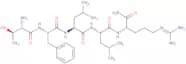
CAS :H-Thr-Phe-Leu-Leu-Arg-NH2 is a peptide that has been shown to reduce the severity of lung inflammation and injury in rats with pulmonary hypertension. It also prevents the release of proinflammatory cytokines such as tumor necrosis factor alpha (TNFα) and interleukin 6 (IL6). This peptide also induces an antibody response against collagen gel, which is used to treat fibrotic diseases and wounds. The peptide binds to the soybean trypsin inhibitor, preventing it from inhibiting protease enzymes, thereby allowing for protein synthesis. H-Thr-Phe-Leu-Leu-Arg-NH2 has been shown to have antiapoptotic effects by restoring mitochondrial membrane potential in cancer cells. This peptide can be used as a therapeutic agent for various diseases including primary pulmonary hypertension, cancer tissues, and mitochondrial disorders.Formule :C31H53N9O6Degré de pureté :Min. 95%Couleur et forme :White PowderMasse moléculaire :647.81 g/molH-Glu(Val-OH)-OH
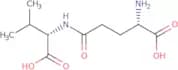
CAS :H-Glu(Val-OH)-OH is a synthetic form of l-glutamic acid. It increases the activity of glutamyl synthetase, which is an enzyme that regulates the synthesis of glutathione. H-Glu(Val-OH)-OH has been shown to have anticarcinogenic effects in animal studies. This compound also inhibits the synthesis of alpha-tocopherol, which is a molecule that protects against oxidative stress and is essential for maintaining cell membranes. H-Glu(Val-OH)-OH may be useful as a dietary supplement for individuals with low body mass index (BMI) or cancer patients undergoing chemotherapy. H-Glu(Val-OH)-OH may be used to treat obesity by increasing energy expenditure and decreasing appetite, although it does not affect glucose levels in mice. The mechanism by which this compound affects obesity is yet unknown, but it may be due to its ability to activate proinflammatory cytokines such as TNFα
Formule :C10H18N2O5Degré de pureté :Min. 98 Area-%Couleur et forme :White Off-White PowderMasse moléculaire :246.26 g/molH-Gly-2-ClTrt-Resin (100-200 mesh) 1% DVB
H-Gly-2-ClTrt-Resin (100-200 mesh) 1% DVB is a building block that is used as an amine or thiol in peptide synthesis. It is also used as a tool for the synthesis of alcohols and resins.
Degré de pureté :Min. 95%H-Gly-Ala-AMC monohydrochloride
CAS :H-Gly-Ala-AMC monohydrochloride is a chemical that is used as a reaction component or reagent in pharmaceutical and research laboratories. It has been shown to be a useful scaffold for the synthesis of complex compounds. This compound is also used as an intermediate in the synthesis of other fine chemicals. H-Gly-Ala-AMC monohydrochloride can be used as a building block for the production of versatile building blocks, which are useful for making speciality chemicals.Formule :C15H17N3O4·HClDegré de pureté :Min. 95 Area-%Couleur et forme :PowderMasse moléculaire :339.77 g/molANP (Rat, 1-28)
ANP (Rat, 1-28) is a peptide that is the active fragment of atrial natriuretic peptide. It has been shown to activate ion channels and inhibit protein interactions. ANP (Rat, 1-28) has also been used as a research tool for studies on receptor biology and pharmacology.
Degré de pureté :Min. 95%Hepcidin-24 (Human)
Consisting of the disulfide Bonds: Cys6- Cys22, Cys9-Cys12, Cys10- Cys18, and Cys13-Cys21 and of the trifluoroacetate salt form, this product can be used as an internal standard for Hepcidin assays.Hepcidin-24 is a peptide hormone that plays a key role in the regulation of iron metabolism in the body. It is produced by the liver and is secreted into the bloodstream, where it interacts with cells in the intestine and other tissues to control the absorption and distribution of iron. Hepcidin acts as a negative regulator of iron uptake and release by binding to and inhibiting the activity of ferroportin, a protein that facilitates the export of iron from cells into the bloodstream. When hepcidin levels are high, ferroportin activity is reduced, leading to decreased iron absorption from the diet and reduced iron release from cells. When hepcidin-24 levels are low, ferroportin activity is increased, leading to increased iron absorption and release. Imbalances in hepcidin levels can lead to a variety of disorders, including iron-deficiency anemia, hemochromatosis (an iron overload disorder), and anemia of chronic disease. Therefore, hepcidin-24 is a key target for the development of treatments for these and other iron-related disorders. In addition to its role in iron metabolism, hepcidin has been shown to have antimicrobial properties, as it can inhibit the growth of certain bacteria and fungi. It may also be involved in the regulation of immune function and inflammation.Formule :C109H165N33O28S9Degré de pureté :Min. 95%Masse moléculaire :2,674.31 g/molInfluenza B labeled 5-peptide mixture
Influenza B labelled 5-peptide mixture of: H-SHFANLK^-OHH-SYFANLK^-OHH-GVLLPQK^-OHH-NLNSLSELEVK^-OHH-GILLPQK^-OH K^ = Lysine (U-13C6,15N2) 100 aliquots/pack total to equal 1nmol/peptide/vial dry aliquotsH3 native 6-peptide mixture
H-STQAAIDQINGK-OHH-STQAAIDQISGK-OHH-SDAPIGK-OHH-DEALNNR-OHH-EFSEVEGR-OHH-TITNDR-OHPeptide purity: >98%AAA: Concentration - Duplicate100 aliquots/pack total to equal 1nmol/peptide/vial dry aliquotsRetatrutide
CAS :GLP-1, GIP, and GCGR2 mimic; Obesity research
Formule :C221H342N46O68Degré de pureté :Min. 99 Area-%Masse moléculaire :4,731.33 g/molEpitope2-S133-A145-A
Research peptide matching Epitope2-S133-A145-AFormule :C76H114N20O23SCouleur et forme :PowderMasse moléculaire :1,725.92 g/molH-D-Tyr-Val-NH2
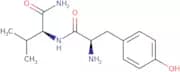
CAS :H-D-Tyr-Val-NH2 is a regulatory group that acts as the prosthetic group for a number of peptidyl and peptide hormones. H-D-Tyr-Val-NH2 is also involved in catalytic mechanism, as it is the amino acid responsible for the formation of peptide bonds in proteins. H-D-Tyr-Val-NH2 is found in high concentrations in the cerebriform tissue and has been shown to be important for the biosynthesis of amides, which are prohormones. H-D-Tyr-Val NH2 also participates in a number of cellular reactions, including those that have a kinetic rate.
Formule :C14H21N3O3Masse moléculaire :279.33 g/molH-Ile-Asn-OH
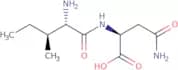
CAS :H-Ile-Asn-OH is a chloroplastic amide that is used as a substrate in polymerase chain reactions. It can be used to study the structure of proteins and enzymes by the use of monoclonal antibodies. H-Ile-Asn-OH has been sequenced and assayed, and found to have high binding affinity for carboxylate groups. This chemical has been shown to have multidomain structures as well as an isotype that is specific for triticum aestivum. H-Ile-Asn-OH may also be involved in plant physiology due to its role in photosynthesis.Formule :C10H19N3O4Masse moléculaire :245.28 g/molH-Phe-Pro-OH
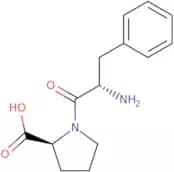
CAS :H-Phe-Pro-OH is a cyclic peptide that is a structural mimic of the natural amino acid gamma-aminobutyric acid (GABA) and has been shown to be an effective inhibitor of the p450 enzymes responsible for carcinogen activation. The peptide binds to response elements in DNA and RNA, which prevents transcription of genes that are involved in cancer development. H-Phe-Pro-OH also inhibits collagen production and has hemolytic activity due to hydrogen bonding with erythrocytes. This peptide can be used as an antimicrobial agent against Gram negative bacteria, including Pseudomonas aeruginosa, Klebsiella pneumoniae, Escherichia coli, and Salmonella typhimurium. In addition, it has been shown to inhibit the growth of Gram positive bacteria such as Staphylococcus aureus and Clostridium perfringens. The mechanism by which this compound inhibits bacterial growth is
Formule :C14H18N2O3Degré de pureté :Min. 95%Couleur et forme :PowderMasse moléculaire :262.3 g/molACTH(1-39) trifluoroacetate
CAS :ACTH(1-39) trifluoroacetate is a synthetic form of ACTH that is used for the diagnosis of autoimmune diseases and bowel disease. It is also used to assess the function of the adrenal gland in cases of suspected Cushing's syndrome. The blood sampling procedure involves withdrawing a small amount of blood from the patient and adding ACTH(1-39) trifluoroacetate to it, which causes an increase in cortisol concentration. ACTH(1-39) trifluoroacetate binds to corticotropin receptors on cells in the body, causing them to release basic proteins that are responsible for inflammation. This drug may be a potential biomarker for metabolic disorders such as obesity. It has been shown to have anti-inflammatory properties and can be used as a nonsteroidal anti-inflammatory drug (NSAID).
Formule :C207H308N56O58SDegré de pureté :Min. 98 Area-%Couleur et forme :PowderMasse moléculaire :4,541.07 g/mol


![Phe4,9 [Ring D5]-Hepcidin (Rat)](/_next/image/?url=https%3A%2Fstatic.cymitquimica.com%2Fproducts%2F3D%2Fthumb-webp%2FPLP-3780-PI.webp&w=3840&q=75)