


Peptides
Les peptides sont des chaînes courtes d'acides aminés liées par des liaisons peptidiques, jouant un rôle essentiel en tant que molécules biologiques dans divers processus cellulaires. Ils fonctionnent comme hormones, neurotransmetteurs et molécules de signalisation, et sont largement utilisés dans les applications thérapeutiques et diagnostiques. Les peptides sont également cruciaux dans la recherche pour étudier les interactions protéiques, les activités enzymatiques et les voies de signalisation cellulaire. Chez CymitQuimica, nous proposons une large sélection de peptides de haute qualité pour soutenir vos besoins en recherche et développement en biotechnologie et en pharmacie.
Sous-catégories appartenant à la catégorie "Peptides"
29707 produits trouvés pour "Peptides"
Trier par
Degré de pureté (%)
0
100
|
0
|
50
|
90
|
95
|
100
LL-37 fragment (30-34)
LL-37 is a member of the large cationic family of anti-microbial peptides called cathelicidins which have broad-spectrum anti-microbial activity and are expressed in many species. The only cathelicidin found in humans is LL-37, this is produced in epithelial cells, by proteolytic cleavage from the C-terminal of the hCAP-18 protein. LL-37 can be processed into different forms of anti-microbial peptides. As well as its anti-microbial properties LL-37 also regulates many aspects of the innate immune system and overexpression of LL-37 has been linked to autoimmune diseases such as asthma and psoriasis, making LL-37 the most studied form of the human cathelicidin peptides.More recently, studies have shown that LL-37 binds to SARS-CoV-2 S protein and inhibits binding to its receptor hACE2, which may inhibit viral entry into the cell. LL-37 is upregulated by vitamin D, therefore this may be one mode of action for the positive outcomes seen with vitamin D treatment for Covid-19.Couleur et forme :PowderMasse moléculaire :597.4 g/molBIM 187
Bombesin/GRP receptor agonist derived from the pro-apoptotic protein BIM, which is a member of the BCL-2 family proteins and activates the BAX and BAK proteins to promote apoptosis.The process of apoptosis can be activated by the intrinsic or extrinsic pathways, the former is activated by stress stimuli such as DNA damage and nutrient deficiency, while the latter is induced through activation of the death receptors FAS and TRAIL.The BCL-2 family's transmembrane anchor at the C-terminus allows them to locate at the mitochondrial outer membrane and play a vital role in apoptosis.Within the mitochondria BIM is a member of the BH3 molecules alongside, BIM, PUMA and NOXA which can all be activated by the intrinsic pathway. These in turn can initiate the homo-oligomerisation of BAX and BAK which induce mitochondrial outer membrane permeabilisation (MOMP) and the release of cytochrome c into the cytosol. Here cytochrome c associates with APAF-1 and dATP, ultimately activating effector caspase3/7 and apoptosis.BIM can be activated by CHOP-mediated transcription and phosphatase 2A-mediated dephosphorylation during endoplasmic reticulum stress. However when BIM is phosphorylated it undergoes degradation by the proteasome.Masse moléculaire :1,068.6 g/molKHLF-[AMC]
Peptide substrate for the kallikrein-related peptidase 7 (KLK7), the most abundant KLK family protease in the stratum corneum (outermost layer of the epidermis). KLK family have been implicated in several key homeostatic processes and in skin diseases that feature impaired desquamation. Increased levels of KLK7, have been identified in the stratum corneum of patients with atopic dermatitis (AD). T-helper type 2 cytokines, including interleukin 4 (IL-4) and-IL-13, can stimulate expression of KLK7, suggesting a direct link between inflammation in AD and KLK7 levels.KLK7 cleaves its substrates after tyrosine or phenylalanine residues. This peptide contains a C-terminal 7-amino-4-methylcoumarin (AMC) fluorescent tag, which is quenched when linked to the peptide via the amide bond. AMC is cleaved from the peptide by KLK7, upon cleavage the AMC fluorescence is activated.Couleur et forme :PowderMasse moléculaire :700.4 g/molKisspeptin 14 human
The biologically active C-terminal region of Kisspeptin. Kisspeptin, is cleaved from a 145 amino acid precursor to a 54 amino acid peptide in humans and a 52 amino acid peptide in mice. Smaller isoforms of 14, 13 and 10 amino acids have also been isolated in humans, each sharing the common C-terminal sequence. Kisspeptin-14 (KP-14) has equivalent receptor binding efficiency and potency to full length Kisspeptin.Kisspeptin, a product of the KISS1 gene, is a hypothalamic neuropeptide that stimulates gonadotropin-releasing hormone (GNRH) neurons and drives fertility. When energy balance is severely altered (either negatively or positively), Kiss1 expression and fertility are compromised. Kisspeptin neurons are responsible for the transmission of key homeostatic information to GNRH neurons, which is likely to mediate the link between energy balance and fertility. Leptin, ghrelin, pro-opiomelanocortin (POMC), and neuropeptide Y (NPY) have been suggested as modulators of this process.Kisspeptin binds specifically to the G-protein-coupled receptor-54, now known as Kiss1r, which is expressed in almost all GNRH neurons. Kisspeptin plays an essential role in reproduction, and Kiss1r mutations have been isolated in cases of defects in sexual development. Kiss1r is also expressed in other areas of the brain and periphery, highlighting other possible roles for kisspeptin outside of reproduction. Due to kisspeptins importance in reproduction it is synthesized in excess to ensure reproductive success.Couleur et forme :PowderMasse moléculaire :1,740.8 g/molNeuropeptide Y (3-36) Human,Rat
Neuropeptide Y (NPY) is a peptide involved in the gut-brain axis. Neurons express it in both the brain and the gut. However, expression is significantly increased upon nerve injury. NPY is the most abundant neuropeptide within the brain and is expressed by many neuronal systems, and several important pathways utilising NPY as a neurotransmitter have been identified. Mammalian NPY acts as a vasoconstrictor by affecting blood pressure around peripheral nerves, while it also acts on food intake and emotional regulation.The primary receptor subtypes on which NPY acts in the brain are the Y1 and Y2 receptors but also include Y4, Y5 and y6 (a human pseudogene). Y1 and Y2 increase blood pressure, Y1 and Y5 increase food intake, and Y2 and Y4 decrease food intake.NPY has been linked to psychiatric disorders such as anxiety and depression. Low levels of NPY have been observed in patients with major depressive disorder. Rodent models are used to understand better NPY and its receptors' role in emotional regulation.Masse moléculaire :4,271.69 g/molDYKDDDDK FLAG peptide
Highly specific protein tag that can be added to a protein using recombinant DNA technology. FLAG is an artificial antigen to which high affinity monoclonal antibodies have been raised, therefore allowing for highly effective protein purification by affinity chromatography as well as accurate localisation of FLAG tagged proteins within living cells, or Western blots. FLAG peptide can be used to effectively purify complexes with multiple proteins as its mild purification procedure tends not to disrupt such complexes. It can be used to obtain proteins of sufficient purity for x-ray crystallography.Masse moléculaire :1,012.4 g/molTetanus Toxin (1084-1099)
Tetanus Toxin (1084-1099) is a protein that is derived from the single-chain polypeptide neurotoxin produced by Clostridium tetani. The neurotoxins produced by Clostridium tetani are among the most potent molecules known to humankind. Once in the body, the toxin binds to the basal lamina at the neuromuscular junction. From here, the toxin is transported to inhibitory interneurons in the spinal cord, where it prevents the release of neurotransmitters, which causes spastic paralysis.Masse moléculaire :1,878.1 g/molCSK substrate
Substrate peptide for C-terminal Src kinase (Csk) for use in kinase assays. Csk is a cytosolic tyrosine kinase that is closely related to the kinase Src and is a well-known negative regulator of Src family kinases. Csk has both tumour suppressor and oncogenic properties and has also been implicated in regulating blood pressure, making Csk a novel therapeutic target for hypertension disorders.
Couleur et forme :PowderMasse moléculaire :1,504.8 g/molNeurokinin A (Substance K)
Neurokinin A (NKA) is a member of the classical tachykinins family of peptides which also includes substance P and neurokinin B. These peptides are primarily found in the nervous system where they act as neurotransmitters and neuromodulators. They also play key roles in neuronal inflammation, and high levels of NKA have been linked to poor prognosis of some tumours.The tachykinin peptides are characterised by a common C-terminal sequence, Phe-X-Gly-Leu-Met-NH2, where X represents either an aromatic (Phe, Tyr) or a branched aliphatic (Val, Ile) amino acid.This C-terminal region is thought to be responsible for activating the receptor. The divergent N-terminal region is thought to play a role in determining the receptor subtype selectivity. NKA binds preferentially to the NK2 receptor.Masse moléculaire :1,132.6 g/molMotilin (1-10)
Residues 1-10 of the gastrointestinal hormone motilin, secreted from endocrine cells in the small intestines, mainly from the jejunum and duodenum, in response to the fasting, drinking water or the mechanical stimulus of eating.Masse moléculaire :1,184.6 g/molRhodopsin Epitope Tag
ID4 is a highly versatile epitope tag. The peptide sequence is highly specific to rhodopsin and related photoreceptor proteins, meaning when used with monoclonal antibodies off-target signals are virtually non-existent. ID4 is also devoid of charged residues therefore reducing nonspecific ionic interactions. Monoclonal antibodies also bind to ID4 with high affinity therefore there is less need for inserting multiple copies of ID4.Masse moléculaire :902.4 g/molBiotin-Desmoglein-3 DSG3 (50-79)
Desmoglein-3 DSG3 (50-79) is derived from the pemphigus vulgaris antigen DSG3 and is involved in cell-cell adhesion. It can exist as non-junctional and junctional and is one of the desmosomal cadherins. Within the epithelial cells non-junctional DSG3 takes part in E-cadherin signalling.The overexpression of DSG3 has been observed in squamous cell carcinoma and can be used as a biomarker for cervical sentinel lymph nodes. DSG3 in tumours is considered as being pro-metastatic through DSG3 ability to activate AP-1 and the PKC/Ezrin pathway.Biotin (B7) has been added to the N-terminus.Couleur et forme :PowderMasse moléculaire :3,705.9 g/molTregitope 289
T regulatory cell epitopes (Tregitopes) are a set of natural T cell epitopes derived from immunoglobulin G. These peptides are Treg-activating and show some promise in prophylactic and therapeutic studies in type 1 diabetes mellitus: which is associated with effector T cell (Teff) destruction of insulin-producing pancreatic β-islet cells. In non-diabetics, self-reactive T cells are deleted during thymic development, rendered anergic, or converted into natural regulatory T cells (Tregs) that suppress autoimmune responses.Tregitopes are processed and presented by MHC class II molecules. They can suppress effector T cell responses, and up-regulate Treg-associated cytokines and chemokines. Tregitopes help stimulate 'antigen-specific adaptive tolerance induction' (ASATI) to modulate antigen-specific transplant rejection and to reduce immune responses to allergens in vitro and in vivo.Masse moléculaire :2,564.3 g/molMelittin [Cy5]
Melittin is a 26-residue cationic, haemolytic peptide isolated from honeybee venom. Melittin lowers the surface tension at the plasma membrane and causes cell lysis. It also exhibits potent anti-inflammatory and antimicrobial activity. Melittin has been extensively used as a model peptide for observing membrane lipid-protein interaction. In Melittin [Cy5] the fluorophore Cy5, a member of the Cy-Dye fluorescent molecule group which are most commonly used in DNA-related applications is added to the melittin peptide.Couleur et forme :PowderMasse moléculaire :3,712 g/molApolipoprotein KV domain (67 - 77)
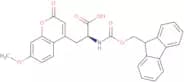
Vascular lipid deposition and altered lipid profiles are typical when unregulated angiogenesis is occurring, it is often seen in vascular disorders such as cancer and atherosclerosis. Apolipoprotein a (ApoA) functions as part of the lipid transporter complex high-density lipoproteins (HDL) to ensure lipid homeostasis and therefore the balance of angiogenesis. Within ApoA the Kringle5 (KV) domain (67 - 77), also known as KV11, has been identified as the region of ApoA that exerts anti-angiogenic effect. KV11 was shown in tumour cells to inhibit angiogenesis and consequently inhibits tumour progression. KV11 targets the angiogenesis c-Src/ERK pathway by blocking the activation signals received from vascular endothelial growth factor (VEGF). KV11 provides a new research potential for an anti-angiogenesis and anti-tumour therapeutic agent.Masse moléculaire :1,447.66 g/molFmoc-β-(7-methoxy-coumarin-4-yl)-Ala-OH
CAS :Fmoc-b-(7-methoxy-coumarin-4-yl)-Ala-OH is a reagent with the CAS No. 524698-40-6, which is used in organic synthesis. It is a versatile building block and useful intermediate that can be used to synthesize other organic compounds. Fmoc-b-(7-methoxy-coumarin-4-yl)-Ala-OH is also used as a reaction component in the synthesis of peptides and proteins, as well as in the preparation of polymers. It has been shown to be an effective building block for complex compounds.Formule :C28H23NO7Degré de pureté :Min. 95%Couleur et forme :PowderMasse moléculaire :485.48 g/molAc-Arg-[Cys-Met-Ava-Arg-Val-Tyr-Ava-Cys]-NH2
Ac-Arg-[Cys-Met-Ava-Arg-Val-Tyr-Ava-Cys]-NH2 is a peptide that has antagonist activity against melanin, the hormone receptor. This peptide can be used to treat skin pigmentation disorders such as vitiligo, which is an autoimmune disorder in which the melanocytes are destroyed. Ac-Arg-[Cys-Met-Ava-Arg-Val-Tyr-Ava-Cys]-NH2 is also an aminovaleric acid derivative, which can inhibit the production of aminovaleric acid and related compounds.Formule :C49H82N16O11S3Degré de pureté :Min. 95%Masse moléculaire :971.22 g/molH-Ser(tBu)-2-ClTrt-Resin (100-200 mesh) 1% DVB
H-Ser(tBu)-2-ClTrt-Resin (100-200 mesh) 1% DVB is a resin that is designed for the synthesis of peptides. It can be used as a building block and has been shown to react with thiols, alcohols, amines, and other building blocks.Degré de pureté :Min. 95%Fmoc-ß-Ala-Wang Resin (100-200 mesh) 1% DVB
Fmoc-ß-Ala-Wang Resin (100-200 mesh) 1% DVB is a high purity reagent for peptide synthesis. It is used in the production of cell biology research tools, such as inhibitors and activators of ion channels, ligands for receptor binding, and antibodies. Fmoc-ß-Ala-Wang Resin (100-200 mesh) 1% DVB is a reagent that is used to synthesize peptides. This resin can be used in the production of various types of research tools, including inhibitors and activators of ion channels, ligands for receptor binding, and antibodies.Degré de pureté :Min. 95%



![KHLF-[AMC]](/_next/image/?url=https%3A%2Fstatic.cymitquimica.com%2Fproducts%2F3D%2Fthumb-webp%2FCRB1101150.webp&w=3840&q=75)











![Melittin [Cy5]](/_next/image/?url=https%3A%2Fstatic.cymitquimica.com%2Fproducts%2F3D%2Fthumb-webp%2FCRB1130465.webp&w=3840&q=75)

![Ac-Arg-[Cys-Met-Ava-Arg-Val-Tyr-Ava-Cys]-NH2](/_next/image/?url=https%3A%2Fstatic.cymitquimica.com%2Fproducts%2F3D%2Fthumb-webp%2FPMC-3881-PI.webp&w=3840&q=75)

