


Peptides
Sous-catégories appartenant à la catégorie "Peptides"
29635 produits trouvés pour "Peptides"
H-SVFDQDPFLLR^-OH
Peptide H-SVFDQDPFLLR^-OH is a Research Peptide with significant interest within the field academic and medical research. This peptide is available for purchase at Cymit Quimica in multiple sizes and with a specification of your choice.
H-NQTANLTNQGK^-OH
Peptide H-NQTANLTNQGK^-OH is a Research Peptide with significant interest within the field academic and medical research. This peptide is available for purchase at Cymit Quimica in multiple sizes and with a specification of your choice.[5-FAM]-VGB4
Antagonist peptide of VEGF-A and VEGF-B reproducing two binding regions of VEGF-B (loop 1 and loop3) linked together by a receptor binding region of VEGF-A (loop3). Binds to both VEGFR1 and VEGFR2 and inhibits VEGF-A driven proliferation, migration and tube formation in HUVECs. It contains 5-carboxyfluorescein (5-FAM), a widely used green fluorescent tag.Masse moléculaire :3,066.5 g/molH-SLDFTELDVAAEK^-OH
Peptide H-SLDFTELDVAAEK^-OH is a Research Peptide with significant interest within the field academic and medical research. This peptide is available for purchase at Cymit Quimica in multiple sizes and with a specification of your choice.
[5-FAM]/[Lys(Dabcyl)]-CoV Main Protease (Mpro) Substrate
FRET peptide substrate for the severe acute respiratory syndrome coronavirus main protease (SARS-CoV Mpro). The substrate sequence is derived from residues P4-P5' of the SARS-CoV Mpro N-terminal autoprocessing site which has the sequence AVLQSGFRK. SARS-CoV Mpro is a key antiviral target.This peptide contains an N-terminal 5-Carboxyfluorescein (5-FAM), a widely used green fluorescent tag and the Dabcyl fluorescence quencher. When the peptide is intact, fluorescence is undetectable due to the proximity of the Dabcyl quencher to the 5-FAM fluorophore. However upon cleavage of the peptide by SARS-CoV Mpro, the 5-FAM group and the Dabcyl quencher are separated and fluorescence can be detected. This therefore represents a useful tool for investigating SARS-CoV Mpro activity.Couleur et forme :PowderMasse moléculaire :1,740.8 g/molAF488 Maleimide
Please enquire for more information about AF488 Maleimide including the price, delivery time and more detailed product information at the technical inquiry form on this pageDegré de pureté :Min. 95%Thrombin Receptor Antagonist
Thrombin is the main effector of the coagulation cascade- it is a serine protease. Thrombin binds to active protease activated receptor 1 (PAR-1) which belongs to a subfamily of G-protein coupled receptors (GPCR). However, thrombin generated during cardiopulmonary bypass can activate PAR-1 leading to platelet dysfunction and unwanted bleeding. FLLRN is found to be a potent PAR-1 antagonist. Use of FLLRN and variants has aided the study of platelet aggregation dynamics. Further study may provide a suitable clinical application.Masse moléculaire :661.4 g/molHemokinin 1 (mouse, rat)
CAS :Custom research peptide; min purity 95%. For different specs please use the Peptide Quote ToolFormule :C61H100N22O15SMasse moléculaire :1,413.65 g/mol[Azhx]-ANP (Human)
ANP (human) is derived from the atrial natriuretic peptide (ANP) which is a cardiac hormone involved in maintaining cardio-renal homeostasis. This occurs through the activation of the guanylyl cyclase-coupled receptor, resulting in the increased concentration of cyclic guanylate monophosphate. Moreover its function in the processes of anti-proliferation and anti-angiogenesis allow it to take part in cardiovascular remodelling.ANP is a member of the natriuretic peptide family and it is encoded by the NPPA gene, located on chromosome 1. Once synthesized from the 151 amino acid pre-prohormone into its biologically active form, ANP is secreted by the atrial cardiomyocytes in the circulating forms: ANP (1-98) and ANP (99-126). This synthesis process involves the signal peptide being removed from the pre-prohormone resulting in pro-ANP (1-126) which is converted into the circulating forms by the type II transmembrane serine protease Corin.At the N-terminus Azhx, 6-azidohexanoic acid, is present.
Masse moléculaire :3,219.5 g/molNucleoprotein (396-404)
CAS :Custom research peptide; min purity 95%. For different specs please use the Peptide Quote ToolFormule :C50H71N13O14Masse moléculaire :1,078.18 g/molSomatostatin-28
CAS :Somatostatin-28 is the 28 amino acid isoform of somatostatin and has similar activity to the 14 amino acid isoform. While the 14 amino acid form mainly acts in the brain, somatostatin-28 mainly operates in the gastrointestinal tract. Somatostatin is a peptide hormone that is widely expressed throughout the body for example in the gastrointestinal (GI) tract, hypothalamus, pancreas and the central nervous system. It has been found to inhibit pituitary growth hormone release as well as endocrine, pancreatic and GI secretions. In the central nervous system somatostatin plays a role in neurotransmission modification and it has also demonstrated to be effective against a number of cancers such as squamous carcinoma.Formule :C137H207N41O39S3Degré de pureté :Min. 95%Masse moléculaire :3,148.62 g/molTAT-NR2B (C-ter)
N-methyl-D-aspartate receptors (NMDARs) are ligand-gated ionotropic glutamate receptors that mediate excitatory synaptic transmission and play important roles in many aspects of nervous system function including: synaptic plasticity- learning and memory- neuronal development and circuit formation. NMDARs have been implicated in various neuronal disorders. NMDARs are heteromers consisting of an obligate NR1 subunit and most commonly one or two kinds of NR2 subunits or occasionally NR3 subunits. NR2B is the predominant subunit found in the postnatal brain, however over time the number of NRA2 subunits increase and eventually outnumber NR2B subunits in a process known as the NR2B-NR2A developmental switch. The greater ratios of the NR2B subunit in post-natal brains leads to NMDA receptors which remain open longer compared to those with more NR2A subunits, this may be related to the greater memory abilities in the immediate postnatal period compared to late in life. NR2B improves synaptic plasticity and memory when over-expressed in neurones. The involvement of NMDAR in the central nervous system (CNS) has become a focus area for neurodegenerative diseases such as Alzheimer's disease, epilepsy and ischemic neuronal cell death.The TAT peptide is present due to its properties as a cell penetrating cationic peptide (CPP). It derived from the N-terminus of the Tat protein, which is a trans-activator of the transcription protein present in the human immunodeficiency virus (HIV). As a CPP, TAT is able facilitate the delivery of NR2B (C-ter) across the plasma membrane.Couleur et forme :PowderMasse moléculaire :2,517.4 g/molHXB2 gag NO-99/aa393 - 407
Custom research peptide; min purity 95%. For different specs please use the Peptide Quote Tool
Masse moléculaire :1,663.9 g/molAc-SEEEDPAPSRKIHFSTAPIQVFST-NH2
Peptide Ac-SEEEDPAPSRKIHFSTAPIQVFST-NH2 is a Research Peptide with significant interest within the field academic and medical research. This peptide is available for purchase at Cymit Quimica in multiple sizes and with a specification of your choice.5Fam-CRGDK-OH
Peptide 5Fam-CRGDK-OH is a Research Peptide with significant interest within the field academic and medical research. This peptide is available for purchase at Cymit Quimica in multiple sizes and with a specification of your choice.Ac-CHHHHHH-OH PAB-402-60F
Peptide Ac-CHHHHHH-OH PAB-402-60F is a Research Peptide with significant interest within the field academic and medical research. This peptide is available for purchase at Cymit Quimica in multiple sizes and with a specification of your choice.
TAT-TRPV1 (736-745)
TAT-TRPV1 (736-745) is a cell-permeable TRPV1 fragment (capsaicin receptor and the vanilloid receptor 1), that can inhibit the interaction of TRPV1 and A-kinase anchoring protein 79 (AKAP79). TAT- TRPV1 (736-745) consists of amino acids 736-749 from the TRPV1 C-terminal domain, combined with amino acids 47-57 of TAT to promote uptake across neuronal cell membranes. TAT-TRPV1 (736-745) inhibits both the first and the second phase of pain behaviour in the formalin test, implying an effect on both acute and inflammatory pain.A-kinase anchoring protein 79 (AKAP79) is a protein that targets kinases to TRPV1. Inflammation causes hyperalgesia but can be reduced when TRPV1 is blocked. a key region on AKAP79, amino acids 326-336, is responsible for its interaction with TRPV1. TAT-TRPV1 (736-745) promotes uptake across the cell membrane and TRPV1 (736-745) inhibited inflammatory hyperalgesia in mice. TAT-TRPV1 (736-745) did not affect pain thresholds in the absence of inflammation. These results suggest that antagonizing the TRPV1-AKAP79 interaction will be a useful strategy for inhibiting inflammatory hyperalgesia and TAT is an effective delivery system.
Masse moléculaire :2,927.6 g/molH-EALALALDQER^-OH
Peptide H-EALALALDQER^-OH is a Research Peptide with significant interest within the field academic and medical research. This peptide is available for purchase at Cymit Quimica in multiple sizes and with a specification of your choice.H-GTVNLTWSR^-OH
Peptide H-GTVNLTWSR^-OH is a Research Peptide with significant interest within the field academic and medical research. This peptide is available for purchase at Cymit Quimica in multiple sizes and with a specification of your choice.H-YQDVELCETGED-NH2
Peptide H-YQDVELCETGED-NH2 is a Research Peptide with significant interest within the field academic and medical research. This peptide is available for purchase at Cymit Quimica in multiple sizes and with a specification of your choice.Fmoc-Ser(tBu)-Wang resin (200-400 mesh)
Fmoc-Ser(tBu)-Wang resin is a versatile building block that is used in the synthesis of complex compounds. It has a CAS number and is available as a fine chemical or reagent. Fmoc-Ser(tBu)-Wang resin is an intermediate for research chemicals, reaction components, and speciality chemicals. This material can be used as an important building block in the synthesis of many useful compounds and has high quality.Formule :C22H24NO4RDegré de pureté :Min. 95%Couleur et forme :PowderMasse moléculaire :366.43 g/molPEN-FFW
Sal-like4 (SALL4) derived peptide able to antagonise the SALL4-NuRD complex in hepatocellular carcinoma, turning SALL4 from a dual transcription repressor-activator to a singular transcription activator. Displays antitumour effects in xenograft mouse models.Couleur et forme :Powder[5-FAM] Kemptide
Kemptide is a synthetic substrate of the PKA catalytically active subunit (PKAc), and can bind along with ATP to PKAc. It contains 5-Carboxyfluorescein (5-FAM), a widely used green fluorescent tag.
Masse moléculaire :1,129.5 g/molH-Glu-Lys-OH
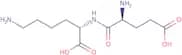
CAS :H-Glu-Lys-OH is an amino acid that has been used for structural analysis and as a pharmacological tool. This compound has been shown to be an agonist at the apical membrane of intestinal cells, where it stimulates the release of growth factors. H-Glu-Lys-OH has also been shown to have potent antagonist activity against the glutamate receptor in caco-2 cells. The reaction products of this amino acid are stabilizing for dna polymerase chain reactions.Formule :C11H21N3O5Degré de pureté :Min. 95 Area-%Couleur et forme :PowderMasse moléculaire :275.3 g/mol(Arg)9
(Arg)9 is a cationic cell-penetrating peptide (CPP)consisting of 9 arginines. Arginine rich CPPs enter cells in a passive manner through membrane multilamellarity and fusion. Evidently as a CPP, (Arg)9 can function to deliver specific molecules to target cells and can be used for drug delivery purposes.Masse moléculaire :1,423.69 g/molH-STGGISVPGPMGPSGPR^-OH
Peptide H-STGGISVPGPMGPSGPR^-OH is a Research Peptide with significant interest within the field academic and medical research. This peptide is available for purchase at Cymit Quimica in multiple sizes and with a specification of your choice.
Pepstatin A Biotin
Pepstatin A was originally purified from Actinomycetes species. The peptide is unusual in containing the amino acid statine (4-amino-hydroxy-6-methylheptanoic acid also known as AMHA). Pepstatin A competitively binds with acid proteases in a highly selective reversible manner to inhibit protease activity. Pepstatin A is ineffective on thiol, neutral and serine proteases. The functions of proteases have been investigated by the application of pepstatin A such as renin, pepsin, bovine chymosin and retroviral proteases from HIV. Characterisation of HIV protease using pepstatin A has been vital in development of HIV treatment to block viral replication. Pepstatin A is also a reagent to disrupt autophagy- this helps characterise the function of proteosome degradation in research such as during influenza A replication and improving drug delivery of therapeutic cancer treatments. Biotin is C-terminally linked to this peptide for convenient detection and purification. The polyethylene glycol (PEG) linker improves the water solubility of biotin labelled proteins.Masse moléculaire :1,041.7 g/molH-FSPDDSAGASALL^R-OH
Peptide H-FSPDDSAGASALL^R-OH is a Research Peptide with significant interest within the field academic and medical research. This peptide is available for purchase at Cymit Quimica in multiple sizes and with a specification of your choice.FSY tripeptide
Angiotensin I-converting enzyme (ACE) plays a critical role in blood pressure regulation. There is a rise in conditions linked to hypertension such as heart attacks, strokes, and dementia. This has led to search for novel inhibitors of ACE to regulate blood pressure. Food-derived bioactive peptides have been identified and utilised for their health-promoting abilities. The tripeptide FSY (Phe-Ser-Tyr) was identified from shrimp (Pandalus borealis) protein hydrolysate as a highly potent inhibitor of ACE activity. FSY is capable of being absorbed in the digestive tract to be transported in the blood to the receptors which is a useful feature for clinical application. Further study can provide deeper understanding of FSY potency on ACE function and may lead to drug development.Masse moléculaire :415.2 g/molH-CYFQNCPR^G-OH
Peptide H-CYFQNCPR^G-OH is a Research Peptide with significant interest within the field academic and medical research. This peptide is available for purchase at Cymit Quimica in multiple sizes and with a specification of your choice.H-FSPDDSAGASALL^^R-OH
Peptide H-FSPDDSAGASALL^^R-OH is a Research Peptide with significant interest within the field academic and medical research. This peptide is available for purchase at Cymit Quimica in multiple sizes and with a specification of your choice.
Cyclo(-RGDyK)
The cyclic pentapeptide cyclo(-Arg-Gly-Asp-d-Phe-Lys-) is a highly potent and selective inhibitor for the alphavβ3 integrin receptor. A related compound, cyclo(-Arg-Gly-Asp-d-Phe-Val), is a promising anti-cancer drug candidate- it inhibits angiogenesis and induces apoptosis in vascular cells.Cyclic RGD-containing peptides are selective antagonists of integrins, proteins that play important roles in cell-cell and cell-matrix interactions. In a suitably labelled form, these peptides may serve as useful tools for diagnostic imaging and peptide targeted therapy of some types of cancer.
Masse moléculaire :619.3 g/molRACGAP1
Custom research peptide; min purity 95%. For different specs please use the Peptide Quote ToolCodesane
Codesane (COD), is a cationic α-helical amphipathic-anti-microbial-peptide isolated from the venom of the wild bee Colletes daviesanus (Hymenoptera Colletidae). COD exhibits-anti-microbial-activity against Gram-positive and Gram-negative bacteria and Candida albicans but also noticeable haemolytic activity.COD peptide works by permeating both the outer and inner cytoplasmic membranes of Escherichia coli.Masse moléculaire :1,915.2 g/molH-LSGFGNFDLR^-OH
Peptide H-LSGFGNFDLR^-OH is a Research Peptide with significant interest within the field academic and medical research. This peptide is available for purchase at Cymit Quimica in multiple sizes and with a specification of your choice.
H-GDDDDK-2Naphthylamide
Peptide H-GDDDDK-2Naphthylamide is a Research Peptide with significant interest within the field academic and medical research. This peptide is available for purchase at Cymit Quimica in multiple sizes and with a specification of your choice.H-GFGFK^-OH
Peptide H-GFGFK^-OH is a Research Peptide with significant interest within the field academic and medical research. This peptide is available for purchase at Cymit Quimica in multiple sizes and with a specification of your choice.Histone H3 (1-20) K4Me3-GG-[Cys(Aurora™ Fluor 647)]
Histone H3 (1 - 20) K4Me3 is derived from Histone 3 (H3), which is one of the four core histones (H2A, H2B, H3 and H4) fundamental in compacting eukaryotic DNA into the nucleosome. The nucleosome arises when 147 base pairs of DNA wrap around a H3-H4 tetramer and two H2A-H2B dimers, forming the histone octamer core. H4 and H3 are highly conserved and perform roles in binding to segments of DNA which enter and leave the nucleosome and in chromatin formation. Like the other core histone, H3 has a globular domain and a flexible N-terminal domain, 'histone tail' which can undergo modifications such as acetylation, methylation, phosphorylation and ubiquitination. Due to histones containing many lysine and arginine residues, they have a positive net charge which interacts electrostatically with the negatively charged phosphate groups in DNA. The transcriptional activation or silencing of the chromatin is controlled by ATP-dependent chromatin remodelling factors and histone-modifying enzymes which target histone proteins. Both processes alter the positioning of the nucleosome, allowing the DNA to be either available or inaccessible to the transcription machinery.Histone tails can undergo multiple modifications, including acetylation, methylation, ubiquitylation and sumoylation. The modification pattern is believed to alter chromatin function/structure. Lysine 4 of histone H3 (1 - 20) K4Me3 has been tri-methylated. This is a common cis-tail histone methylation pattern, read by histone effectors such as Spindlin1. H3 (1 - 20) K4Me3 has been used to understand interactions with histone effectors in co-crystallisation. H3 (1 - 20) K4Me3 is labelled with the Aurora Fluor 647 fluorescent tag.Masse moléculaire :3,435.7 g/molAngiotensin III
Aspartyl aminopeptidase A (APA) and glutamyl APA, produce angiotensin III (Ang-III) by removing an aspartic acid from the N-terminal of angiotensin-II (Ang-II). Ang-III has many similar biological properties to Ang-II including aldosterone secretion and vasoconstriction, however some of its functions oppose those of Ang-II, such as sodium excretion and secretion of atrial natriuretic peptide (ANP). Due to its ability to promote ANP secretion Ang-III has some cardio protective effects.Ang-III likely binds to both G-protein-coupled Ang-II type 1 (AT1) and Ang-II type 2 (AT2) receptors with a similar affinity to that of Ang-II. Ang-III appears to be cleared from the plasma at a faster rate than Ang-II, therefore the physiological effects of Ang-III are likely to limited to the site at which it is produced.Couleur et forme :PowderMasse moléculaire :931.09 g/molAc-CGASKPKKKAKGLFM-OH
Peptide Ac-CGASKPKKKAKGLFM-OH is a Research Peptide with significant interest within the field academic and medical research. This peptide is available for purchase at Cymit Quimica in multiple sizes and with a specification of your choice.Ala-Ala-Ala-Ala-Ala-Ala-Ala
Custom research peptide; min purity 95%. For different specs please use the Peptide Quote Tool
Formule :C21H37N7O8Masse moléculaire :515.56 g/molH-TMLLQPAGSLGSYSYR^-OH
Peptide H-TMLLQPAGSLGSYSYR^-OH is a Research Peptide with significant interest within the field academic and medical research. This peptide is available for purchase at Cymit Quimica in multiple sizes and with a specification of your choice.H-GTVVVPTLDSVLYDNQEFPDPEK^-OH
Peptide H-GTVVVPTLDSVLYDNQEFPDPEK^-OH is a Research Peptide with significant interest within the field academic and medical research. This peptide is available for purchase at Cymit Quimica in multiple sizes and with a specification of your choice.
H-IQEVAGSLIFR^-OH
Peptide H-IQEVAGSLIFR^-OH is a Research Peptide with significant interest within the field academic and medical research. This peptide is available for purchase at Cymit Quimica in multiple sizes and with a specification of your choice.
V5 epitope tag
The V5 tag is derived from a small epitope (Pk) found on the P and V proteins of the paramyxovirus (of the simian virus 5 (SV5) family) and is extensively used as a general epitope tag in expression vectors.Couleur et forme :PowderMasse moléculaire :1,420.6 g/molAtorvastatin acid
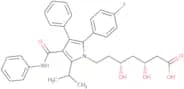
CAS :Atorvastatin acid is a pharmaceutical compound belonging to the class of statins, which is a synthetic derivative of fungal metabolites. It functions as an HMG-CoA reductase inhibitor, playing a critical role in the cholesterol biosynthesis pathway. By inhibiting this key enzyme, atorvastatin acid effectively reduces the conversion of HMG-CoA to mevalonate, a precursor of cholesterol, thus lowering overall cholesterol levels in the bloodstream.Formule :C33H35FN2O5Degré de pureté :Min. 98 Area-%Couleur et forme :White PowderMasse moléculaire :558.64 g/mol[Atto655]-LifeAct (Abp140 1-17)
[Atto655]-LifeAct (Abp140 1-17) contains the 17 amino acid peptide Lifeact derived from amino acids 1-17 of the Saccharomyces cerevisiae actin binding protein, Abp140. These first 17 amino acids of Abp140 are crucial in allowing Lifeact to localise to actin filaments (F-actin) and therefore it can be used as a cytoskeletal marker. One application of lifeact is in the study of plant development and pathogen defence as filamentous actin within the plant's actin cytoskeleton is important in key processes such as cell division, membrane trafficking and stomatal movements. The addition of the oxazine fluorophore Atto655 which has single molecule (SM) imaging properties allows the location of the LifeAct (Abp140 1-17) to be detected.
Couleur et forme :PowderMasse moléculaire :2,432.2 g/molVP4 (449-454) Nora virus
VP4 is a viral coat protein of Nora virus encoded for by ORF4. The product of these gene is likely cleaved into three capsid proteins, VP4A, B and C. VP4 is also the most conserved gene from Nora virus and related viruses. Nora virus is a non-pathogenic virus found in gut of Drosophila melanogaster. It causes persistent, non-pathological infection, it replicates in the fly gut and is transmitted via the faecal-oral route. Nora virus has a 12333 nucleotides long single-stranded RNA genome of positive polarity.Masse moléculaire :806.4 g/molHistone H3 (1-20) K4Me2-GG-[Lys(5-FAM)]
Histone H3 (1-20) K4Me2 is derived from Histone 3 (H3), which is one of the four core histones (H2A, H2B, H3 and H4) fundamental in compacting eukaryotic DNA into the nucleosome. The nucleosome arises when 147 base pairs of DNA wrap around a H3-H4 tetramer and two H2A-H2B dimers, forming the histone octamer core. H4 and H3 are highly conserved and perform roles in binding to segments of DNA which enter and leave the nucleosome and in chromatin formation. Like the other core histone, H3 has a globular domain and a flexible N-terminal domain, 'histone tail' which can undergo modifications such as acetylation, methylation, phosphorylation and ubiquitination. Due to histones containing many lysine and arginine residues, they have a positive net charge which interacts electrostatically with the negatively charged phosphate groups in DNA. The transcriptional activation or silencing of the chromatin is controlled by ATP-dependent chromatin remodelling factors and histone-modifying enzymes which target histone proteins. Both processes change the positioning of the nucleosome, allowing the DNA to be either available to the transcription machinery or inaccessible.Histone tails can undergo multiple modifications, including acetylation, methylation, ubiquitylation and sumoylation. The modification pattern is believed to alter chromatin function/structure. Histone H3 (1-20) K4Me2-GG-[Lys(5-FAM)] lysine 4 has been dimethylated, has a C-terminal GGK linker labelled with 5-Carboxyfluorescein (5-FAM), a widely used green fluorescent tag. This peptide also has an uncharged C-terminal amide. H3 (1-20) K4Me2 has been investigated to understand its effect on epigenetic regulation through NMR with histone readers such as zinc finger domains. Histone H3 (1-20) K4Me2-GG-[Lys(5-FAM)] can be used to study the function of this pattern on chromatin availability and histone effectors via crystallisation, pull-down assays and protein blots.Masse moléculaire :2,809.5 g/mol

![[5-FAM]-VGB4](/_next/image/?url=https%3A%2Fstatic.cymitquimica.com%2Fproducts%2F3D%2Fthumb-webp%2FCRB1101542.webp&w=3840&q=75)
![[5-FAM]/[Lys(Dabcyl)]-CoV Main Protease (Mpro) Substrate](/_next/image/?url=https%3A%2Fstatic.cymitquimica.com%2Fproducts%2F3D%2Fthumb-webp%2FCRB1101508.webp&w=3840&q=75)
![[Azhx]-ANP (Human)](/_next/image/?url=https%3A%2Fstatic.cymitquimica.com%2Fproducts%2F3D%2Fthumb-webp%2FCRB1000609.webp&w=3840&q=75)

![[5-FAM] Kemptide](/_next/image/?url=https%3A%2Fstatic.cymitquimica.com%2Fproducts%2F3D%2Fthumb-webp%2FCRB1001375.webp&w=3840&q=75)
![Histone H3 (1-20) K4Me3-GG-[Cys(Aurora™ Fluor 647)]](/_next/image/?url=https%3A%2Fstatic.cymitquimica.com%2Fproducts%2F3D%2Fthumb-webp%2FCRB1101679.webp&w=3840&q=75)

![[Atto655]-LifeAct (Abp140 1-17)](/_next/image/?url=https%3A%2Fstatic.cymitquimica.com%2Fproducts%2F3D%2Fthumb-webp%2FCRB1101303.webp&w=3840&q=75)
![Histone H3 (1-20) K4Me2-GG-[Lys(5-FAM)]](/_next/image/?url=https%3A%2Fstatic.cymitquimica.com%2Fproducts%2F3D%2Fthumb-webp%2FCRB1101683.webp&w=3840&q=75)