Peptides
Sous-catégories appartenant à la catégorie "Peptides"
29608 produits trouvés pour "Peptides"
Alkyne-agarose
Alkyne-Agarose targets azide-modified proteins with an activation level of 10-20 umol alkyne groups per mL resin. Alkyne-Agarose is a 6% crosslinked agarose resin that is activated with terminal alkyne functional groups for covalent capturing azide-tagged biomolecules. This product is adequate to work in batch or column purification (low pressure).Couleur et forme :PowderH-SVYDFFVWL-OH
This peptide is derived from tyrosinase-related protein 2 (TRP2) residues 180-188. TRP2, also named L-dopachrome tautomerase, H-2KB or DCT, belongs to the melanocyte differentiation antigens and has been implicated as a target for immunotherapy of human as well as murine melanoma. Studies show that this TRP2 derived peptide can bind to mouse and human MHC class Imolecules. Immunization with TRP2 peptide loaded dendritic cells (DCs) results in effective induction of antitumor immunityGHRP-6
CAS :Custom research peptide; min purity 95%. For different specs please use the Peptide Quote Tool
Formule :C46H56N12O6Masse moléculaire :873.01 g/molβ-Pompilidotoxin
CAS :β-Pompilidotoxin is a neurotoxin that is found in the venom of the scorpion Pompilus. It binds to the ryanodine receptor, which is a type of calcium channel protein that regulates intracellular calcium levels. β-Pompilidotoxin blocks the release of calcium from the sarcoplasmic reticulum and inhibits the entry of calcium into cells by blocking voltage-gated sodium channels. It has been shown to be cytotoxic to ventricular myocytes and cerebellar purkinje neurons. β-Pompilidotoxin also has a physiological function in regulating glomerular filtration rate and preventing accumulation of intracellular calcium, which can lead to overload.Formule :C71H124N22O17Degré de pureté :Min. 95%Masse moléculaire :1,557.9 g/molH-SLYNTVATL-OH
HIV-1 p17 Gag (77-85), also called SL9, is a short part of the Human Immunodeficiency Virus 1 especially a short peptide of matrix composed of the viral protein p17 ensuring the integrity of the virion particle. HIV-1 p17 Gag (77-85) HLA-A*02:01-restricted was one of the first cytotoxic T lymphocytes epitope identified for HIV-1. It produces a specific cytotoxic T cells response in 75% of chronically infected adults but a rare activity in acute infection. Therefore, HIV-1 p17 Gag (77-85) may serve as target for anticancer immunotherapeutic strategies especially for vaccine development. Applications of HIV-1 p17 Gag (77-85): HIV-1 p17 Gag (77-85) is used to stimulate CTL responses in peripheral blood mononuclear cells (PBMCs). Then, ELISPOT assay is used to quantify peptide epitope specificity and IFN-γ releasing effector cells. Potential cross-reactivities with FluM1 (58-66) and HCV NS5B (2594-2602): Moreover, HIV-1 p17 Gag (77-85) share similarities with FluM1 (58-66) which can potentially show a cross-reactivity between these epitopes. It has been demonstrated a cross-reactivity and results suggest that immunity following infection by Influenza virus causes specific immune response to HIV-1 p17 Gag (77-85). Similarities between two others HLA-A2-restricted epitopes of two viruses have been demonstrated too: the amino acid sequence of HIV-1 p17 Gag (77-85) (SLYNTVATL) and of HCV NS5B (2594-2602) (ALYDVVTKL). Therefore, researches are conducted to know if during HCV/HIV co-infection it could be exist a T cell cross reactivity.H-SDEGGYTCFFRDHSYQEE-OH
MOG(91-108) corresponds to amino acids 97 to 108 of the rat myelin oligodendrocyte glycoprotein (MOG).
H-LTLGEFLKL-OH
Survivin protein:
Survivin, also called BIRC5, is a member of the apoptosis inhibitor protein family containing a baculovirus domain. Survivin is overexpressed in most human cancers but rarely express in normal differentiated adult tissues. Survivin protein inhibits caspase activation leading to negative regulation of cell death and promote cell proliferation. Survivin localizes in G2/M phase in cell cycle and interacts with tubulin during mitosis. It has been demonstrated that Survivin expression seems to be regulated by the tumor protein p53. Human Survivin contains HLA-A*02:01 binding motifs.
Applications of A*02:01/Human Survivin (96-104):
A*02:01/Human Survivin (96-104) HLA-A*02:01-restricted can be recognized by cytotoxic T lymphocytes on MHC I. Therefore, A*02:01/Human Survivin (96-104) may serve as a target for therapeutics CTL responses and for anticancer immunotherapeutic strategies. A*02:01/Human Survivin (96-104) is used to stimulate CTL responses in peripheral blood mononuclear cells (PBMCs). Then, ELISPOT assay is used to quantify peptide epitope specificity and IFN-γ releasing effector cells. A*02:01/Human Survivin (96-104) have shown spontaneous T-cell reactivity in chronic lymphatic leukemia and in melanoma (1). A*02:01/Human Survivin (96-104) has also demonstrated the ability to induce CTL responses in lung cancer and may serve for developing cancer vaccines.H-SLLMWITQV-OH
NY-ESO-1 (157-165) C165V – SLLMWITQV – General analogue epitope of tumor cells
Formule :C51H83N11O13SMasse moléculaire :1,090.3 g/molACE Light Tryptic Peptide Standard (4nmol)
Angiotensin converting enzyme (ACE) light tryptic peptide standard for use in proteomics studies. ACE is involved in the regulation of blood pressure through converting inactive angiotensin I to active angiotensin II and also degrading active Bradykinin.
Degré de pureté :Min. 95%Anti NPY (1-19) (Human, Rat, Mouse) Serum
Anti NPY (1-19) is a peptide that binds to the NPY receptor. It is an agonist of the NPY receptor, which is a G-protein coupled receptor. This peptide has been shown to activate ion channels, such as nicotinic acetylcholine receptors and glutamate receptors. Anti NPY (1-19) has also been shown to inhibit ligand binding to the NPY receptor, and may be used as a research tool for studying this receptor in cell biology.
Degré de pureté :Min. 95%Peroxiredoxin-1, human, recombinant
Peroxiredoxin-1 is a protein that belongs to the peroxiredoxin family. It is a redox-active protein that can reduce hydroperoxides and organic hydroperoxides. Peroxiredoxin-1 has been shown to be an activator of ion channels, receptors, and ligands. It is used as a research tool for studying the interactions between proteins and peptides.
Degré de pureté :Min. 95%H-Leu-D-Leu-OH
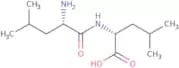
CAS :H-Leu-D-Leu-OH is a nonproteinogenic amino acid that is used in the biosynthesis of proteins. It is formed from glutamic acid and leucine through an amide bond, and has a protonated amino group. The specificities of H-Leu-D-Leu are not yet known, but it has been shown to have antibacterial activity against Staphylococcus aureus and Streptococcus pyogenes. H-Leu-D-Leu may be transported across the cytoplasm membrane by means of a transport rate that is significantly higher than other amino acids. This amino acid also exhibits significant homology with nanosized molecules.Formule :C12H24N2O3Degré de pureté :Min. 95%Masse moléculaire :244.33 g/molAnti CCK-8 (Human, Rat) Serum
This is a vivitide catalogue product. Please send your vivitide product enquiry to sales@vivitide.com for an up-to-date price and availability.Degré de pureté :Min. 95%H-Arg-Pro-OH sulfate salt
CAS :H-Arg-Pro-OH sulfate salt is a synthetic peptide that binds to the receptor for filtrates. It is used to treat skin conditions such as dermatitis, eczema, and psoriasis. H-Arg-Pro-OH sulfate salt has been shown to be effective in inhibiting clostridium from producing proteins. This drug also inhibits the uptake of these proteins by blocking the binding of phosphorylated lysine residues to their receptors on the cell membrane. It has been shown to hydrolyze amide bonds and can be used as a catalyst for bond cleavage reactions.Formule :C11H21N5O3Degré de pureté :Min. 95%Couleur et forme :PowderMasse moléculaire :271.32 g/molTyrosyl-BNP-32, human
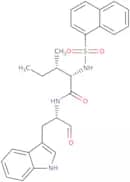
Tyrosyl-BNP-32, human is a peptide that is used as a research tool to study the activation of ion channels and protein interactions. Tyrosyl-BNP-32, human has been shown to be an inhibitor for the receptor for angiotensin II. It also binds to the beta-adrenergic receptor, which is a G protein coupled receptor. Tyrosyl-BNP-32, human is classified as a high purity reagent and has CAS No. 633007-74-2.Formule :C152H253N51O44S4Degré de pureté :Min. 95%Masse moléculaire :3,627.2 g/mol1-Naphthalenylsulfonyl-Ile-Trp-aldehyde
CAS :1-Naphthalenylsulfonyl-Ile-Trp-aldehyde is a recombinant protein that has protease activity. It is a serine protease that cleaves proteins at the amino acid sequence Ser-Xaa-Gly or Ser-Xaa. The recombinant protein has been shown to have proteolytic activity and can be used in assays to measure the amount of β-catenin, collagen, and growth factor in cells. 1-Naphthalenylsulfonyl-Ile-Trp-aldehyde also binds to monoclonal antibodies and can be used as a neutralizing agent for these proteins. This recombinant protein also has been shown to inhibit the growth of lung fibroblasts.Formule :C27H29N3O4SDegré de pureté :Min. 95%Couleur et forme :PowderMasse moléculaire :491.6 g/molSerum/Glucocorticoid Regulated Kinase 1, human, recombinant
SRPK1 is a protein kinase that is involved in the regulation of the cell cycle progression and apoptosis. SRPK1 has been shown to be phosphorylated by serum/glucocorticoid regulated kinase 2 (SGK2) and glycogen synthase kinase 3 beta (GSK3β). It is inhibited by the protein phosphatase calcineurin (PP2B), which may play a role in regulating cardiac function. SRPK1 also interacts with ion channels, such as voltage-gated potassium channels, which may be due to its ability to regulate ion channel activity.Degré de pureté :Min. 95%Protein A/G (recombinant)
Protein A/G is a recombinant protein that is used to purify immunoglobulins and other proteins. It has been shown to inhibit binding of IgE to mast cells, which may be due to its ability to bind to the Fc receptor on the surface of these cells. Protein A/G has also been shown to bind with high affinity and specificity to the Fc receptor on human platelets, which may be due to its ability to activate phospholipase C-γ (PLC-γ) in these cells. This activation leads to an increase in intracellular calcium concentrations and subsequent activation of protein kinase C (PKC). Protein A/G binds with high affinity and specificity for membrane-bound receptors for many ligands, such as epidermal growth factor (EGF), transforming growth factor β1 (TGFβ1), erythropoietin (EPO), prolactin, follicle stimulating hormone (FSH), luteDegré de pureté :Min. 95%Anti PHI (13-27), Human Serum
Anti PHI (13-27) is a peptide that is used as a research tool for cell biology and pharmacology. It has been shown to bind to the human receptor, the peptide sequence of which is the same as that of the human PHI(1-27). This peptide can activate ion channels and inhibit ligand binding to receptors. Anti PHI (13-27) has also been shown to inhibit some protein interactions such as those between activated protein kinase C and its substrates. Anti PHI (13-27) can be used in antibody production, immunoprecipitation, and Western blotting. The CAS number for Anti PHI (13-27) is 207900-10-2.Degré de pureté :Min. 95%Biotin-dPEG®23-Azide
Biotin-dPEG®23-Azide is a PEG compound with two different functional groups (also known as heterobifunctional). Unlike homobifunctional PEG compounds (same functional group on both ends), this type of compounds are more versatile as have two different anchor points. Biotin-dPEG®23-Azide is used as a linker and spacer to add a PEG moiety, via pegylation (a bioconjugation technique) to proteins, peptides, oligonucleotides, small molecules and nanoparticles.Formule :C58H112N6O25SDegré de pureté :Min. 95%Masse moléculaire :1,325.60 g/molNeurofilament Medium Polypeptide Bovine
Neurofilament Medium Polypeptide Bovine is a freeze-dried preparation of the protein neurofilament medium polypeptide. It is used for the quantitative determination of neurofilaments in spinal cord tissue and for functional studies of neurofilaments in neuronal cells. The protein is purified from bovine spinal cord by fractionation with ammonium sulfate precipitation and desalting on a DEAE-cellulose column, followed by two cycles of freeze-drying. The molecular mass is about 190 kDa. Reconstitute in 0.1 M methylammonium chloride and store at 4°C before use.Degré de pureté :Min. 95%Val-His-Leu-Thr-Pro-Glu
Please enquire for more information about Val-His-Leu-Thr-Pro-Glu including the price, delivery time and more detailed product information at the technical inquiry form on this page
Formule :C31H50N8O10Degré de pureté :Min. 95%Masse moléculaire :694.78 g/molHigh Density Lipoprotein Human
High density lipoproteins (HDL) are a major component of the blood plasma, which is believed to play an important role in cholesterol metabolism. High-density lipoprotein human is a population of cells that has been isolated from the peripheral blood of healthy donors and cryopreserved. The cells can be used for cell therapy or as a source of extracellular matrix proteins, such as collagen and glycol, for the culture of various cell types.Degré de pureté :Min. 95%DBCO-dPEG®4-MAL
DBCO-dPEG®4-MAL is a PEG compound with two different functional groups (also known as heterobifunctional). Unlike homobifunctional PEG compounds (same functional group on both ends), this type of compounds are more versatile as have two different anchor points. DBCO-dPEG®4-MAL is used as a linker and spacer to add a PEG moiety, via pegylation (a bioconjugation technique) to proteins, peptides, oligonucleotides, small molecules and nanoparticles.Degré de pureté :Min. 95%Masse moléculaire :674.74 g/molThyrotropin Releasing Hormone (TRH) (Human, Ovine, Porcine, Rat)
CAS :Thyrotropin Releasing Hormone (TRH) is a hormone that stimulates the release of thyroid hormones. TRH has been used to diagnose and treat conditions such as autoimmune diseases, infectious diseases, and thyroid disease. It is also used in the treatment of patients with hypothyroidism who are not responding to levothyroxine therapy. TRH is administered intravenously or intramuscularly. This drug is primarily used for diagnostic purposes in women who have symptoms of hyperthyroidism but normal serum levels of TSH and thyroxine levels. TRH administration can result in a rise in serum prolactin levels, which may be useful for diagnosis of the condition hyperprolactinemia.Formule :C16H22N6O4•H2ODegré de pureté :Min. 95%Masse moléculaire :380.4 g/molGM3 Labelled by NBD (Ammonium Form)
GM3 Labelled by NBD (Ammonium Form) is a peptide inhibitor of the Ras protein. It binds to Ras and inhibits its activity. This compound is used as a pharmacological tool for research on the Ras protein in cell biology, immunology, neurology, and cancer biology. GM3 Labeled by NBD (Ammonium Form) is also used as a reagent for the study of protein interactions and receptor-ligand binding. This product has high purity and can be used as a research tool in life science laboratories.Formule :C55H90N6O24Degré de pureté :Min. 95%Masse moléculaire :1,219.3 g/molICI 174864
CAS :Please enquire for more information about ICI 174864 including the price, delivery time and more detailed product information at the technical inquiry form on this page
Formule :C34H46N4O6Degré de pureté :Min. 95%Masse moléculaire :606.75 g/molThyroglobulin VIF Heavy Tryptic Peptide Standard (4nmol)
This Thyroglobulin VIF Heavy Tryptic Peptide Standard is useful in protein identification and quantitation studies such as liquid chromatography-tandem mass spectrometry (LC-MS/MS). The use of tryptic peptides overcomes the challenges of quantifying serum thyroglobulin levels using immunoassays through removing the risk of interferences from Thyroglobulin antibodies. Thyroglobulin is a thyroid hormone production substrate and thus an important biomarker for differentiated thyroid cancer.Degré de pureté :Min. 95%Anti Peptide YY (PYY), Human Serum
Anti Peptide YY (PYY), human serum is a research tool that activates the ion channels of cells. It is a peptide and belongs to the group of hormones called gut hormones. The antibody is used in research to study protein interactions, receptor-ligand binding, and pharmacology. This product is also used as an inhibitor for peptide YY (PYY).Degré de pureté :Min. 95%Plasminogen Light Tryptic Peptide Standard (4nmol)
For Protein Identification and QuantitationDegré de pureté :Min. 95%Epidermal Growth Factor Receptor, Mouse Anti Human
Epidermal Growth Factor Receptor, Mouse Anti Human is a mouse monoclonal antibody that blocks the receptor for epidermal growth factor (EGF). It is used as an inhibitor of EGF to study the cell biology of EGF-dependent processes and for diagnosis of diseases such as cancer. Epidermal Growth Factor Receptor, Mouse Anti Human has shown specificity for human EGFR. This antibody can be used in immunohistochemistry and Western blotting procedures. The antibody recognizes the extracellular domain of EGFR, which is present on all cells that express this receptor.
Degré de pureté :Min. 95%Anti Acidic-FGF (1-15) (Bovine) Serum
Anti Acidic-FGF (1-15) (Bovine) Serum is a research tool used to study the activation of FGF receptors and their ligands. It contains peptides that are derived from the extracellular domain of human acidic FGF (1-15). This serum stimulates the activation of FGF receptors, which are important in cell growth, proliferation, and survival. Anti Acidic-FGF (1-15) Serum is purified by ion exchange chromatography and contains no detectable amounts of other proteins. It is supplied as a lyophilized powder at a concentration of 10 mg/mL.Degré de pureté :Min. 95%Osteopontin Light Tryptic Peptide Standard (4nmol)
For Protein Identification and QuantitationDegré de pureté :Min. 95%Thyroglobulin VIF Light Tryptic Peptide Standard (4nmol)
This Thyroglobulin VIF Light Tryptic Peptide Standard is useful in protein identification and quantitation studies such as liquid chromatography-tandem mass spectrometry (LC-MS/MS). The use of tryptic peptides overcomes the challenges of quantifying serum thyroglobulin levels using immunoassays through removing the risk of interferences from Thyroglobulin antibodies. Thyroglobulin is a thyroid hormone production substrate and thus an important biomarker for differentiated thyroid cancer.
Degré de pureté :Min. 95%H-LLSATDTLDEAER-OH
Peptide H-LLSATDTLDEAER-OH is a Research Peptide with significant interest within the field academic and medical research. This peptide is available for purchase at Cymit Quimica in multiple sizes and with a specification of your choice.
H-NYRWRCKNQN-OH
Peptide H-NYRWRCKNQN-OH is a Research Peptide with significant interest within the field academic and medical research. This peptide is available for purchase at Cymit Quimica in multiple sizes and with a specification of your choice.H-IQVLVEPDHFK-OH
Peptide H-IQVLVEPDHFK-OH is a Research Peptide with significant interest within the field academic and medical research. This peptide is available for purchase at Cymit Quimica in multiple sizes and with a specification of your choice.CMVpp65 - 72
CMVpp65 - 72 is a custom research peptide; min purity 95%, TFA salt. For different specs please use the Peptide Quote Tool
Programmed cell death 1 ligand 1 (15-23)
Peptide Programmed cell death 1 ligand 1 (15-23) is a Research Peptide with significant interest within the field academic and medical research. This peptide is available for purchase at Cymit Quimica in multiple sizes and with a specification of your choice.H-WHVSC-OH
Peptide H-WHVSC-OH is a Research Peptide with significant interest within the field academic and medical research. This peptide is available for purchase at Cymit Quimica in multiple sizes and with a specification of your choice.
H-HSLLDEGKQSLTKLA-OH
H-HSLLDEGKQSLTKLA-OH is a custom research peptide; min purity 95%, TFA salt. For different specs please use the Peptide Quote Tool
H-QRMHLRQYELL-OH
Peptide H-QRMHLRQYELL-OH is a Research Peptide with significant interest within the field academic and medical research. This peptide is available for purchase at Cymit Quimica in multiple sizes and with a specification of your choice.
H-TQETNKVETY-OH
Peptide H-TQETNKVETY-OH is a Research Peptide with significant interest within the field academic and medical research. This peptide is available for purchase at Cymit Quimica in multiple sizes and with a specification of your choice.
Ac-RGDSPGGC-NH2
Peptide Ac-RGDSPGGC-NH2 is a Research Peptide with significant interest within the field academic and medical research. This peptide is available for purchase at Cymit Quimica in multiple sizes and with a specification of your choice.
H-AFLPGMNPPPYSQFLSR-OH
Peptide H-AFLPGMNPPPYSQFLSR-OH is a Research Peptide with significant interest within the field academic and medical research. This peptide is available for purchase at Cymit Quimica in multiple sizes and with a specification of your choice.
Protegrin-1
Peptide Protegrin-1 is a Research Peptide with significant interest within the field academic and medical research. This peptide is available for purchase at Cymit Quimica in multiple sizes and with a specification of your choice.
H-LPFFSNVTW-OH
Peptide H-LPFFSNVTW-OH is a Research Peptide with significant interest within the field academic and medical research. This peptide is available for purchase at Cymit Quimica in multiple sizes and with a specification of your choice.